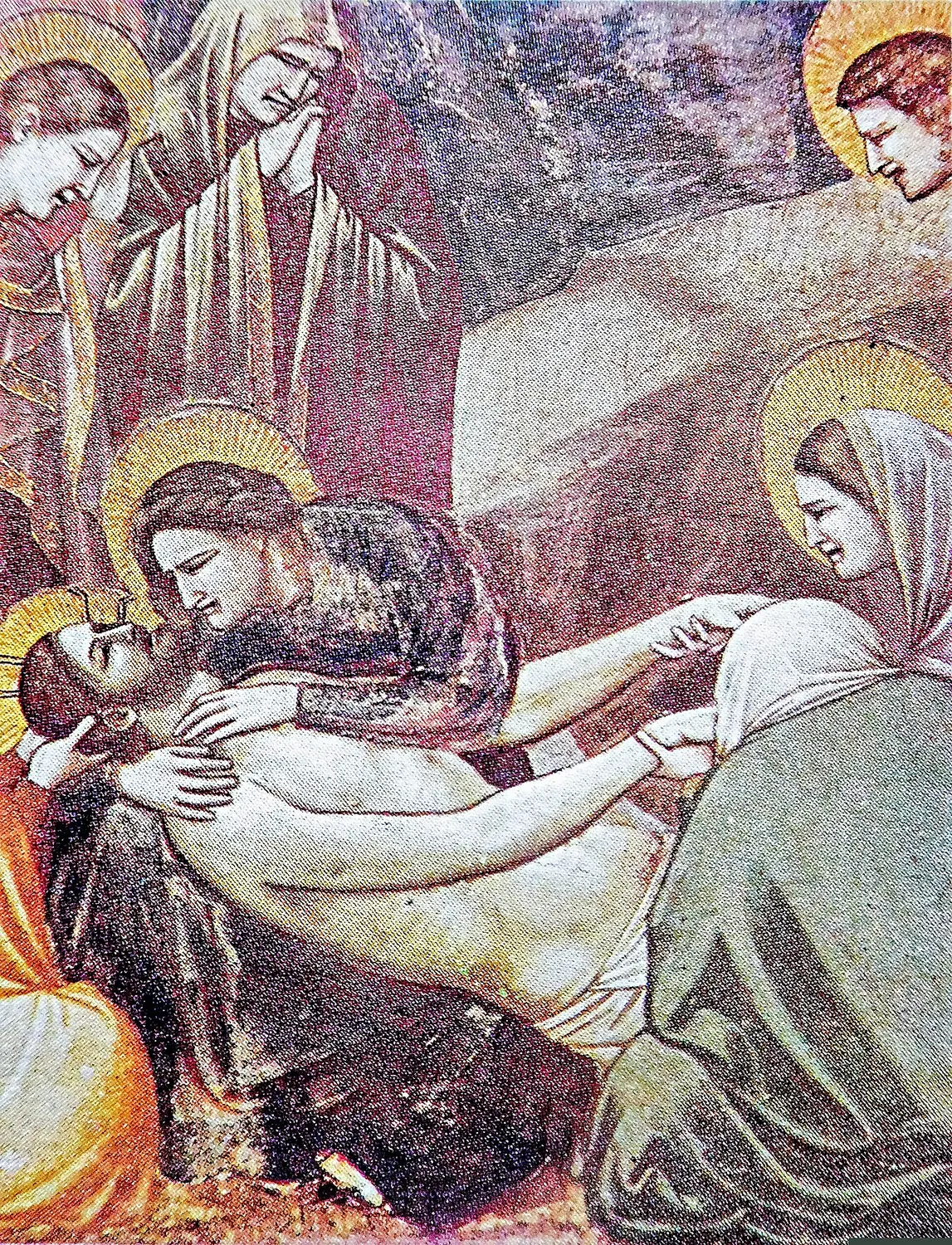
The Lamentation
Weeping angels swirl through the sky around the body of Christ. The diagonal line of the rock leads the eye to the faces of mother and son, almost touching. Two women seen from behind, lower left, place us at the edge of the scene.
The painter who brought emotion down to earth
A Florentine painter and architect, Giotto broke away from the flat figures inherited from Byzantium: his people have weight, volume and feelings. Many see him as the first painter of the Renaissance.
Born around 1267 in a village of the Mugello, north of Florence, Giotto di Bondone probably trained with Cimabue. A legend told by Vasari says the master found him as a boy, drawing a sheep on a stone. He soon became the most sought-after painter in Italy, called to Assisi, Rome, Padua and Naples.
Around 1303-1305, the banker Enrico Scrovegni asked him to decorate a chapel in Padua. Giotto painted some forty scenes from the lives of the Virgin and Christ under a blue vault scattered with stars. Late in life, Florence made him master builder of the cathedral, and he designed the bell tower that still bears his name. He died in 1337.
Giotto painted in fresco, laying his colours on fresh plaster in small patches that had to be finished within the day. He set his figures in a space with real depth and made them turn, lean and weep. Gestures and glances tell the story, without text or complicated symbols.
Weeping angels swirl through the sky around the body of Christ. The diagonal line of the rock leads the eye to the faces of mother and son, almost touching. Two women seen from behind, lower left, place us at the edge of the scene.
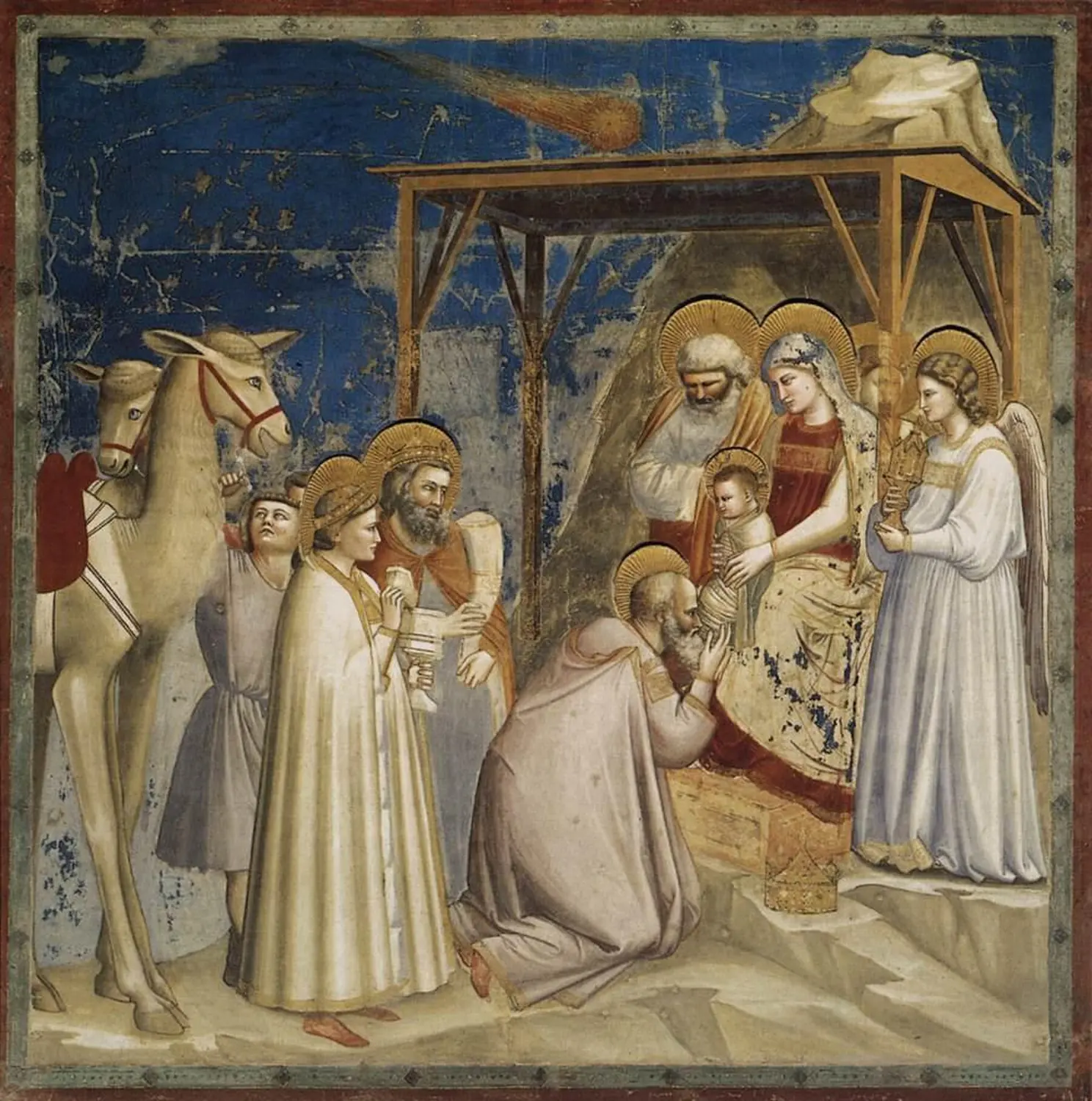
The Magi come to worship the infant Jesus. Above the stable, a comet with a long tail replaces the usual star: Giotto may have seen Halley’s Comet pass in 1301. Camels, animals the painter had probably never seen, accompany the procession.
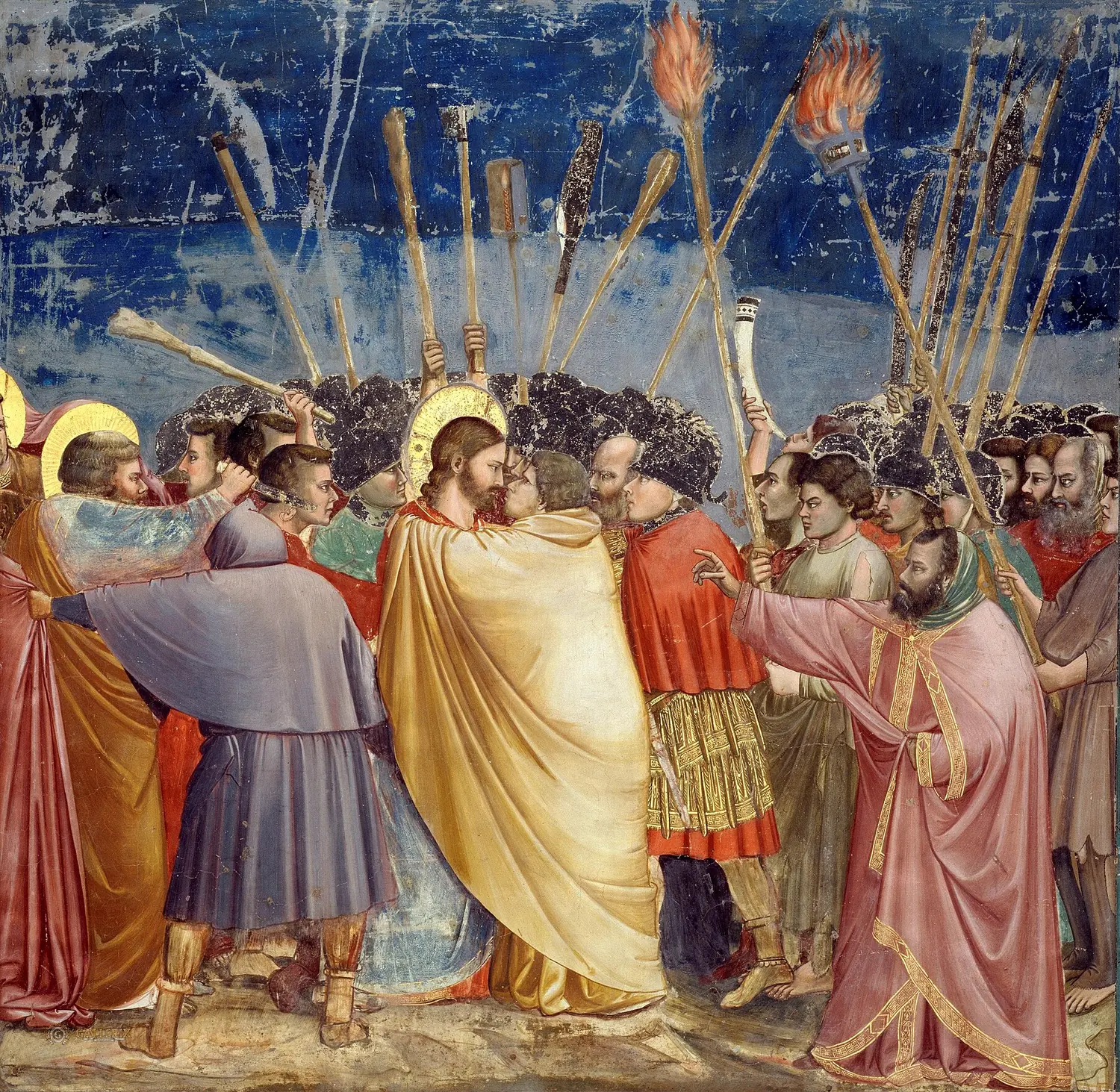
Judas wraps Christ in his large yellow cloak to kiss him and point him out to the soldiers. The two faces meet, motionless, in the middle of a crowd bristling with torches and clubs. The whole drama lies in this exchange of looks.
According to Vasari, an envoy of the pope asked Giotto for a sample of his skill. The painter drew a perfect circle freehand, in a single stroke. For centuries, ’round as Giotto’s O’ meant something flawless in Italy. In 1985, the European Space Agency named its probe to Halley’s Comet after him.
 Duccio di Buoninsegna