lesPeintres.eu

Duccio di Buoninsegna

Born: Siena, c. 1255Died: Siena, c. 1319

The gold and grace of Siena

Gothic paintingItaly
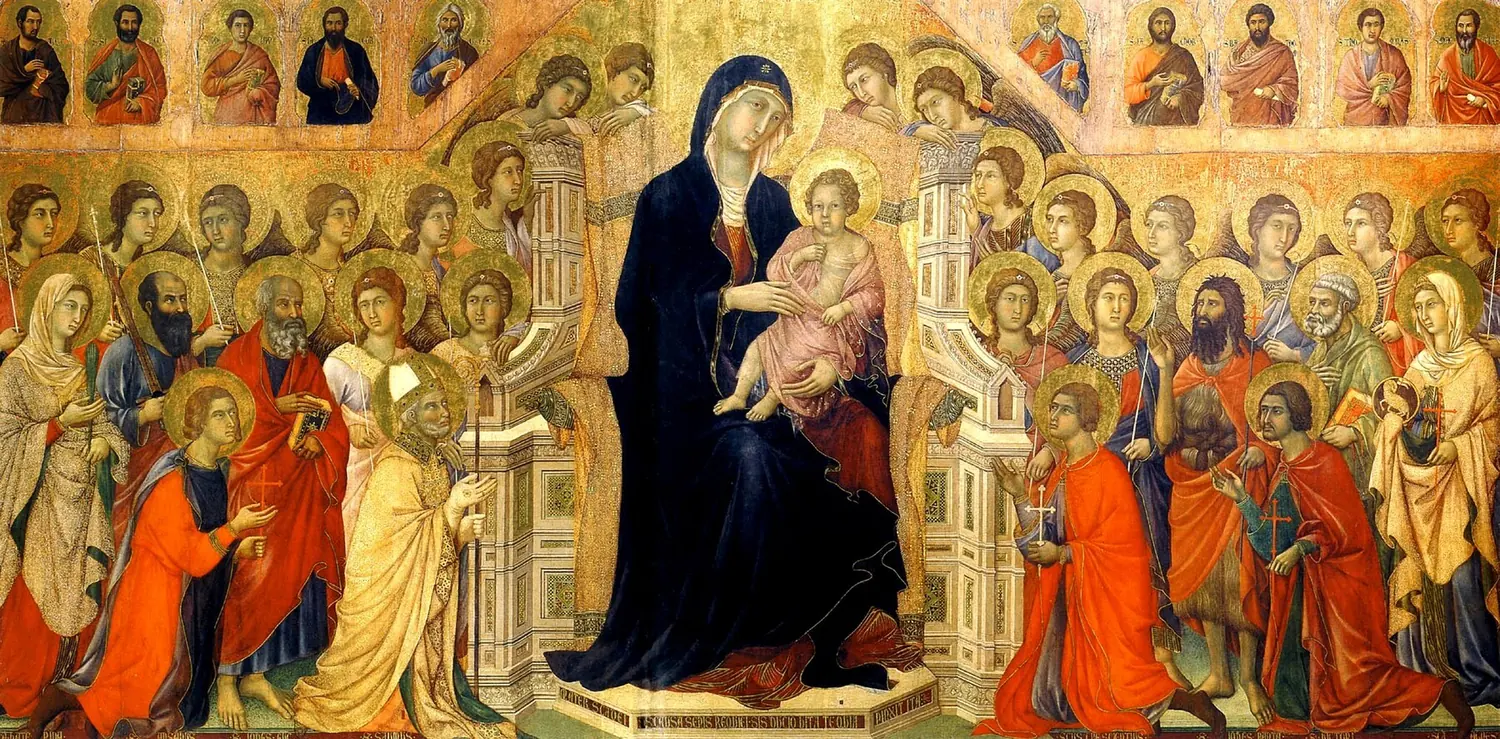
Maestà — Duccio di Buoninsegna
Maestà, 1311 · Museo dell’Opera del Duomo, Siena
Public domain — Wikimedia Commons

1In brief

Founder of the Sienese school, Duccio combined the elegance of Byzantine icons with a new tenderness. His Maestà, a huge altarpiece for Siena Cathedral, was carried in triumph through the city.

2Life

Born around 1255 in Siena, Duccio di Buoninsegna worked all his life for his city and for Florence, its great rival. In 1285 a Florentine confraternity ordered a large Madonna from him for the church of Santa Maria Novella: the Rucellai Madonna, long attributed to Cimabue.

Siena’s archives record his debts and several fines, but also his fame. On 9 June 1311 the Maestà left his workshop and crossed the city to the sound of bells, escorted by officials and townspeople, all the way to the cathedral. Duccio died around 1318-1319.
3Style and technique

Duccio painted in egg tempera on wooden panels covered with gold leaf. He kept the gold ground and long faces of icons, but softened the gazes, loosened the drapery and told stories in small scenes full of detail. His delicate blues and pinks made Siena’s reputation.

4Works

Maestà — Duccio di Buoninsegna

Maestà

1311Museo dell’Opera del Duomo, Siena

The Virgin sits on a marble throne, surrounded by rows of angels and saints against a gold ground. At the foot of the throne kneel the four patron saints of Siena. An inscription asks the Virgin for peace for the city and long life for Duccio.

Public domain — Wikimedia Commons

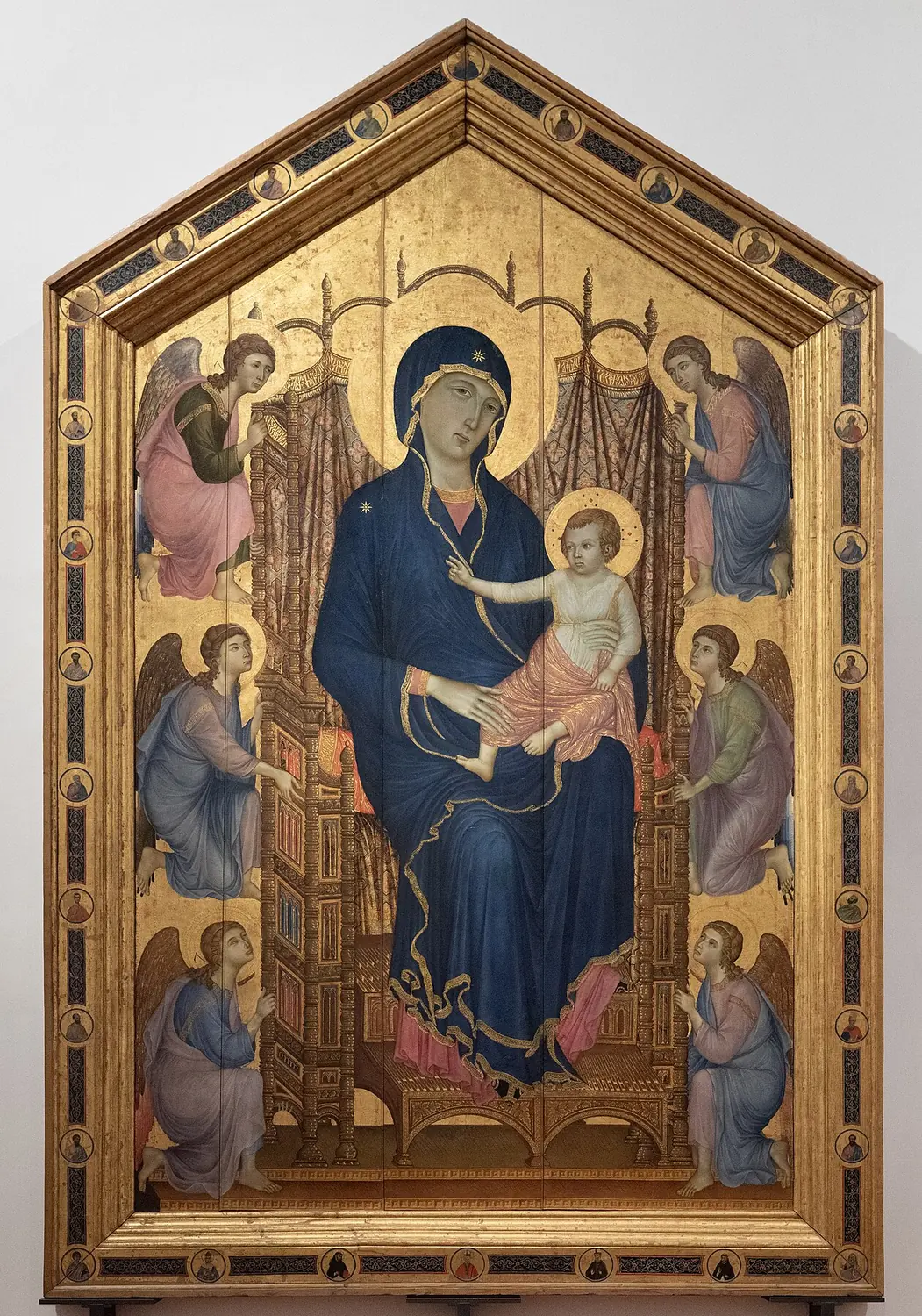
The Rucellai Madonna — Duccio di Buoninsegna

The Rucellai Madonna

1285Uffizi Gallery, Florence

Painted for a Florentine confraternity, this Madonna more than four metres high is surrounded by six angels kneeling in the air. The gold hem of her cloak traces a long winding line, typical of Gothic taste.

Public domain — Wikimedia Commons

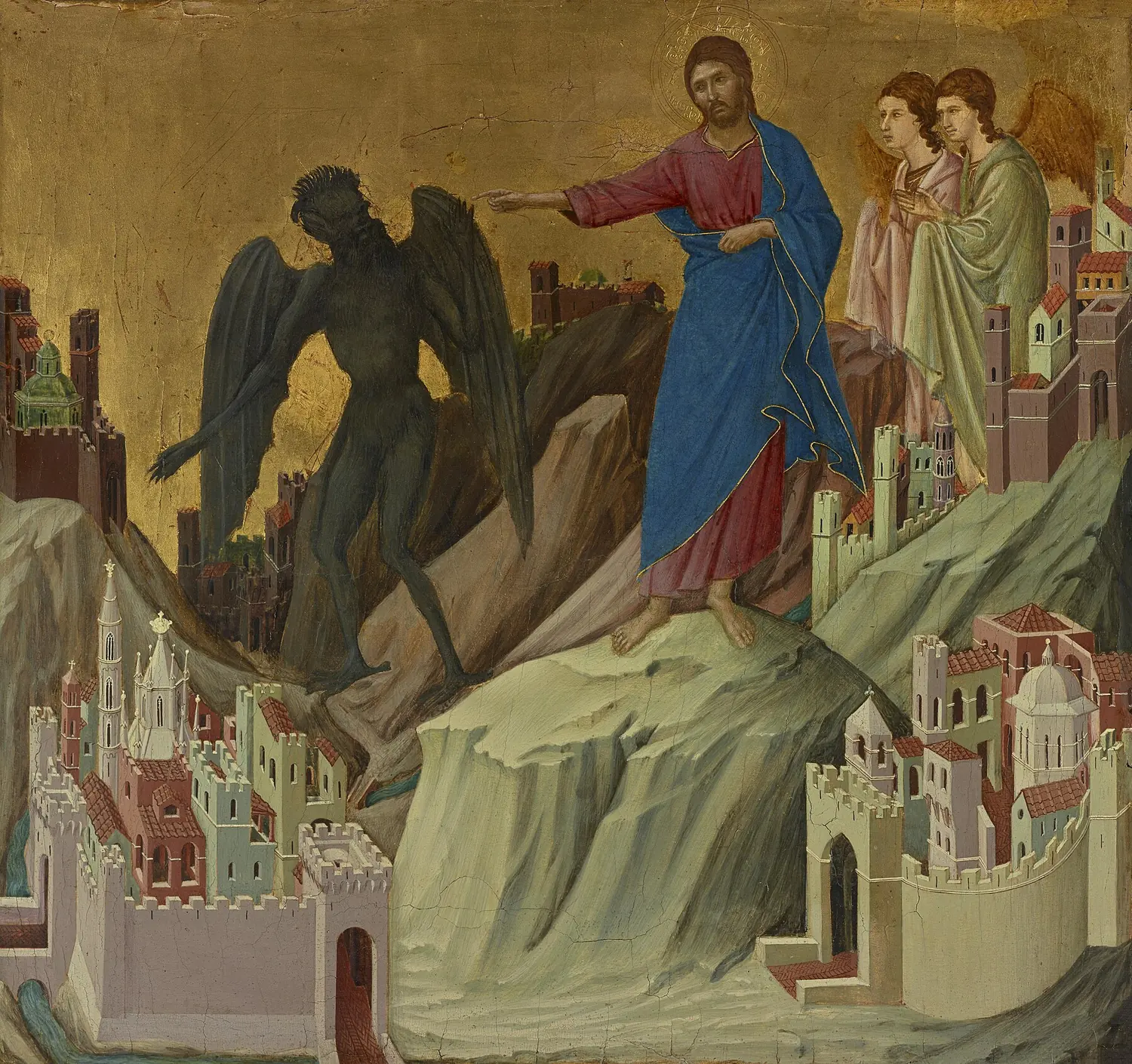
The Temptation of Christ on the Mountain — Duccio di Buoninsegna

The Temptation of Christ on the Mountain

1311Frick Collection, New York

This small panel comes from the Maestà. On a mountain, the devil offers Christ all the kingdoms of the world, shown as miniature cities. Christ sends him away with a gesture while two angels wait on the right.

Public domain — Wikimedia Commons

5Did you know?

The Maestà was painted on both sides: on the front, the Virgin in majesty surrounded by saints and angels; on the back, twenty-six scenes of Christ’s Passion. In the 18th century the altarpiece was sawn apart for display, and several small panels ended up as far away as the United States.

6Further

Contemporaries