lesPeintres.eu

Zhang Zeduan

Born: Dongwu (Shandong), 1085Died: unknown, 1145

A whole city on a silk scroll

Chinese paintingChina (Song dynasty)
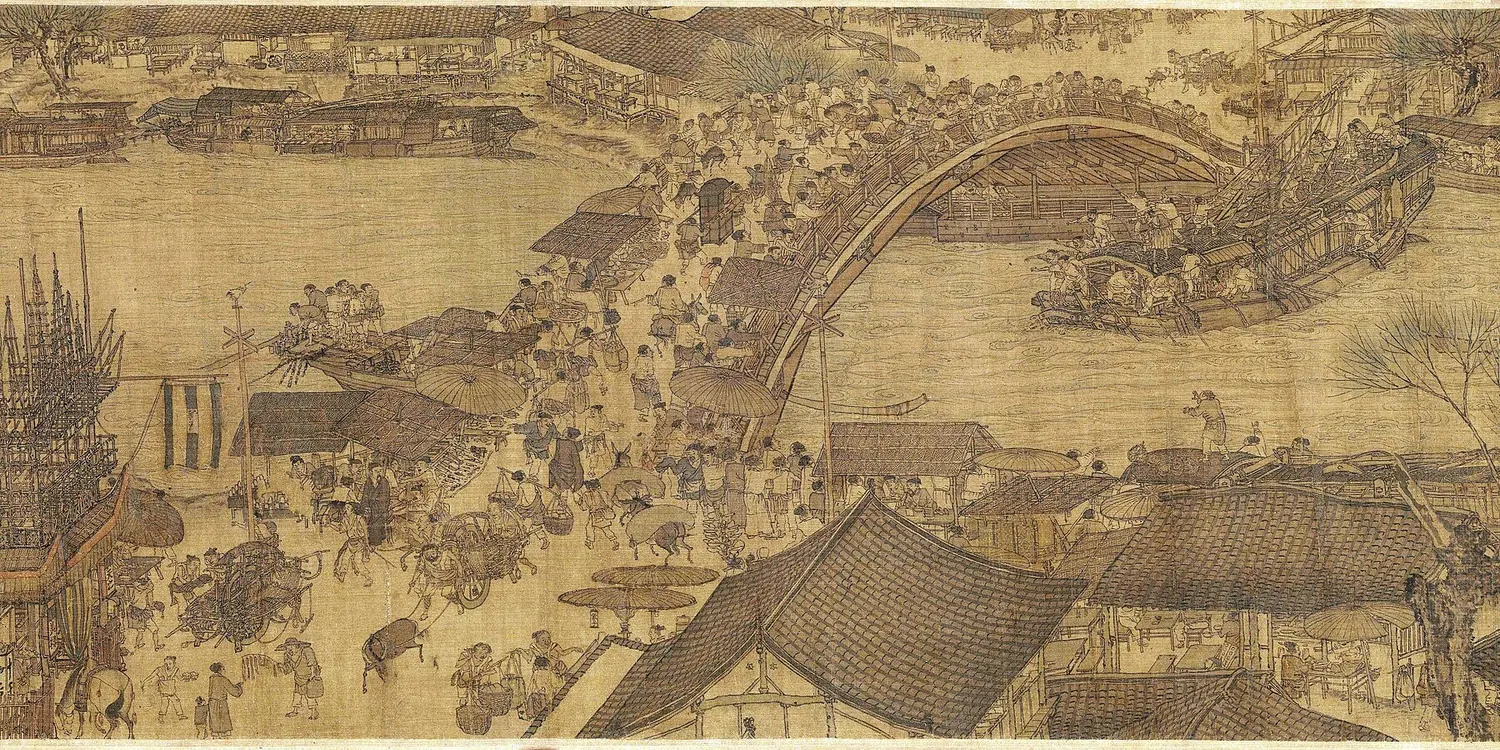
Along the River During the Qingming Festival (detail) — Zhang Zeduan
Along the River During the Qingming Festival (detail), c. 1120 · Palace Museum, Beijing
Public domain — Wikimedia Commons

1In brief

Of Zhang Zeduan, a painter of the Song dynasty, we know almost a single work: a scroll more than five metres long showing life in a Chinese capital nine hundred years ago. It is sometimes called ’China’s Mona Lisa’.

2Life

Information about Zhang Zeduan is scarce. Born in 1085 in the Shandong region, he is said to have studied in the capital, Bianjing, today’s Kaifeng, before becoming a painter at the imperial academy. He specialised in the precise painting of buildings, boats, bridges and vehicles.

His scroll Along the River During the Qingming Festival, painted in the early 12th century, belonged to several emperors and was copied dozens of times over the centuries. The original, kept in the Palace Museum in Beijing, is so fragile that it is shown only very rarely. Zhang Zeduan is thought to have died around 1145.

3Style and technique

The scroll unrolls from right to left, like a walk: the eye moves forward scene after scene. Painted in ink and light colours on silk, it describes houses, shops, bridges, boats and hundreds of figures with documentary precision, without a single perspective, each part seen from slightly above.

4Works

Along the River During the Qingming Festival (detail) — Zhang Zeduan

Along the River During the Qingming Festival (detail)

c. 1120Palace Museum, Beijing

The scroll begins in the countryside at dawn, then follows the river to the city in festival mood. In the centre a large boat tries to pass under an arched bridge as the crowd shouts. Then come the city gates, inns, shops, porters, camels and storytellers: the whole life of a capital. The detail shown here is the crowd on the arched bridge.

Public domain — Wikimedia Commons

5Did you know?

Historians have counted more than eight hundred figures on the scroll, some sixty animals, twenty-eight boats and around twenty vehicles.

6Further

Contemporaries