lesPeintres.eu

Fra Angelico

Born: Vicchio (Tuscany), c. 1395Died: Rome, 1455

The friar who painted heavenly light

Italian RenaissanceItaly
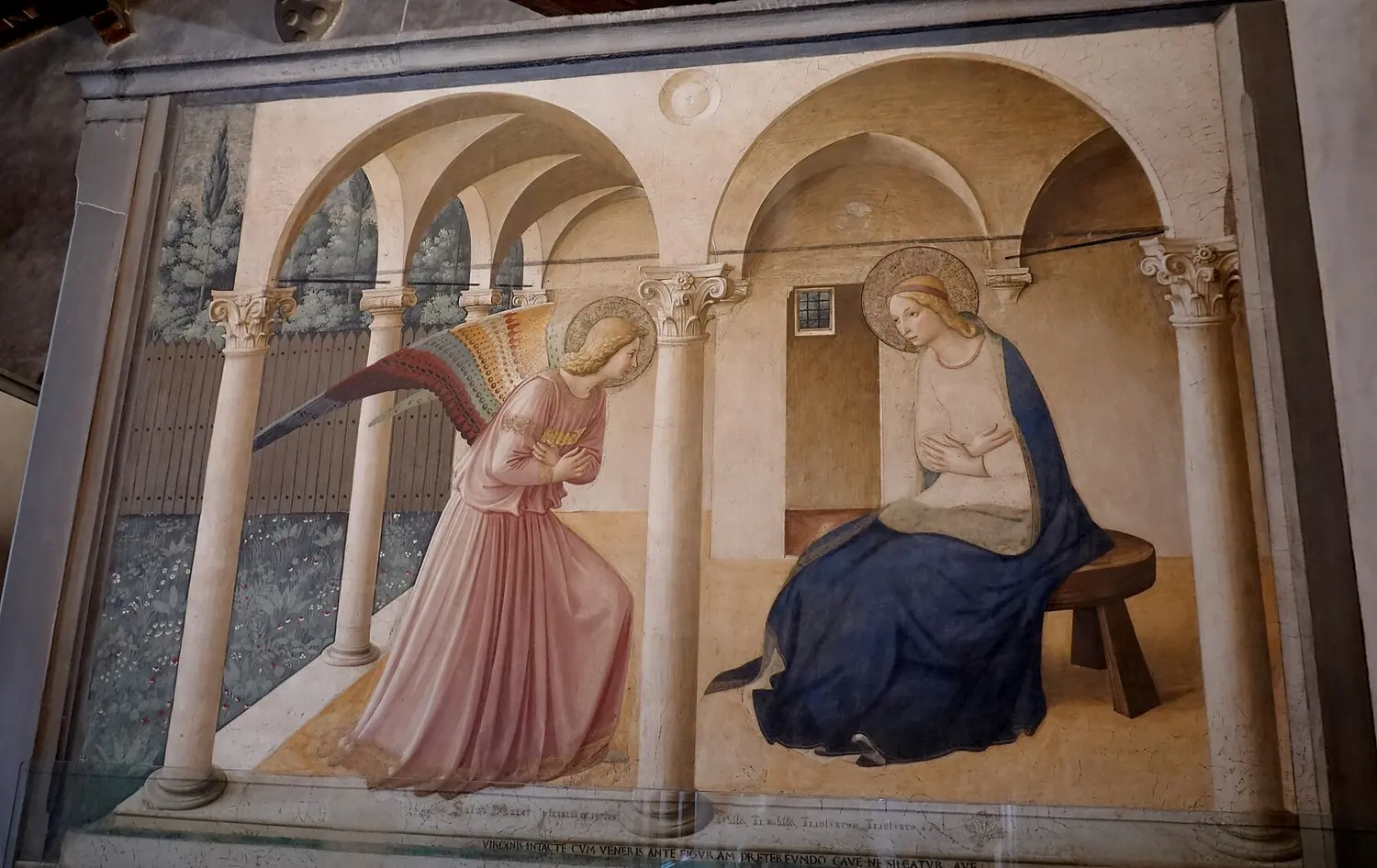
The Annunciation (San Marco) — Fra Angelico
The Annunciation (San Marco), c. 1440 · San Marco Museum, Florence
Photo: Richard Mortel — CC BY 2.0 — Wikimedia Commons

1In brief

A Dominican friar and painter, Fra Angelico combined the brightness of gold grounds with Florence’s new perspective. His luminous Annunciations are among the most famous images of the Renaissance.

2Life

Born around 1395 near Vicchio, north of Florence, Guido di Pietro became a Dominican friar at Fiesole under the name Fra Giovanni. He already ran a renowned workshop. Around 1438 Cosimo de’ Medici paid for the rebuilding of the convent of San Marco in Florence, and Fra Angelico and his assistants painted a fresco in every friar’s cell.

Called to Rome by Popes Eugene IV and Nicholas V, he decorated a chapel in the Vatican. He died in Rome in 1455. The nickname Angelico, ’the angelic one’, was given to him after his death. The Catholic Church beatified him in 1982 and named him patron of artists.

3Style and technique

Fra Angelico painted in fresco and in tempera on wood. His colours are clear and pure: ultramarine blue, pink, soft green, gold. He knew Brunelleschi’s perspective and used it to build light architecture, loggias with slender columns. His calm, prayerful figures seem bathed in shadowless light.

4Works

The Annunciation (San Marco) — Fra Angelico

The Annunciation (San Marco)

c. 1440San Marco Museum, Florence

At the top of the dormitory stairs at San Marco, the angel Gabriel tells Mary she will be the mother of Christ. The scene takes place under a bright vaulted loggia that opens onto an enclosed garden. An inscription invited every friar to greet the Virgin as he passed.

Photo: Richard Mortel — CC BY 2.0 — Wikimedia Commons
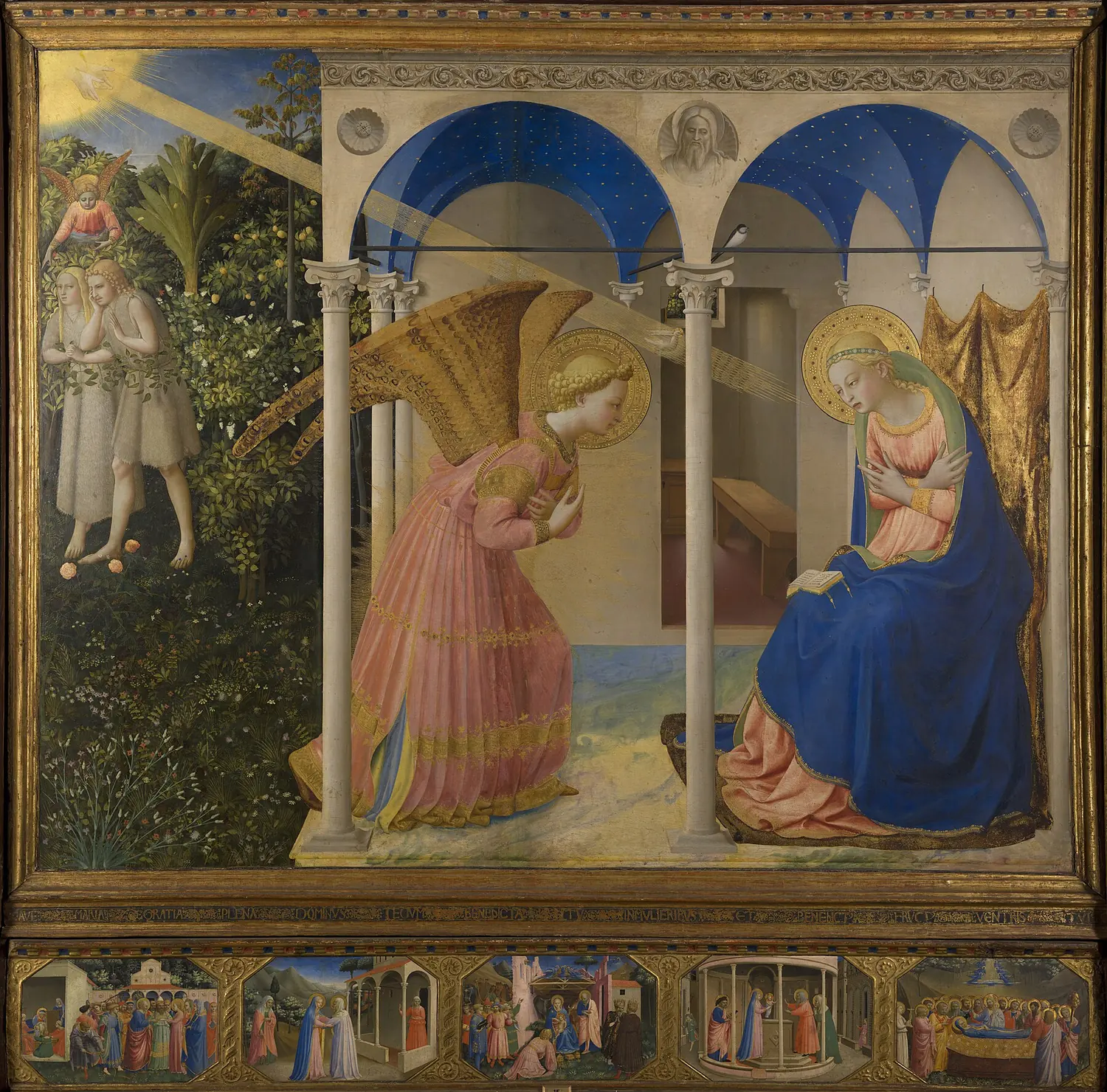
The Annunciation (Prado) — Fra Angelico

The Annunciation (Prado)

c. 1426Prado Museum, Madrid

On this gold panel, the Annunciation takes place under a portico while, on the left, Adam and Eve are driven out of paradise. A ray of light runs from the hand of God down to Mary: the promise of salvation answers the fall.

Public domain — Wikimedia Commons

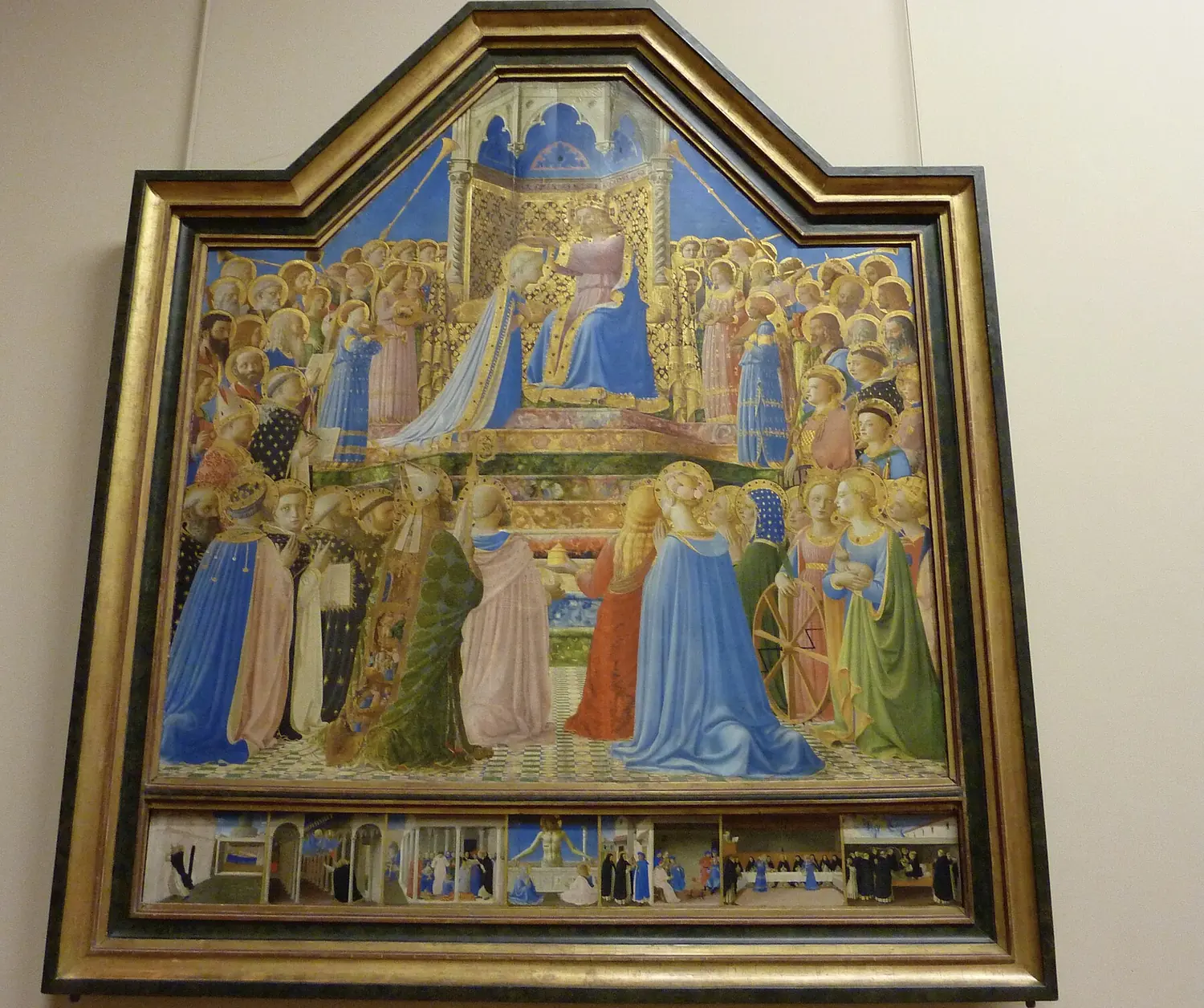
The Coronation of the Virgin — Fra Angelico

The Coronation of the Virgin

c. 1432Louvre Museum, Paris

Christ crowns his mother at the top of a marble staircase, surrounded by music-making angels and a crowd of saints. The painting, made for a convent in Fiesole, was taken to France in 1812 and never returned.

Public domain — Wikimedia Commons

5Did you know?

Vasari says Fra Angelico never retouched a finished work, believing God wanted it that way, and that he could not paint a crucifix without weeping.

6Further

Contemporaries