lesPeintres.eu

Jan van Eyck

Born: Maaseik (probably), c. 1390Died: Bruges, 1441

The wizard of oil painting

Early Netherlandish paintingBurgundian Netherlands (today Belgium)
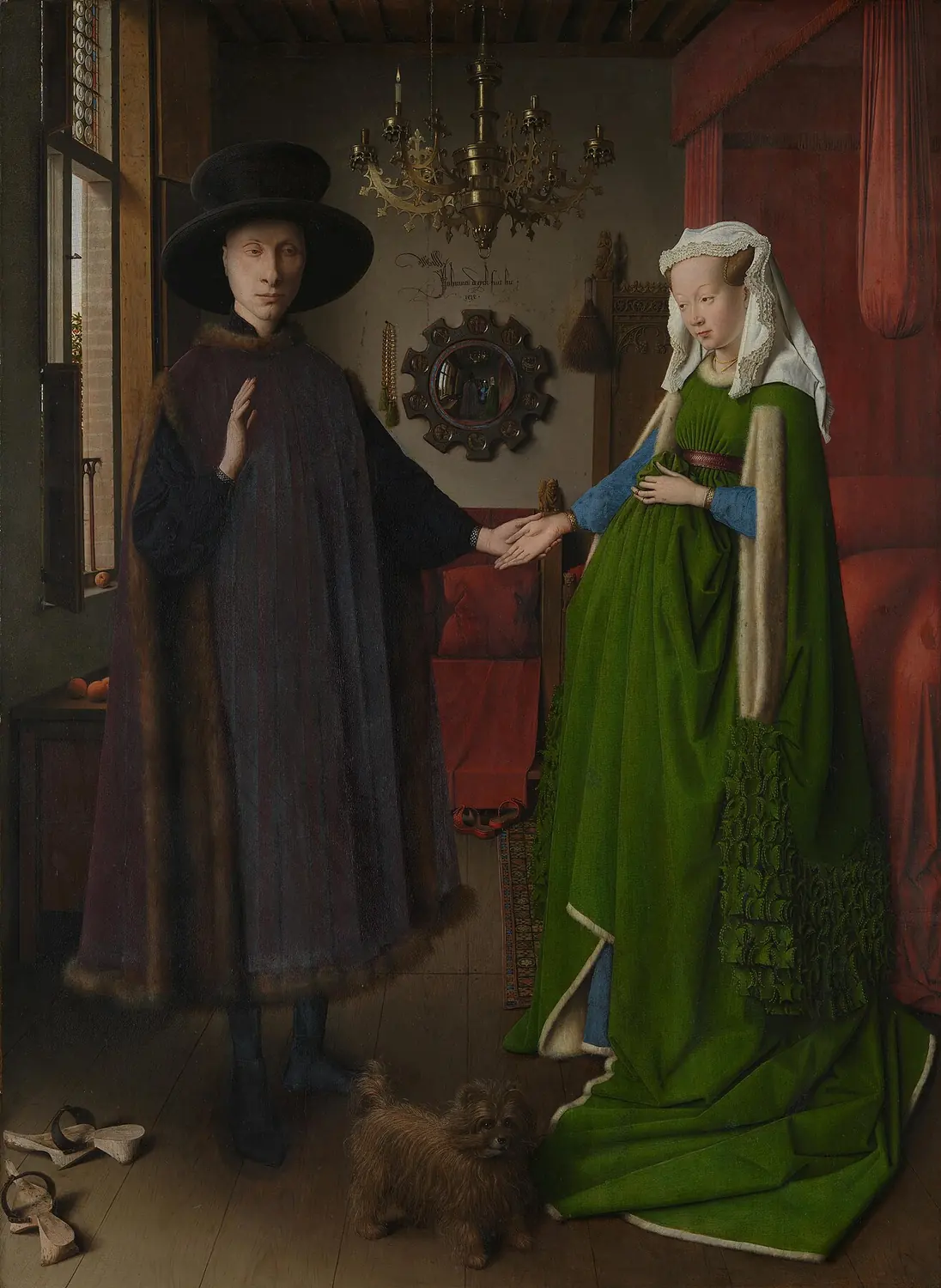
The Arnolfini Portrait — Jan van Eyck
The Arnolfini Portrait, 1434 · National Gallery, London
Public domain — Wikimedia Commons

1In brief

Court painter to the Duke of Burgundy, Jan van Eyck took oil painting to unheard-of precision: reflections, textures, light. His pictures are made to be looked at with a magnifying glass.

2Life

Born around 1390, probably in Maaseik, Jan van Eyck first worked for the Count of Holland, then in 1425 entered the service of Philip the Good, Duke of Burgundy. He was court painter, valet and diplomat: in 1428 the duke sent him to Portugal to paint Princess Isabella, whom he wished to marry.

Settled in Bruges, he completed in 1432 the Ghent Altarpiece, begun with his brother Hubert for a church in Ghent. He also painted portraits of townspeople and foreign merchants, such as the Arnolfini couple. He died in Bruges in 1441.
3Style and technique

Van Eyck did not invent oil painting, but he mastered it better than anyone: he layered thin transparent films called glazes, giving his colours extraordinary depth and glow. Every detail is described: a dog’s hair, the reflections in a mirror, jewels, the gold threads of a carpet. He sometimes signed with his motto, ’Als ich can’, ’as I can’.

4Works

The Arnolfini Portrait — Jan van Eyck

The Arnolfini Portrait

1434National Gallery, London

An Italian merchant and his wife pose in their room in Bruges. At the back, a convex mirror reflects the room and two people entering, perhaps including the painter. Above it, a Latin inscription reads: ’Jan van Eyck was here, 1434’.

Public domain — Wikimedia Commons

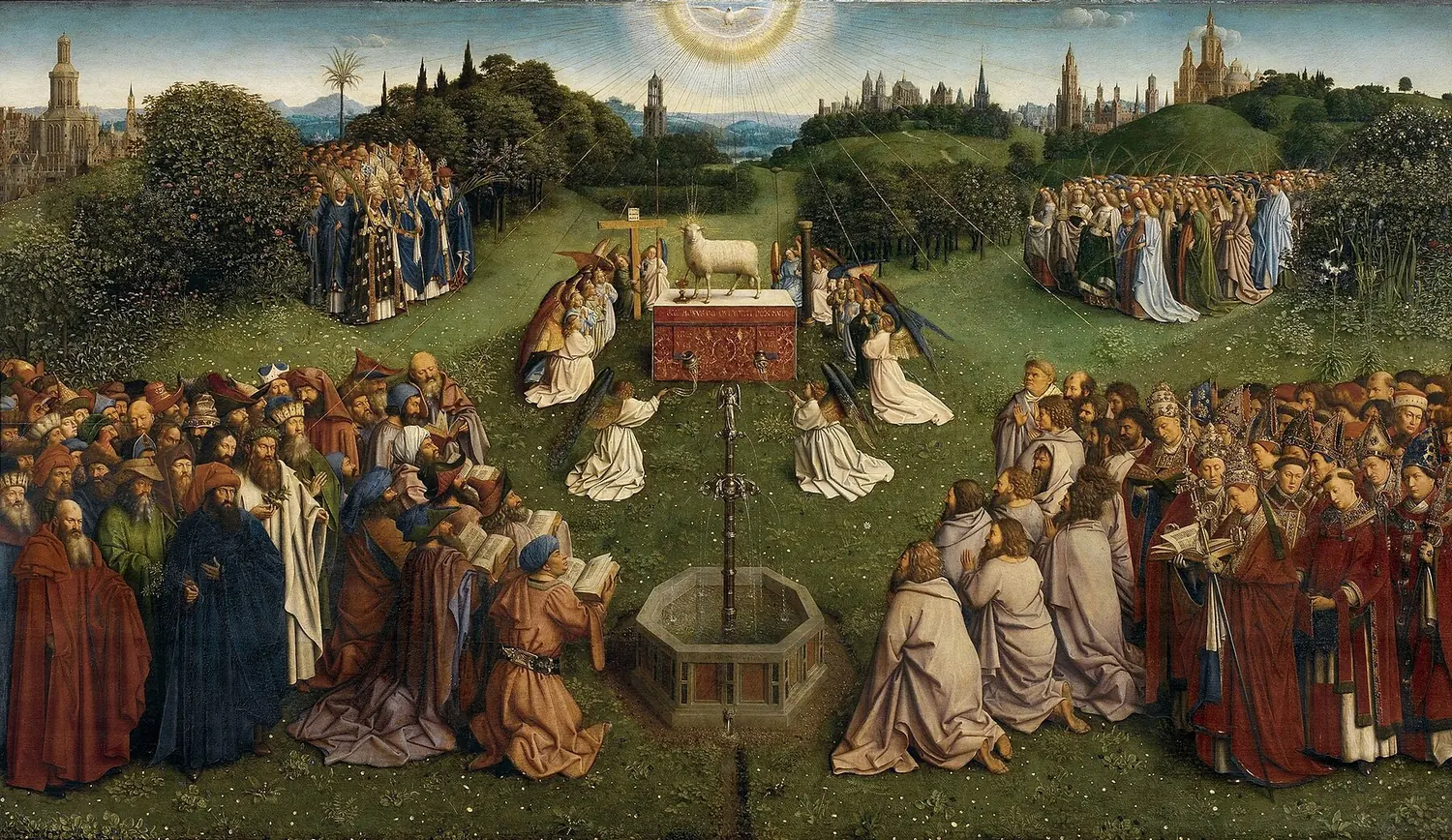
The Adoration of the Mystic Lamb — Jan van Eyck

The Adoration of the Mystic Lamb

1432St Bavo’s Cathedral, Ghent

At the centre of this vast altarpiece, the Lamb of God stands on an altar in a flowering meadow, surrounded by groups of angels, prophets, saints and pilgrims coming from every direction. Botanists recognise dozens of plants in it.

Public domain — Wikimedia Commons

The Madonna of Chancellor Rolin — Jan van Eyck

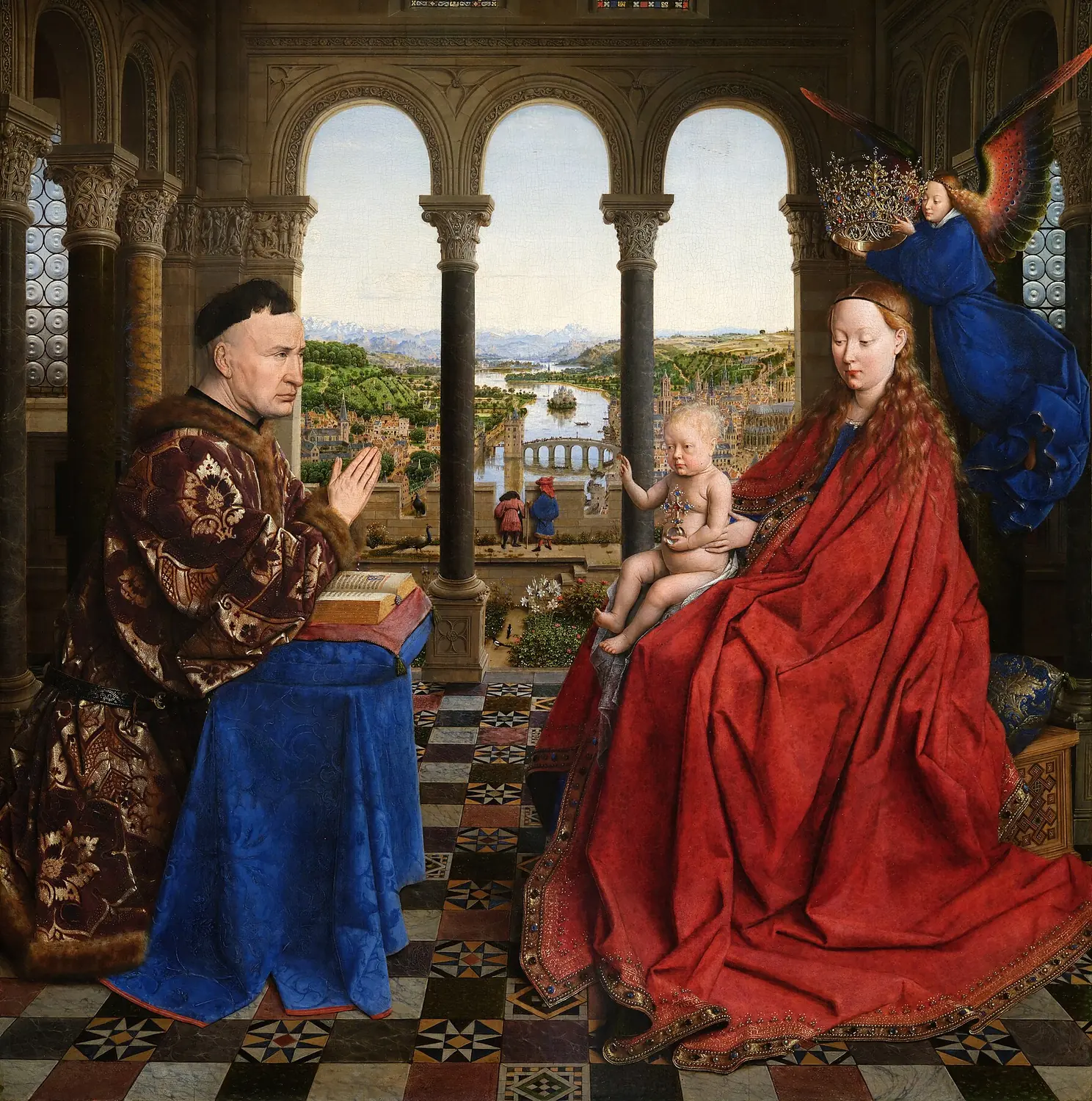
The Madonna of Chancellor Rolin

c. 1435Louvre Museum, Paris

Chancellor Nicolas Rolin kneels before the Virgin and Child in a loggia opening onto a town and a river. The landscape, tiny yet detailed down to the people on the bridge, invites us to come very close.

Public domain — Wikimedia Commons

5Did you know?

The Ghent Altarpiece is one of the most stolen artworks in history: carried off by Napoleon’s troops, cut up, sold, seized by the Nazis… One of its panels, the Just Judges, stolen in 1934, has never been found.

6Further

Contemporaries