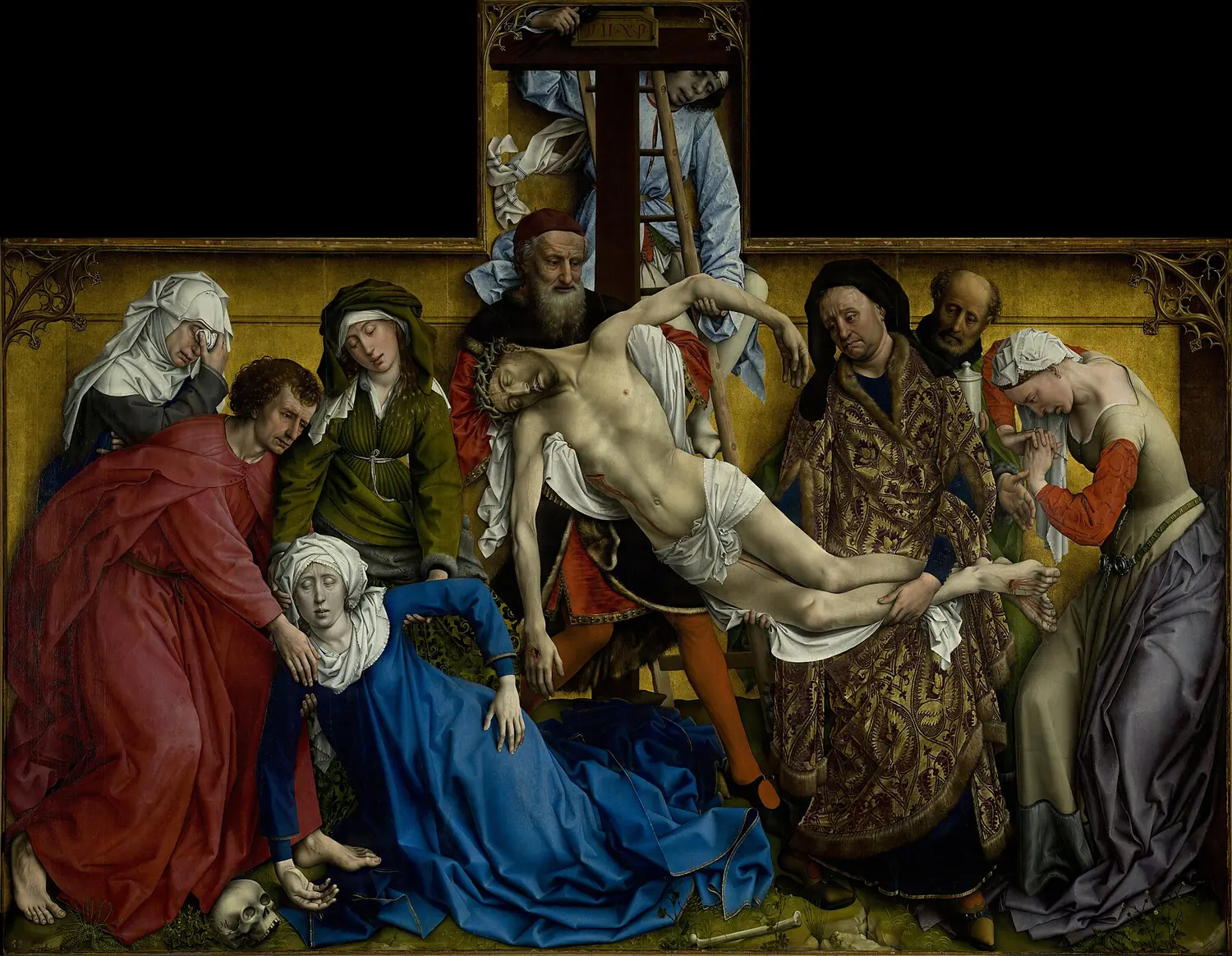
The Descent from the Cross
Almost life-size figures crowd into a kind of gilded box. Christ’s body, taken down from the cross, forms a curve echoed by the fainting Virgin just below. Tears, painted one by one, glisten on the faces.
The sorrow and grace of the Flemish Primitives
Official painter of the city of Brussels, Rogier van der Weyden gave religious scenes unrivalled dramatic force. His compositions were copied all over Europe.
Born around 1399 in Tournai as Rogier de la Pasture, he trained in the workshop of Robert Campin. In 1436 he became official painter of Brussels and translated his name into Flemish. He received commissions from the Burgundian court, the Church, wealthy townspeople and Italian princes.
In 1450 he travelled to Rome for the Jubilee and discovered Italian painting. He ran a busy workshop whose models circulated everywhere. He died in Brussels in 1464.
Rogier painted in oil with van Eyck’s precision but put emotion first. His figures are slender, his lines sharp, his colours bold. He often packed his figures into a shallow space, like sculptures in a niche, to focus attention on gestures and tears.
Almost life-size figures crowd into a kind of gilded box. Christ’s body, taken down from the cross, forms a curve echoed by the fainting Virgin just below. Tears, painted one by one, glisten on the faces.
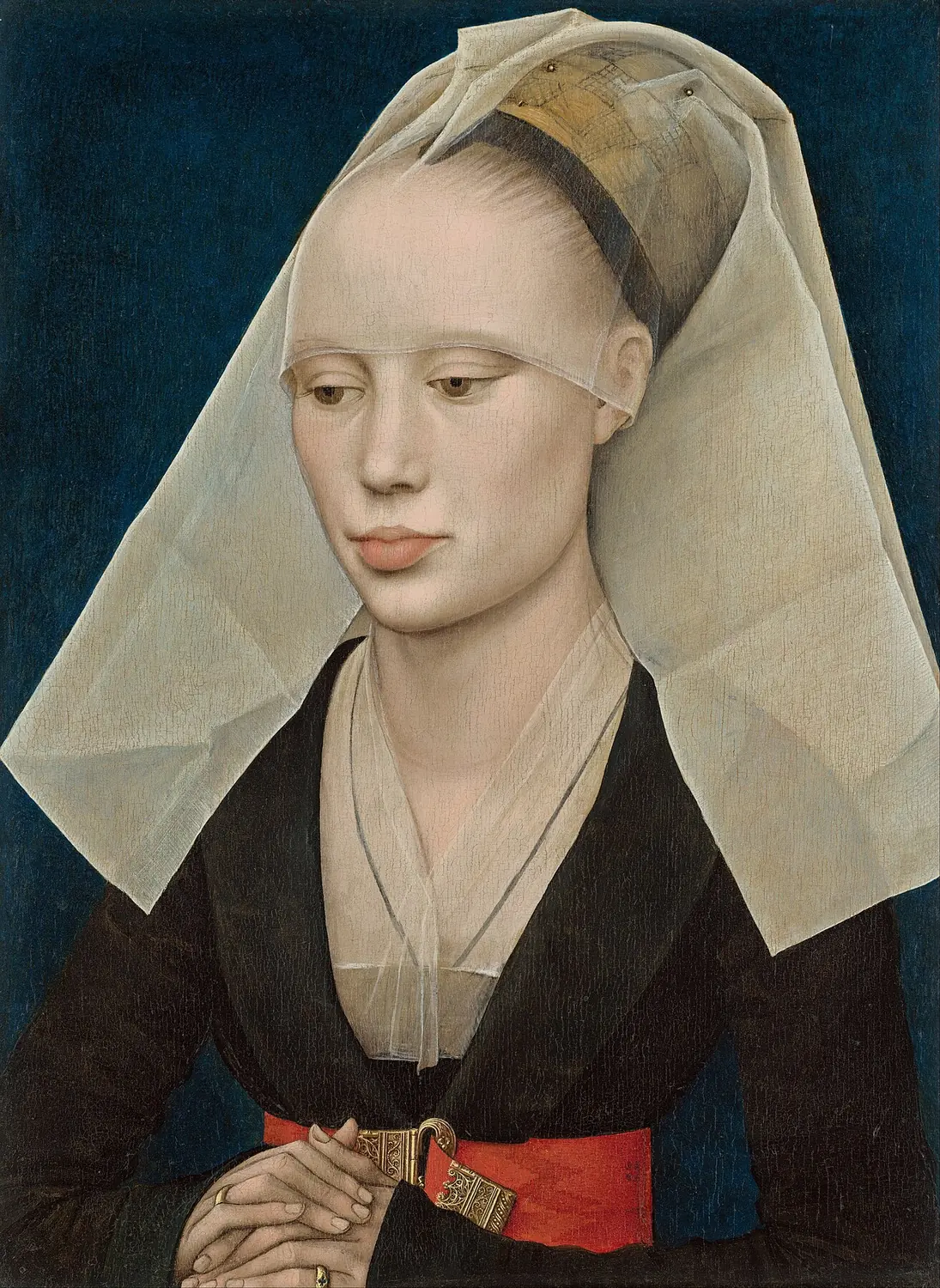
A young woman lowers her eyes, hands clasped. Her transparent pinned veil reveals her forehead and neck. The dark background brings out the paleness of her face and the delicacy of her fingers.
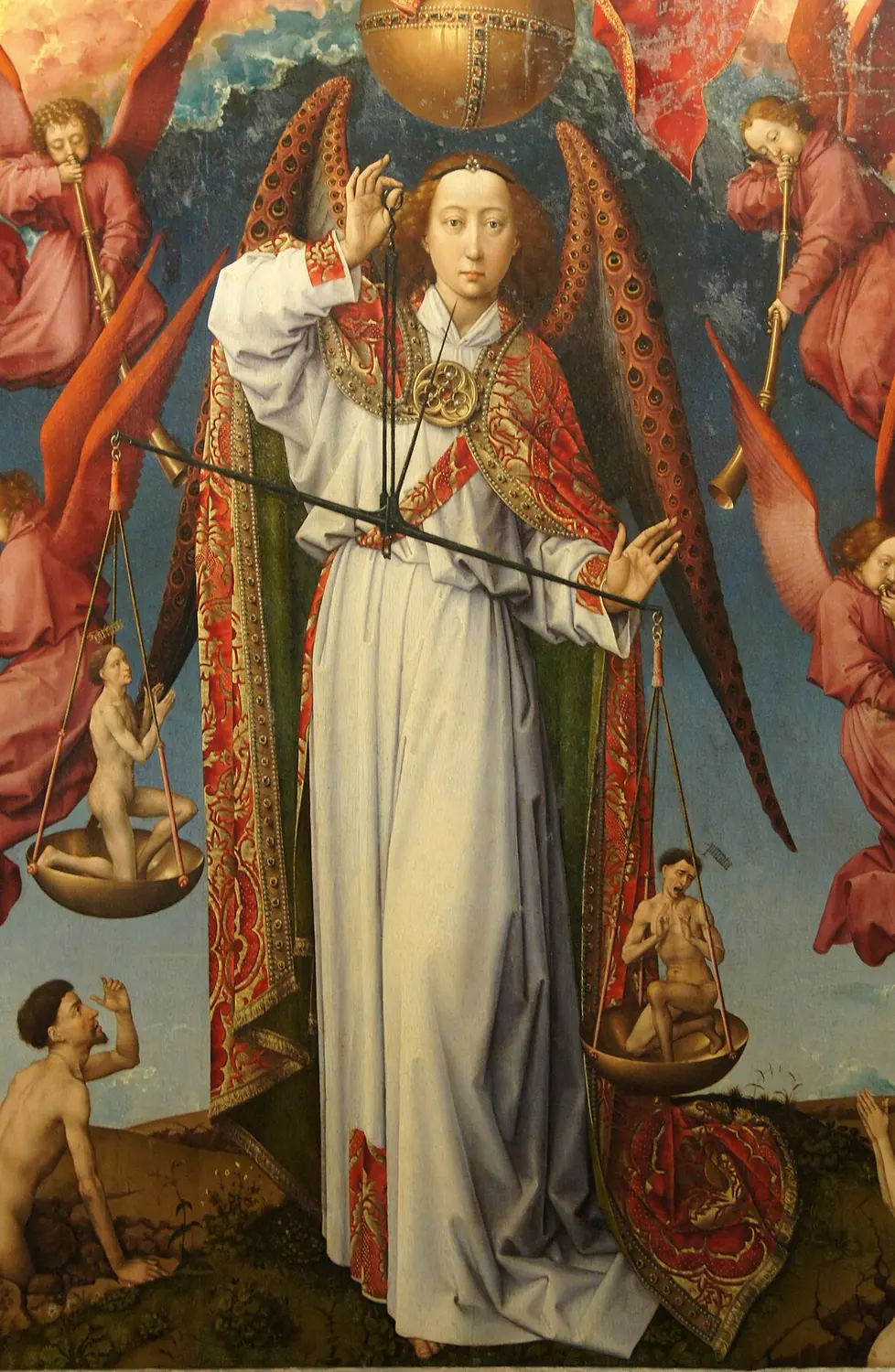
Painted for the Hôtel-Dieu hospital in Beaune, this altarpiece more than five metres wide watched over the patients’ beds. In the centre, Saint Michael weighs souls; on the left the blessed enter paradise, on the right the damned fall into hell.
The Descent from the Cross was commissioned by the crossbowmen’s guild of Leuven: the painter slipped small crossbows into the gilded tracery in the upper corners of the picture.
 Paolo Uccello
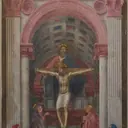 Masaccio
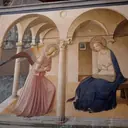 Fra Angelico
 Jan van Eyck
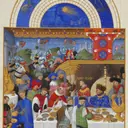 The Limbourg brothers
 Piero della Francesca
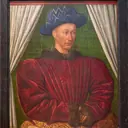 Jean Fouquet
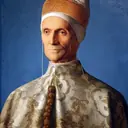 Giovanni Bellini