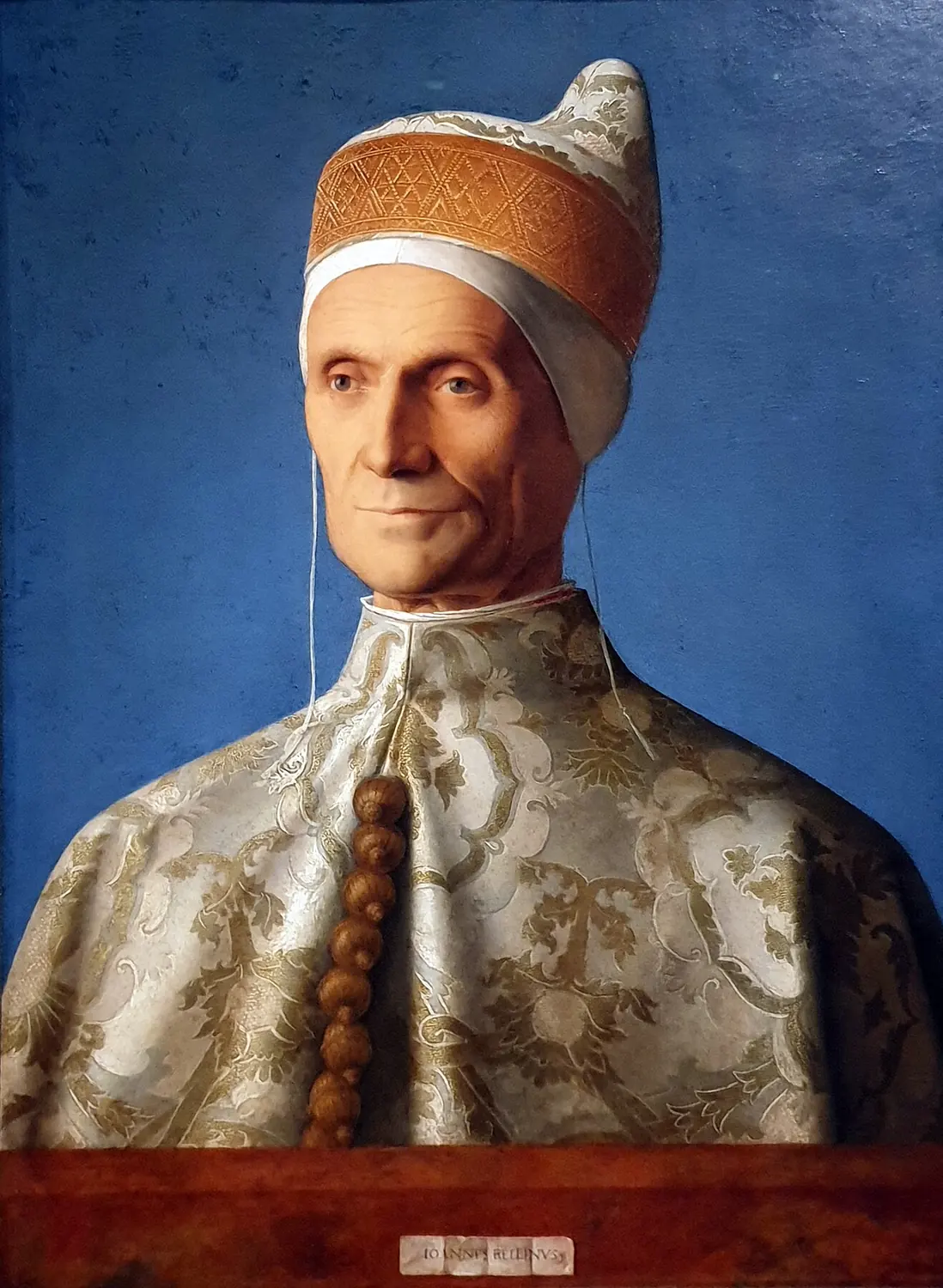
Doge Leonardo Loredan
The doge of Venice poses behind a marble parapet in his official robe of embroidered silk. The plain blue background makes the face stand out, both stern and serene. Bellini signed on a small paper painted on the parapet.
The father of Venetian painting
Giovanni Bellini made Venice a capital of painting. He adopted oil paint, invented golden light and vibrant landscapes, and trained Giorgione and Titian.
Born around 1430 in Venice, Giovanni was the son of the painter Jacopo Bellini and the brother of Gentile, also a painter. His sister married Mantegna, whose influence marks his early work. Around 1475 he discovered oil painting, probably thanks to the Sicilian Antonello da Messina, who came to Venice.
Official painter of the Republic, he ran the largest workshop in the city. In 1506 the young Dürer, passing through, wrote that he was very old but still the best painter. He worked until his death in 1516.
Bellini softened outlines and let light unify his pictures: a warm, golden late-afternoon light that caresses faces and landscapes. He set his Madonnas and saints in nature, among finely observed hills, castles and clouds.
The doge of Venice poses behind a marble parapet in his official robe of embroidered silk. The plain blue background makes the face stand out, both stern and serene. Bellini signed on a small paper painted on the parapet.
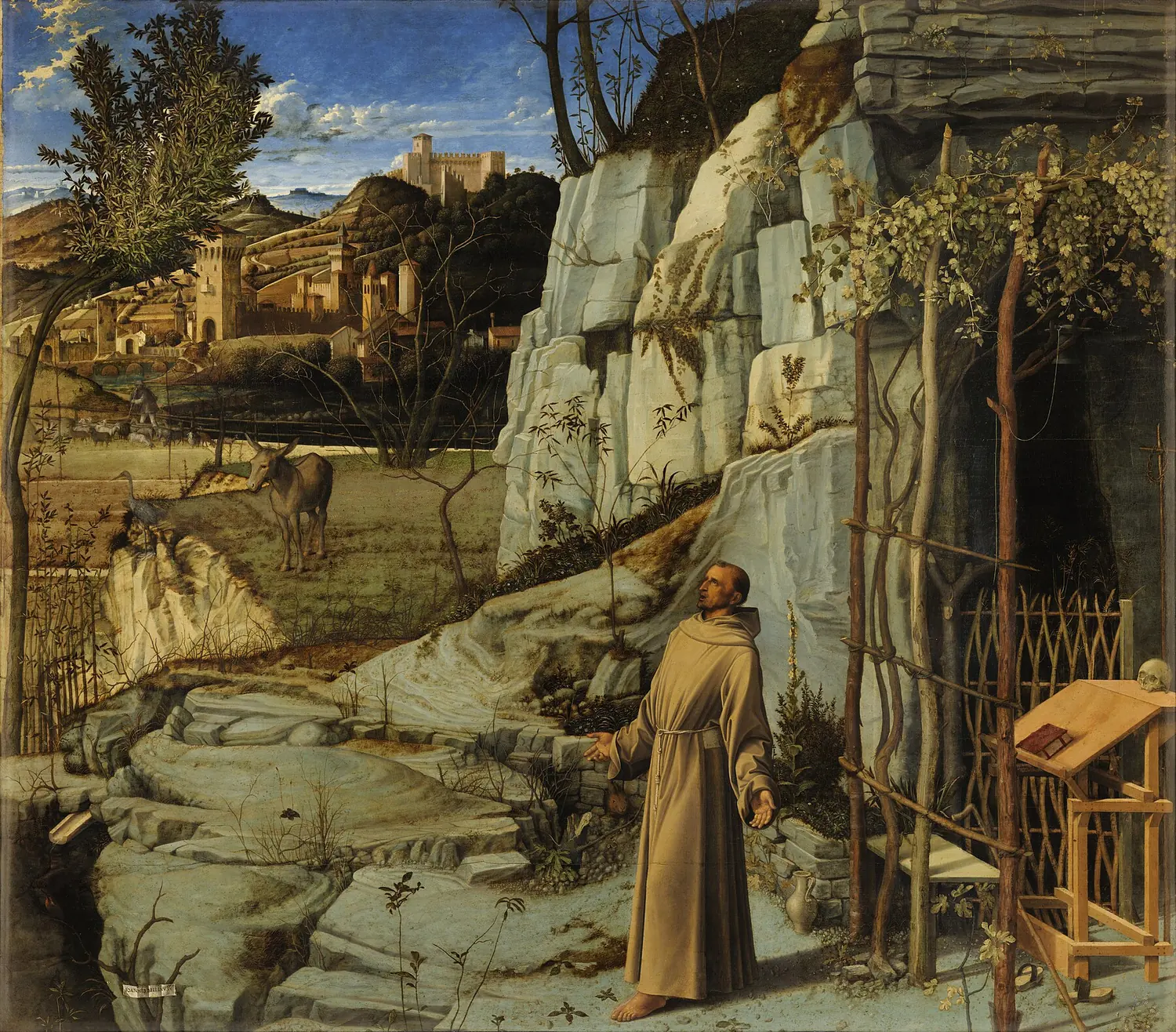
Saint Francis steps out of his cave, arms open, bathed in dazzling light. Around him, a donkey, a heron, rocks and a distant town: all creation seems to share the moment.
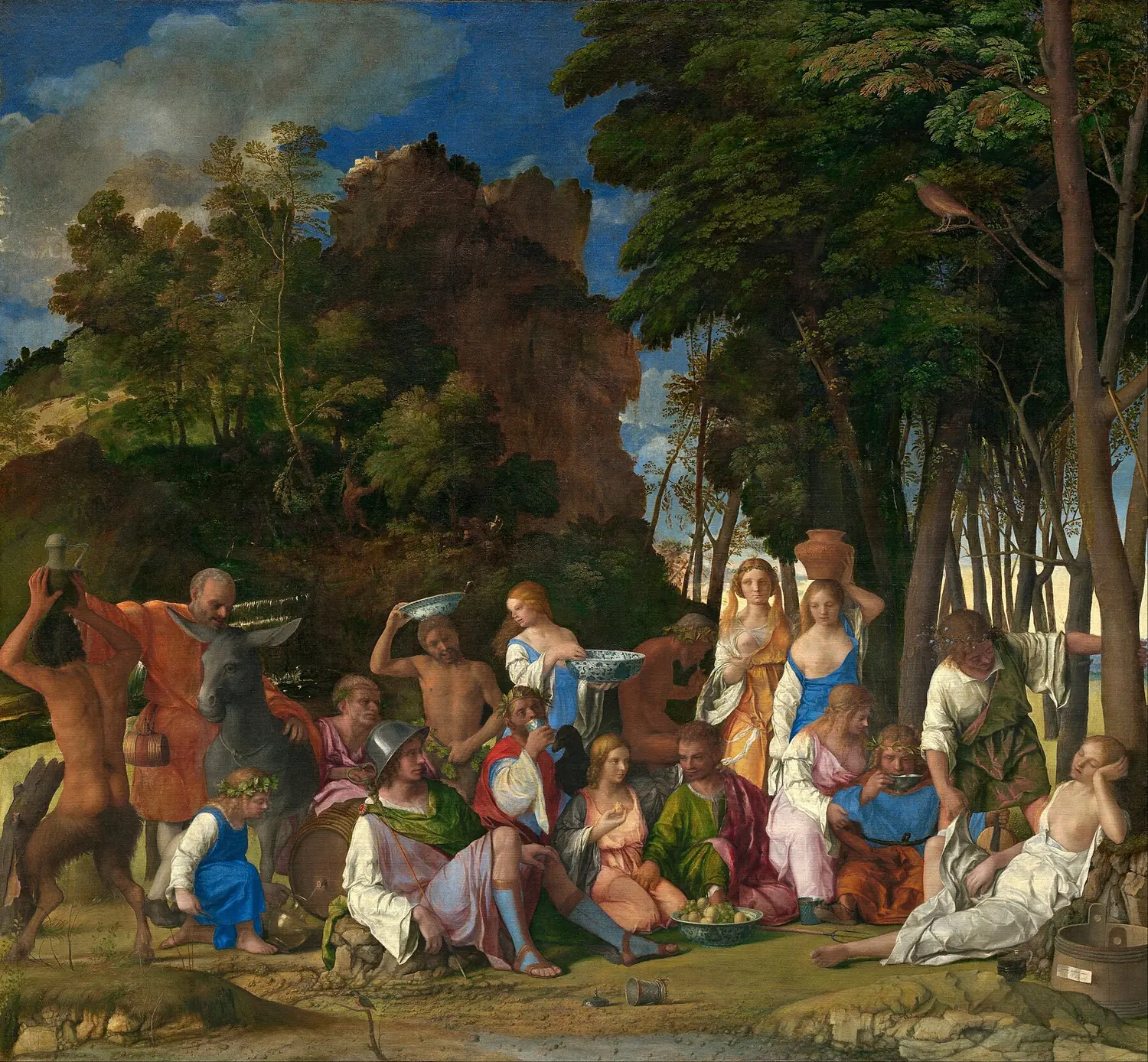
The gods of Olympus picnic in a clearing. Painted for the Duke of Ferrara, this joyful picture is one of the old master’s last works.
The Feast of the Gods was reworked by his pupil Titian, who repainted part of the landscape after Bellini’s death to match his own pictures.
 Andrea Mantegna
 Jean Fouquet
 Piero della Francesca
 Sandro Botticelli
 Kamāl ud-Dīn Behzād
 Hieronymus Bosch
 Leonardo da Vinci
 Rogier van der Weyden