lesPeintres.eu

Jean Fouquet

Born: Tours, c. 1420Died: Tours, c. 1480

The great French painter of the 15th century

Northern RenaissanceFrance
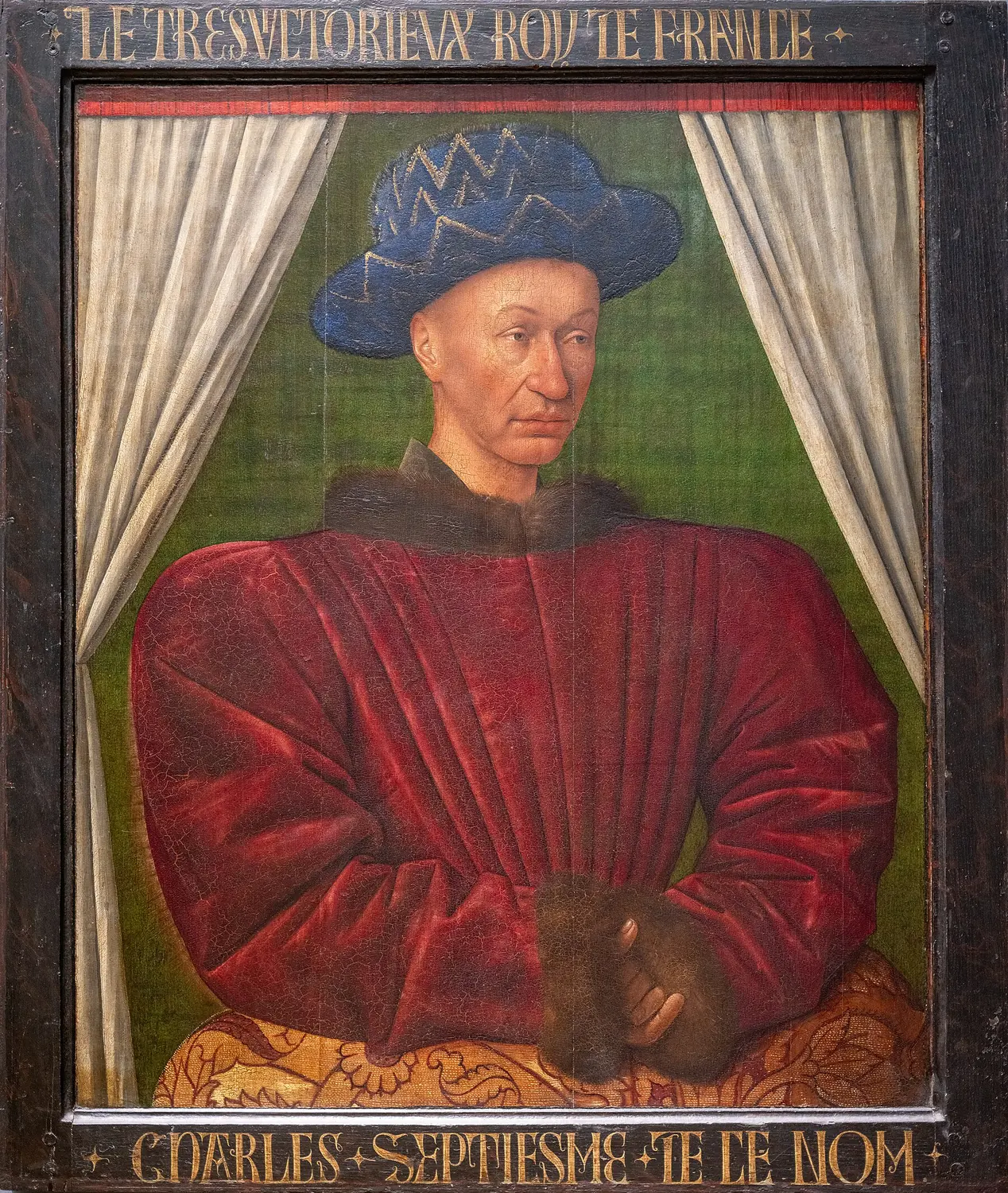
Portrait of Charles VII — Jean Fouquet
Portrait of Charles VII, c. 1450 · Louvre Museum, Paris
Photo: Matthieu.lett.ube — CC BY 4.0 — Wikimedia Commons

1In brief

Painter to Kings Charles VII and Louis XI, Jean Fouquet is the first great master of French painting. He combined Flemish precision and Italian clarity in his portraits, panels and illuminations.

2Life

Born around 1420 in Tours, Jean Fouquet travelled to Rome around 1445, where he painted Pope Eugene IV, a portrait now lost. He discovered the Italian Renaissance, perspective and classical architecture, then returned to settle in Tours.

He worked for the court and for great figures such as Étienne Chevalier, the king’s treasurer, for whom he painted a book of hours and a diptych. In 1475 Louis XI gave him the title of ’painter to the king’. He died in Tours around 1480.

3Style and technique

Fouquet painted in oil on wood and in gouache on parchment. His forms are simple and monumental, almost geometric, his colours bold. In his miniatures he set biblical or historical scenes in the landscapes of the Loire and the monuments of his time.

4Works

Portrait of Charles VII — Jean Fouquet

Portrait of Charles VII

c. 1450Louvre Museum, Paris

Charles VII appears half-length between two white curtains, as if at a window. The frame bears the inscription ’The most victorious king of France’. The king’s weary face contrasts with the glorious title.

Photo: Matthieu.lett.ube — CC BY 4.0 — Wikimedia Commons
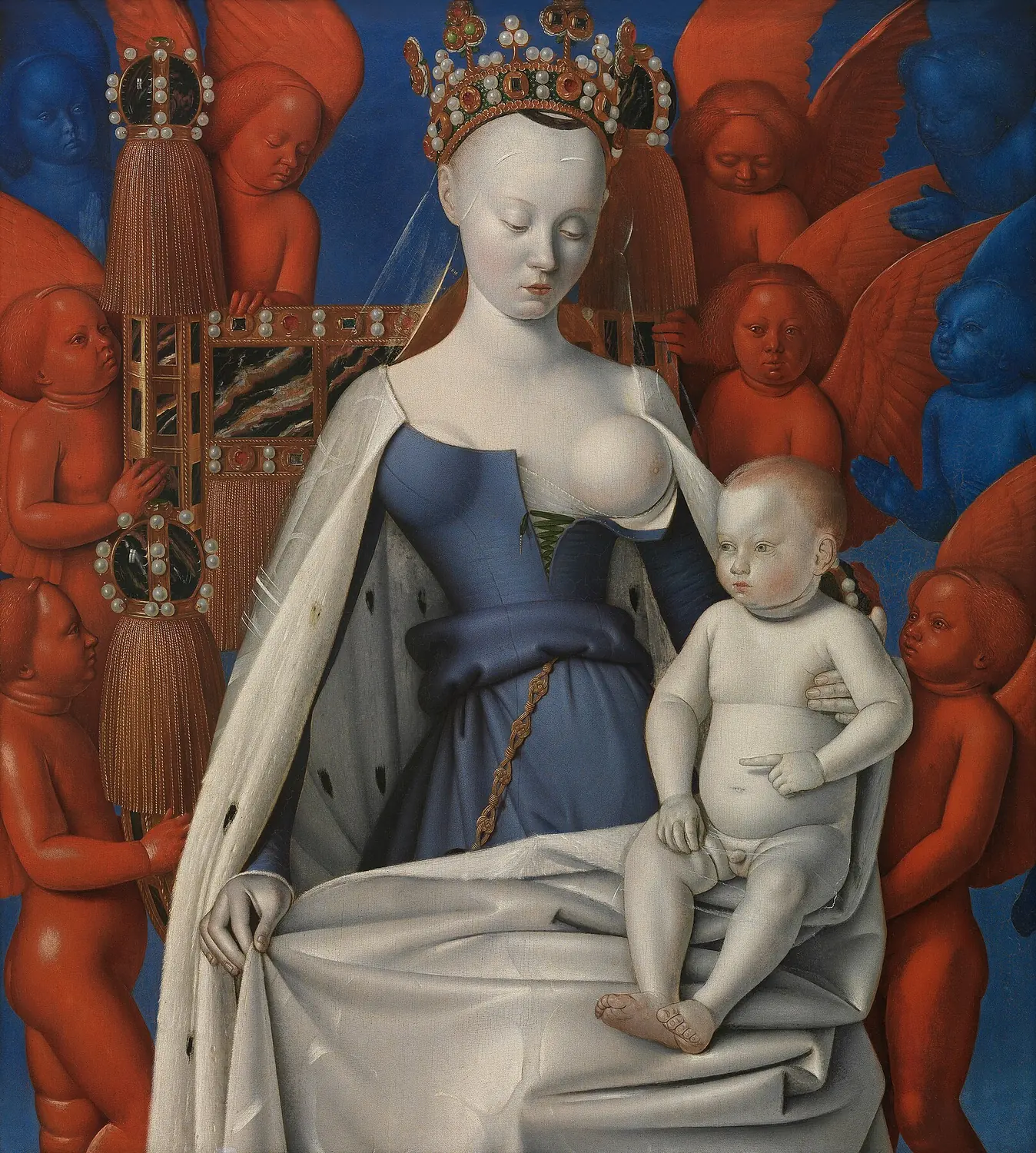
Virgin and Child Surrounded by Angels — Jean Fouquet

Virgin and Child Surrounded by Angels

c. 1452Royal Museum of Fine Arts, Antwerp

The porcelain-skinned Virgin is surrounded by red and blue angels with almost abstract shapes. According to tradition, she has the features of Agnès Sorel, mistress of King Charles VII.

Public domain — Wikimedia Commons

Self-Portrait (enamel) — Jean Fouquet

Self-Portrait (enamel)

c. 1450Louvre Museum, Paris

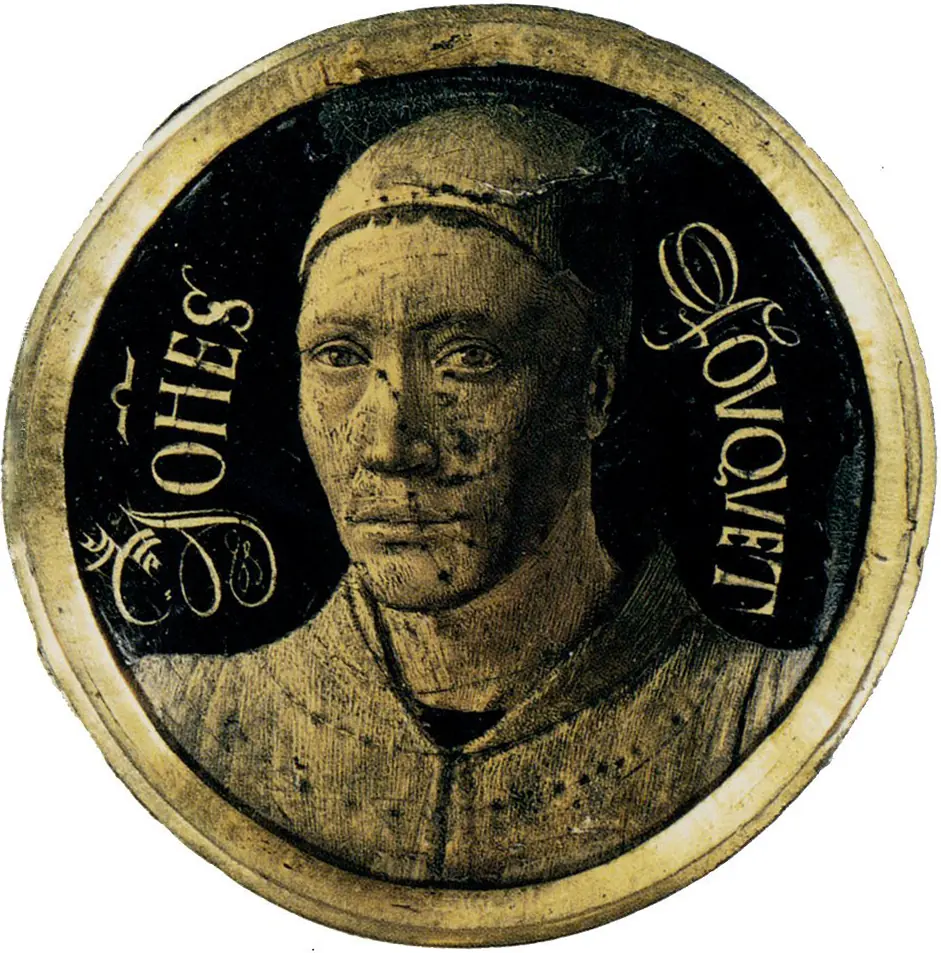
On this small black-and-gold enamel medallion, the painter portrayed himself face on, with a frank gaze. The portrait was part of the frame of the Melun Diptych.

Public domain — Wikimedia Commons

5Did you know?

The enamelled copper medallion in the Louvre is considered the oldest self-portrait in French art.

6Further

Contemporaries