lesPeintres.eu

Georges Seurat

Born: Paris, 1859Died: Paris, 1891

The painter of little dots

Post-ImpressionismFrance
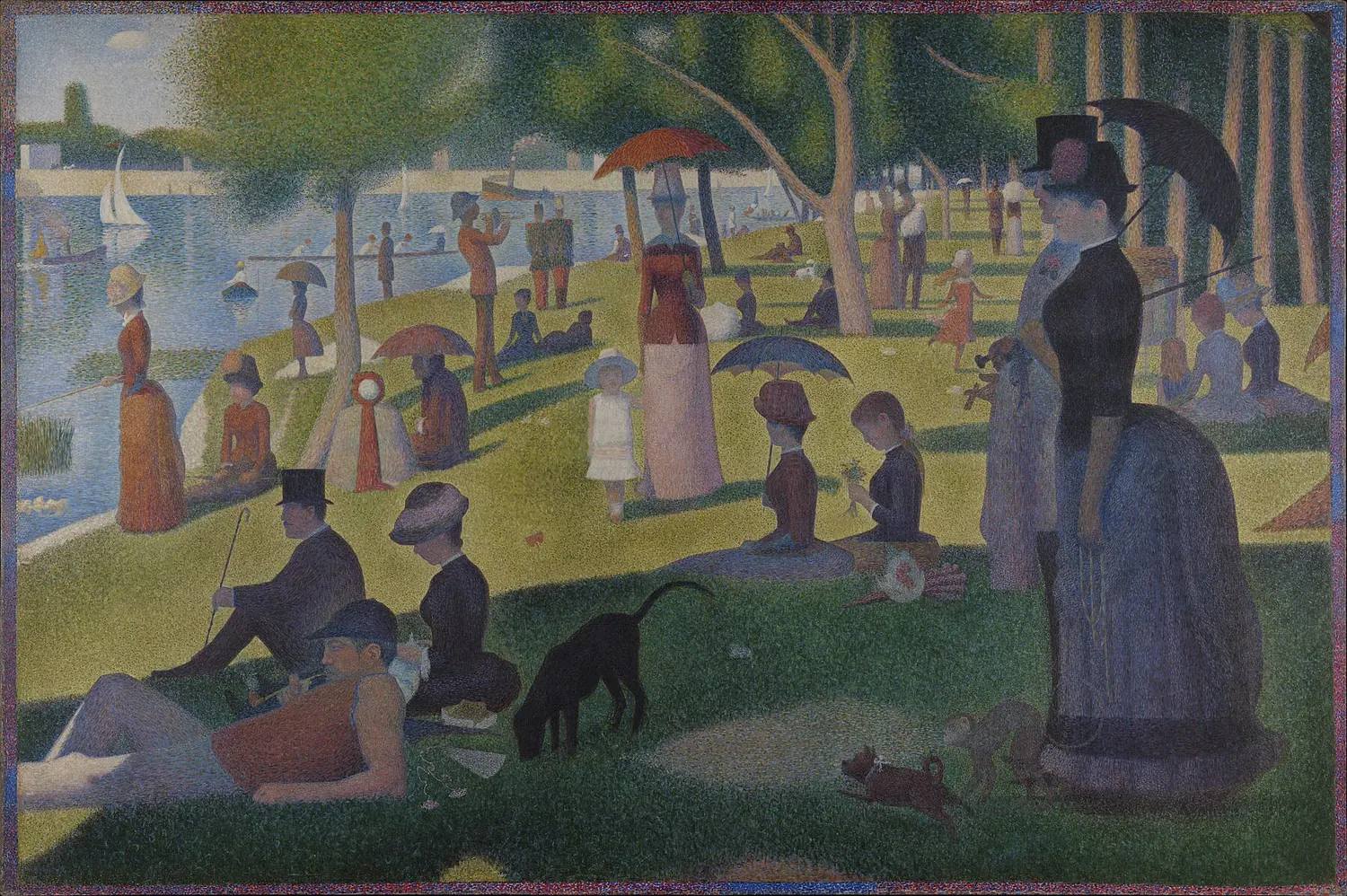
A Sunday Afternoon on the Island of La Grande Jatte — Georges Seurat
A Sunday Afternoon on the Island of La Grande Jatte, 1886 · Art Institute of Chicago
Public domain — Wikimedia Commons

1In brief

Georges Seurat invented a scientific kind of painting: small touches of pure colour set side by side, which the eye mixes from a distance. Dead at thirty-one, he opened the way to Neo-Impressionism and to many modern experiments.

2Life

Born in Paris in 1859, Georges Seurat entered the École des Beaux-Arts, in the studio of a pupil of Ingres. Passionate about theory, he read scientists’ works on colour and vision, such as those of the chemist Eugène Chevreul. He drew a great deal in conté crayon, velvety figures made of shadow and light.

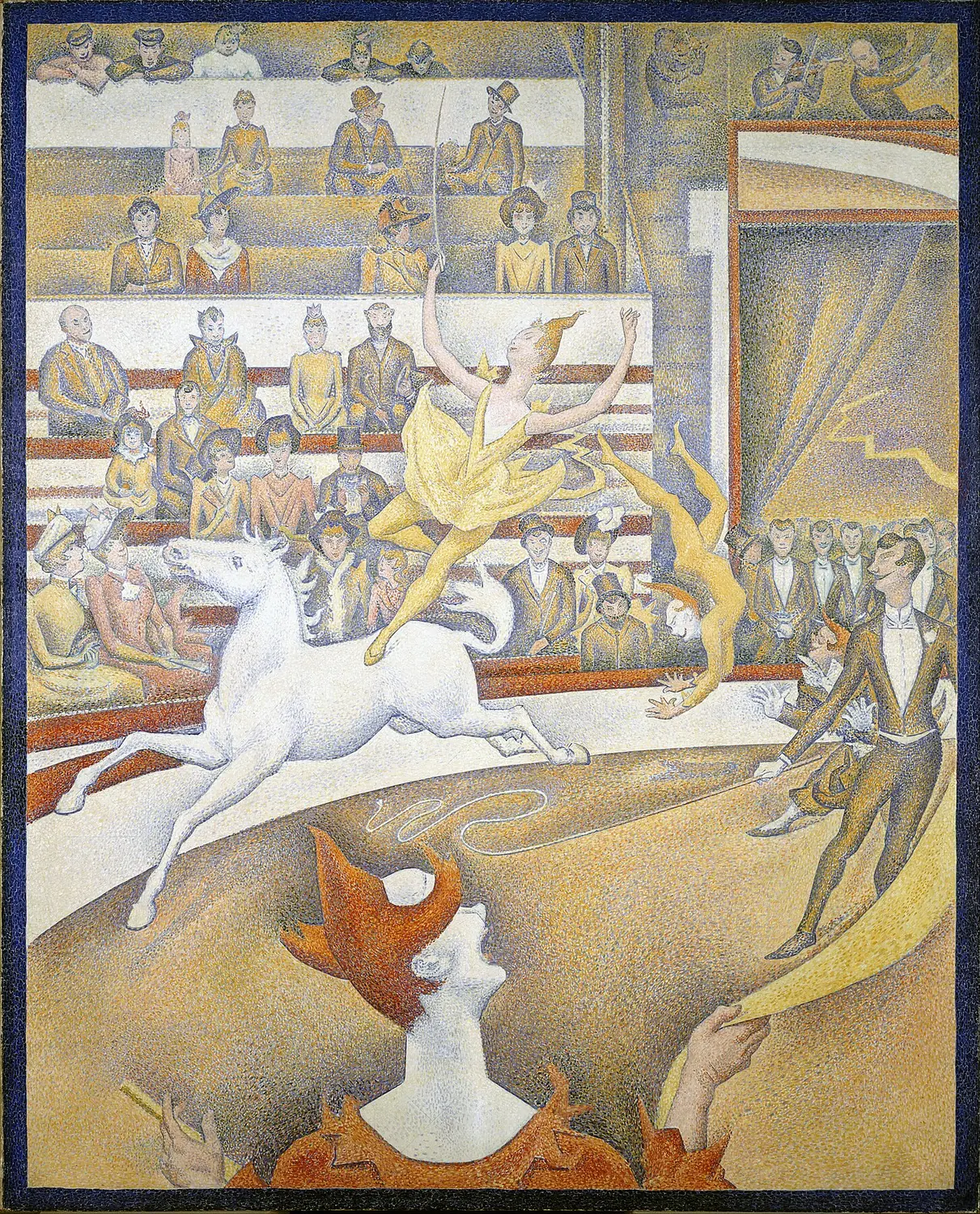
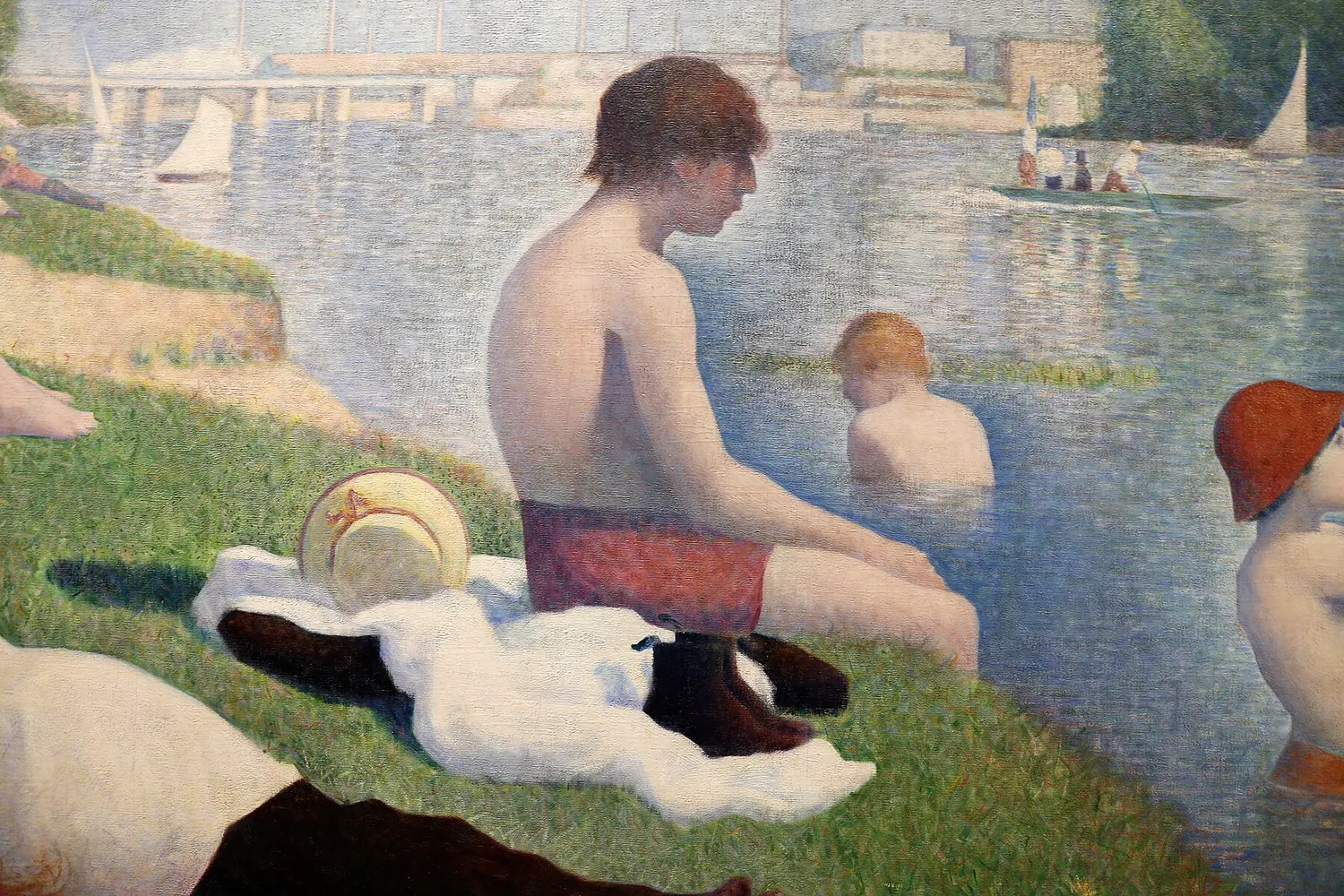
Rejected by the Salon in 1884, his Bathers was shown by the group of Independents, which he helped to found. He then spent two years on La Grande Jatte, shown in 1886 at the last Impressionist exhibition, where it caused a sensation. He died suddenly in Paris in 1891, aged thirty-one, leaving The Circus unfinished.
3Style and technique

Seurat applied the theory of colour contrast: instead of mixing pigments on the palette, he set small dots of pure, complementary colours side by side, which the viewer’s eye recombines at a distance. His carefully calculated compositions freeze figures into still, geometric silhouettes.

4Works

A Sunday Afternoon on the Island of La Grande Jatte — Georges Seurat

A Sunday Afternoon on the Island of La Grande Jatte

1886Art Institute of Chicago

A summer Sunday on the island of La Grande Jatte, beside the Seine: some fifty strollers, a lady with a monkey on a lead, another fishing, dogs, sailing boats. Everything is built of thousands of tiny dots of colour.

Public domain — Wikimedia Commons

Bathers at Asnières — Georges Seurat

Bathers at Asnières

1884National Gallery, London

Workers rest and bathe in the Seine at Asnières, opposite the factories of Clichy. As large as a history painting, this picture shows ordinary people on a day off.

Photo: Sailko — CC BY 3.0 — Wikimedia Commons

The Circus — Georges Seurat

The Circus

1891Musée d’Orsay, Paris

A rider standing on a white horse gallops round a circus ring, watched by a clown in the foreground and a tiered audience. Rising lines express gaiety and energy.

Public domain — Wikimedia Commons

5Did you know?

Seurat sometimes painted a border of dots around his pictures, and even on their frames, so that the colours would not be ’deadened’ by a gilt frame.

6Further

Contemporaries