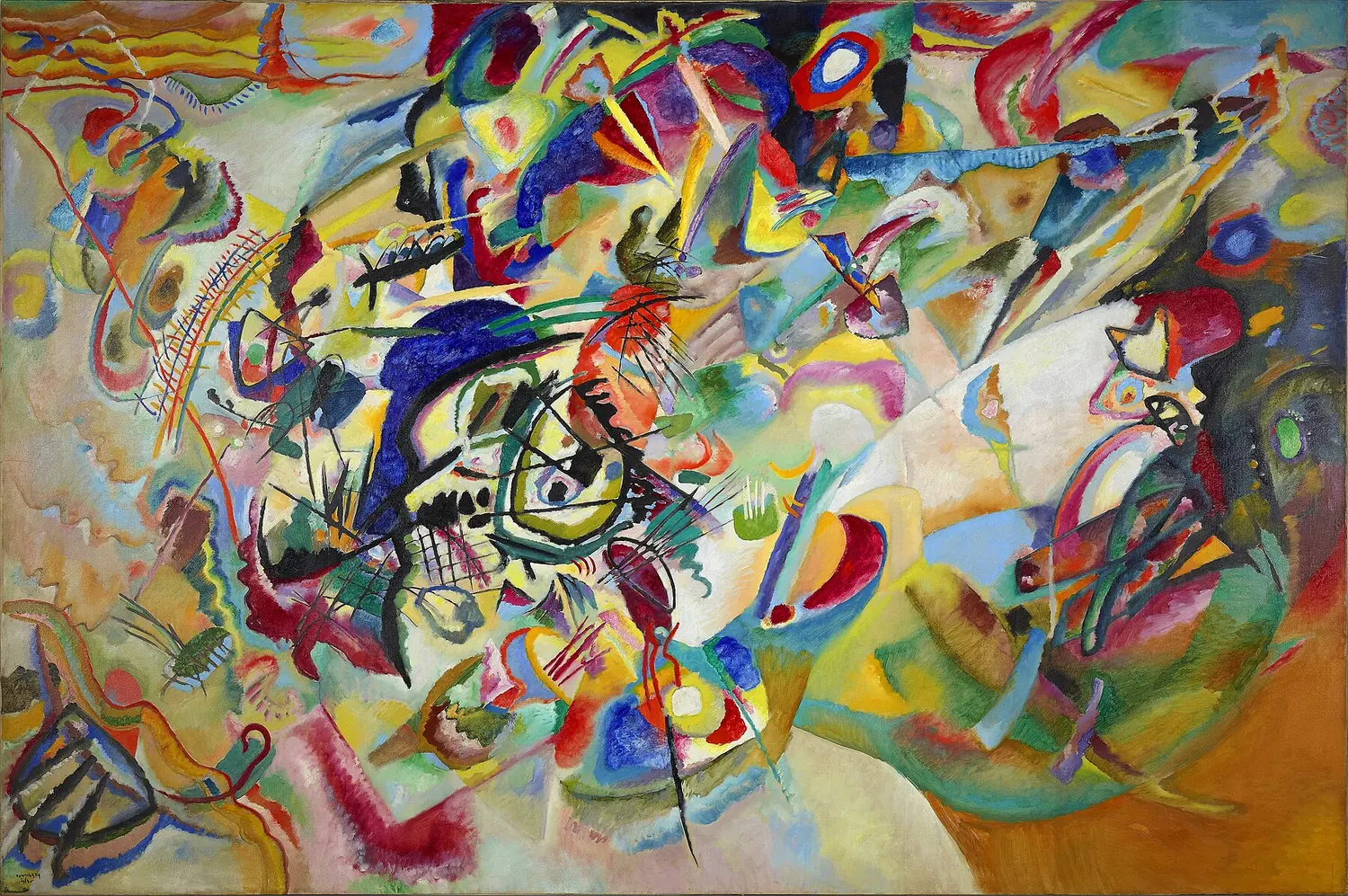
Composition VII
A huge storm of colours, lines and patches with no recognisable subject. Kandinsky prepared this canvas, two metres by three, with some thirty sketches, then painted it in four days.
The pioneer of abstraction
A lawyer turned painter, Wassily Kandinsky was one of the first to paint pictures with no recognisable subject, composed of colours, lines and shapes like music. His book Concerning the Spiritual in Art influenced all modern art.
Born in Moscow in 1866, Wassily Kandinsky studied law and economics and became a university teacher. An exhibition where he saw one of Monet’s Haystacks and a performance of Wagner’s Lohengrin overwhelmed him. At thirty he gave up his career and went to study painting in Munich.
In 1911 he founded the Blaue Reiter (Blue Rider) group with Franz Marc and published Concerning the Spiritual in Art. Back in Russia during the war and revolution, he returned to Germany in 1921 and taught at the Bauhaus until the Nazis closed it in 1933. He then settled in Neuilly-sur-Seine, where he died in 1944.
Kandinsky compared painting to music: for him each colour had a ’sound’ and an effect on the soul; yellow is bright like a trumpet, blue deep like a cello. His first abstractions are teeming and lyrical; at the Bauhaus he built more geometric compositions of circles, triangles and lines.
A huge storm of colours, lines and patches with no recognisable subject. Kandinsky prepared this canvas, two metres by three, with some thirty sketches, then painted it in four days.
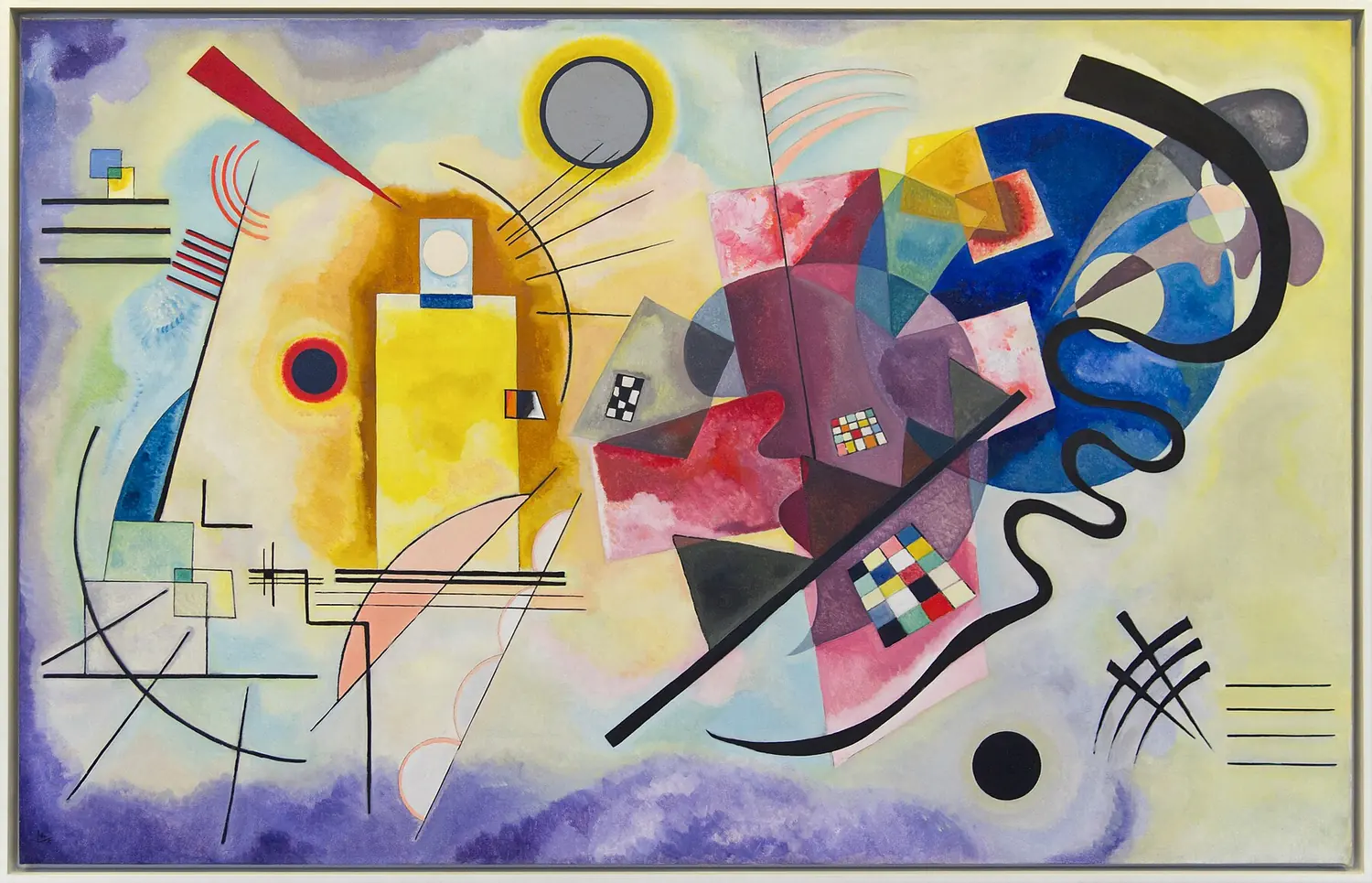
In this long picture two worlds answer each other: on the left, angular yellow forms; on the right, a large blue circle and supple lines. Red, between the two, links them.
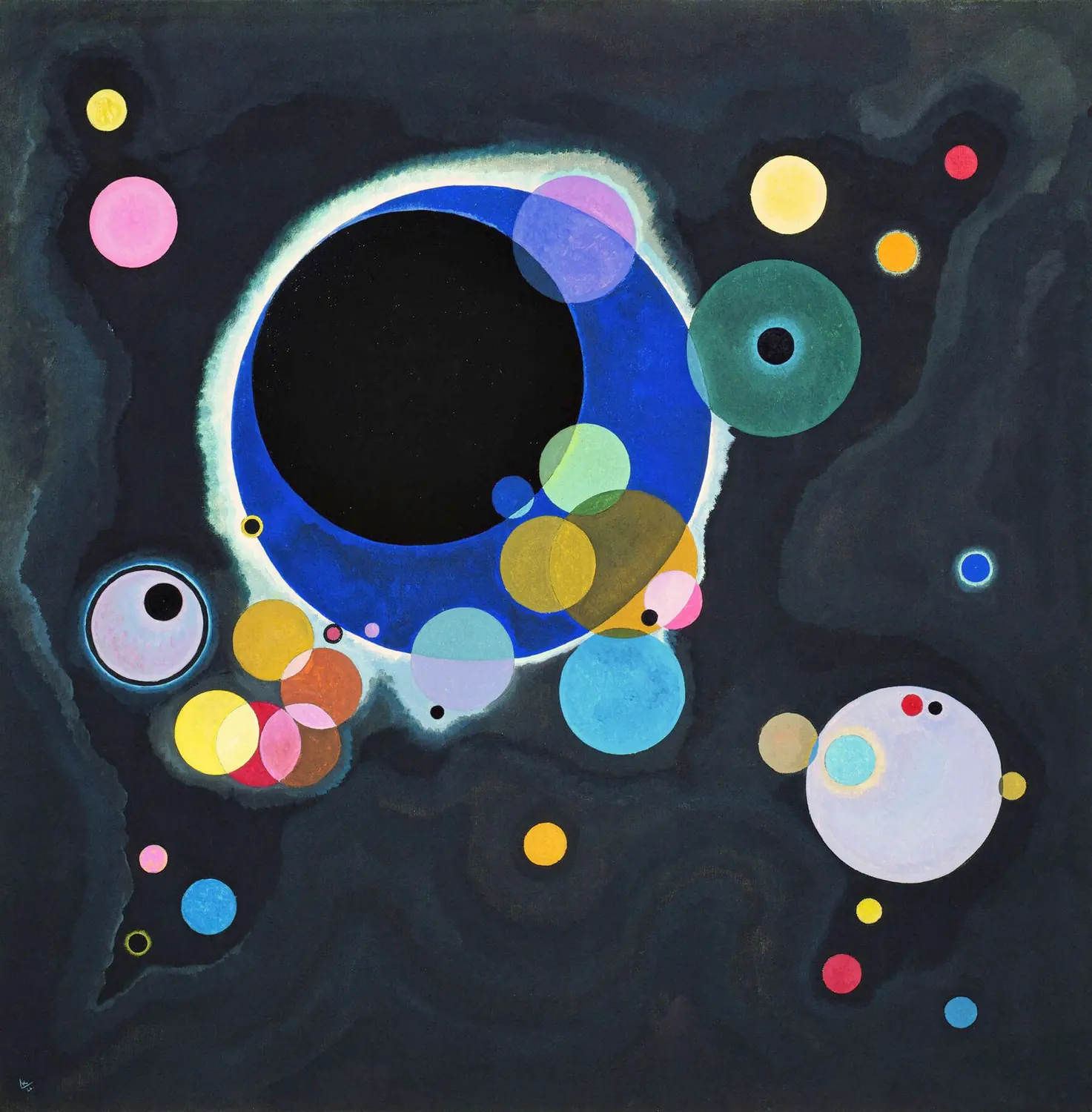
Coloured circles of every size float on a dark background like planets in space. They overlap, and their colours mix where they cross.
Kandinsky tells how one evening, coming home, he discovered a painting of ’indescribable beauty’… It was one of his own canvases, lying on its side. He then understood that represented objects were not necessary to painting.
 Suzanne Valadon
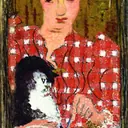 Pierre Bonnard
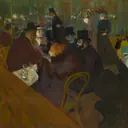 Henri de Toulouse-Lautrec
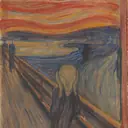 Edvard Munch
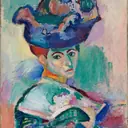 Henri Matisse
 Hilma af Klint
 Gustav Klimt
 Piet Mondrian