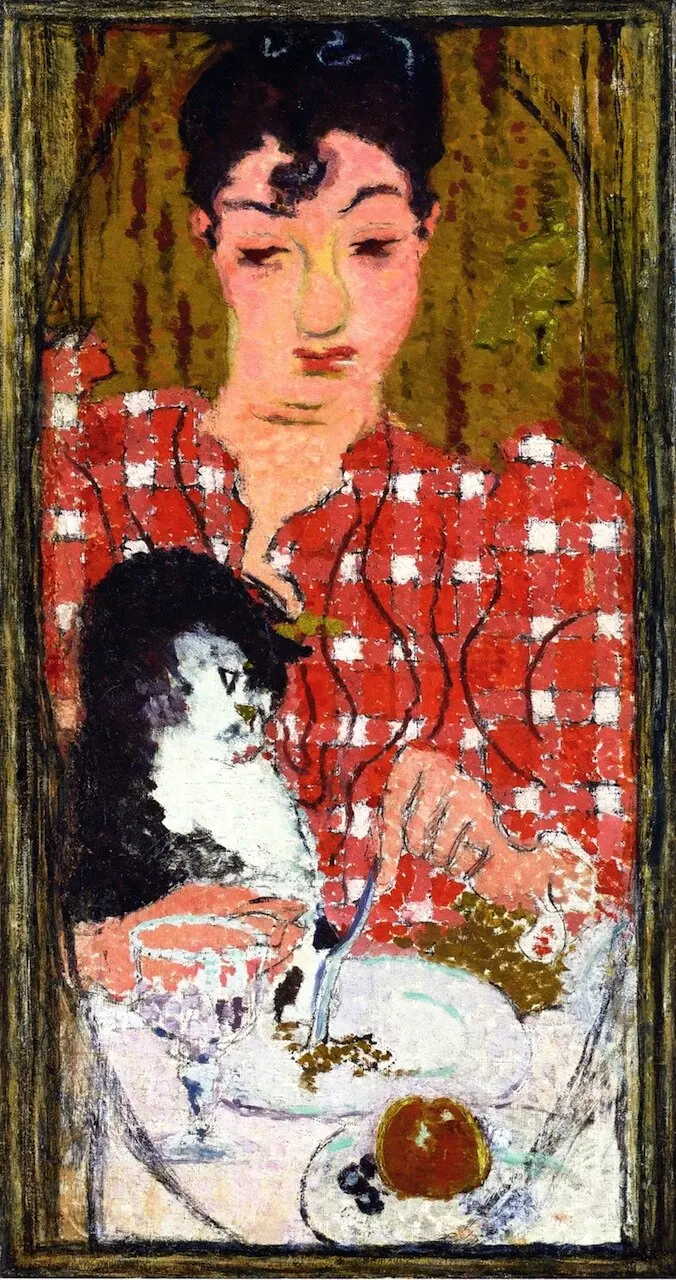
The Checkered Blouse
The painter’s sister Andrée, wife of the composer Claude Terrasse, poses in a red-and-white checked blouse. The flat pattern of the fabric, the narrow format and the simplified figure recall Japanese prints.
The painter of intimate light
A member of the Nabis group and later a solitary painter of colour, Pierre Bonnard painted daily life, gardens, dining rooms and the light of the South of France with a dazzling palette and great tenderness.
Born in 1867 in Fontenay-aux-Roses, Pierre Bonnard studied law to reassure his father, while attending the Académie Julian. There he met Vuillard, Sérusier and Maurice Denis, with whom he formed the Nabis group, Hebrew for ’prophets’. Passionate about Japanese prints, he was nicknamed the ’very Japanese Nabi’. His poster France-Champagne, in 1891, launched his career.
He shared his life with Marthe, whom he painted hundreds of times, notably in the bath. He lived between Paris, Normandy, where he had a house at Vernonnet near Giverny, and the South. In 1926 he bought a villa at Le Cannet above Cannes, where he painted his large luminous canvases and died in 1947.
At first inspired by Japanese prints (flat areas, patterns, narrow formats), Bonnard moved towards ever more intense, vibrant colour. He painted from memory in the studio, from small sketches, and worked on each canvas for a long time, often pinned to the wall without a stretcher.
The painter’s sister Andrée, wife of the composer Claude Terrasse, poses in a red-and-white checked blouse. The flat pattern of the fabric, the narrow format and the simplified figure recall Japanese prints.
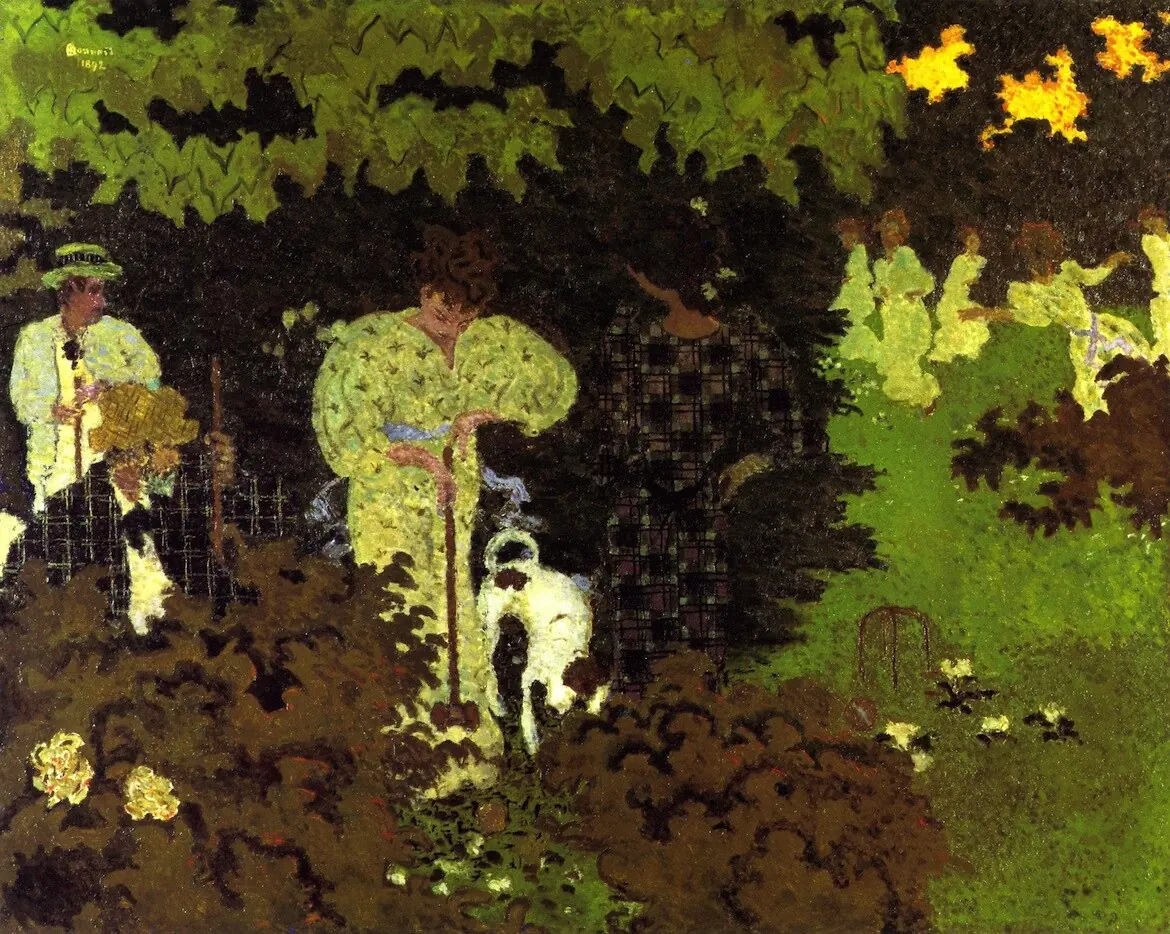
At dusk in the family garden in the Dauphiné, figures in patterned clothes play croquet, while in the background girls dance in a ring in the golden light. The picture mixes a family scene with decorative reverie.
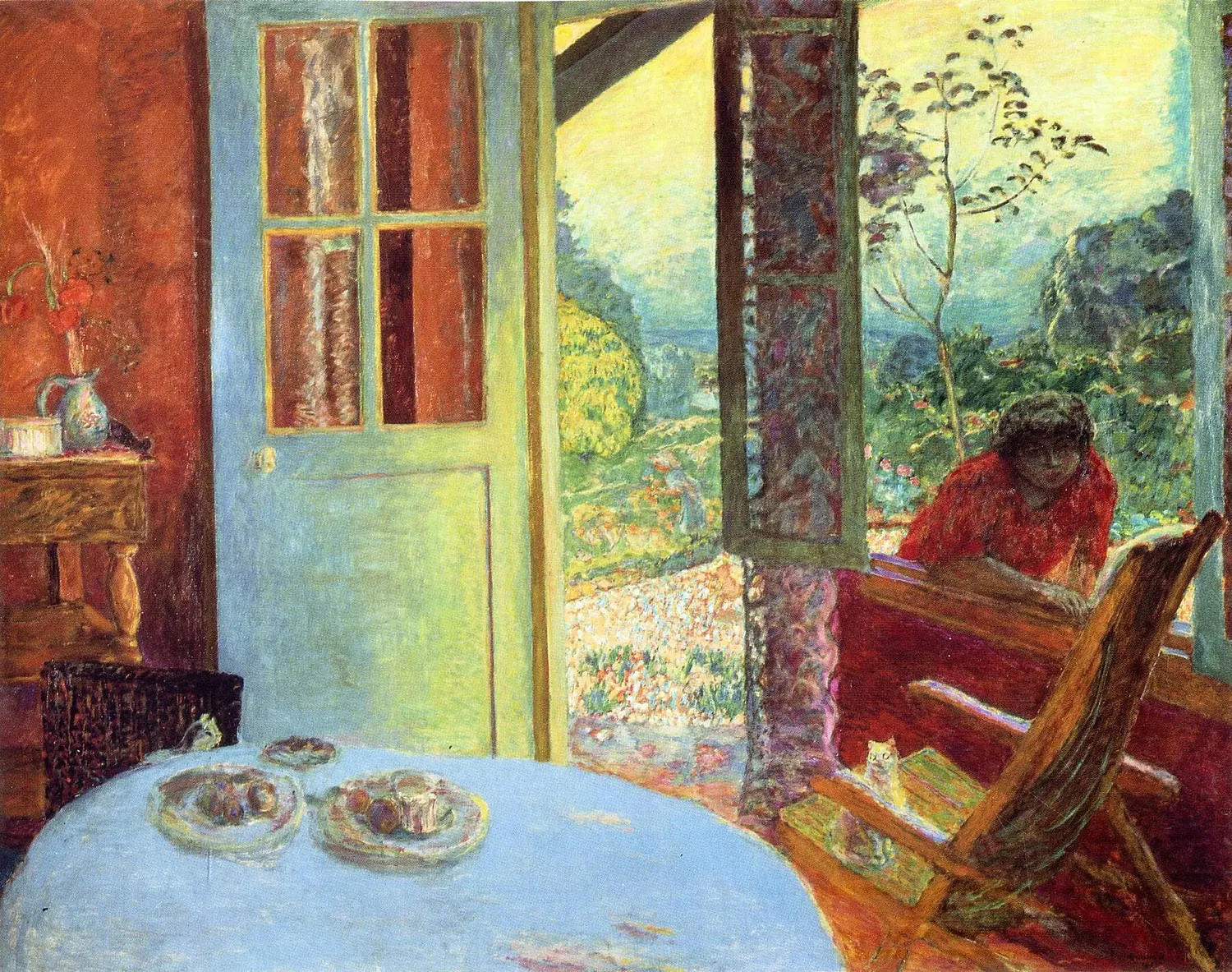
The dining room of the house at Vernonnet opens through a door onto a blazing garden. A woman leans at the window and a cat rests on a chair. The red of the room and the greens of the garden answer each other.
Bonnard never considered a painting finished. It is said that at the Musée du Luxembourg he asked a friend to distract the guard so he could discreetly retouch one of his own canvases hanging on the wall.
 Wassily Kandinsky
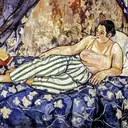 Suzanne Valadon
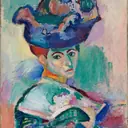 Henri Matisse
 Henri de Toulouse-Lautrec
 Edvard Munch
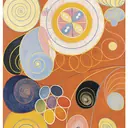 Hilma af Klint
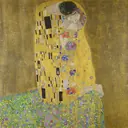 Gustav Klimt
 Piet Mondrian