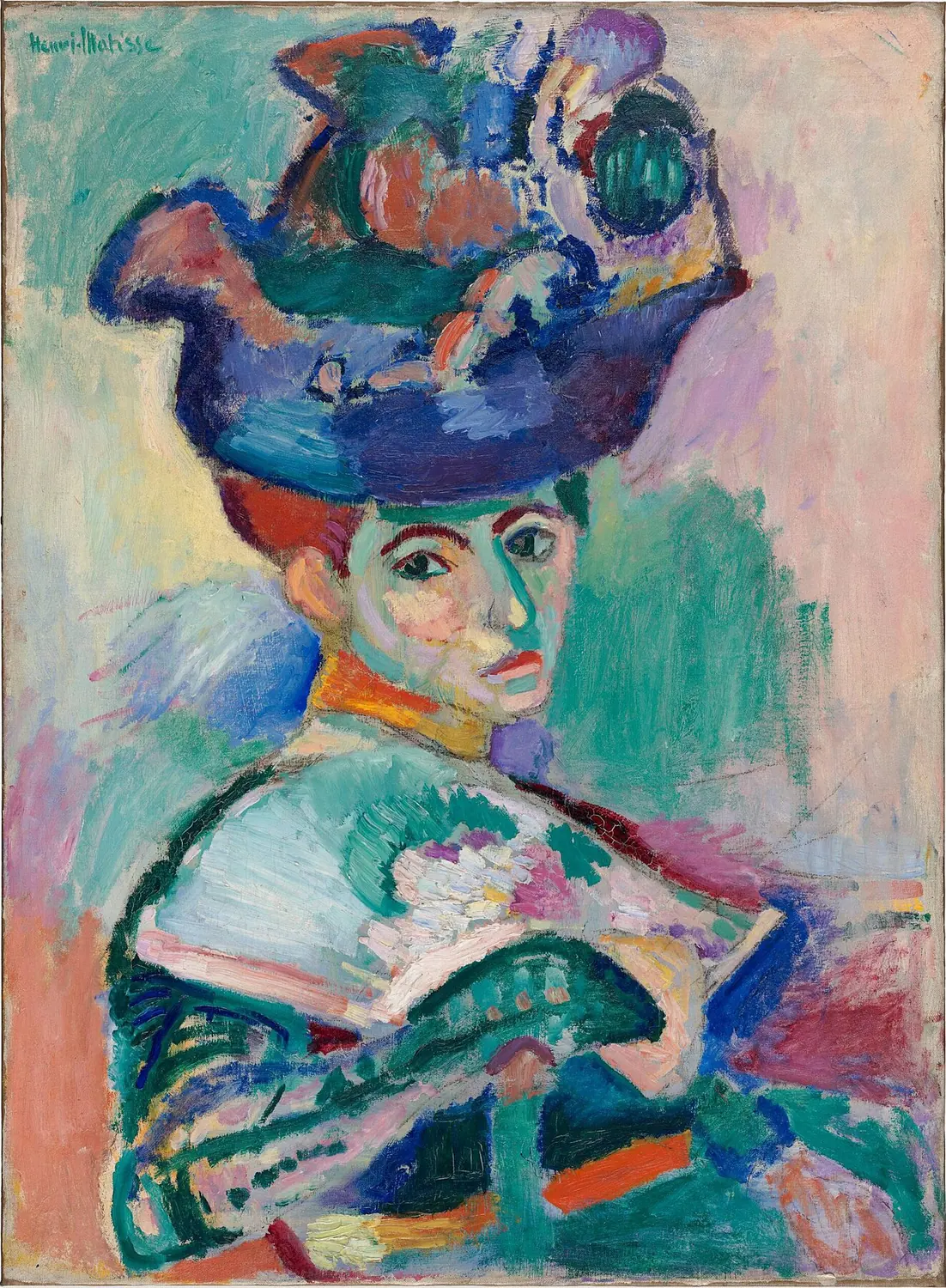
Woman with a Hat
A portrait of Amélie, the artist’s wife, wearing an enormous hat. Her face is streaked with green, mauve and orange, the background made of free patches. Shown in 1905, it shocked the public and became the emblem of Fauvism.
The master of colour
Leader of the Fauves, Henri Matisse freed colour from description and made it a source of joy and balance. From blazing canvases to the paper cut-outs of his old age, he is one of the giants of 20th-century art.
Born in 1869 in Le Cateau-Cambrésis in northern France, Henri Matisse was a law clerk when, at twenty, confined to bed with appendicitis, he was given a paint box by his mother. He went to study in Paris in Gustave Moreau’s studio. At the 1905 Salon d’Automne his violent colours and those of his friends caused a scandal: a critic spoke of ’wild beasts’ (fauves).
Supported by collectors such as the Russian Sergei Shchukin, he painted large decorative compositions, travelled to Morocco and settled in Nice in 1917. After a major operation in 1941, barely able to paint, he invented gouache cut-outs, which he called ’drawing in colour’. He designed the Chapel of the Rosary in Vence and died in Nice in 1954.
Matisse laid down large areas of pure colour, simplified drawing into supple arabesques and did away with modelling and perspective. He sought, he said, ’an art of balance, of purity and serenity’. His decorative patterns, fabrics and wallpapers spread across the space of the picture.
A portrait of Amélie, the artist’s wife, wearing an enormous hat. Her face is streaked with green, mauve and orange, the background made of free patches. Shown in 1905, it shocked the public and became the emblem of Fauvism.
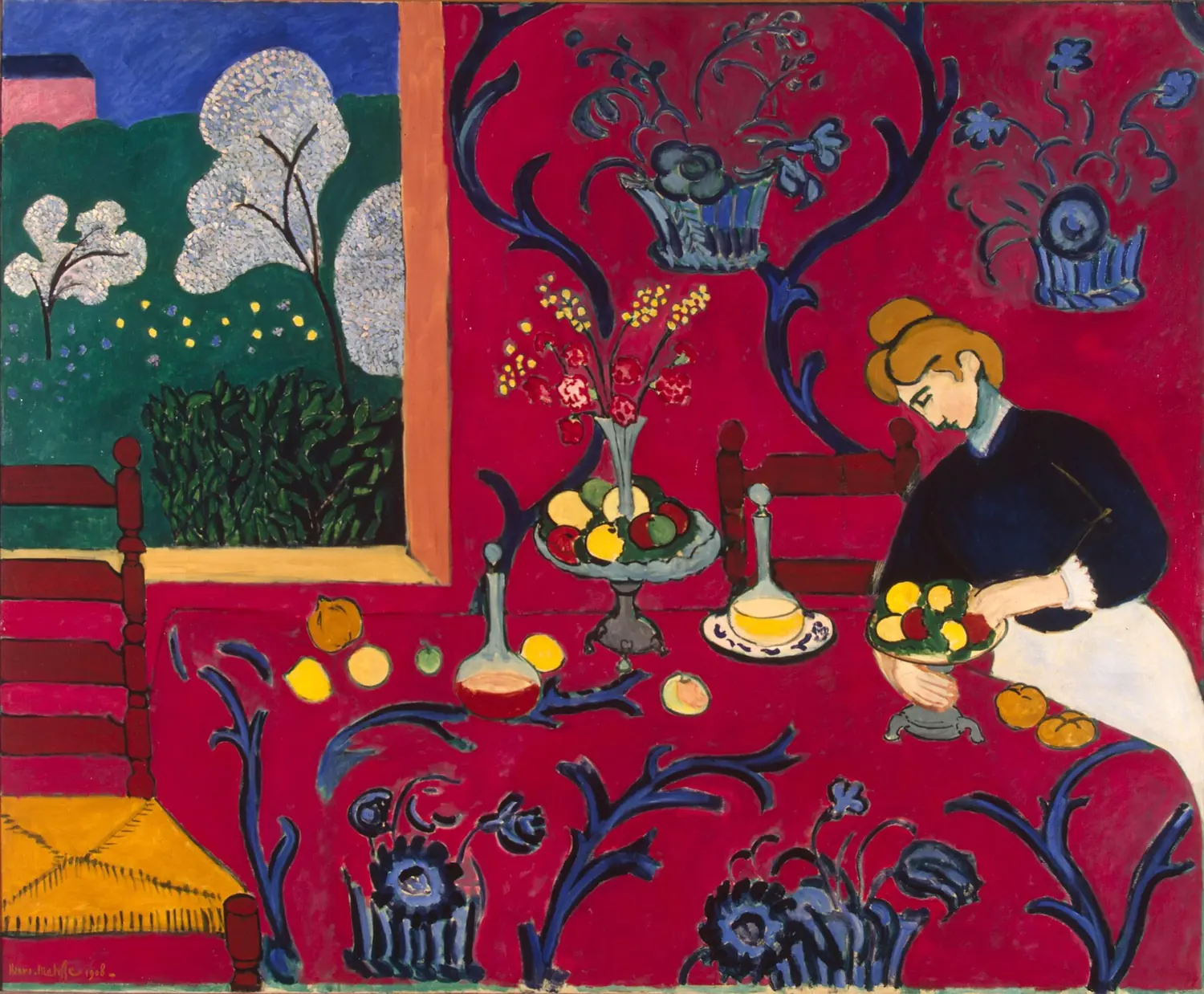
A woman arranges fruit on a table in an entirely red room. The blue arabesques of the tablecloth continue onto the wall, so that table and wall can no longer be told apart. Through the window a garden can be seen.
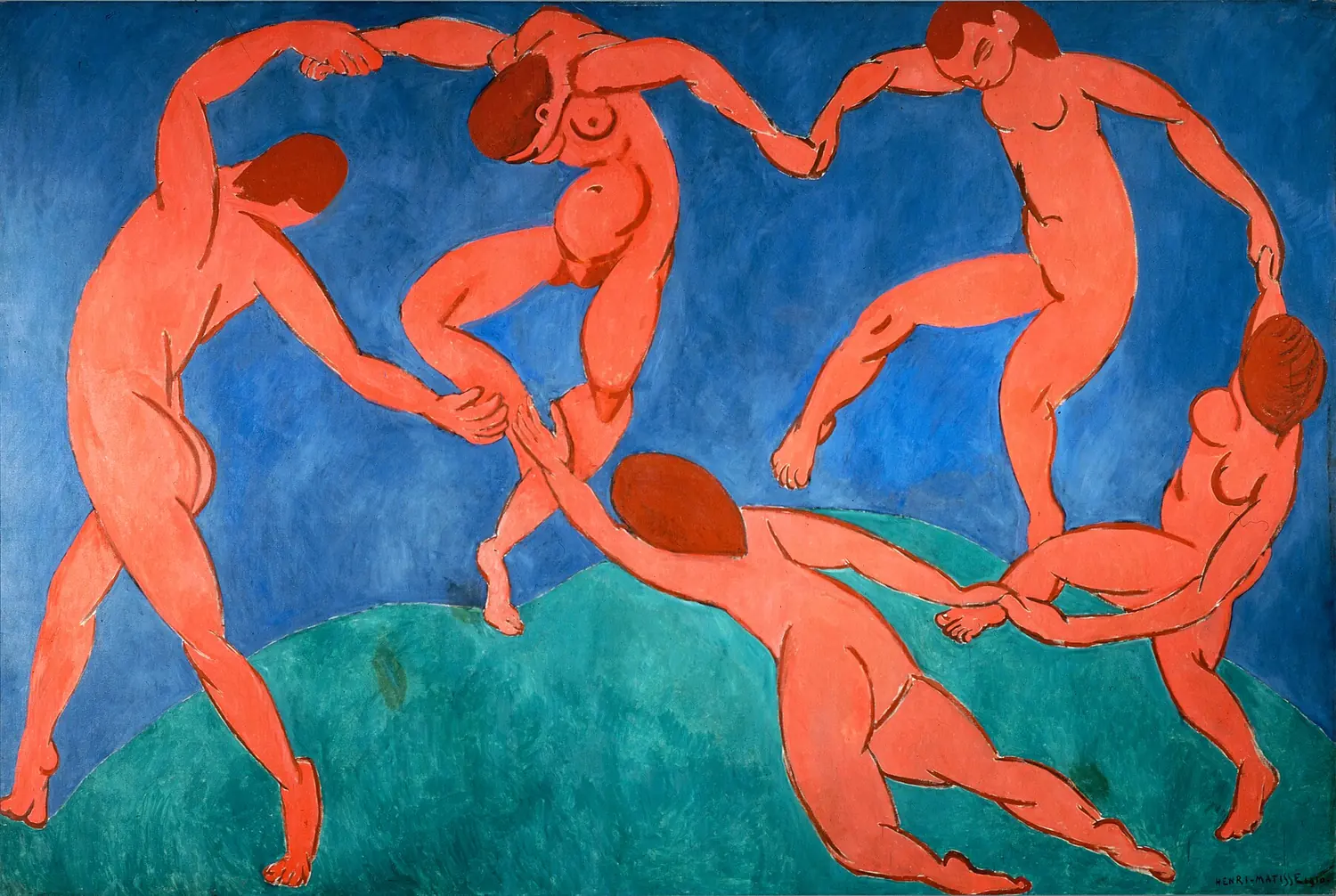
Five red dancers form a ring on a green hill under a blue sky. Three colours are enough. In the foreground two hands no longer touch: the ring seems about to close.
Harmony in Red was first called Harmony in Blue: Matisse repainted the whole background red before delivering the picture to his collector.
 Pierre Bonnard
 Wassily Kandinsky
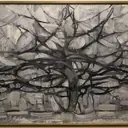 Piet Mondrian
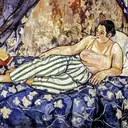 Suzanne Valadon
 Henri de Toulouse-Lautrec
 Edvard Munch
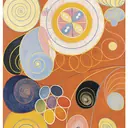 Hilma af Klint
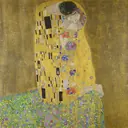 Gustav Klimt