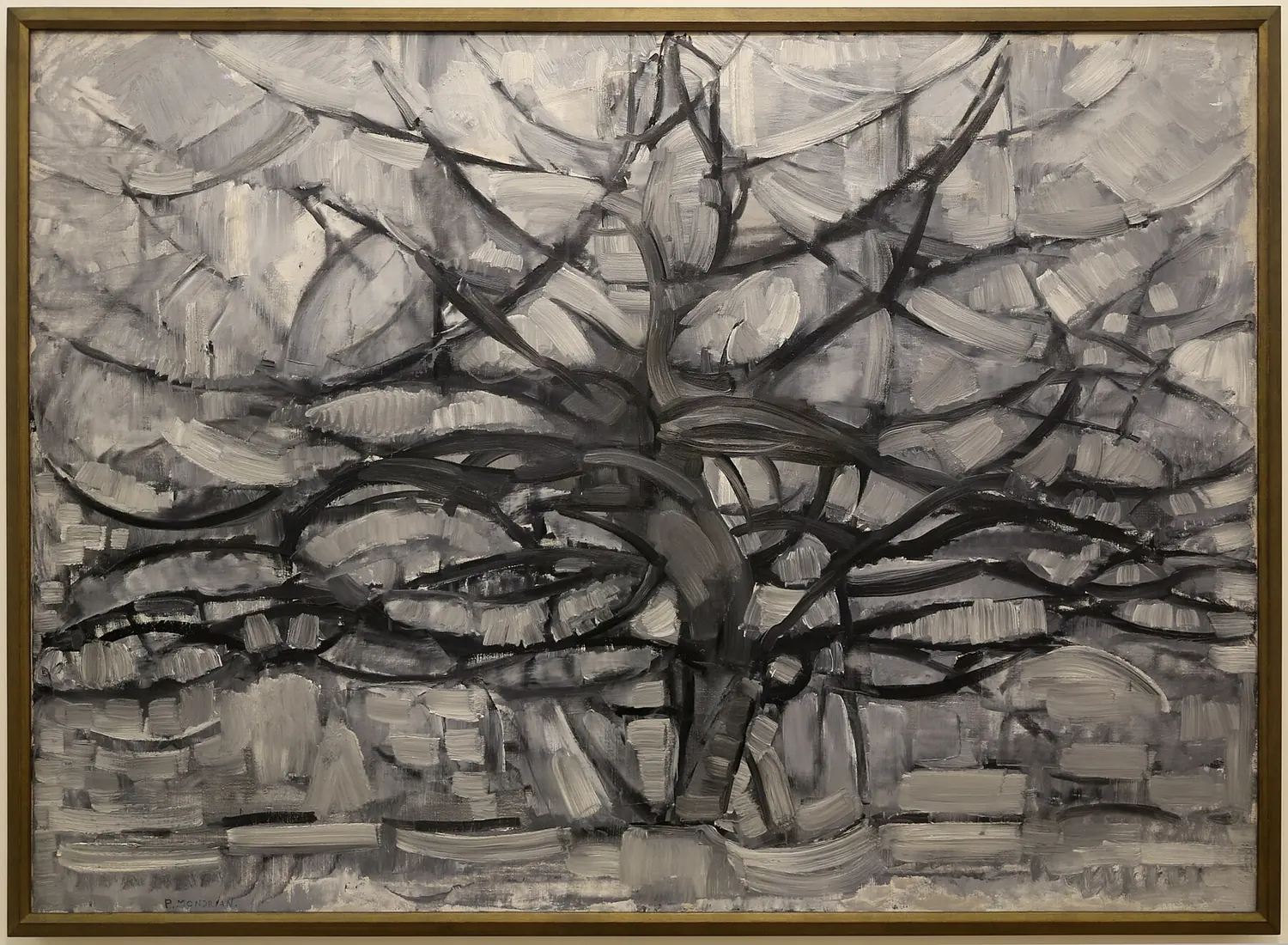
Grey Tree
A tree with bare branches spreads across a grey background. Its curving branches already form a network of lines: we see Mondrian moving from landscape to abstraction.
Photo: Sailko — CC BY 3.0 — Wikimedia Commons
The architect of pure colour
Starting from Dutch landscapes, Piet Mondrian arrived, step by step, at a painting made only of straight black lines and rectangles of primary colours. His compositions have influenced architecture, design and fashion.
Born in 1872 in Amersfoort in the Netherlands, Piet Mondrian first painted landscapes, windmills and trees in the Dutch tradition. Settling in Paris in 1911, he discovered Cubism: his trees simplified into networks of lines. Back in the Netherlands during the war, he founded the journal De Stijl with Theo van Doesburg in 1917.
Returning to Paris in 1919, he developed ’Neo-Plasticism’: only horizontal and vertical lines, the three primary colours, white, grey and black. Fleeing the war, he went to London in 1938 and then New York in 1940. Fascinated by jazz and boogie-woogie, he painted his last canvases in coloured rhythms and died in New York in 1944.
Mondrian sought universal harmony through the simplest means. He balanced planes of colour of different sizes, separated them with black lines of varying thickness and rejected symmetry. He constantly reworked his canvases to reach perfect balance.
A tree with bare branches spreads across a grey background. Its curving branches already form a network of lines: we see Mondrian moving from landscape to abstraction.
Photo: Sailko — CC BY 3.0 — Wikimedia Commons
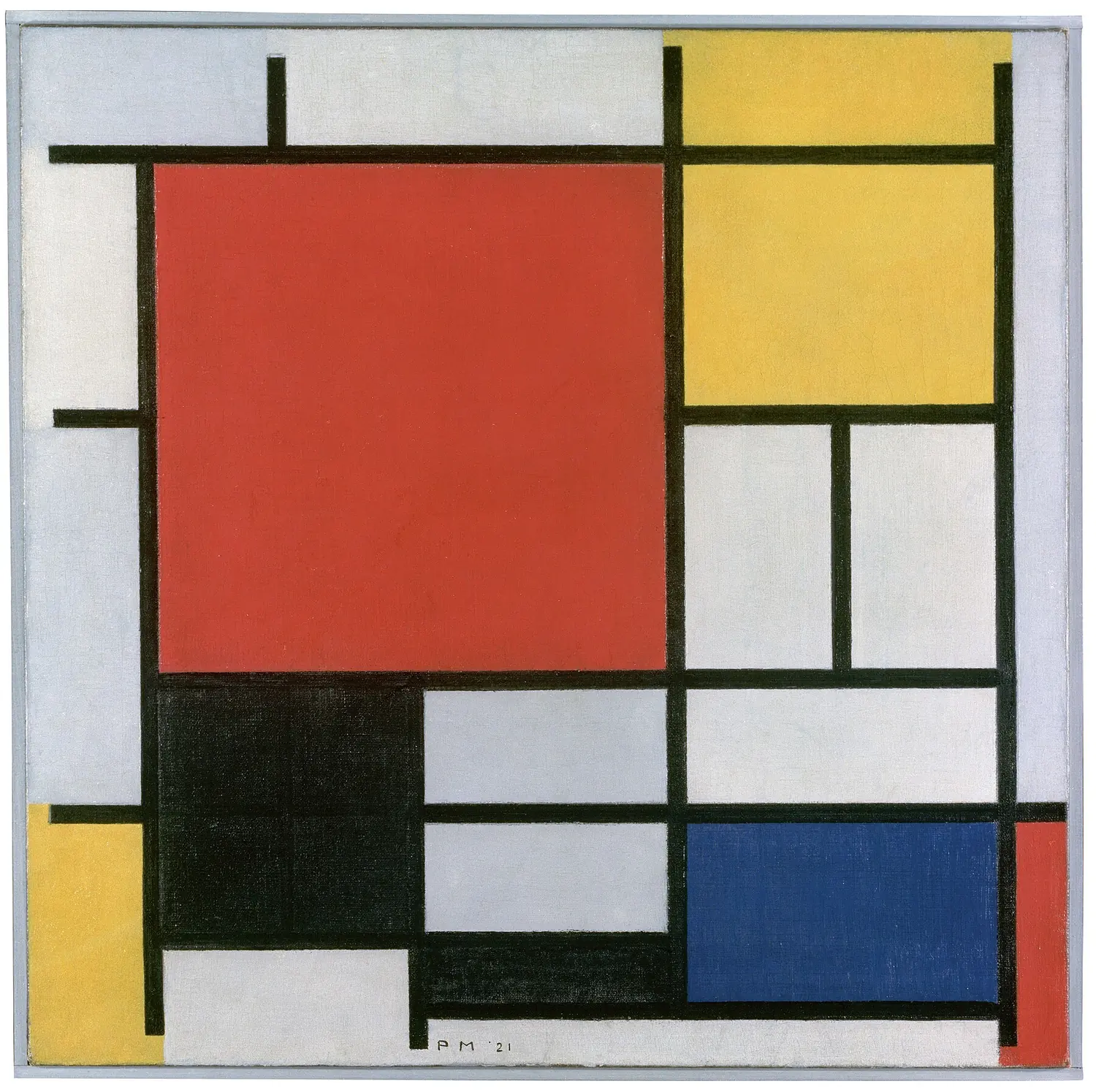
A large red plane dominates the picture, accompanied by small yellow, blue, grey and black planes separated by black lines. The whole composition rests on the balance between these unequal surfaces.
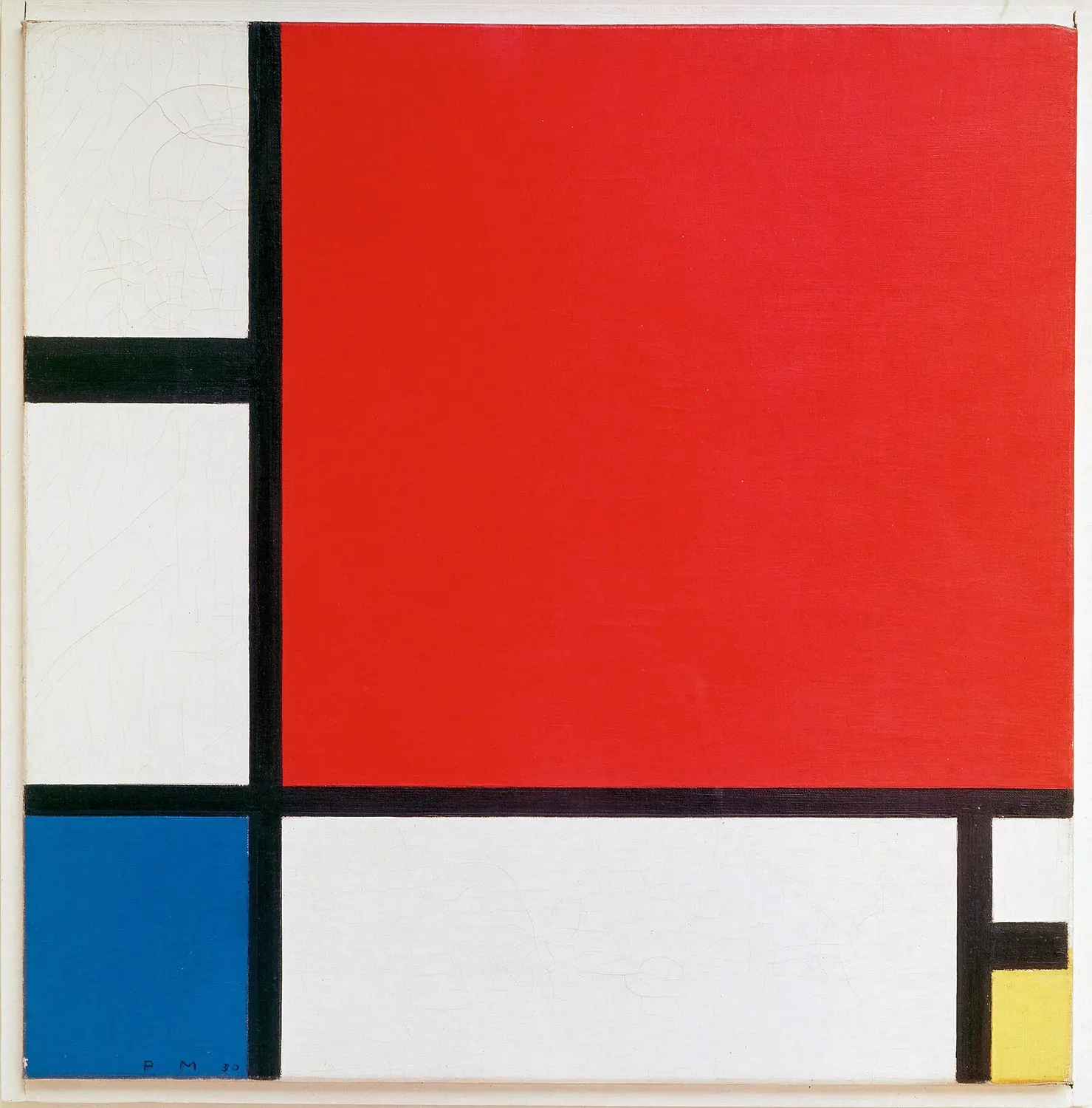
A large red square dominates at the top right. A small blue square at the bottom left and a small yellow rectangle at the bottom right counterbalance it, on a white ground gridded with black lines.
Mondrian fell out with his friend Theo van Doesburg when the latter introduced diagonal lines into his paintings: for Mondrian, only the horizontal and vertical belonged.
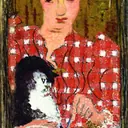
 Henri Matisse
 Pierre Bonnard
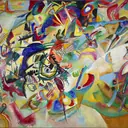 Wassily Kandinsky
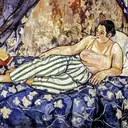 Suzanne Valadon
 Paul Klee
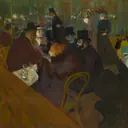 Henri de Toulouse-Lautrec
 Franz Marc
 Edvard Munch