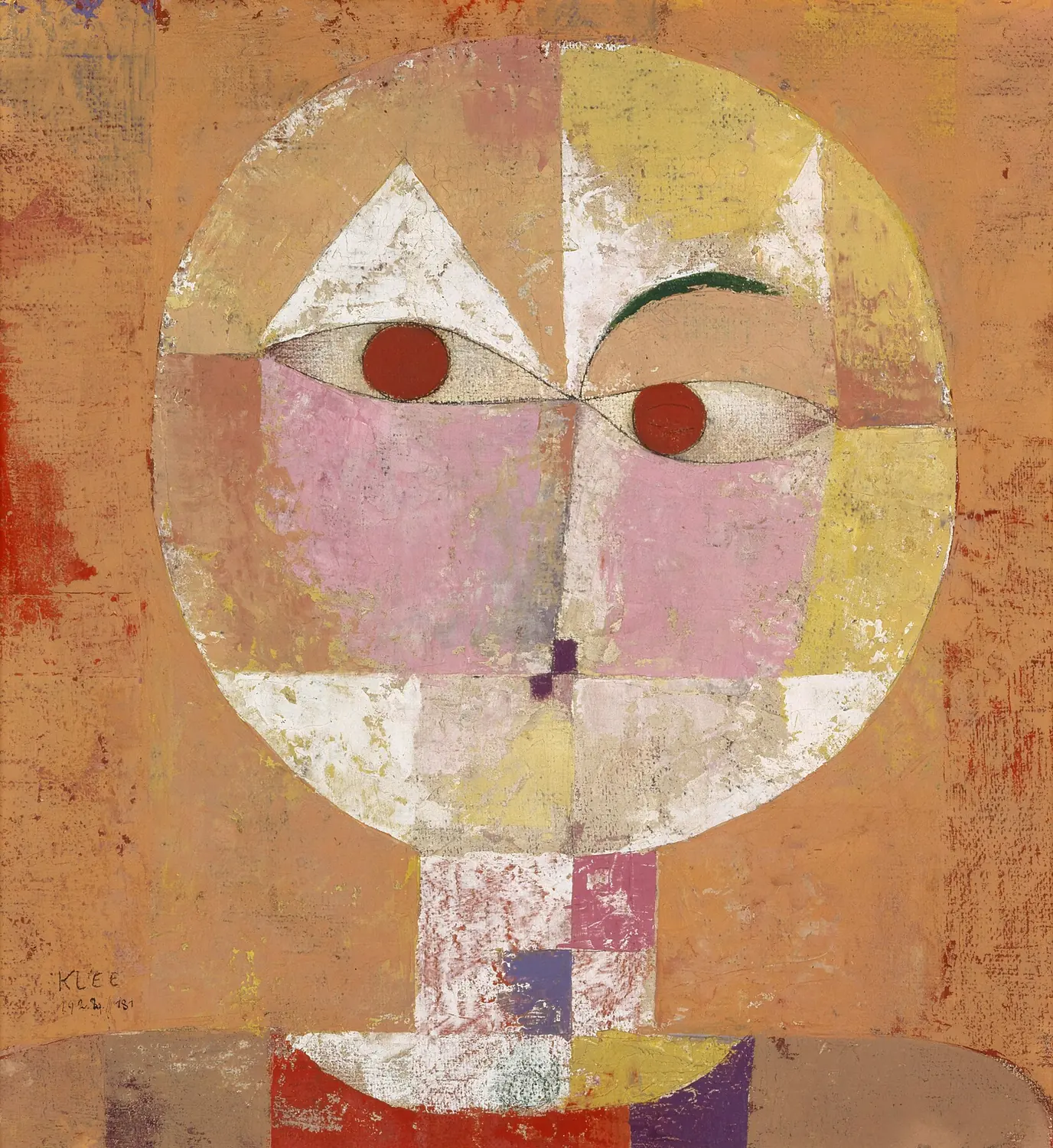
Senecio
A round face made of orange-toned squares of colour looks at the viewer with asymmetrical eyes. The title suggests an old man, but the face also looks like a child’s or a mask.
The poet of shapes and signs
A violinist and painter, Paul Klee created a poetic, humorous world of signs, arrows, little figures and subtle colours. A teacher at the Bauhaus, he thought like no one else about how an image is born.
Born in 1879 near Bern, Switzerland, to a music-teacher father and a singer mother, Paul Klee was an excellent violinist and long hesitated between music and painting. He studied in Munich, where he became friends with Kandinsky and Franz Marc. In 1914 a trip to Tunisia revealed colour to him: ’Colour and I are one. I am a painter.’
He taught at the Bauhaus from 1921 to 1931, then at the Düsseldorf Academy, from which the Nazis expelled him in 1933. He returned to Bern. Despite a serious illness that weakened him from 1935, he still created hundreds of works. He died in 1940 at Muralto, near Locarno, leaving nearly ten thousand paintings, watercolours and drawings.
Klee combined lines, signs, letters, arrows and chequerboards of colour in works often of small size, in watercolour, oil or techniques he invented. He compared the painter’s work to the musician’s: rhythms, polyphony, variations. He wrote that art ’makes visible’.
A round face made of orange-toned squares of colour looks at the viewer with asymmetrical eyes. The title suggests an old man, but the face also looks like a child’s or a mask.
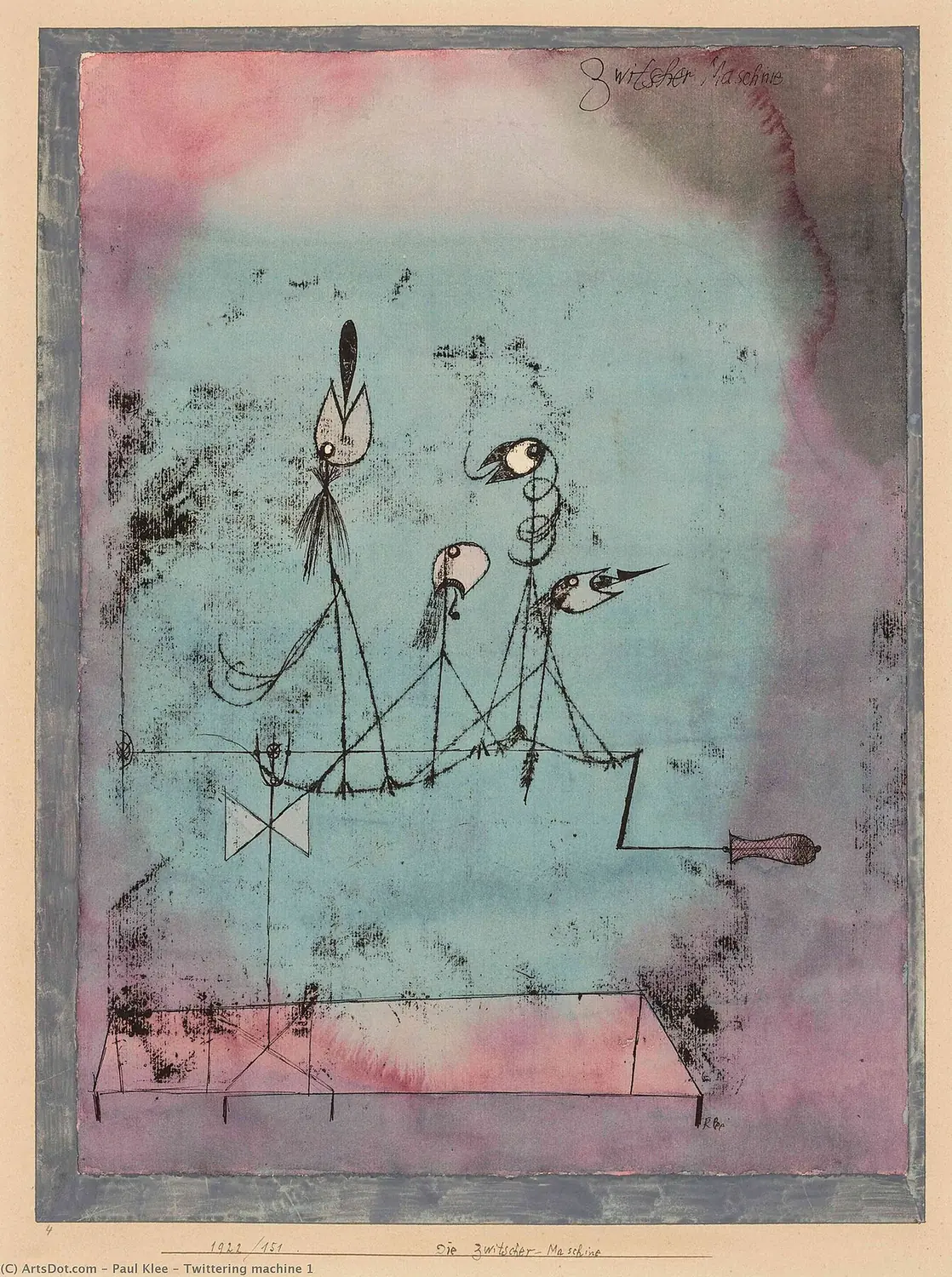
Four strange birds perched on a crank open their beaks as if to sing. Turning the crank would make the machine twitter. Klee gently mocks machines and mechanical music.
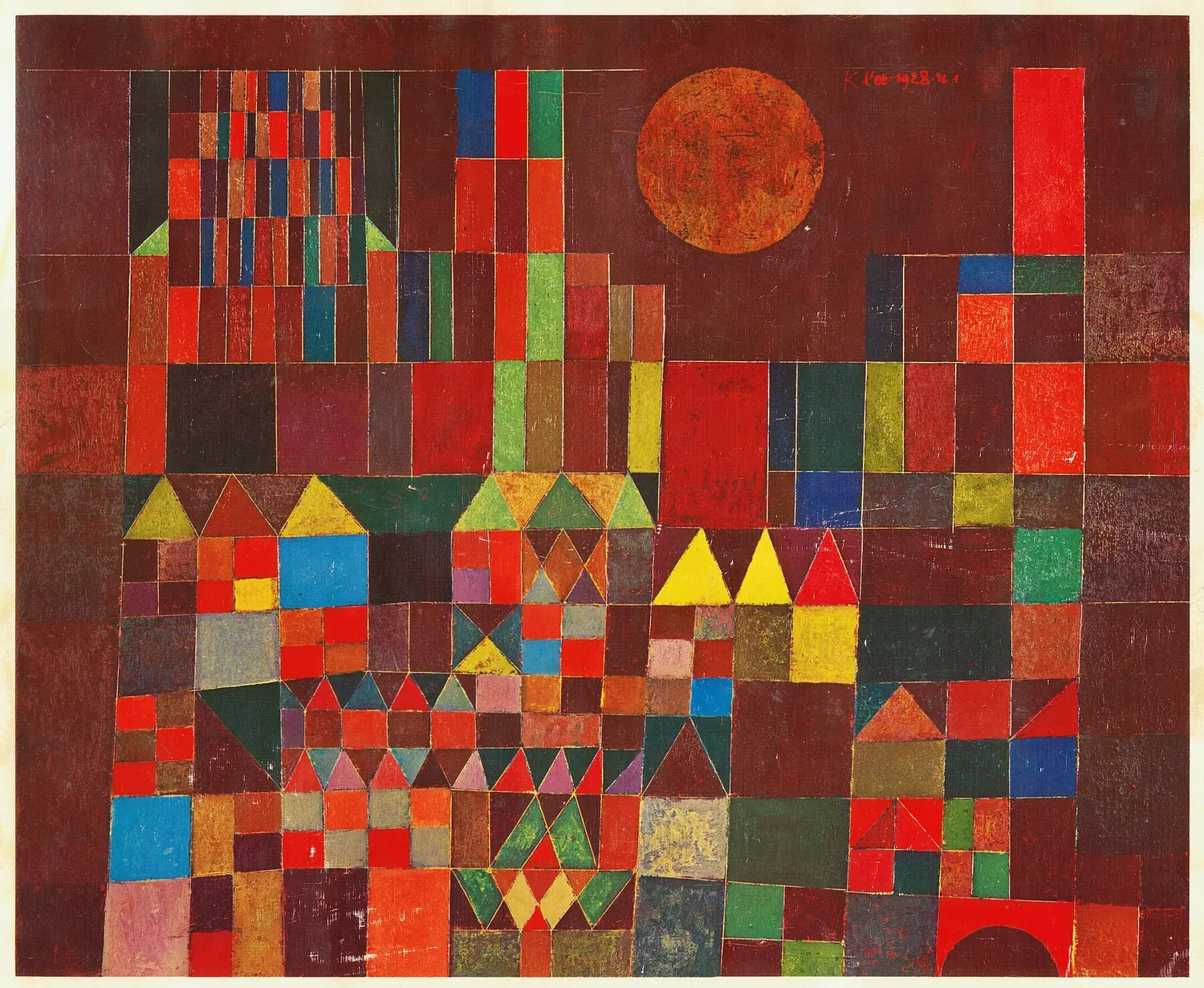
A castle made of coloured squares, rectangles and triangles, like a set of building blocks, rises beneath a round red sun.
Klee played the violin almost every day and played in an orchestra in Bern. He particularly admired Bach and Mozart.
 Franz Marc
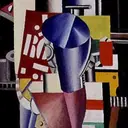 Fernand Léger
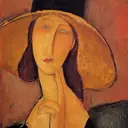 Amedeo Modigliani
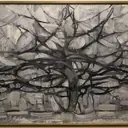 Piet Mondrian