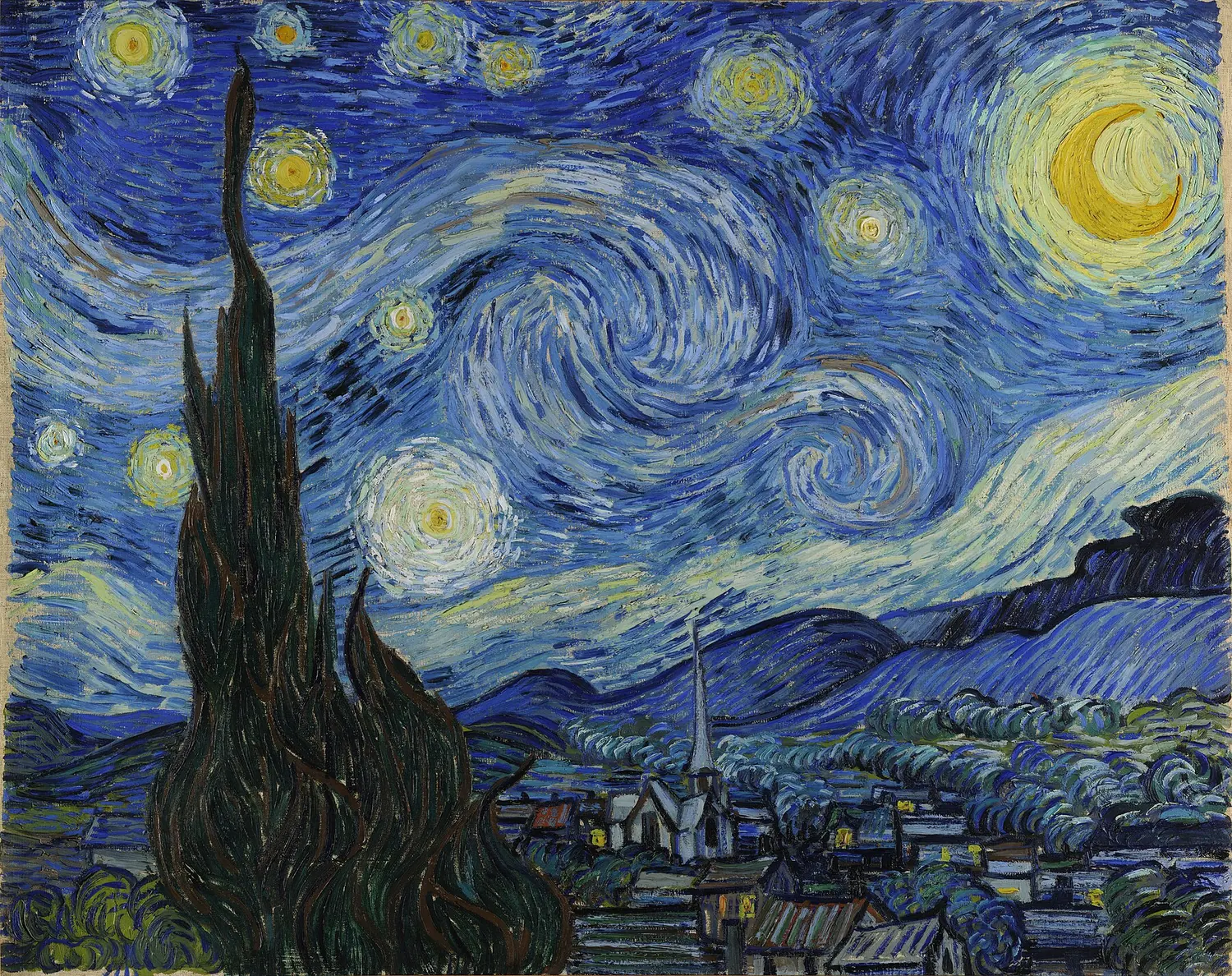
The Starry Night
Above a sleeping village the sky swirls: stars surrounded by halos, a crescent moon and great spirals of wind. In the foreground a dark cypress shoots up towards the sky like a flame.
The painter of colour and emotion
In only ten years of painting, Vincent van Gogh created more than eight hundred paintings of intense colour and swirling brushwork. Almost unknown in his lifetime, he has become one of the best-loved painters in the world.
Born in 1853 in Groot-Zundert in the Netherlands, the son of a pastor, Vincent van Gogh first worked for an art dealer in The Hague, London and Paris, then became a preacher among the miners of the Borinage in Belgium. At twenty-seven he decided to be a painter. His brother Theo, an art dealer, supported him all his life; more than six hundred of Vincent’s letters to Theo survive.
In Paris in 1886 he discovered the Impressionists and Japanese prints: his palette brightened. In 1888 he settled in Arles, where he dreamed of a studio for artists and welcomed Gauguin. Suffering severe crises, he spent a year at the asylum of Saint-Rémy-de-Provence, then moved to Auvers-sur-Oise, where he died in July 1890, aged thirty-seven.
Van Gogh applied paint in thick touches, dashes and spirals that set skies, fields and trees in motion. He used pure, contrasting colours such as yellow and blue to express emotions rather than imitate reality.
Above a sleeping village the sky swirls: stars surrounded by halos, a crescent moon and great spirals of wind. In the foreground a dark cypress shoots up towards the sky like a flame.
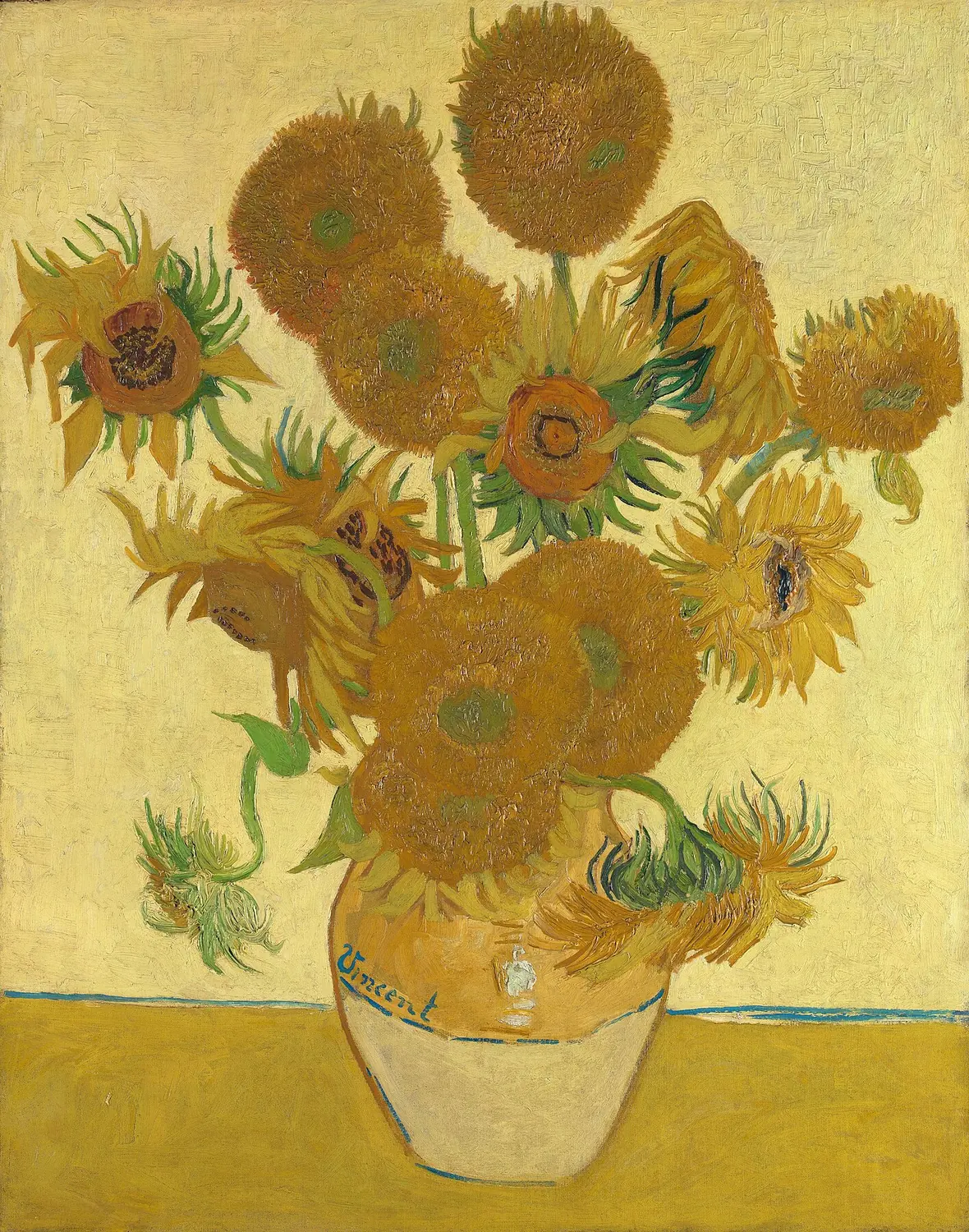
Fifteen sunflowers, in bud, in full bloom or wilting, stand in an earthenware vase against a yellow background. Van Gogh painted them in Arles to decorate the room meant for Gauguin.
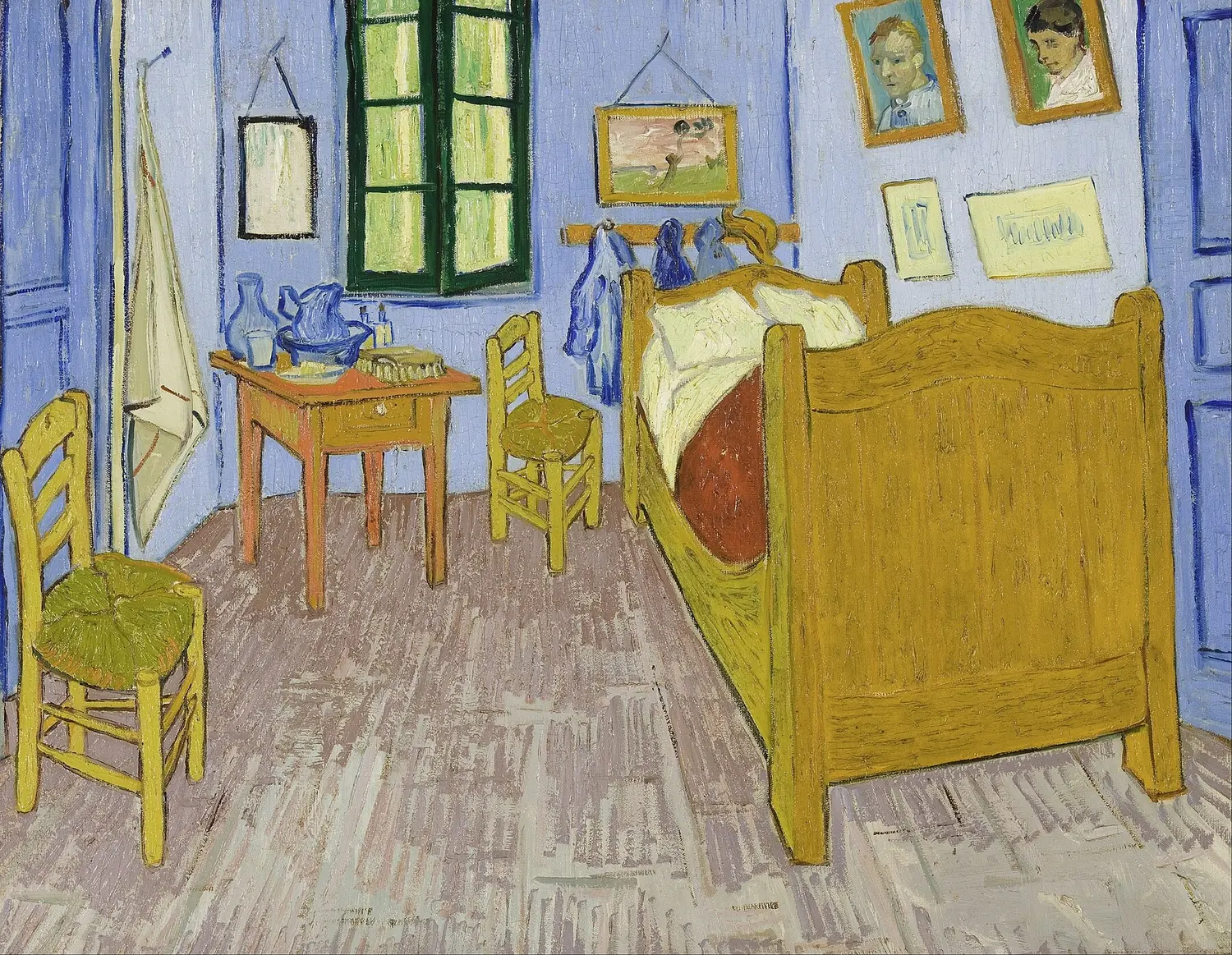
Van Gogh’s bedroom in Arles, with its wooden bed, two chairs, washstand and pictures on the wall. The bright colours and tilted perspective were meant, he said, to suggest rest.
Van Gogh painted The Starry Night in June 1889 from his room at the asylum in Saint-Rémy. In a letter to Theo he describes watching the morning star for a long time before sunrise; it ’looked very big’.
 John Singer Sargent
 Gustave Caillebotte
 Paul Gauguin
 Raja Ravi Varma
 Georges Seurat
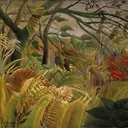 Henri Rousseau
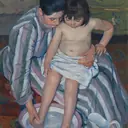 Mary Cassatt
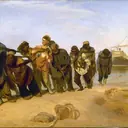 Ilya Repin