lesPeintres.eu

Paul Gauguin

Born: Paris, 1848Died: Atuona (Marquesas Islands), 1903

The voyager of colour

Post-ImpressionismFrance
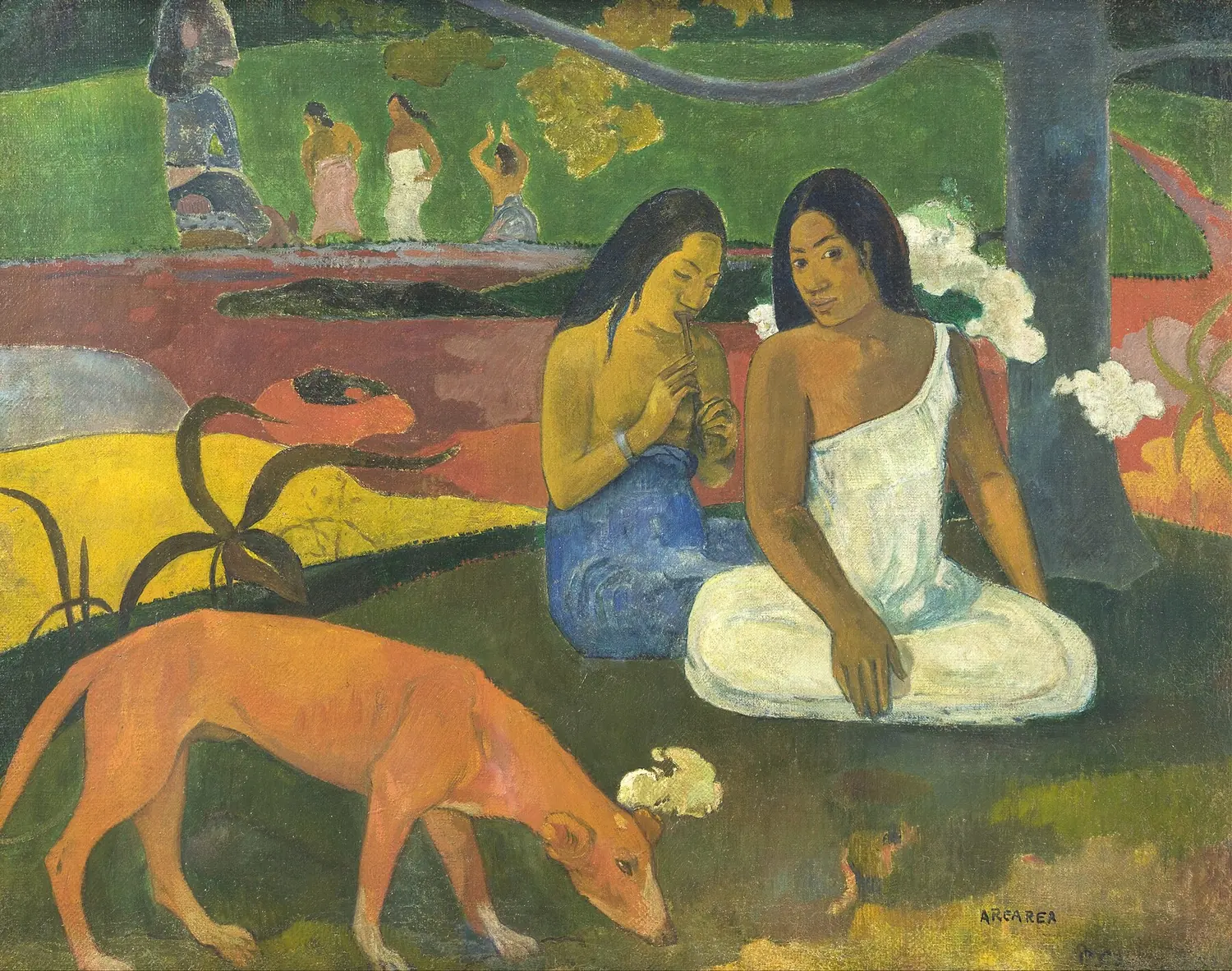
Arearea (Joyfulness) — Paul Gauguin
Arearea (Joyfulness), 1892 · Musée d’Orsay, Paris
Public domain — Wikimedia Commons

1In brief

A stockbroker turned painter, Paul Gauguin broke with the imitation of nature in favour of flat areas of bright colour and simplified forms. From Brittany to Polynesia, he sought a world he imagined to be more authentic.

2Life

Born in Paris in 1848, Paul Gauguin spent part of his childhood in Peru with his mother’s family. A sailor, then a stockbroker’s employee in Paris, he painted on Sundays, collected the Impressionists and exhibited with them from 1879. After the stock market crash of 1882 he decided to live from his painting.

At Pont-Aven in Brittany he and Émile Bernard invented a style of frank colours enclosed by outlines. He joined Van Gogh in Arles in 1888, left for Tahiti in 1891 and settled permanently in Polynesia in 1895. Ill and in debt, he died in the Marquesas Islands in 1903. His view of Polynesia and his private life, notably his relationships with very young Polynesian girls, are strongly criticised today.
3Style and technique

Gauguin painted from memory and imagination more than from nature. He laid down flat areas of intense, often unrealistic colour (pink ground, red dog, vermilion field) outlined in dark lines, as in stained glass or Japanese prints. He was also interested in wood carving and printmaking.

4Works

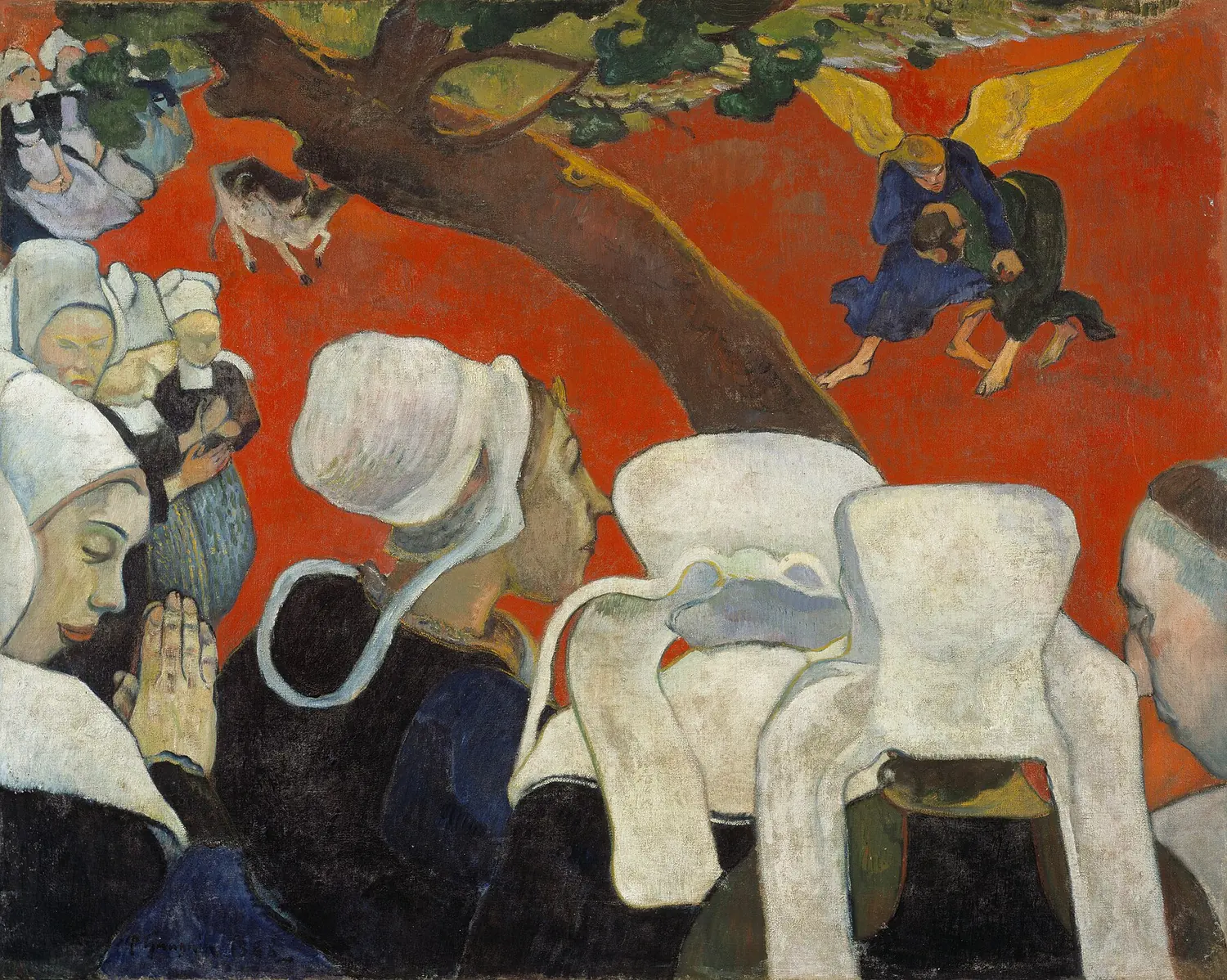
Vision after the Sermon — Paul Gauguin

Vision after the Sermon

1888Scottish National Gallery, Edinburgh

After the Sunday sermon, Breton women in white headdresses see a vision of the biblical scene of Jacob wrestling with the angel. The unreal vermilion ground separates the real world from the vision; a tree trunk cuts diagonally across the picture.

Public domain — Wikimedia Commons

Arearea (Joyfulness) — Paul Gauguin

Arearea (Joyfulness)

1892Musée d’Orsay, Paris

Two Tahitian women sit beneath a tree; one plays the flute. In the foreground a red dog sniffs the ground, while in the background women dance before a statue. The title means ’Joyfulness’.

Public domain — Wikimedia Commons

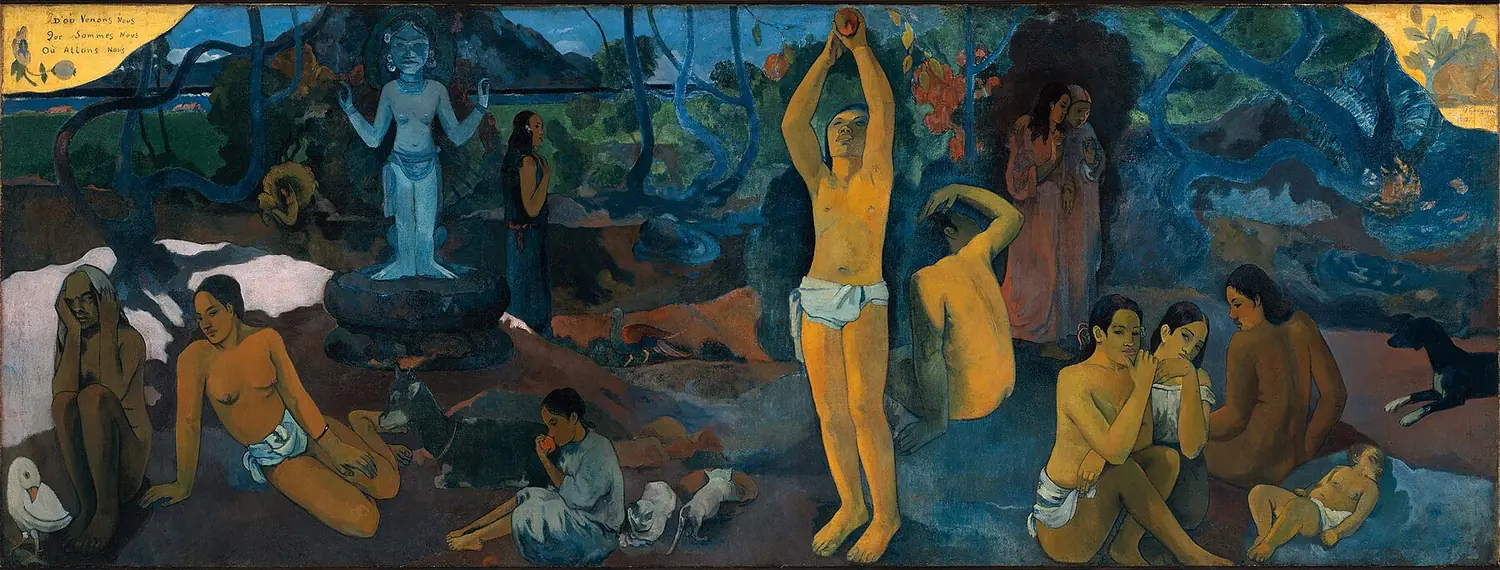
Where Do We Come From? What Are We? Where Are We Going? — Paul Gauguin

Where Do We Come From? What Are We? Where Are We Going?

1898Museum of Fine Arts, Boston

This huge painting, almost four metres long, reads from right to left: from a sleeping baby to an old woman, it travels through the ages of life in a Tahitian landscape. Gauguin regarded it as his artistic testament.

Public domain — Wikimedia Commons

5Did you know?

Shown in Paris in 1893, Arearea made part of the public laugh because of its red dog. Yet Gauguin counted it among his best paintings.

6Further

Contemporaries