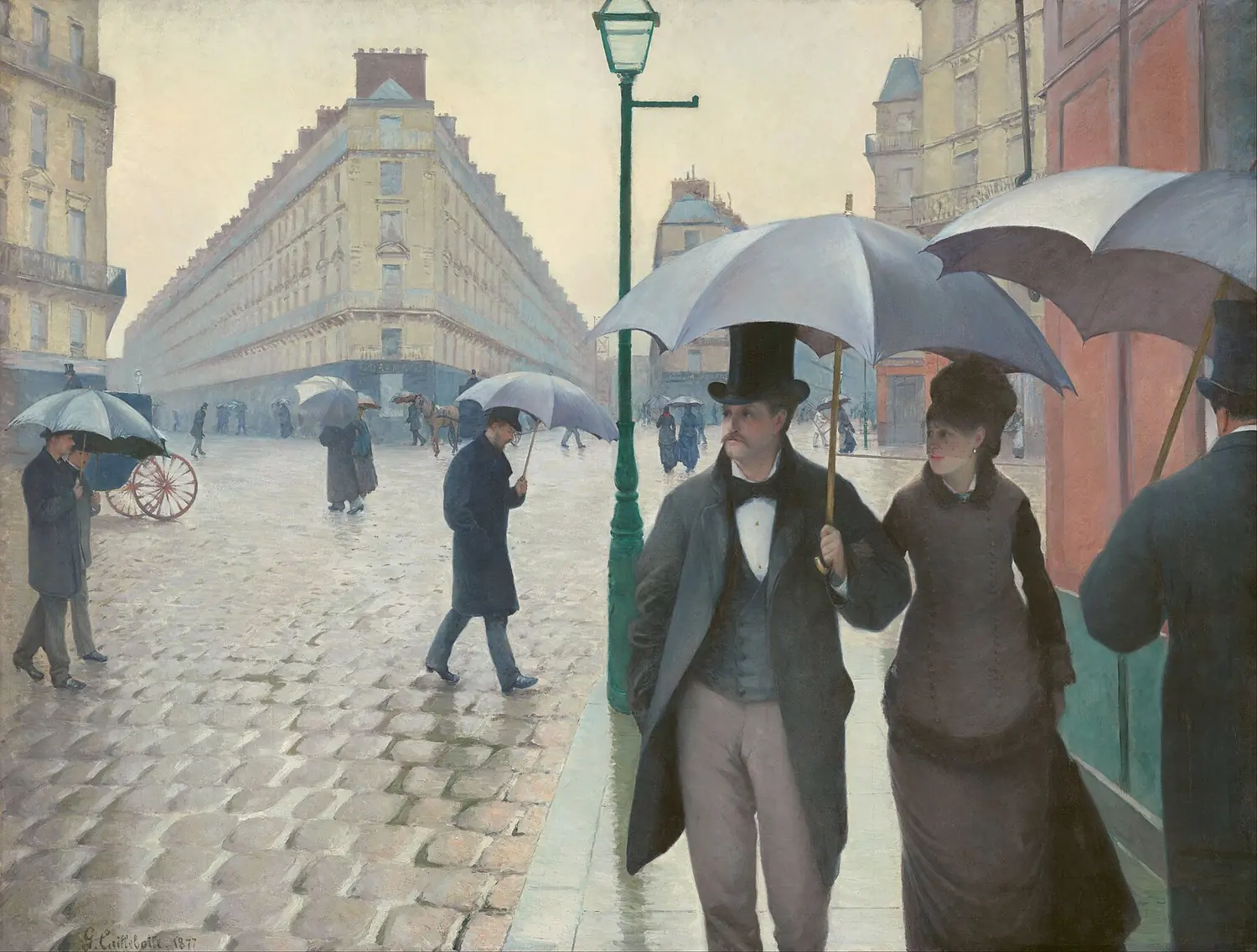
Paris Street; Rainy Day
A crossroads in the Europe district of Paris in light rain. Elegant passers-by walk under their umbrellas on gleaming paving stones. A lamppost divides the picture in two, like a dividing line.
Painter and patron of the Impressionists
A wealthy heir, Gustave Caillebotte painted Haussmann’s modern Paris with striking perspectives, while funding exhibitions and buying paintings by his Impressionist friends, which he left to the State.
Born in Paris in 1848 to a wealthy family, Gustave Caillebotte earned a law degree and then studied painting with Léon Bonnat. In 1875 The Floor Scrapers was rejected by the Salon: the subject, workers at work, was considered vulgar. He showed it the next year at the second Impressionist exhibition.
Thanks to his fortune he helped his friends: he paid rents, organised and funded exhibitions, and bought paintings by Monet, Renoir, Pissarro, Degas and Cézanne. A passionate sailor, he designed and built yachts and tended a large garden at Petit-Gennevilliers, where he died in 1894, aged forty-five.
Caillebotte combined precise, almost photographic drawing with the light and modern subjects of the Impressionists. His perspectives plunge and accelerate, his framing is daring. He painted the new city: wide boulevards, iron bridges, balconies and passers-by.
A crossroads in the Europe district of Paris in light rain. Elegant passers-by walk under their umbrellas on gleaming paving stones. A lamppost divides the picture in two, like a dividing line.
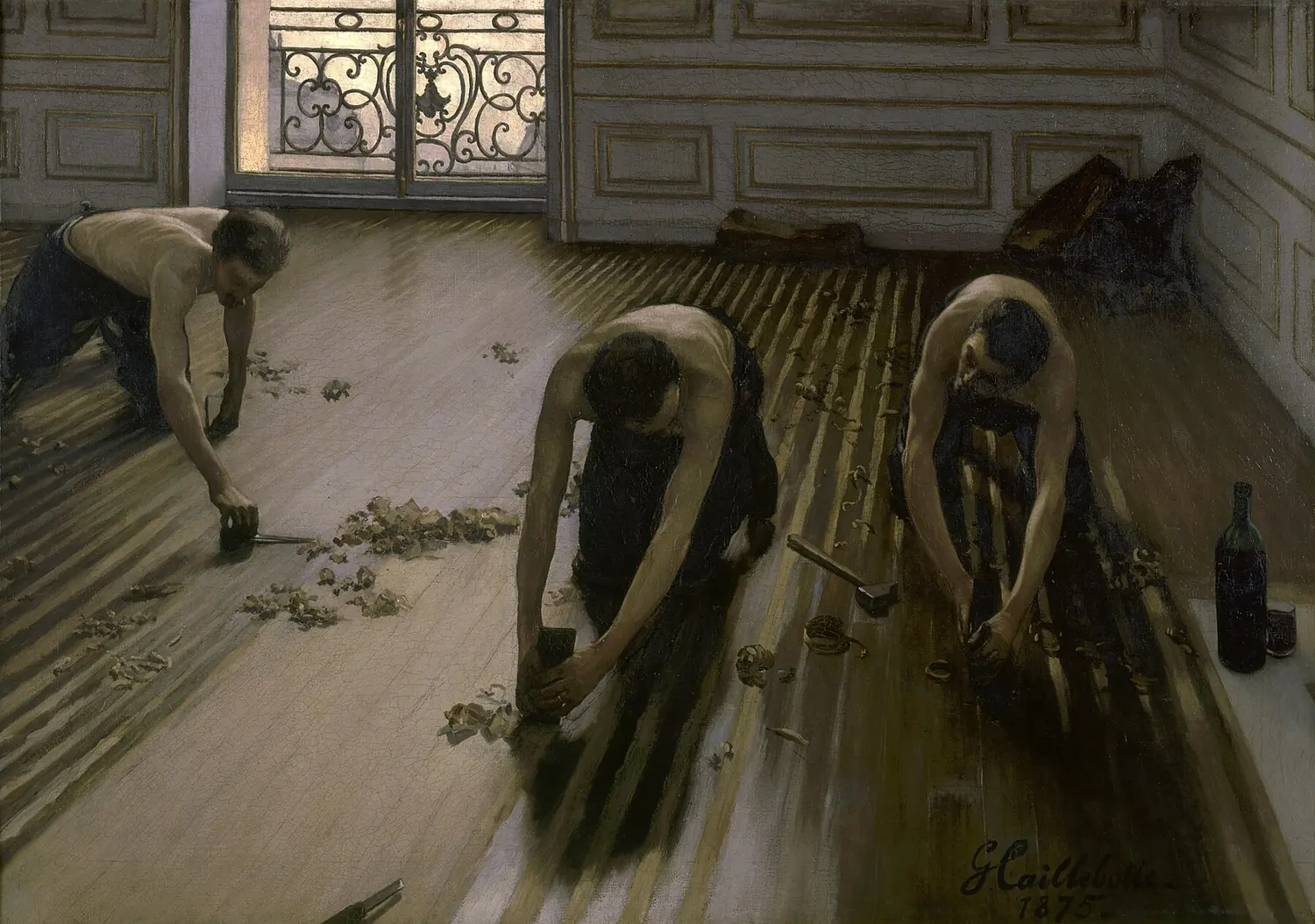
Three bare-chested workers on their knees scrape the floor of a Parisian apartment. Light from the window makes the shavings and bent backs shine. We see the picture from above, as if standing in the room.
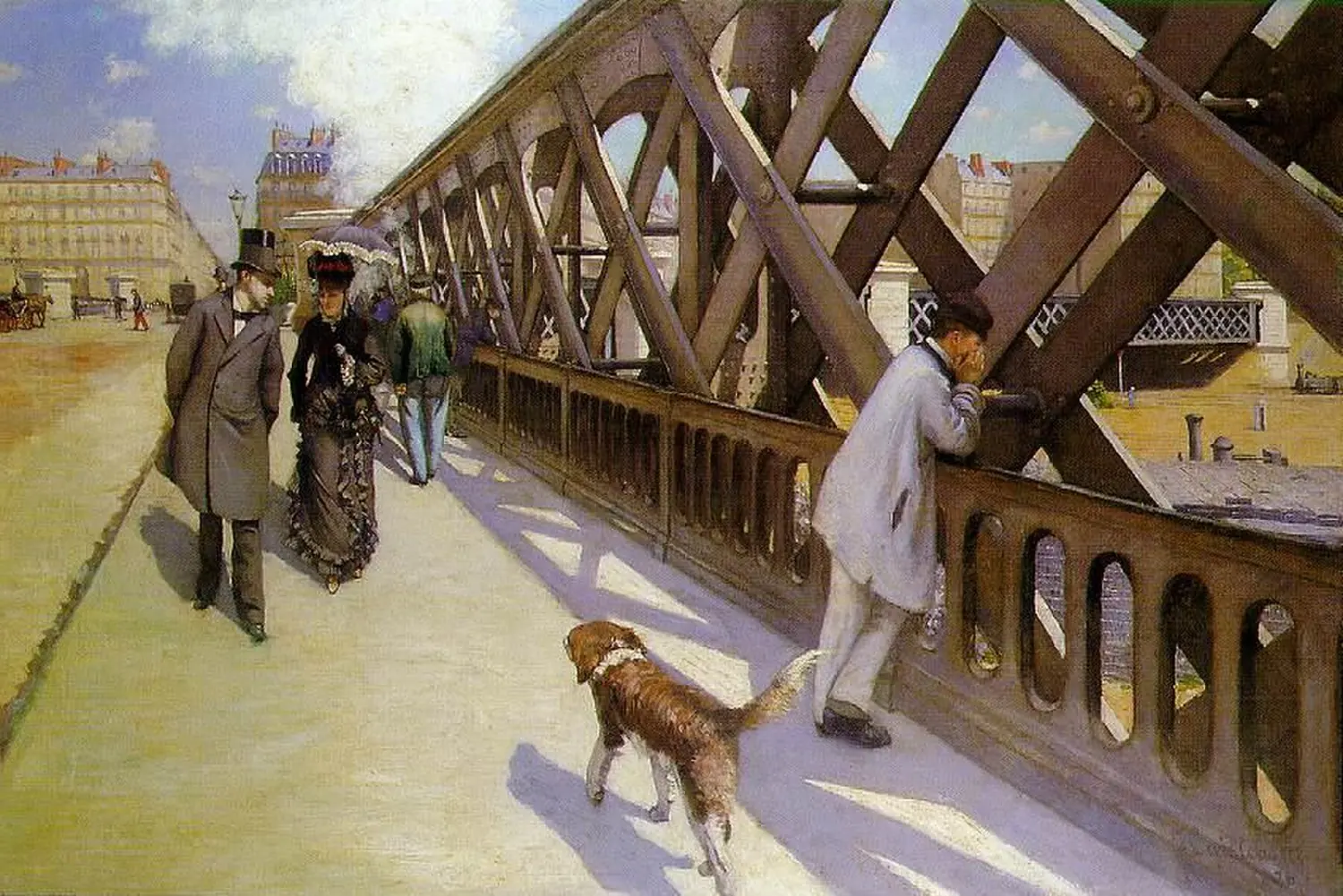
On the Pont de l’Europe, an iron structure spanning the tracks of the Gare Saint-Lazare, a man in a top hat walks with a woman holding a parasol, while a worker watches the trains. A dog trots in the foreground.
He left his collection of Impressionist paintings to the State. Only part of it was accepted in 1896, after long debates; it is now one of the treasures of the Musée d’Orsay.
 Paul Gauguin
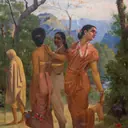 Raja Ravi Varma
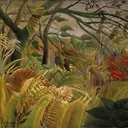 Henri Rousseau
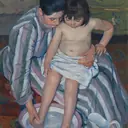 Mary Cassatt
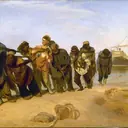 Ilya Repin
 Vincent van Gogh
 Berthe Morisot
 Pierre-Auguste Renoir