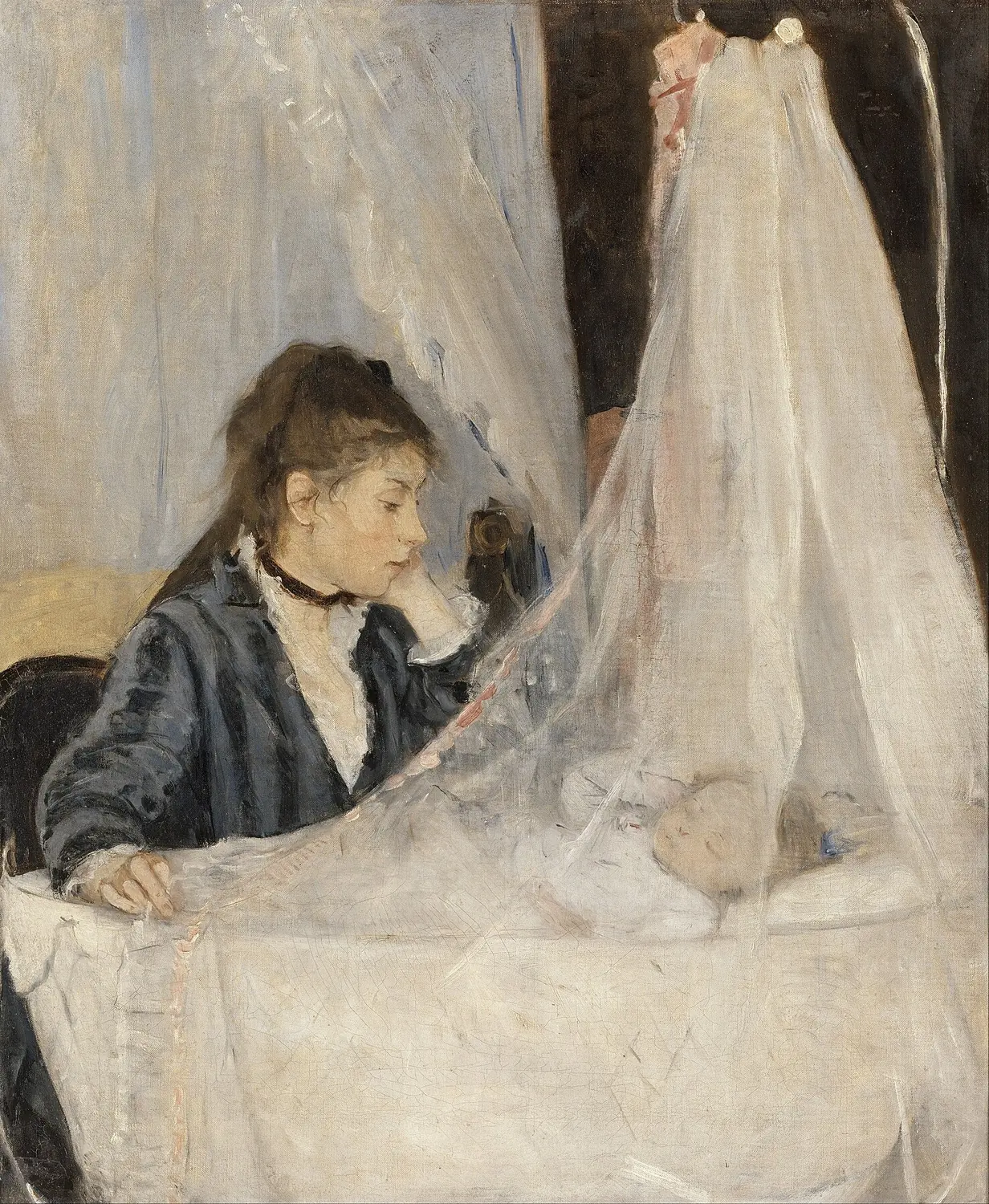
The Cradle
A young mother, Edma, the artist’s sister, watches over her sleeping baby. A transparent muslin veil wraps the cradle. The mother’s gaze and the diagonal of the curtain link the two figures.
The grande dame of Impressionism
A founding member of the Impressionist group, Berthe Morisot painted the lives of women and children, gardens and interiors with a quick, luminous touch. She exhibited with her friends almost every time, at a time when women were not admitted to the École des Beaux-Arts.
Born in Bourges in 1841 to a well-off family, Berthe Morisot took painting lessons with her sister Edma. As women could not enter the École des Beaux-Arts, they copied the masters in the Louvre and received advice from Camille Corot, with whom they painted outdoors.
A friend and model of Édouard Manet, she married his brother Eugène in 1874. The same year she took part in the first Impressionist exhibition and missed only one, in 1879, after the birth of her daughter Julie. She died in Paris in 1895, aged fifty-four, of an illness caught while nursing her daughter.
Morisot painted fast, in broad, supple, light strokes, almost transparent, often left unfinished at the edges. Her pearly whites, reflections and pale tones give her intimate scenes great freshness. She also mastered watercolour and pastel.
A young mother, Edma, the artist’s sister, watches over her sleeping baby. A transparent muslin veil wraps the cradle. The mother’s gaze and the diagonal of the curtain link the two figures.
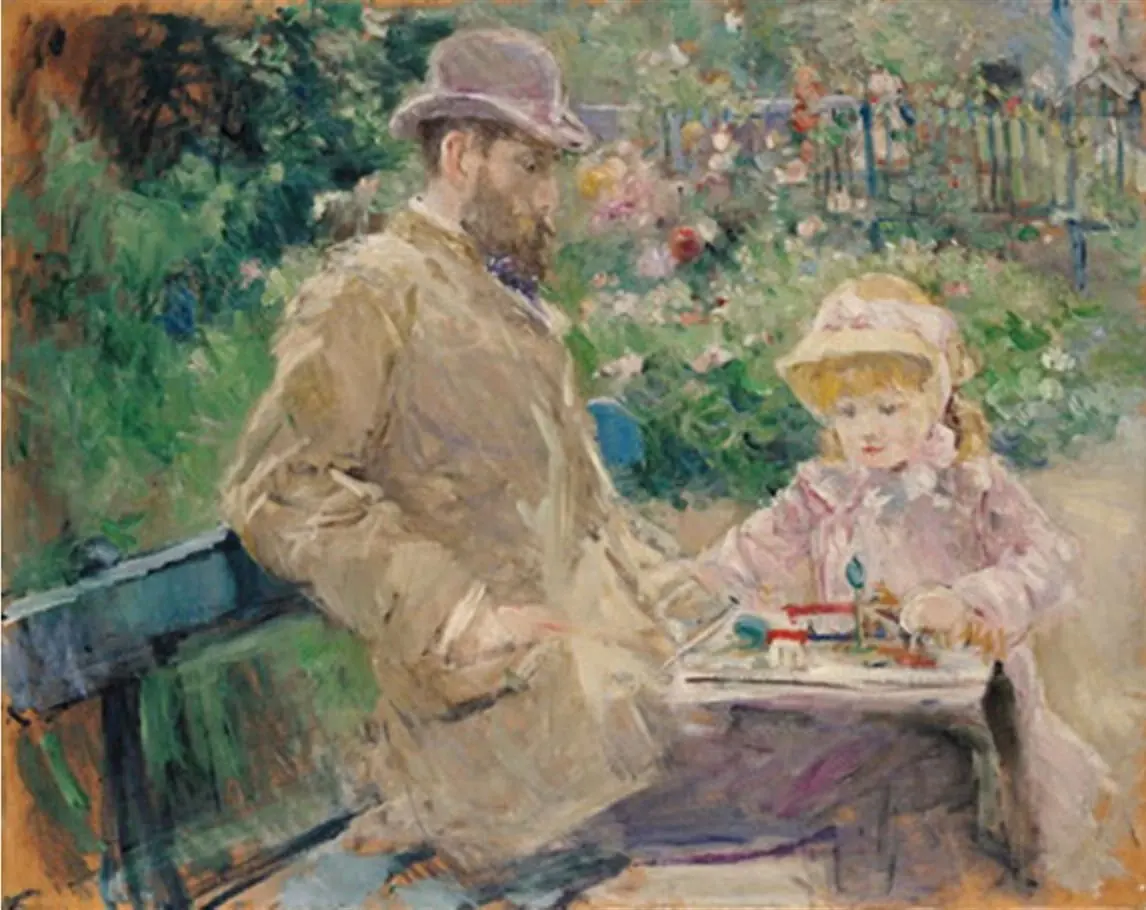
The artist’s husband, Eugène Manet, sits in the garden of their house at Bougival watching their daughter Julie play with a small toy village. Quick strokes make the landscape shimmer around them.
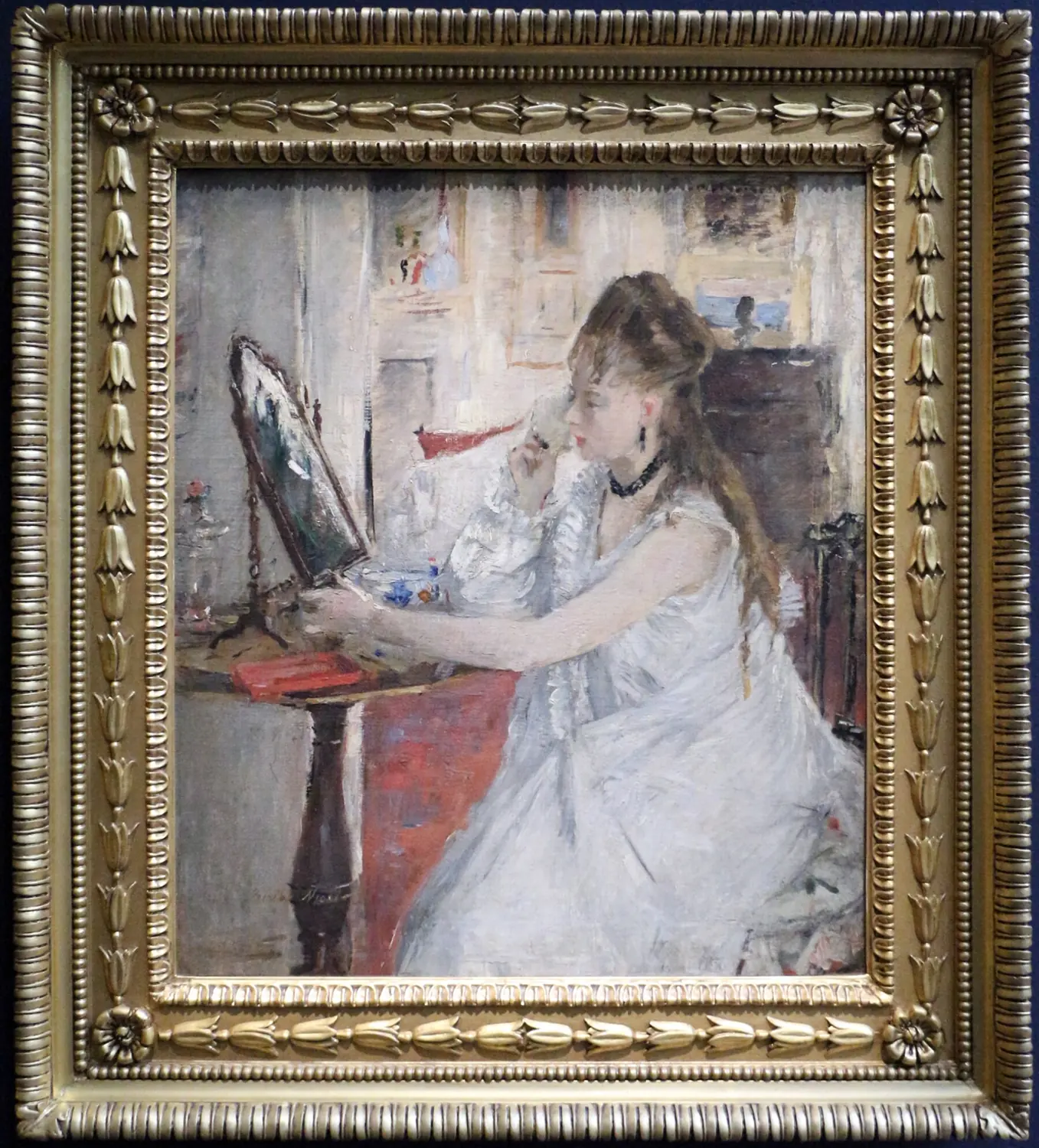
A young woman in a pale dress powders herself in front of a mirror. The simple scene is a pretext for playing whites, pinks and reflections in soft light.
Berthe Morisot’s death certificate described her as ’without profession’, even though she had exhibited and sold her paintings all her life.
 Pierre-Auguste Renoir
 Claude Monet
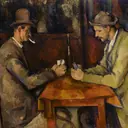 Paul Cézanne
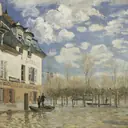 Alfred Sisley
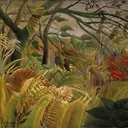 Henri Rousseau
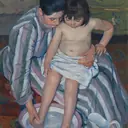 Mary Cassatt
 Ilya Repin
 Edgar Degas