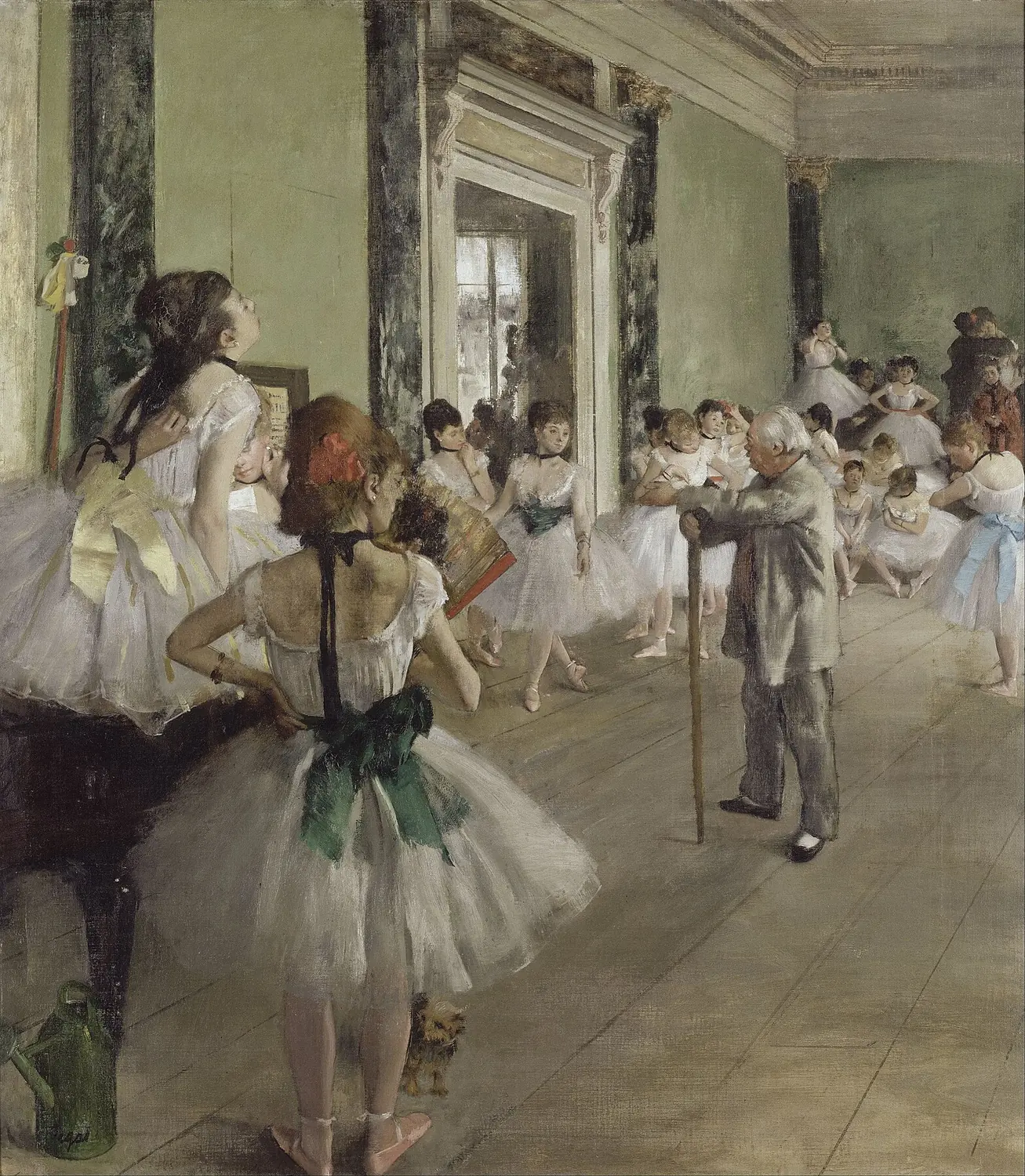
The Dance Class
In a room at the Opéra, an old ballet master leaning on his cane rehearses a young dancer while the other pupils stretch, scratch or adjust their tutus. A little dog hides in the foreground.
Edgar Degas observed the dance, the opera, the races and the cafés of Paris with a draughtsman’s sharp eye. His dancers, caught in rehearsal more than on stage, are among the most famous images of Impressionism.
Born in Paris in 1834 into a banking family, Edgar Degas studied law and then painting, admired Ingres, whom he met, and spent three years in Italy copying the masters. He first painted portraits and history scenes.
A founding member of the Impressionist exhibitions, he took part in almost all of them while calling himself a ’realist’. From the 1870s he devoted himself to the dancers of the Opéra, racehorses and women at work. As his eyesight failed, he turned to pastel and sculpture. He died in Paris in 1917.
Degas framed his scenes like photographs: figures cut off by the edge, views from above, empty spaces. He drew constantly, recomposed in the studio from studies and used pastel with brilliant colours. More than half his work is devoted to dance.
In a room at the Opéra, an old ballet master leaning on his cane rehearses a young dancer while the other pupils stretch, scratch or adjust their tutus. A little dog hides in the foreground.
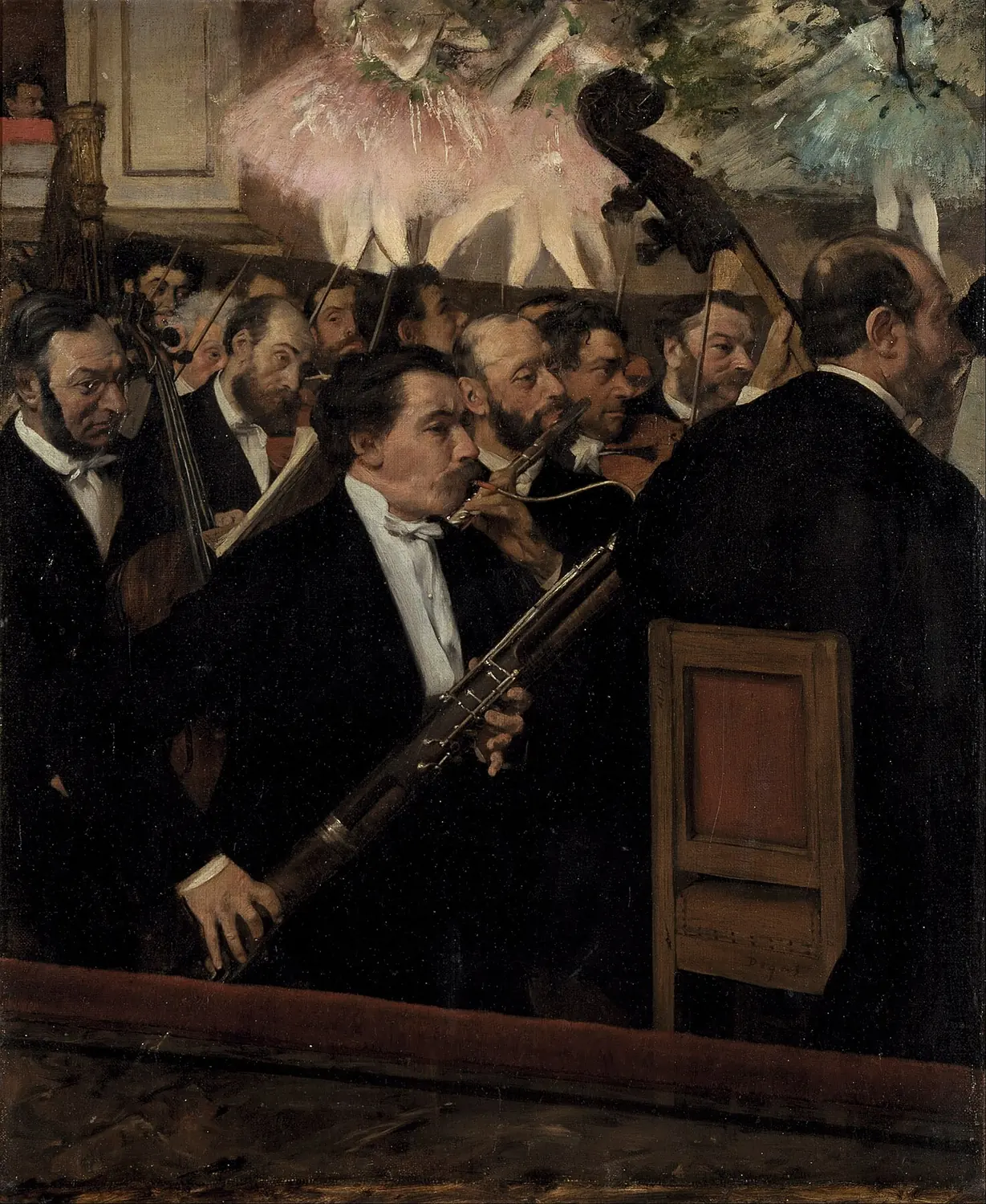
The orchestra’s musicians play in the pit, packed tightly together. Above them, cut off by the frame, the legs and tutus of the dancers lit by the footlights.
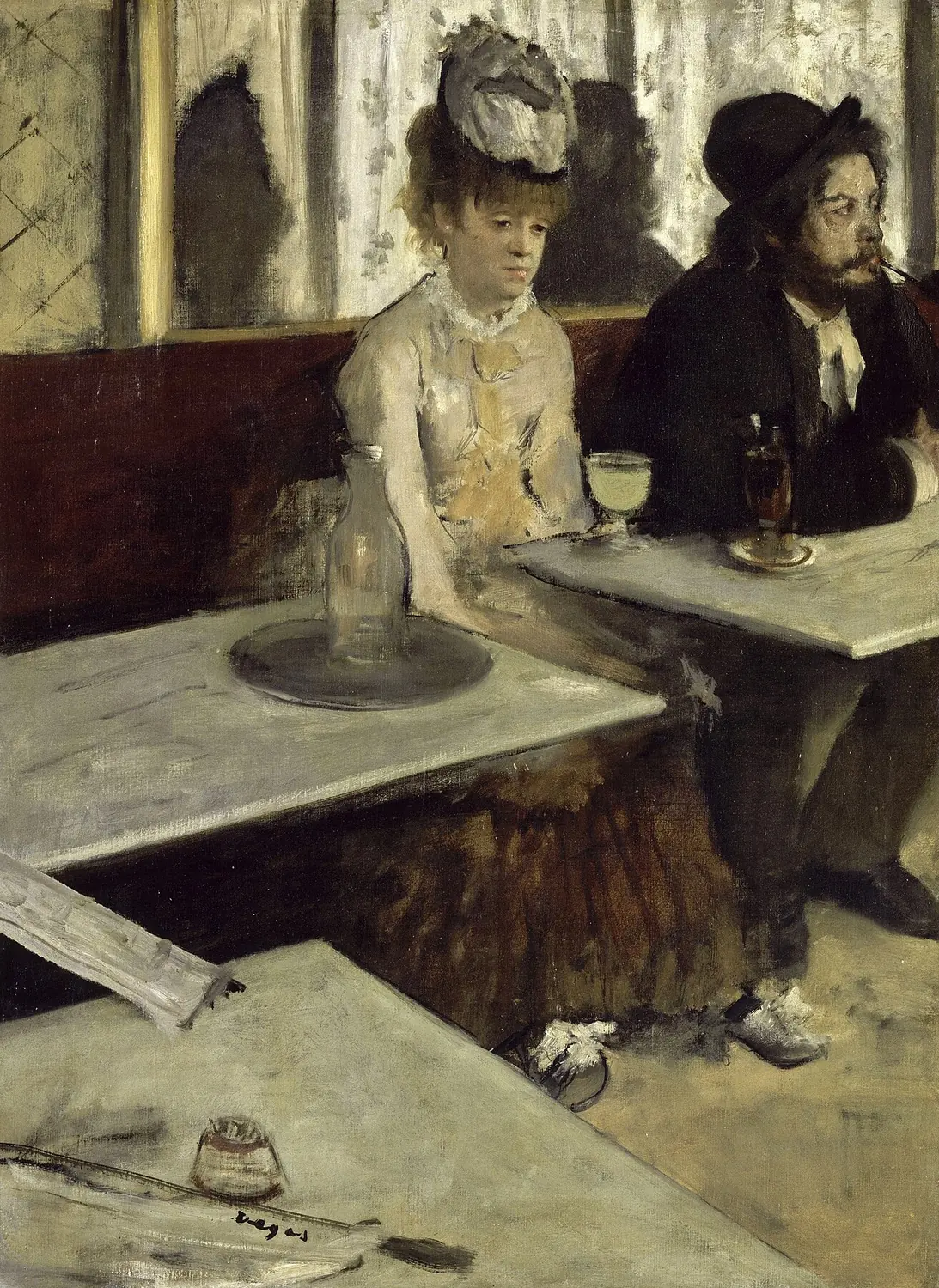
A woman and a man sit side by side at a café, looking vacant, not speaking. The empty zigzag tables and off-centre framing heighten the sense of loneliness.
In The Orchestra at the Opera, the bassoonist in the centre is his friend Désiré Dihau; the dancers above are cut off at the neck, as if seen from the orchestra pit.
 James McNeill Whistler
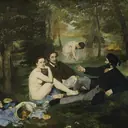 Édouard Manet
 Camille Pissarro
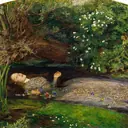 John Everett Millais
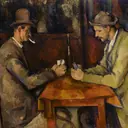 Paul Cézanne
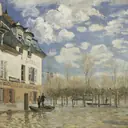 Alfred Sisley
 Claude Monet
 Berthe Morisot