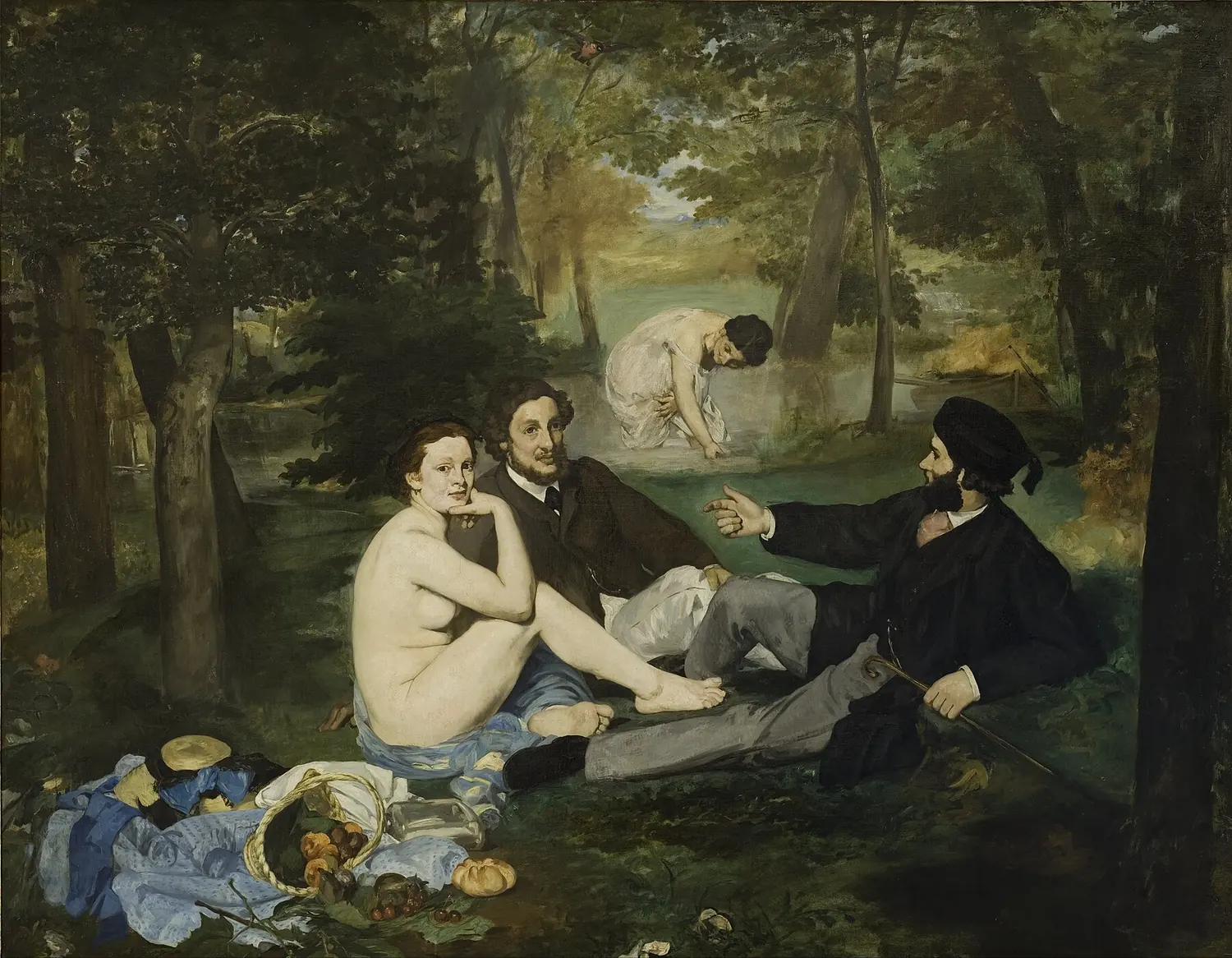
Luncheon on the Grass
Two fashionably dressed men picnic in a wood with a naked woman who looks at us, while another bathes in the background. Manet took a classical subject and transposed it into contemporary life: the public was shocked.
The painter of modern life
An elegant Parisian bourgeois and an unwilling provocateur, Édouard Manet caused scandal by painting modern life with new frankness. His flat areas of colour and free brushwork opened the way for the Impressionists.
Born in Paris in 1832 to a family of magistrates, Édouard Manet failed the naval academy exam and sailed as a cadet on a ship to Rio de Janeiro. Back home he won his father’s permission to study painting and copied Titian, Velázquez and Goya in the Louvre.
In 1863 Luncheon on the Grass caused a scandal at the Salon des Refusés, followed by Olympia in 1865. A friend of the Impressionists, he nevertheless refused to exhibit with them and always sought official recognition. He received the Legion of Honour in 1882 and died the following year, aged fifty-one.
Manet did away with gradations and traditional shading: he set frank light and dark areas side by side, flat patches, intense blacks. He painted contemporary subjects, cafés, races and balls, with a visible, rapid touch inspired by Velázquez and Frans Hals.
Two fashionably dressed men picnic in a wood with a naked woman who looks at us, while another bathes in the background. Manet took a classical subject and transposed it into contemporary life: the public was shocked.
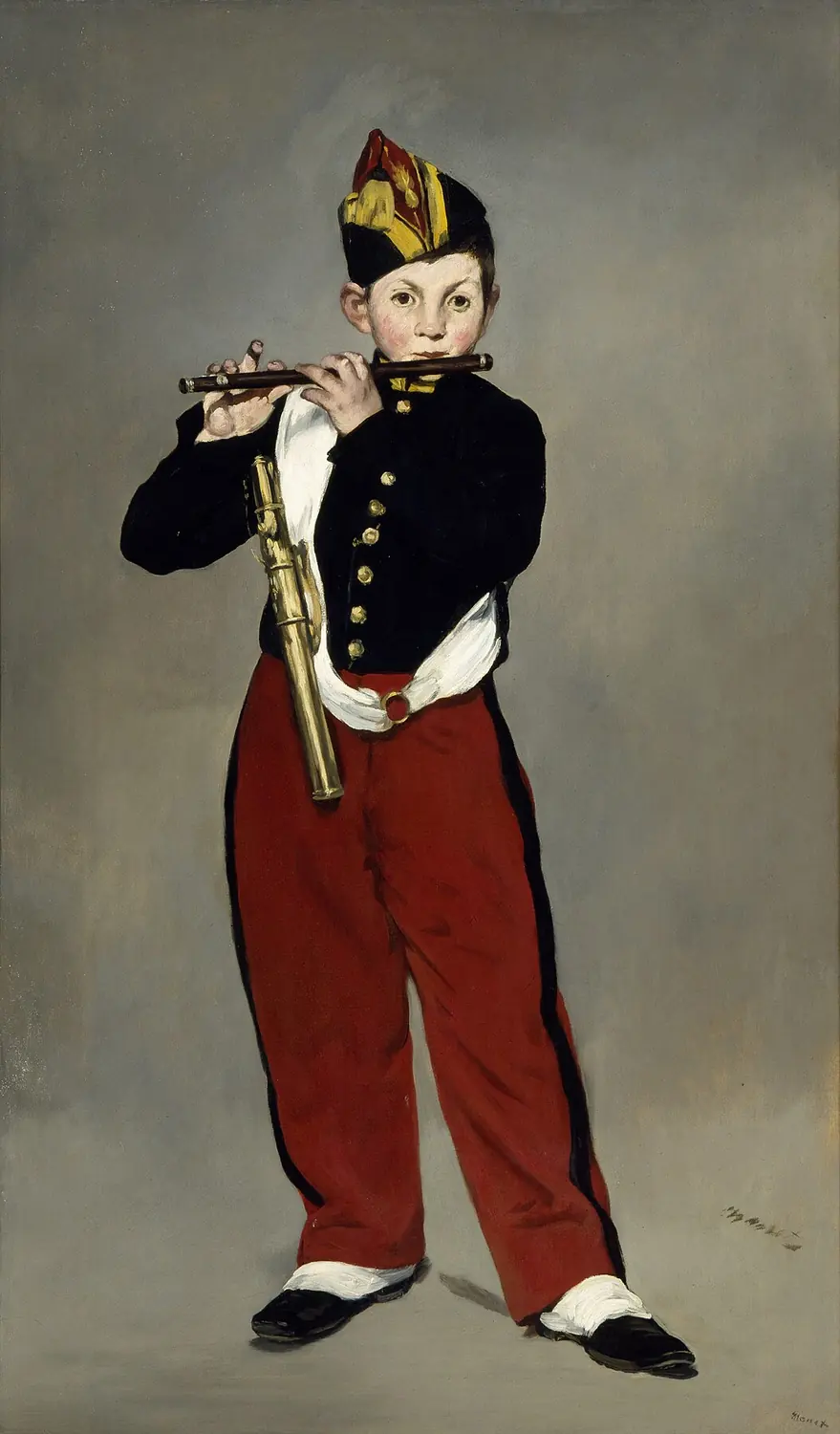
A young musician of the Imperial Guard plays the fife, standing in uniform against a plain grey background. The red trousers with a black stripe, the flat colour and the absence of setting make this portrait astonishingly modern.
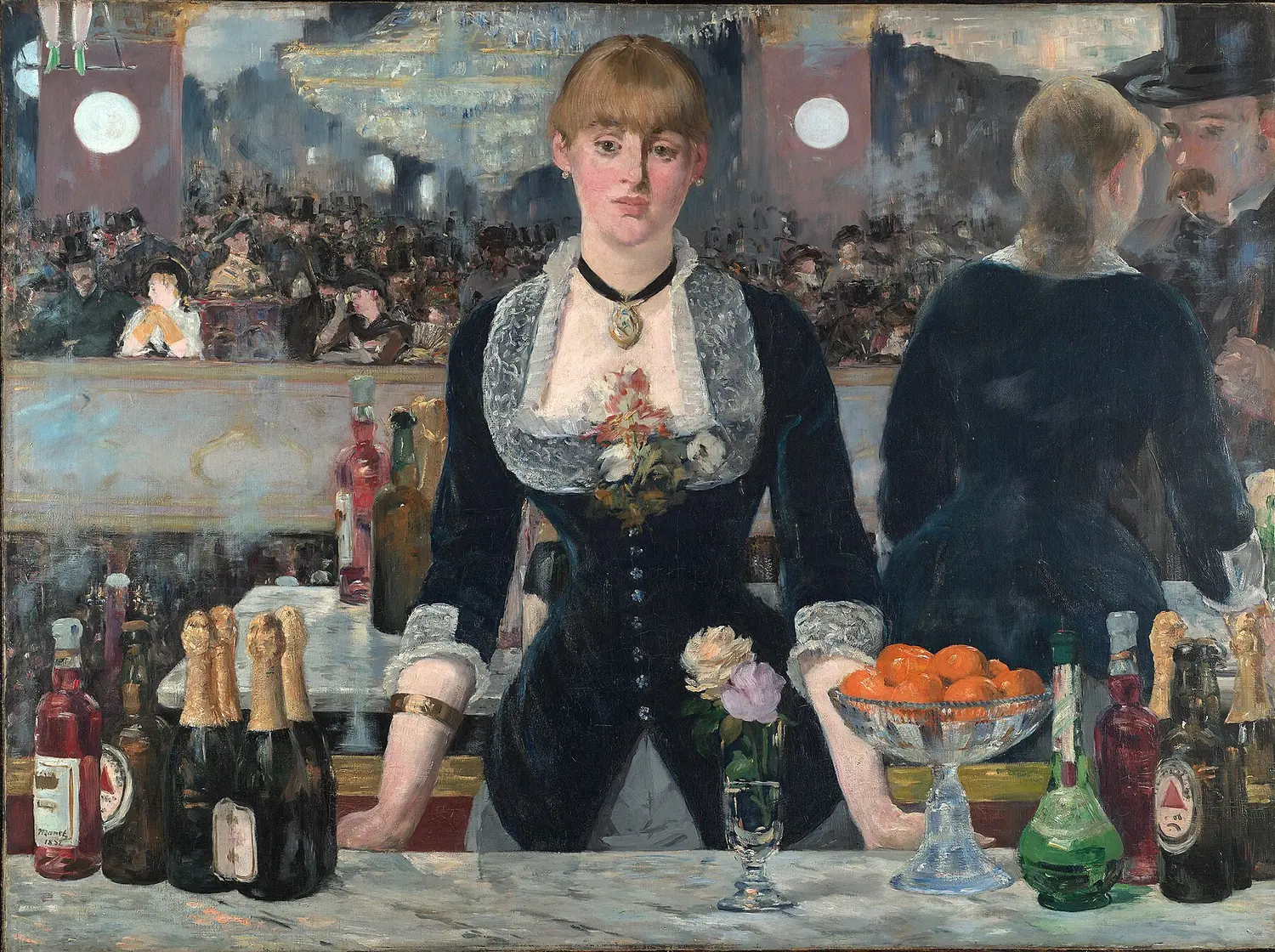
A weary barmaid stands behind the counter of a café-concert. In the mirror behind her are reflected the hall, the crowd and a customer… whose position does not quite match reality. Top left, you can see a trapeze artist’s feet.
The Fifer was rejected by the 1866 Salon. The jury found this young musician against a plain background without any setting too flat; Manet had conceived it after seeing Velázquez’s portraits in Madrid.
 Camille Pissarro
 Edgar Degas
 James McNeill Whistler
 John Everett Millais
 Paul Cézanne
 Alfred Sisley
 Claude Monet
 Berthe Morisot