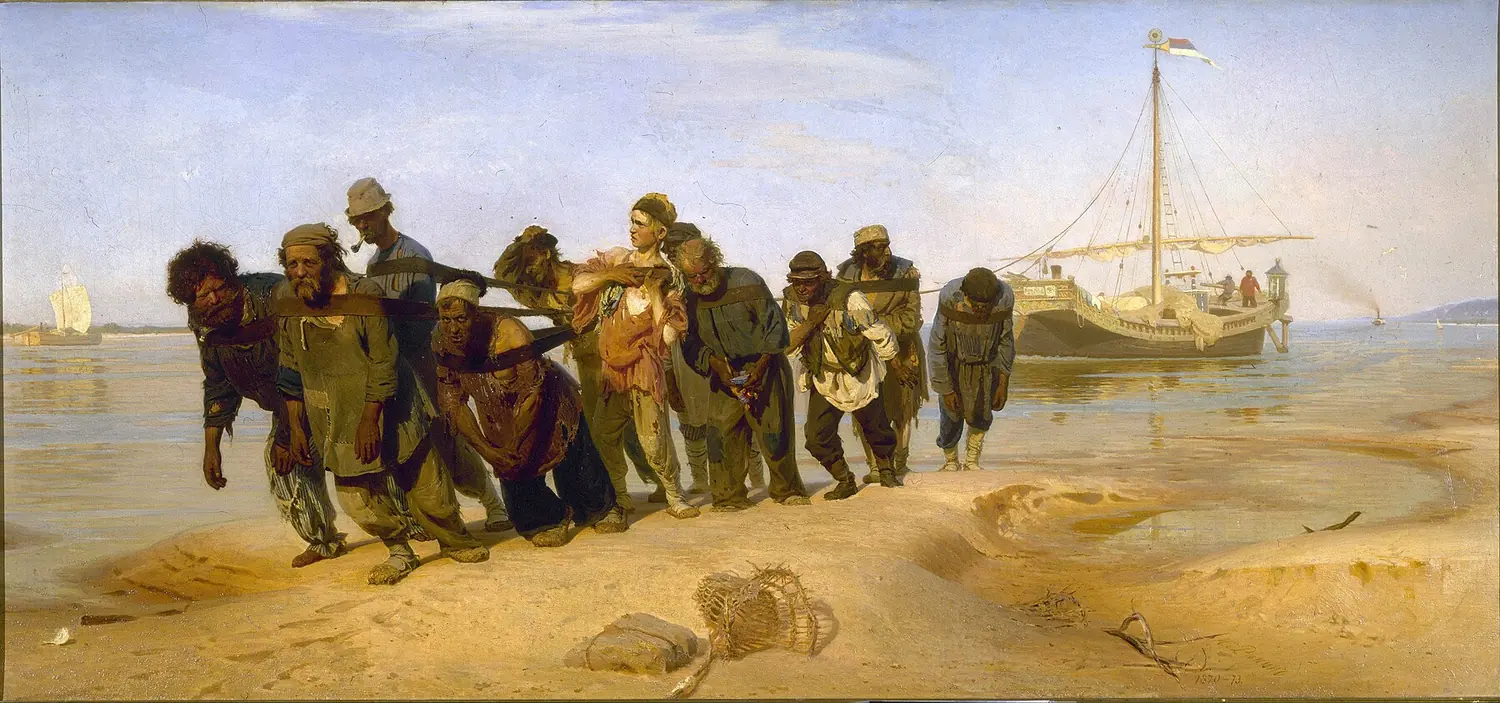
Barge Haulers on the Volga
Eleven men harnessed with straps haul a heavy barge along the Volga under a crushing sun. In the middle of the group a young man raises his head, as if refusing resignation.
The great Realist of the Russian Empire
Ilya Repin painted the society of the Russian Empire in all its diversity: exhausted workers, peasants, Cossacks, artists and writers. His monumental canvases and striking portraits make him the most famous Realist painter of his country.
Born in 1844 in Chuhuiv, in present-day Ukraine, then part of the Russian Empire, Ilya Repin first learned icon painting. In 1864 he entered the Imperial Academy of Arts in St Petersburg. Barge Haulers on the Volga, finished in 1873, made him famous.
Close to the ’Wanderers’, painters who organised travelling exhibitions across the country, he painted history scenes and popular life, and portraits of Tolstoy, Mussorgsky and many others. A professor at the Academy, he settled in 1903 at Kuokkala on the Gulf of Finland. After 1917 the village found itself in independent Finland; he stayed there until his death in 1930.
Repin combined solid drawing, free brushwork and luminous colour. He studied his models at length, made many sketches and sought to express each character. His large compositions are crowded with faces that are all different.
Eleven men harnessed with straps haul a heavy barge along the Volga under a crushing sun. In the middle of the group a young man raises his head, as if refusing resignation.
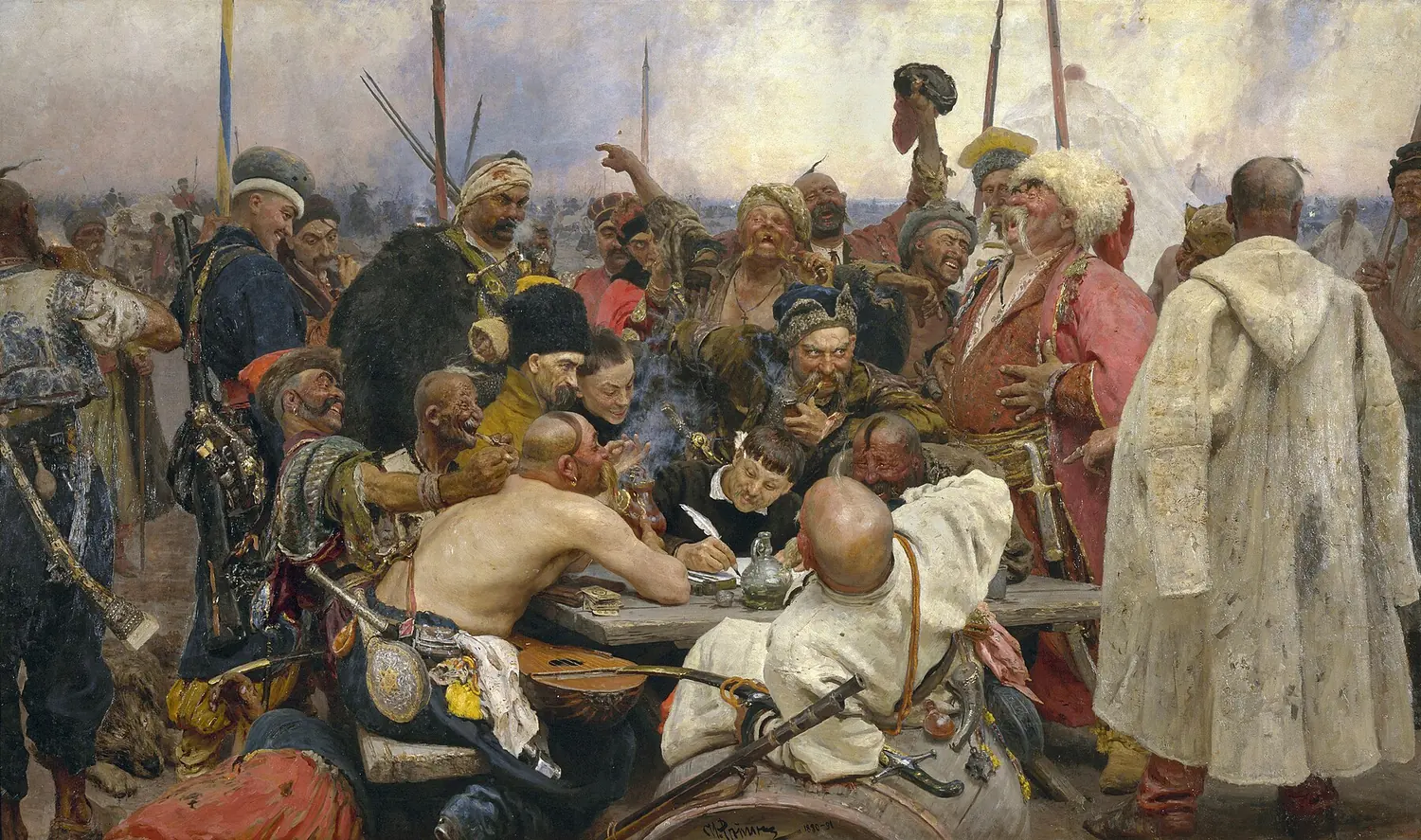
A group of laughing Zaporozhian Cossacks crowds around a table where a scribe writes, at their dictation, a mocking reply to the Ottoman sultan who had demanded their surrender. Repin worked for more than ten years on this picture full of laughter.
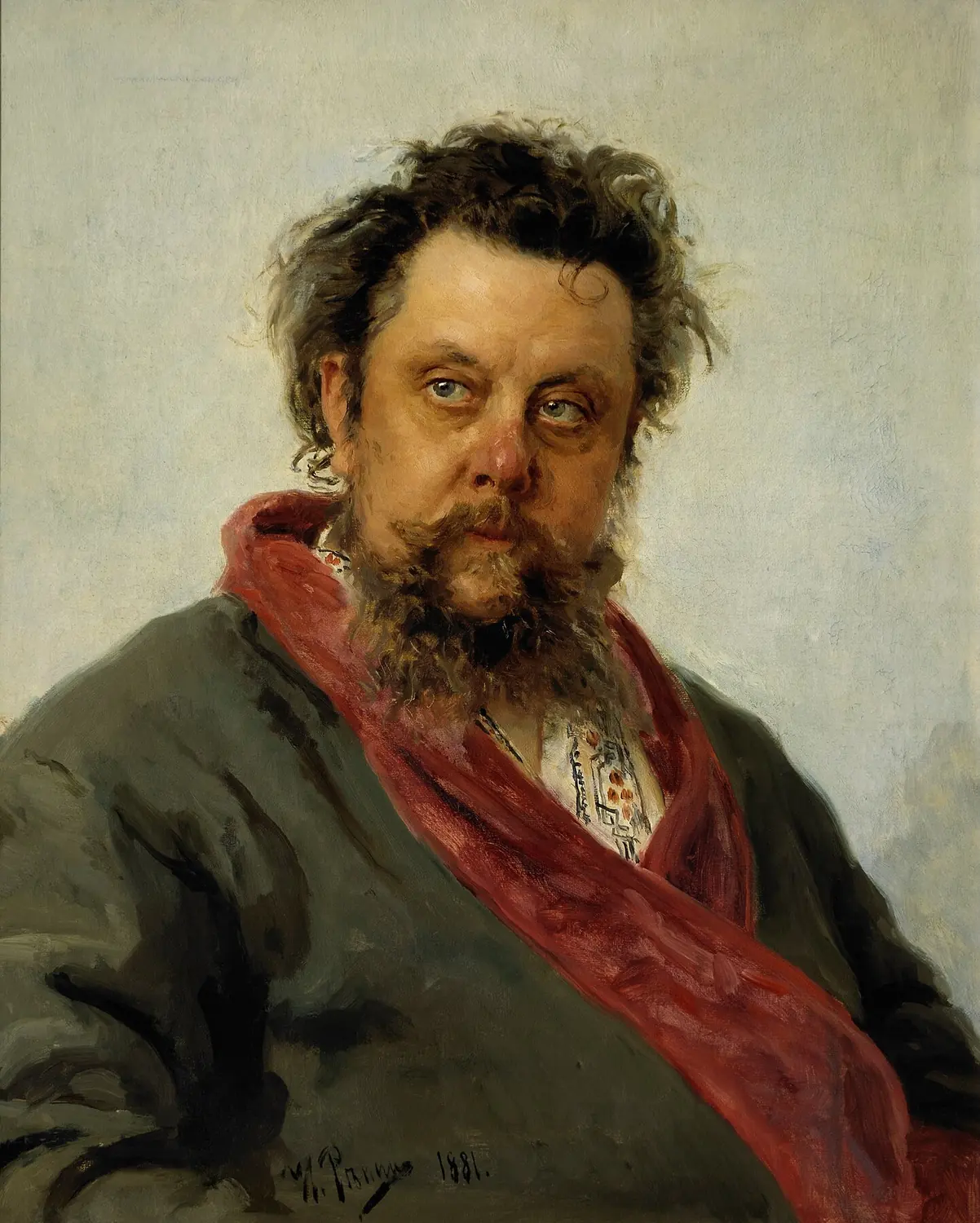
The composer Modest Mussorgsky in a dressing gown, hair dishevelled, gaze lost. Painted in hospital shortly before his death, this devastatingly frank portrait is one of Repin’s most famous.
Repin painted Mussorgsky’s portrait in four sittings in hospital, a few days before the composer’s death in March 1881. He gave the fee he received for it to the musician’s memorial.
 Henri Rousseau
 Mary Cassatt
 Berthe Morisot
 Pierre-Auguste Renoir
 Claude Monet
 Gustave Caillebotte
 Paul Gauguin
 Raja Ravi Varma