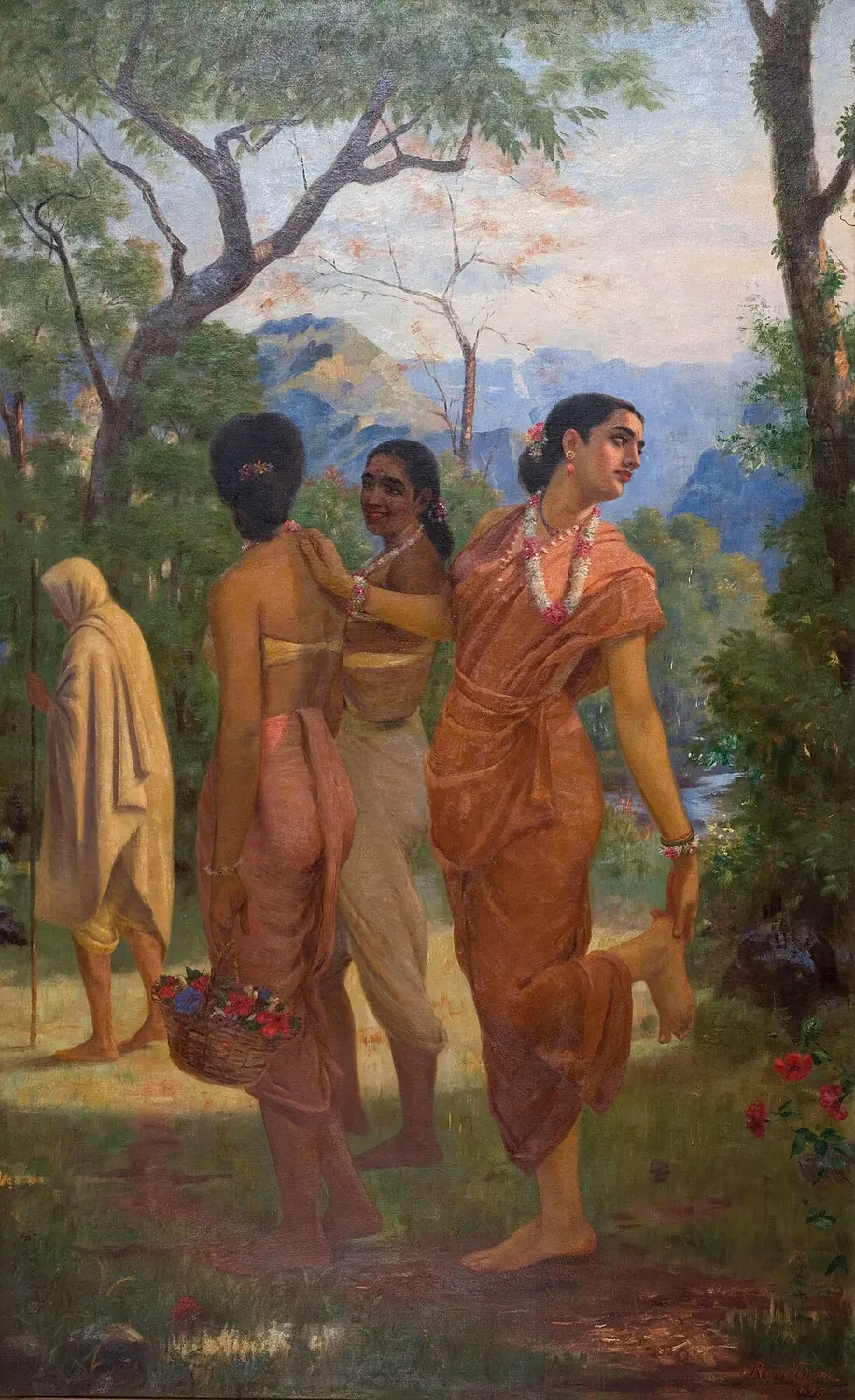
Shakuntala
Shakuntala, heroine of a play by the poet Kalidasa, pretends to remove a thorn from her foot so she can turn and look one last time at King Dushyanta, with whom she has fallen in love.
The painter who gave India’s legends a face
The first great Indian painter to master European oil painting, Raja Ravi Varma illustrated India’s epics and gods. Thanks to his lithographic press, his images reached every household in the country.
Born in 1848 in Kilimanoor, in the kingdom of Travancore in southern India, into an aristocratic family linked to the court, Ravi Varma showed a talent for drawing very young. He learned oil painting by watching visiting European painters, then developed his technique on his own.
Rewarded at the Vienna exhibition in 1873 and in Chicago in 1893, he became portraitist to maharajas and princes. In 1894 he opened a lithographic press near Bombay that reproduced his paintings cheaply. He died in Kilimanoor in 1906.
Ravi Varma combined European academic realism, perspective and oil modelling with the subjects, costumes and landscapes of India. His heroines in brightly coloured saris became reference images for depicting India’s great stories.
Shakuntala, heroine of a play by the poet Kalidasa, pretends to remove a thorn from her foot so she can turn and look one last time at King Dushyanta, with whom she has fallen in love.
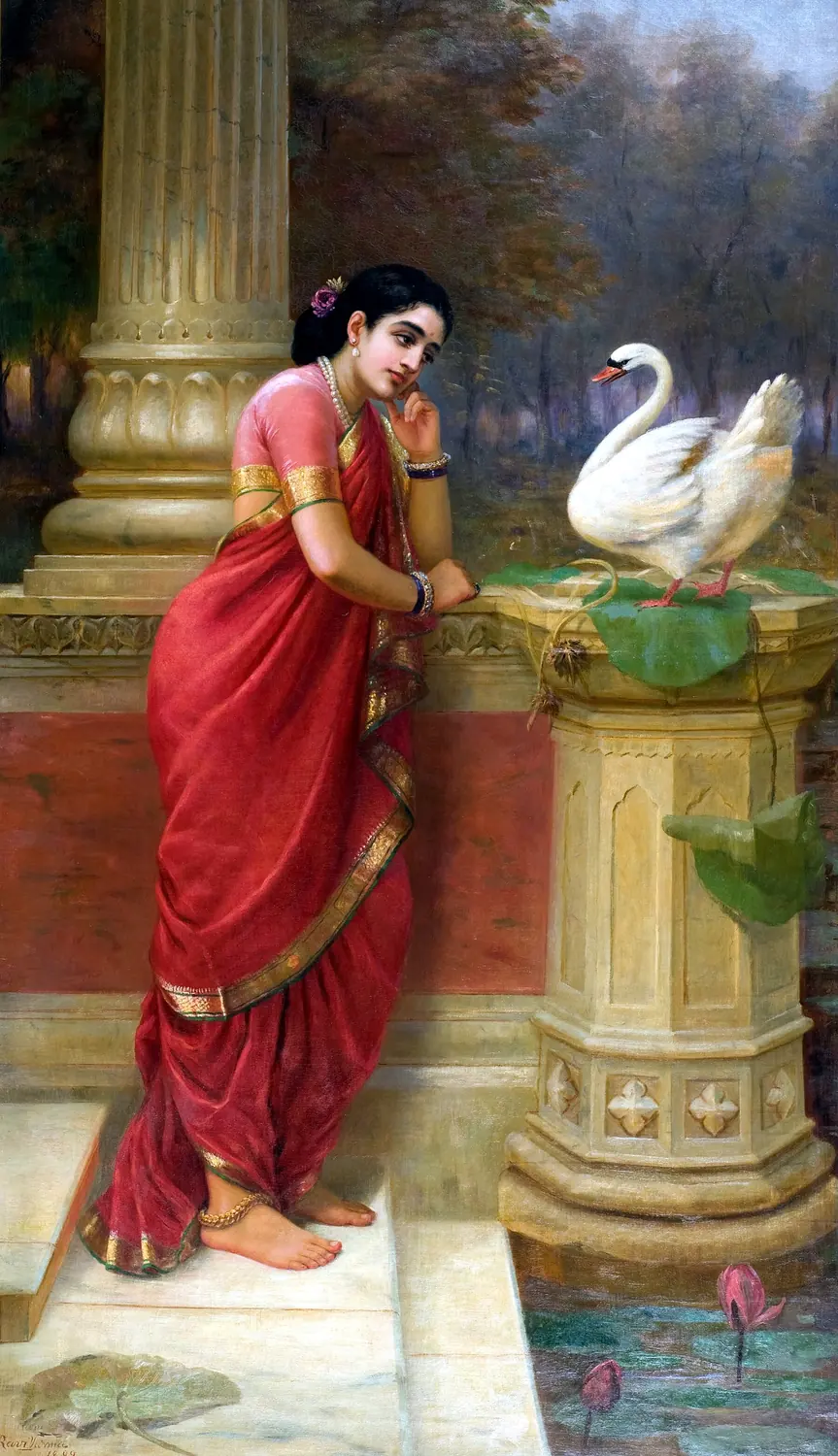
Princess Damayanti listens to the messenger swan telling her about King Nala. The palace setting, fabrics and light give the story a dreamy softness.
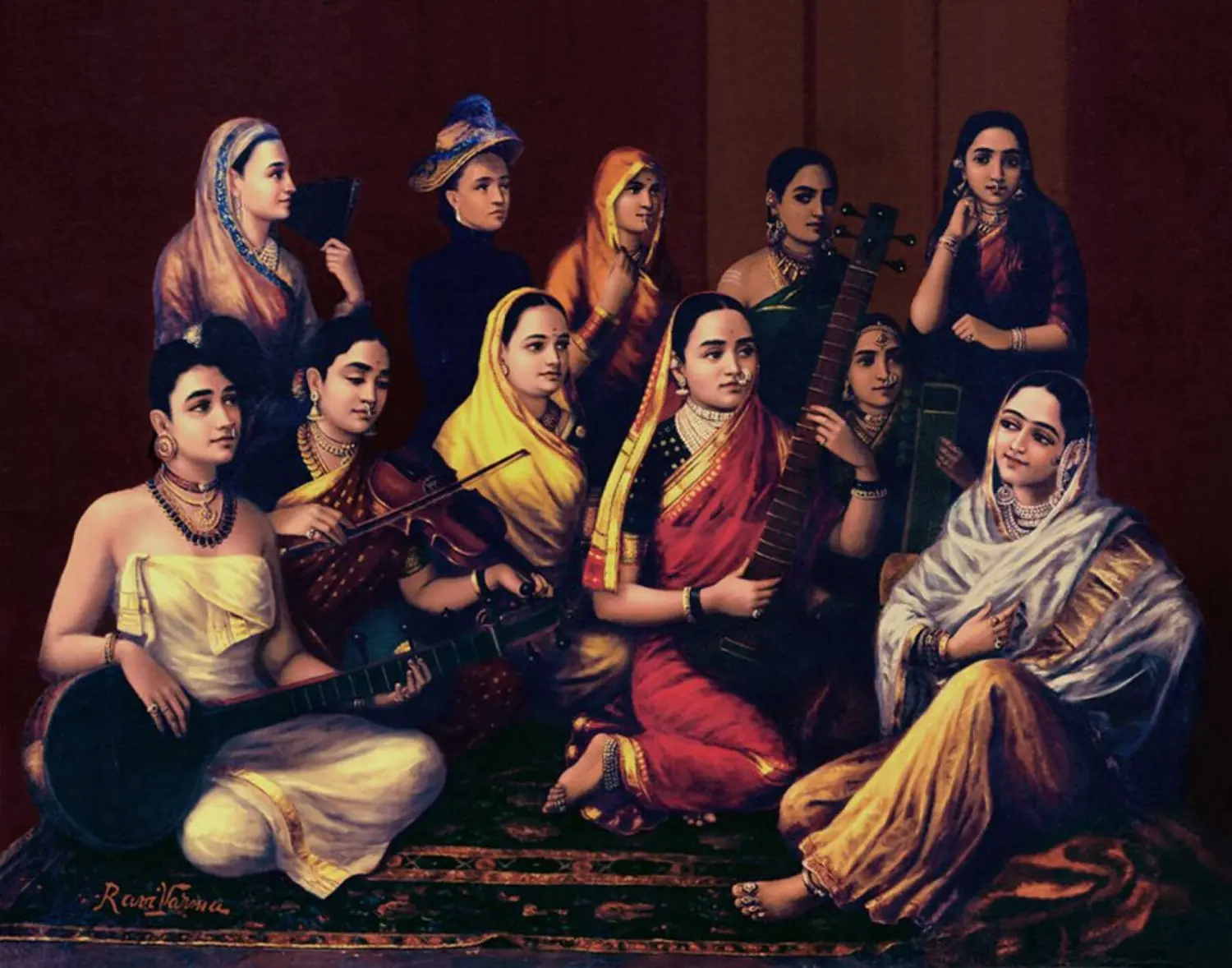
Eleven women musicians from different regions of India, each dressed in her region’s tradition, play string, wind and percussion instruments. The painting celebrates the country’s diversity.
His chromolithographs of Hindu deities, sold for a few coins, shaped the way generations of Indians picture their gods, right down to film posters.
 Gustave Caillebotte
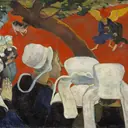 Paul Gauguin
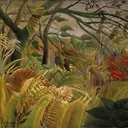 Henri Rousseau
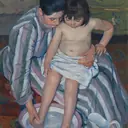 Mary Cassatt
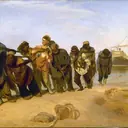 Ilya Repin
 Vincent van Gogh
 Berthe Morisot
 Pierre-Auguste Renoir