lesPeintres.eu

Eugène Delacroix

Born: Charenton-Saint-Maurice, 1798Died: Paris, 1863

The leader of Romanticism

RomanticismFrance
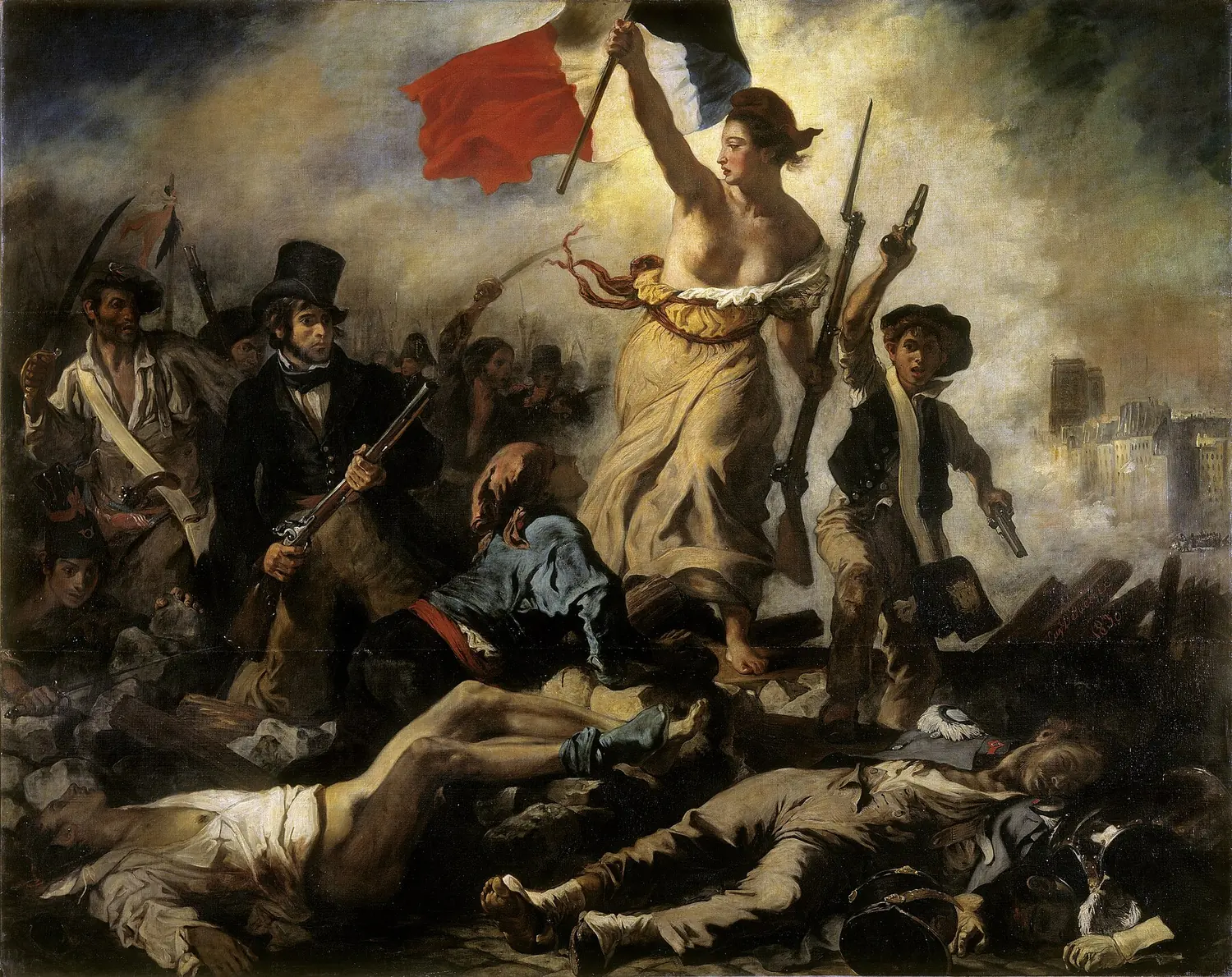
Liberty Leading the People — Eugène Delacroix
Liberty Leading the People, 1830 · Louvre Museum, Paris
Public domain — Wikimedia Commons

1In brief

Painter of colour, movement and passion, Eugène Delacroix was the great master of French Romanticism. Liberty Leading the People has become a symbol of the Republic.

2Life

Born in 1798 at Charenton-Saint-Maurice, Eugène Delacroix trained in Paris and admired Rubens, the Venetians and Géricault, for whom he posed. From 1822 his paintings caused scandal with their violent subjects and free colour.

In 1832 a journey to Morocco and Algeria revealed a new light and new colours, which he recorded in watercolour sketchbooks. He then decorated great Parisian buildings, including a chapel in the church of Saint-Sulpice. A friend of Chopin and George Sand, he kept a valuable journal. He died in Paris in 1863.

3Style and technique

Delacroix made colour the driving force of painting: he juxtaposed complementary tones, red and green, orange and blue, which heighten one another, and placed touches of pure colour even in shadows. His compositions are driven by diagonals, swirls and dramatic gestures.

4Works

Liberty Leading the People — Eugène Delacroix

Liberty Leading the People

1830Louvre Museum, Paris

During the July Revolution of 1830, a woman in a Phrygian cap, the allegory of Liberty, leads the people of Paris over a barricade, the tricolour flag in her hand. Beside her are a worker, a bourgeois in a top hat and a boy armed with pistols.
Public domain — Wikimedia Commons

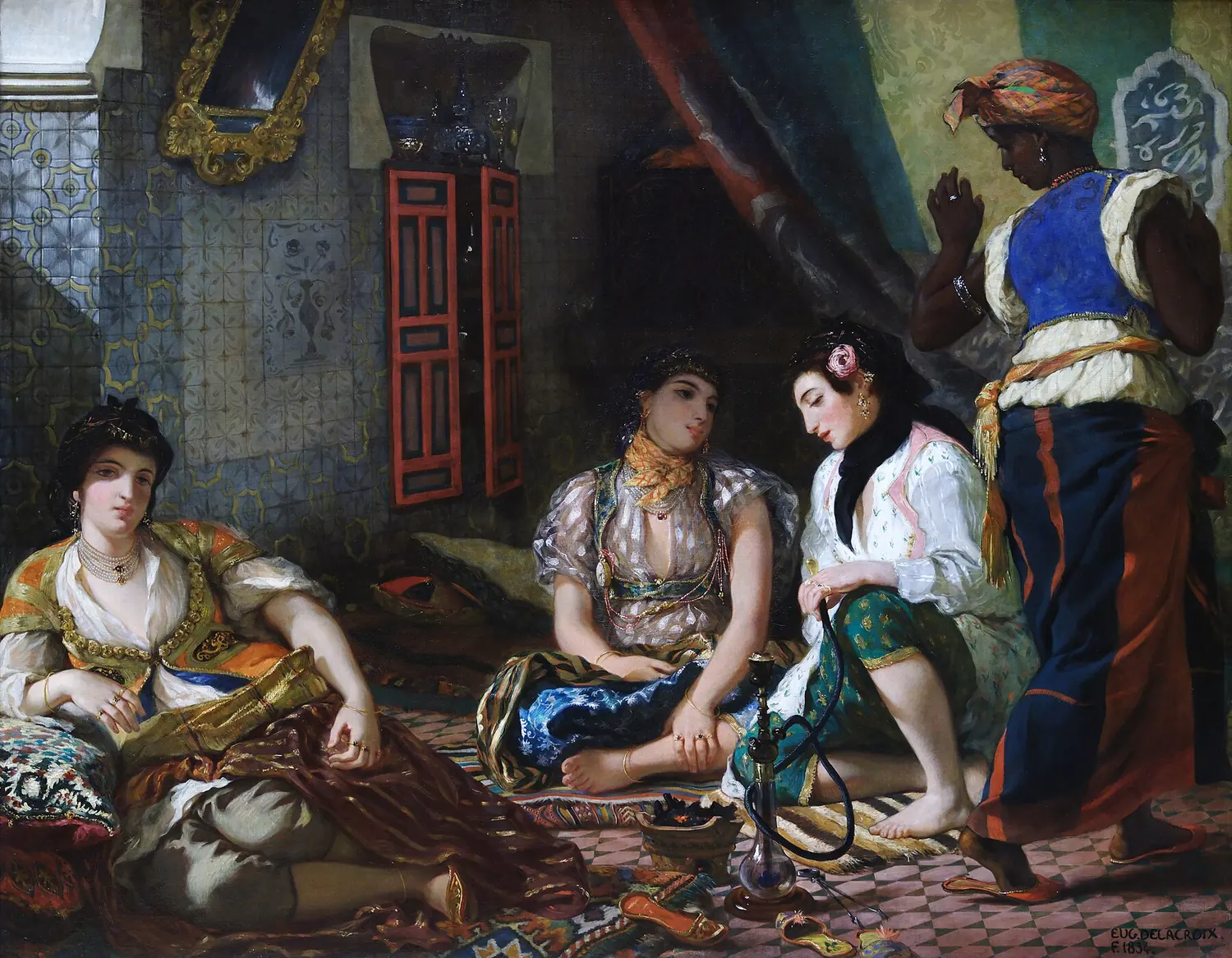
The Women of Algiers in their Apartment — Eugène Delacroix

The Women of Algiers in their Apartment

1834Louvre Museum, Paris

In an Algiers interior with colourful tiles, three seated women chat near a hookah while a Black servant turns her head. The subdued light and shimmering fabrics come from the 1832 journey.

Public domain — Wikimedia Commons

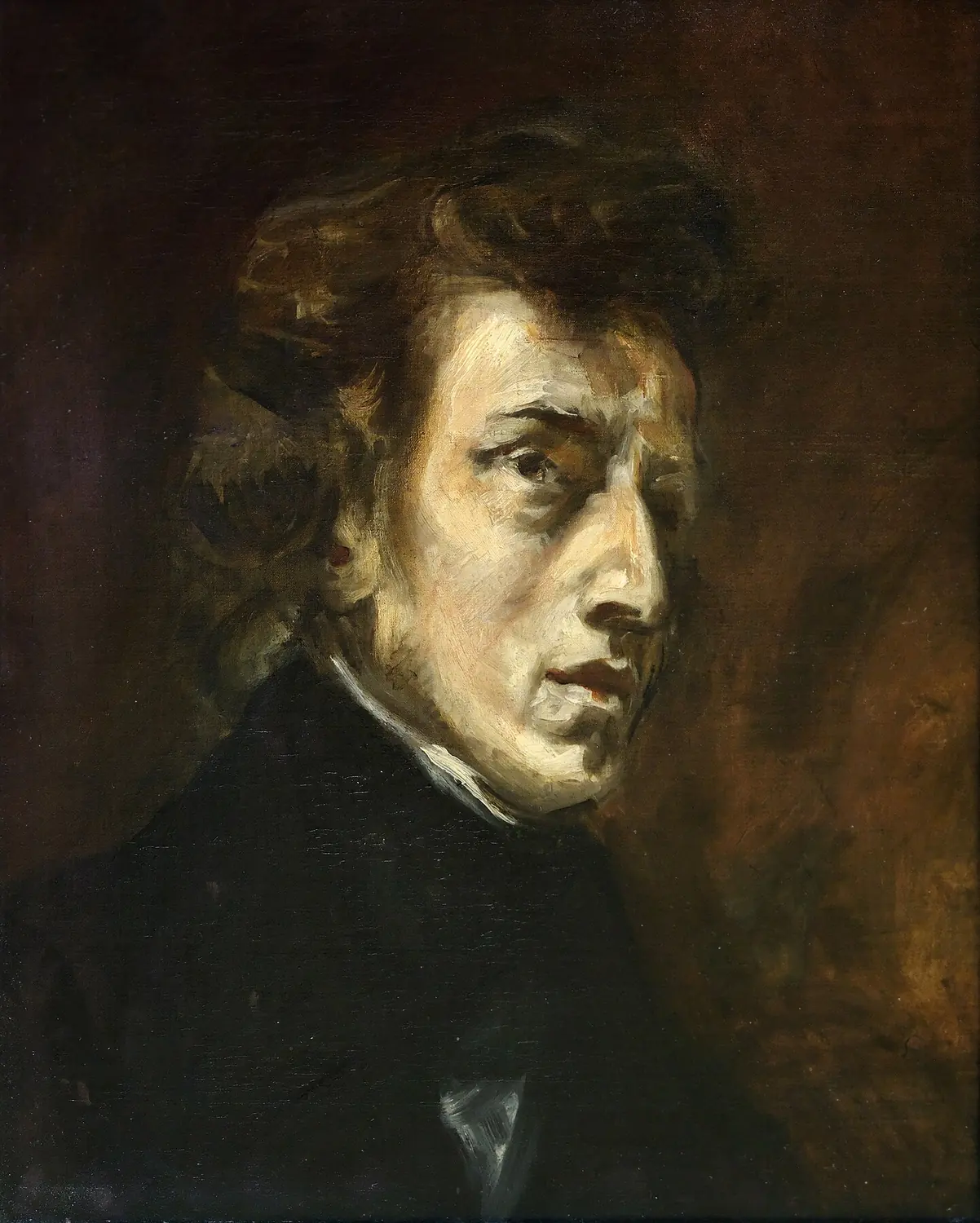
Portrait of Frédéric Chopin — Eugène Delacroix

Portrait of Frédéric Chopin

1838Louvre Museum, Paris

The composer Frédéric Chopin, his face tormented, seems lost in music. The quick brushstrokes and dramatic light convey the artist’s intensity.

Public domain — Wikimedia Commons

5Did you know?

The portrait of Chopin was originally part of a double portrait showing the musician at the piano and George Sand listening. The canvas was cut up after the painter’s death: Chopin is in the Louvre, George Sand in Copenhagen.

6Further

Contemporaries