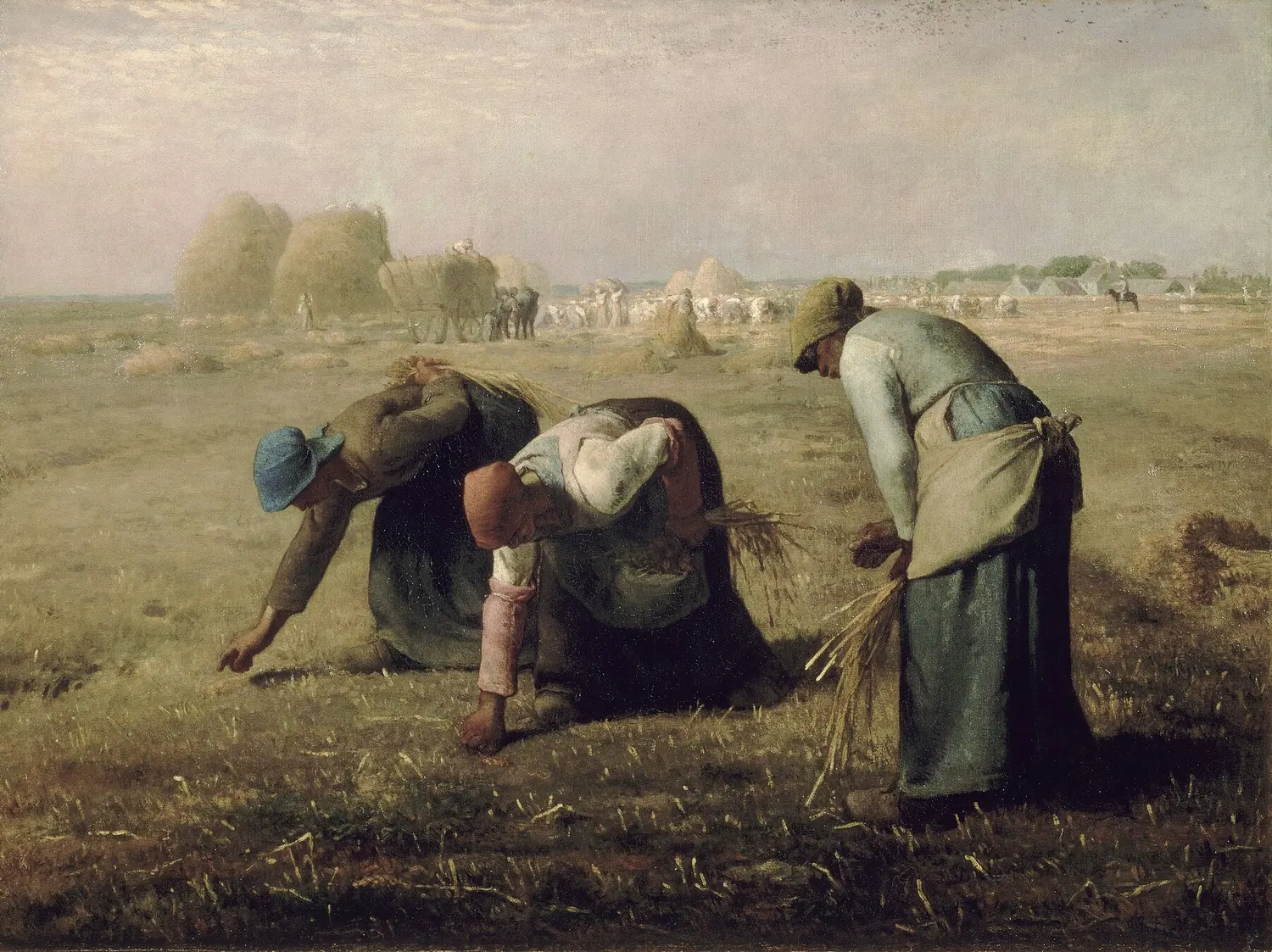
The Gleaners
Three peasant women bent towards the ground pick up the ears of wheat left after the harvest, while in the distance the rich owner’s stacks pile up. At the Salon some saw the painting as a denunciation of poverty.
The painter of peasants
The son of Norman peasants, Jean-François Millet gave farm workers the grandeur of heroes. His Gleaners and Angelus are among the most reproduced paintings in the world.
Born in 1814 in the hamlet of Gruchy, near Cherbourg, Jean-François Millet first worked in the fields with his family. A grant from the town of Cherbourg allowed him to study painting in Paris. At first he painted portraits and mythological scenes to earn a living.
In 1849, fleeing a cholera epidemic, he settled with his large family in Barbizon, on the edge of the Forest of Fontainebleau. From then on he painted peasant life, often in poverty himself. Success came late. He died in Barbizon in 1875.
Millet simplified forms, made figures heavier and slowed gestures to give peasants a monumental, almost sacred dignity. His colours are earthy and his light often that of evening. His pencil and pastel drawings are very powerful.
Three peasant women bent towards the ground pick up the ears of wheat left after the harvest, while in the distance the rich owner’s stacks pile up. At the Salon some saw the painting as a denunciation of poverty.
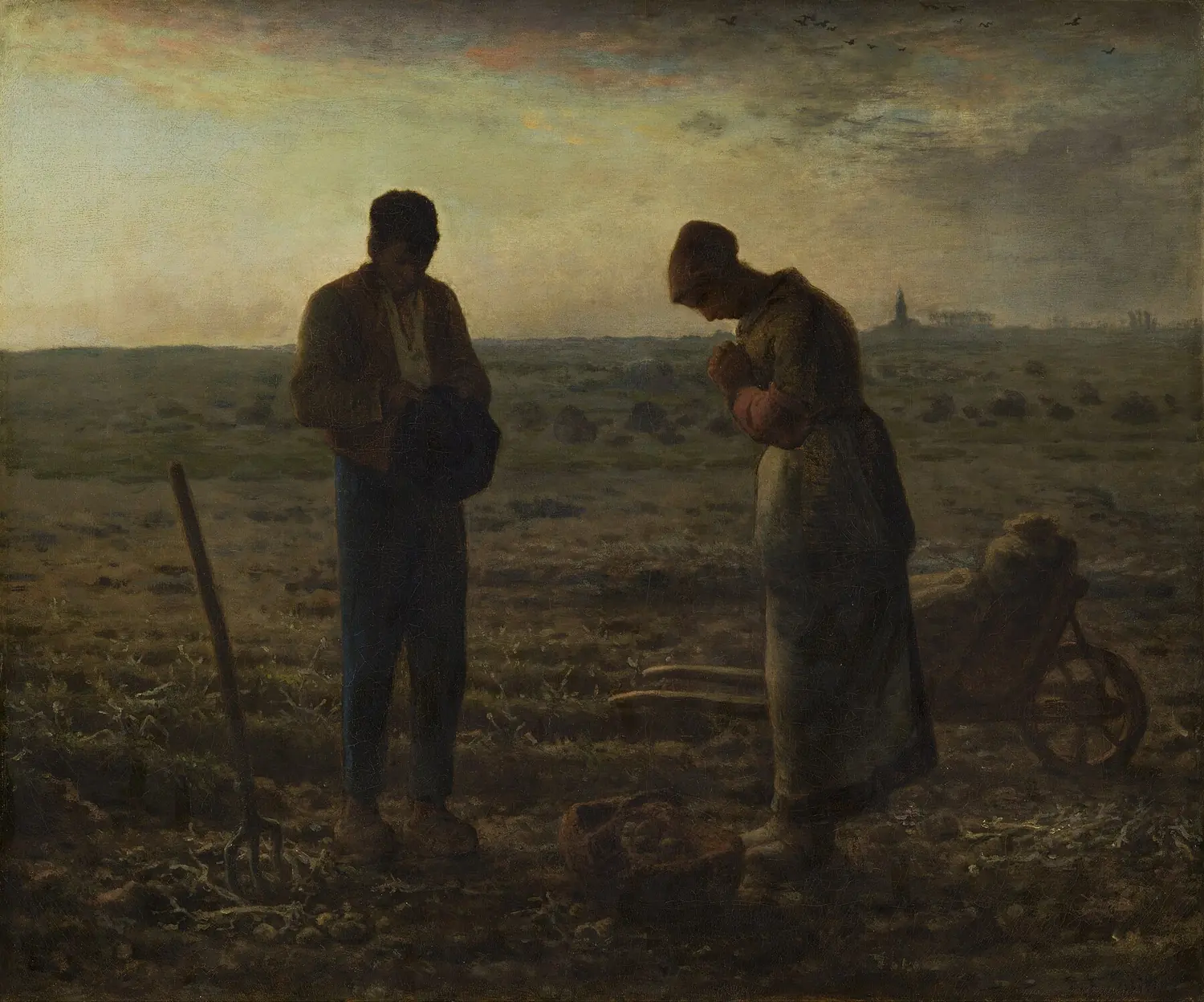
At sunset a peasant couple stops work to pray at the call of the church bell, visible in the distance. The barrow, fork and basket of potatoes rest at their feet.
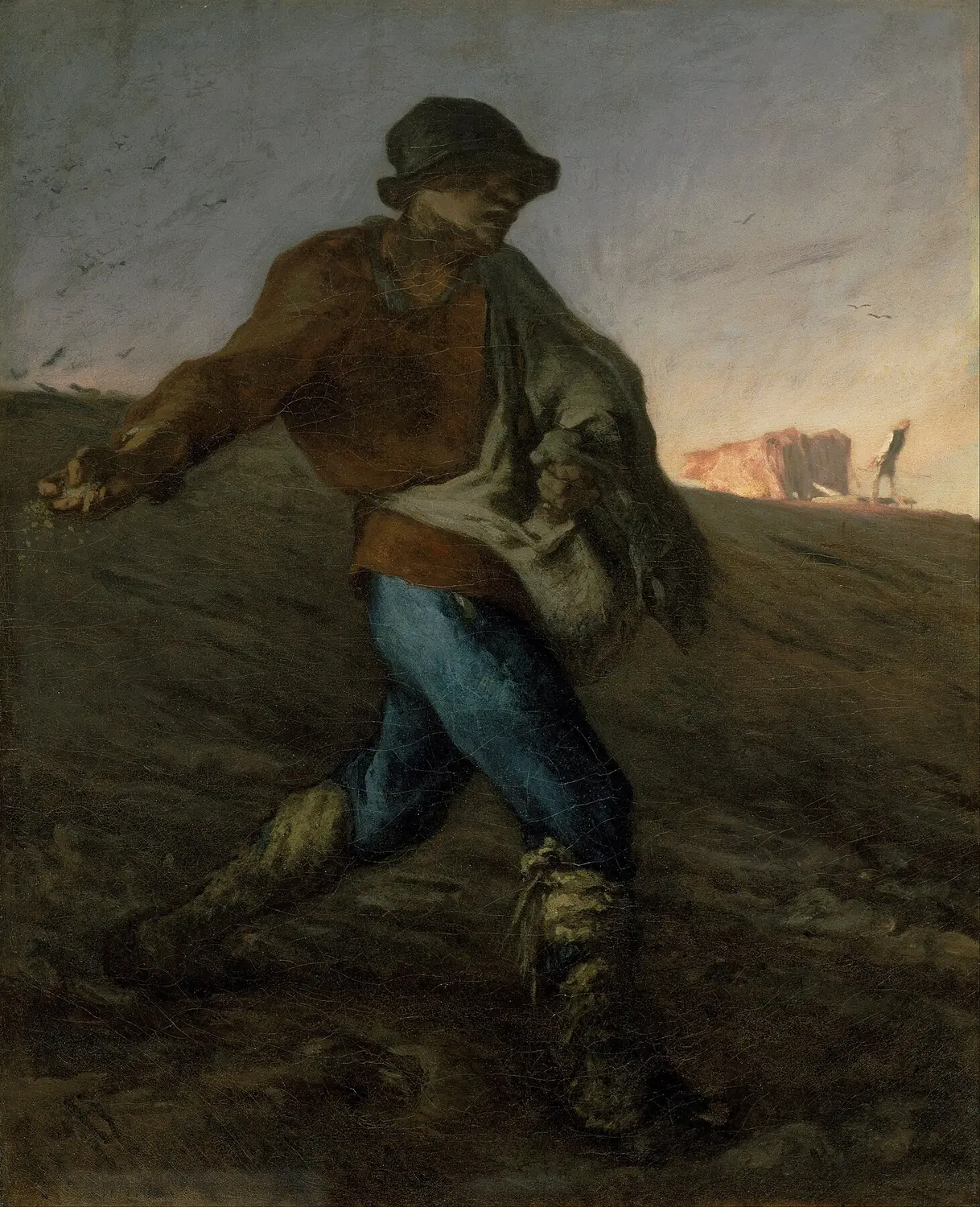
A peasant strides down the slope, scattering seeds with a sweeping gesture. A dark silhouette against the sky, he seems part of the earth itself.
Van Gogh admired Millet so much that he copied his works dozens of times, especially The Sower.
 Gustave Courbet
 Rosa Bonheur
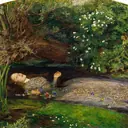 John Everett Millais
 Eugène Delacroix
 Camille Pissarro
 Utagawa Hiroshige
 Camille Corot
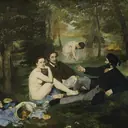 Édouard Manet