lesPeintres.eu

Théodore Géricault

Born: Rouen, 1791Died: Paris, 1824

The horse-mad Romantic

RomanticismFrance
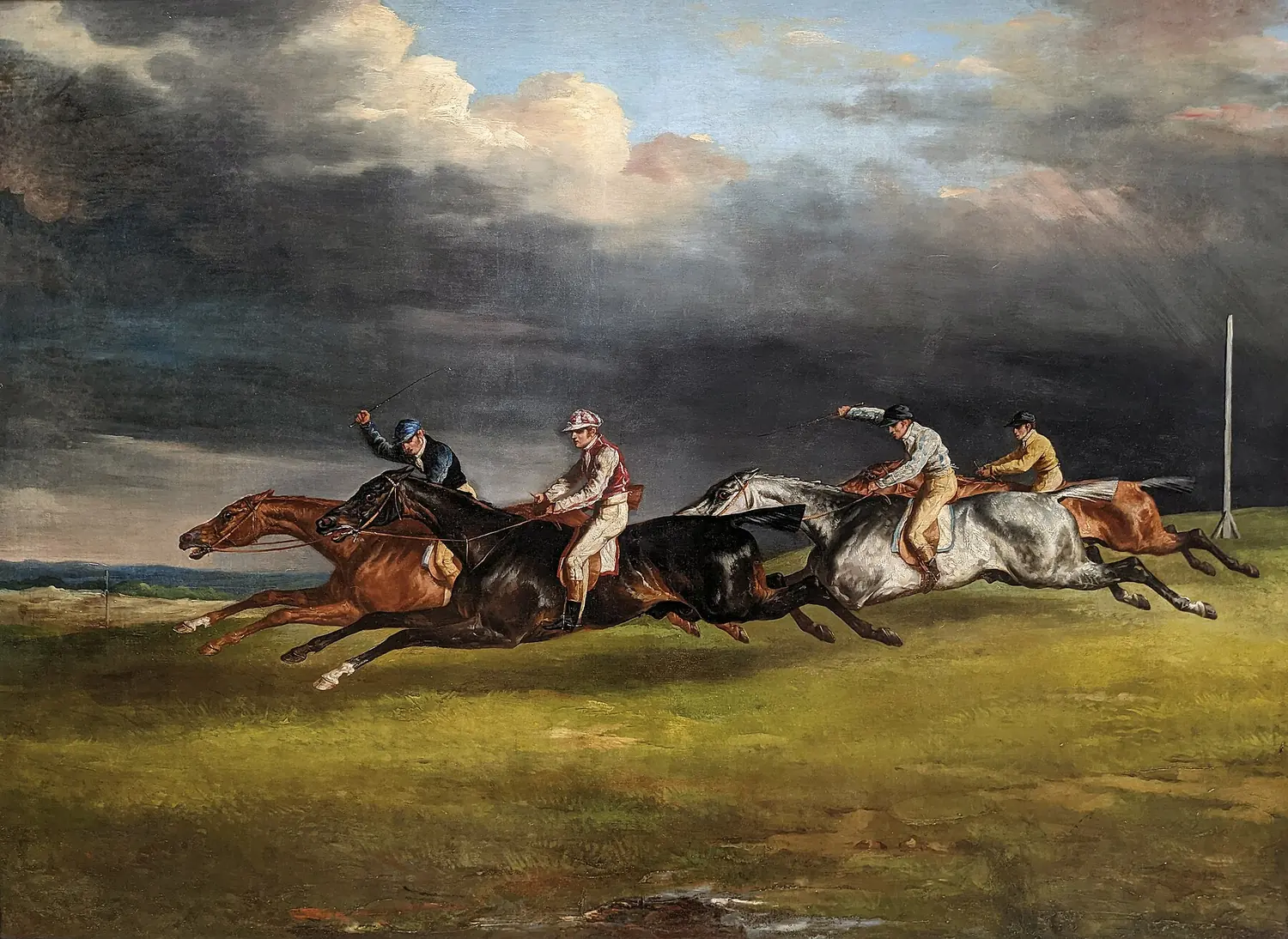
The 1821 Derby at Epsom — Théodore Géricault
The 1821 Derby at Epsom, 1821 · Louvre Museum, Paris
Public domain — Wikimedia Commons

1In brief

Dead at thirty-two, Théodore Géricault nevertheless launched Romanticism in painting with The Raft of the Medusa, a tragic news story treated as an epic. He painted horses with unequalled passion.

2Life

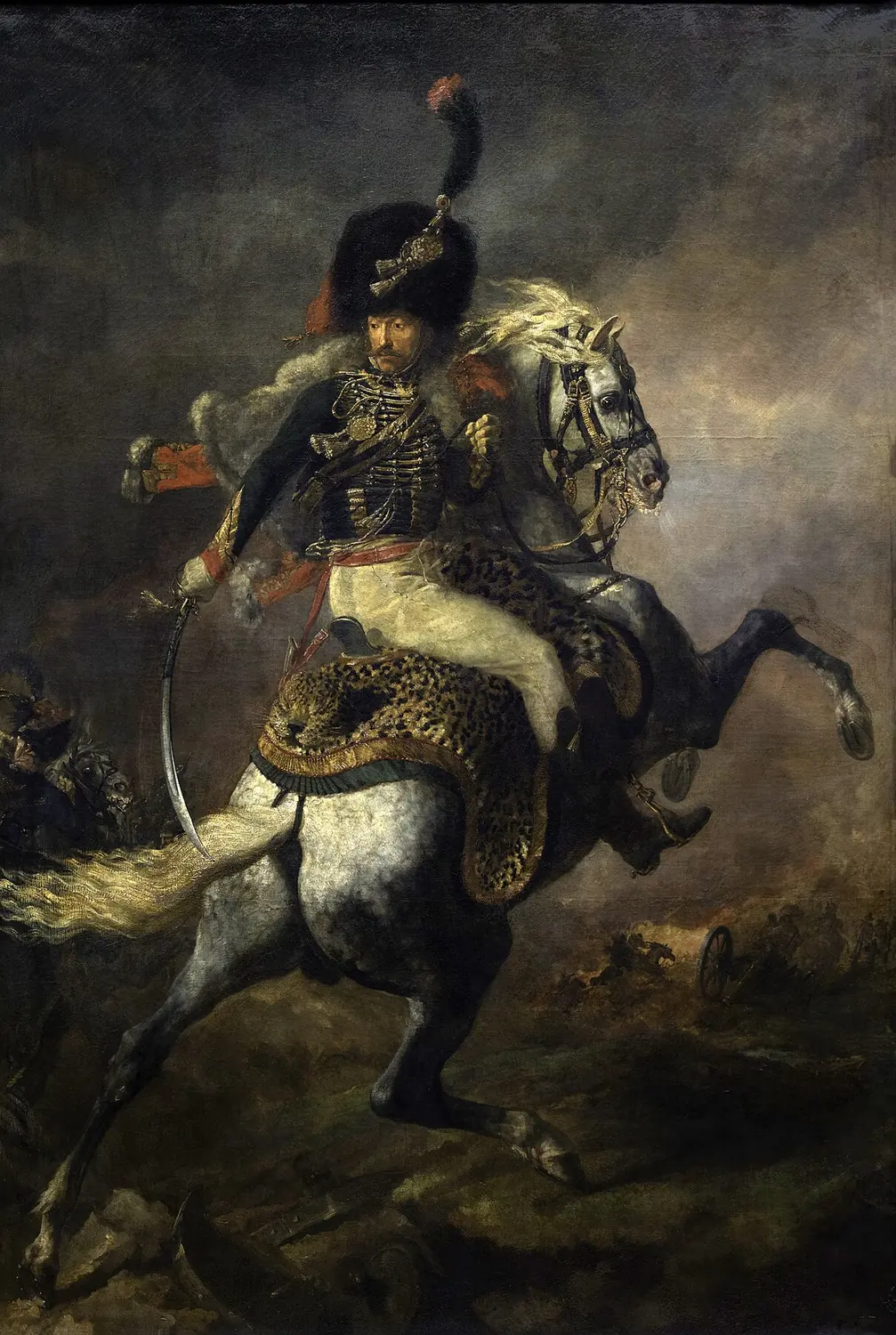
Born in Rouen in 1791 to a wealthy family, Géricault fell in love with horses early and drew them constantly in stables. At twenty-one he showed at the Salon a dashing Charging Chasseur that won him a medal.

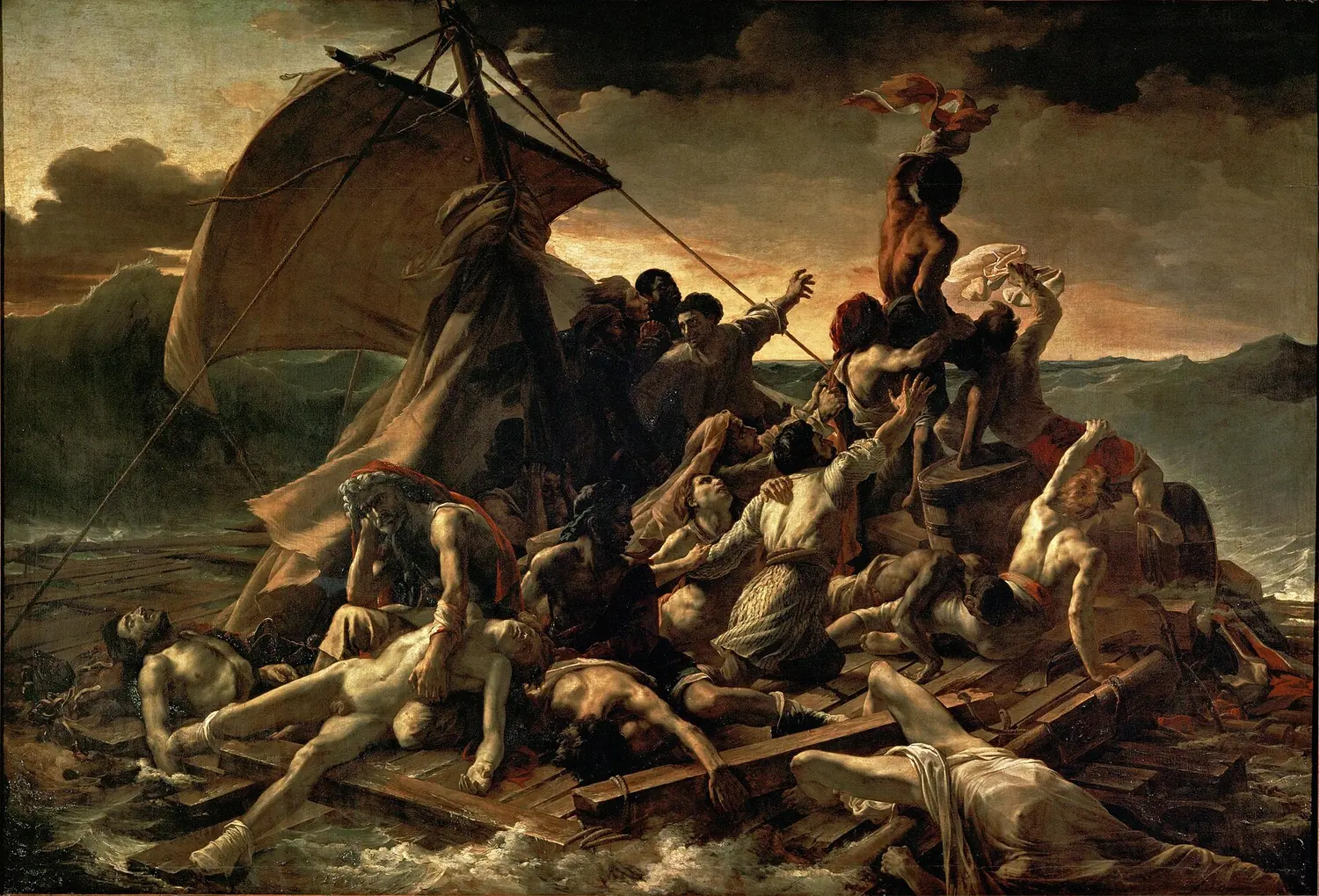
In 1816 the wreck of the frigate Méduse off Africa caused a scandal: on an abandoned raft, one hundred and forty-seven people, fifteen survivors. Géricault interviewed survivors, had a model of the raft built and worked for months on his huge painting, shown in 1819. Several falls from horses damaged his health; he died in Paris in 1824.
3Style and technique

Géricault painted powerful bodies inspired by Michelangelo, stormy skies and violent emotions. He chose modern subjects: a news story, racehorses, portraits of the sick. His pyramid compositions and contrasts of light and shadow give striking dramatic force.

4Works

The Raft of the Medusa — Théodore Géricault

The Raft of the Medusa

1819Louvre Museum, Paris

Castaways, exhausted or dying, crowd onto a raft battered by waves. At the top of a pyramid of bodies, a man waves a cloth towards a tiny ship on the horizon: hope rises from despair. The young Delacroix posed for one of the figures.

Public domain — Wikimedia Commons

The Charging Chasseur — Théodore Géricault

The Charging Chasseur

1812Louvre Museum, Paris

A cavalry officer on a rearing horse turns in the midst of the charge, in the smoke of battle. Géricault was twenty-one.

CC0 — Wikimedia Commons

The 1821 Derby at Epsom — Théodore Géricault

The 1821 Derby at Epsom

1821Louvre Museum, Paris

Four racehorses gallop flat out across an English course under a threatening sky. Their legs stretched forwards and backwards give an impression of extraordinary speed.

Public domain — Wikimedia Commons

5Did you know?

In The 1821 Derby at Epsom, the horses have all four legs stretched out in the air. More than fifty years later, Eadweard Muybridge’s photographs showed that a galloping horse never takes this position.

6Further

Contemporaries