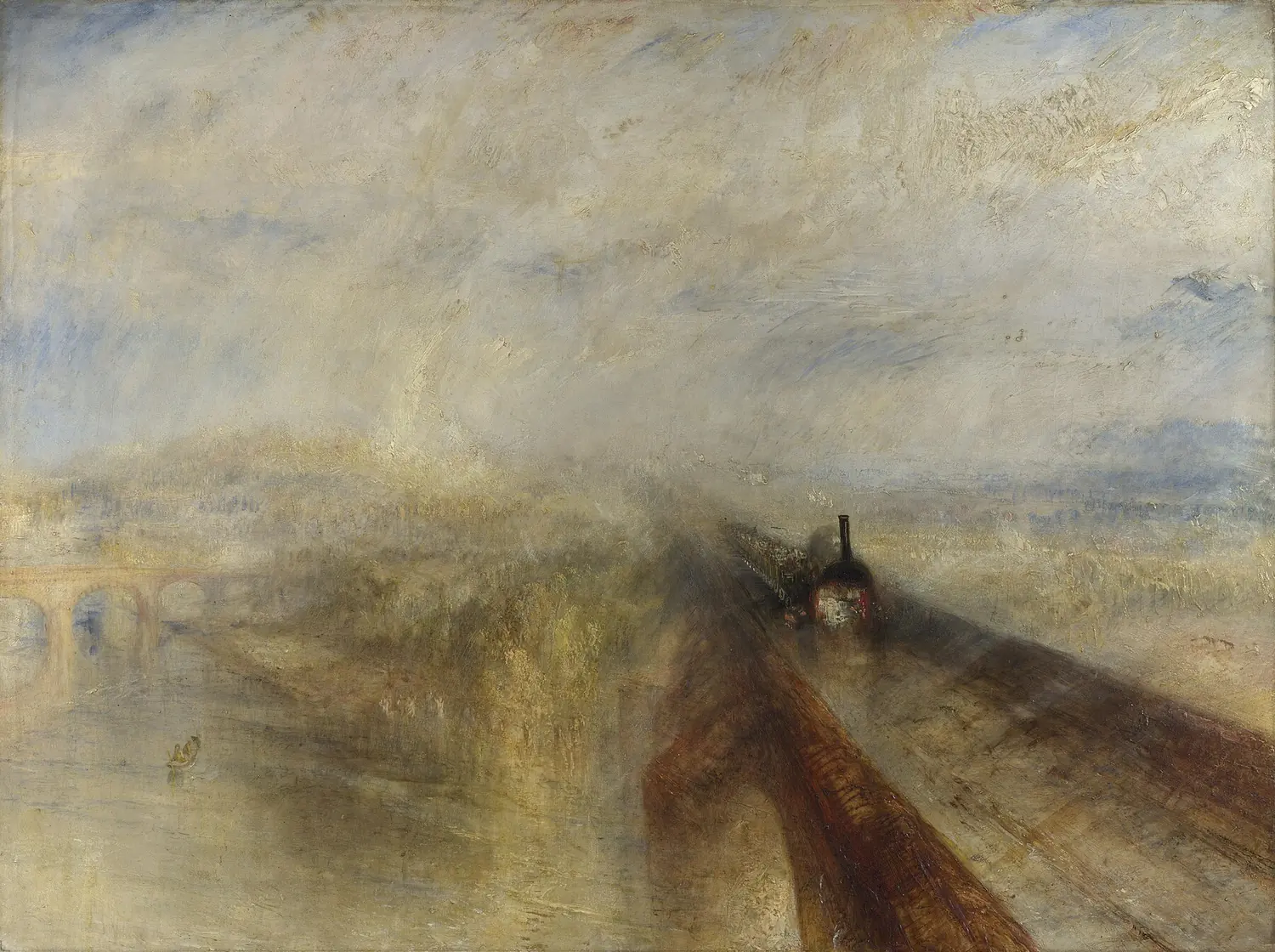
Rain, Steam and Speed
A locomotive bursts at full steam across a bridge in the rain, in golden light. A tiny hare runs ahead of the engine. Turner celebrates modern speed and the railway age.
The painter of light and storms
Painter of light, steam and raging elements, William Turner dissolved forms in colour long before the Impressionists. He is now the most famous of English painters.
Born in London in 1775, the son of a barber, Joseph Mallord William Turner entered the Royal Academy schools at fourteen and became a member at twenty-six, a record. He travelled constantly in Britain, France, Switzerland and Italy, filling hundreds of sketchbooks.
His increasingly daring pictures baffled critics, but he remained respected and wealthy. On his death in London in 1851 he left the nation nearly three hundred paintings and tens of thousands of drawings and watercolours.
Turner painted light itself: sun, mist, steam, rain, snow, fire. His forms dissolve in swirls of pale yellow and golden colours. He worked in oil and watercolour, scraped the paint and layered transparent glazes. The Impressionists admired him during their stay in London.
A locomotive bursts at full steam across a bridge in the rain, in golden light. A tiny hare runs ahead of the engine. Turner celebrates modern speed and the railway age.
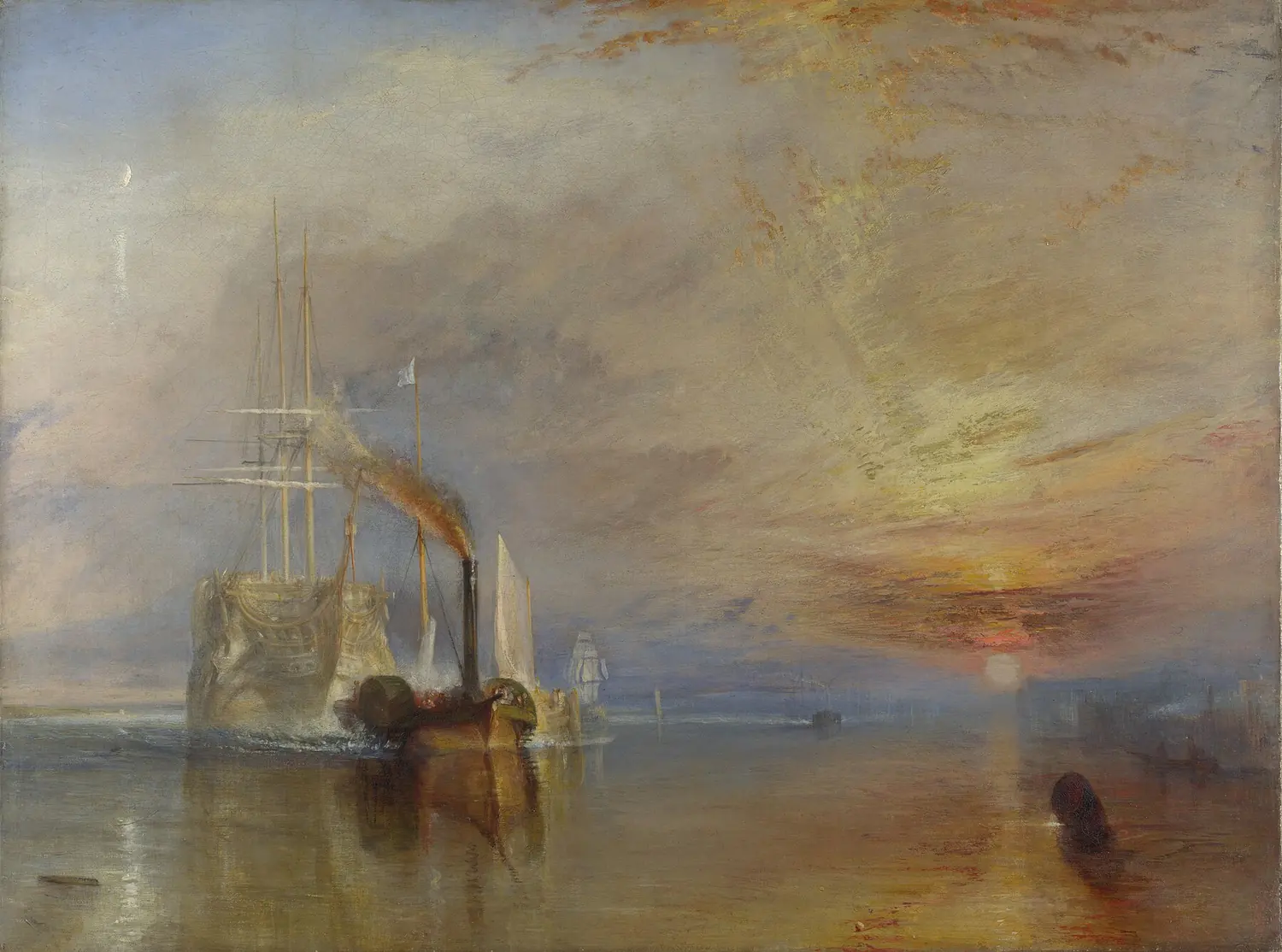
The Temeraire, an old warship and hero of the Battle of Trafalgar, is towed by a small black steam tug to the yard where it will be broken up. In the background the sun sets: an era ends.
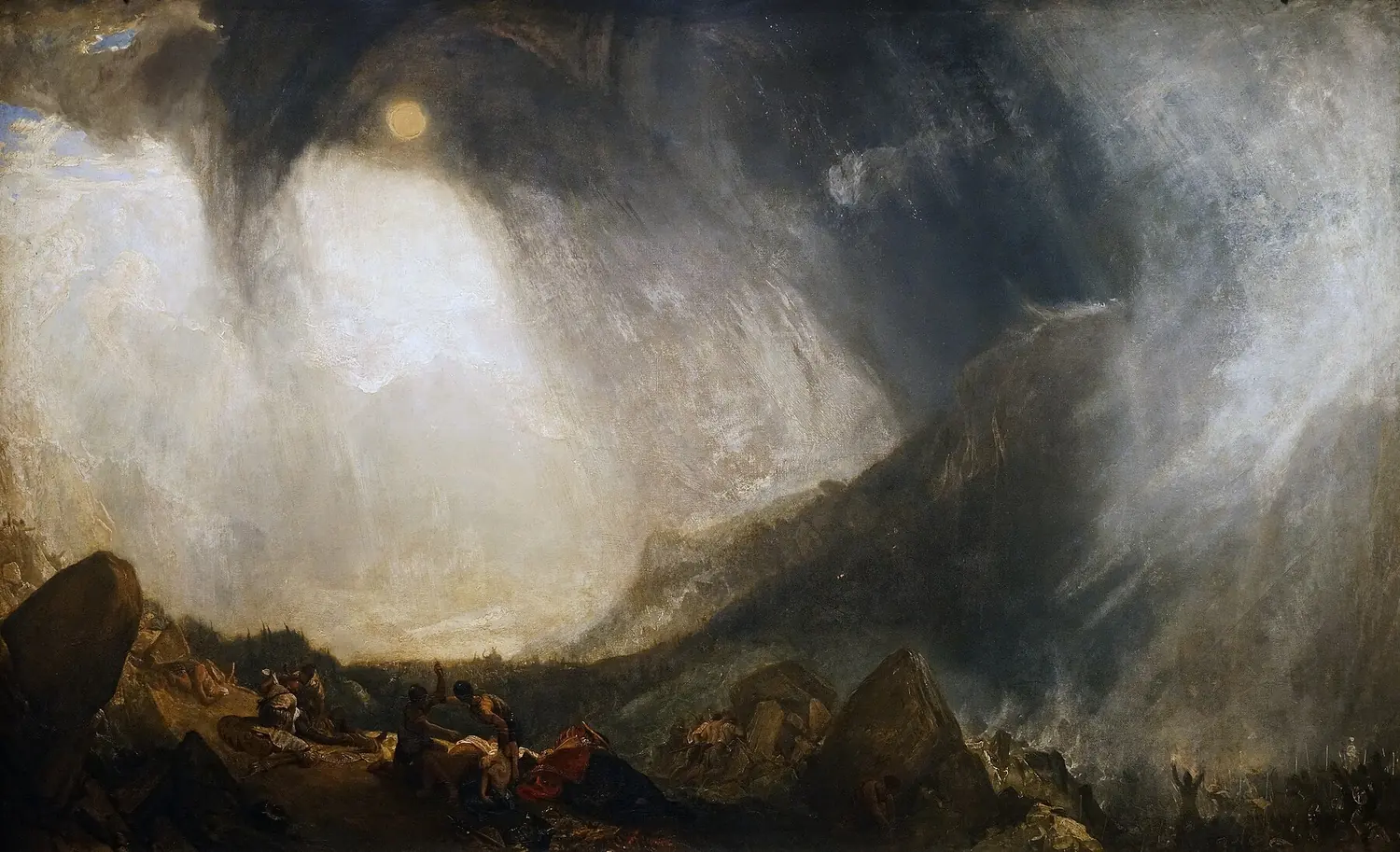
Hannibal’s army crosses the Alps, caught in a snowstorm. A huge black vortex covers the sky and the sun is just a pale disc. Nature overwhelms men.
Turner claimed he had himself lashed to the mast of a boat for four hours during a snowstorm so that he could paint it. Since 2020 The Fighting Temeraire has appeared on the English twenty-pound note.
 Caspar David Friedrich
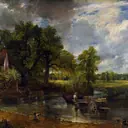 John Constable
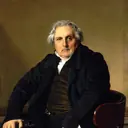 Jean-Auguste-Dominique Ingres
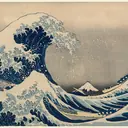 Katsushika Hokusai
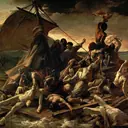 Théodore Géricault
 Élisabeth Vigée Le Brun
 Camille Corot
 Utagawa Hiroshige