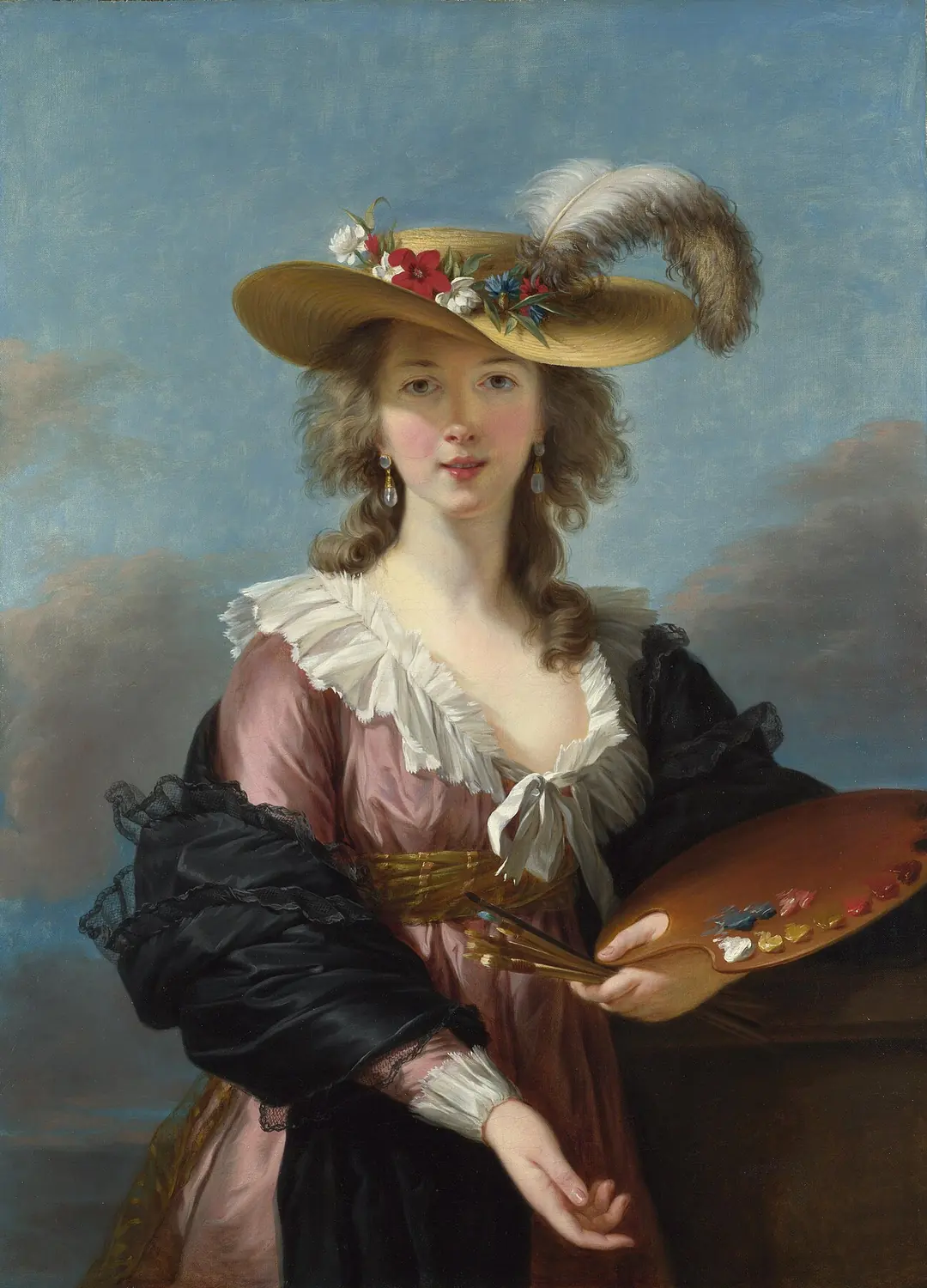
Self-Portrait in a Straw Hat
Inspired by Rubens’s Chapeau de Paille, the artist paints herself outdoors in a hat decorated with flowers and a feather, palette in hand. She proudly asserts her profession.
Marie Antoinette’s portraitist
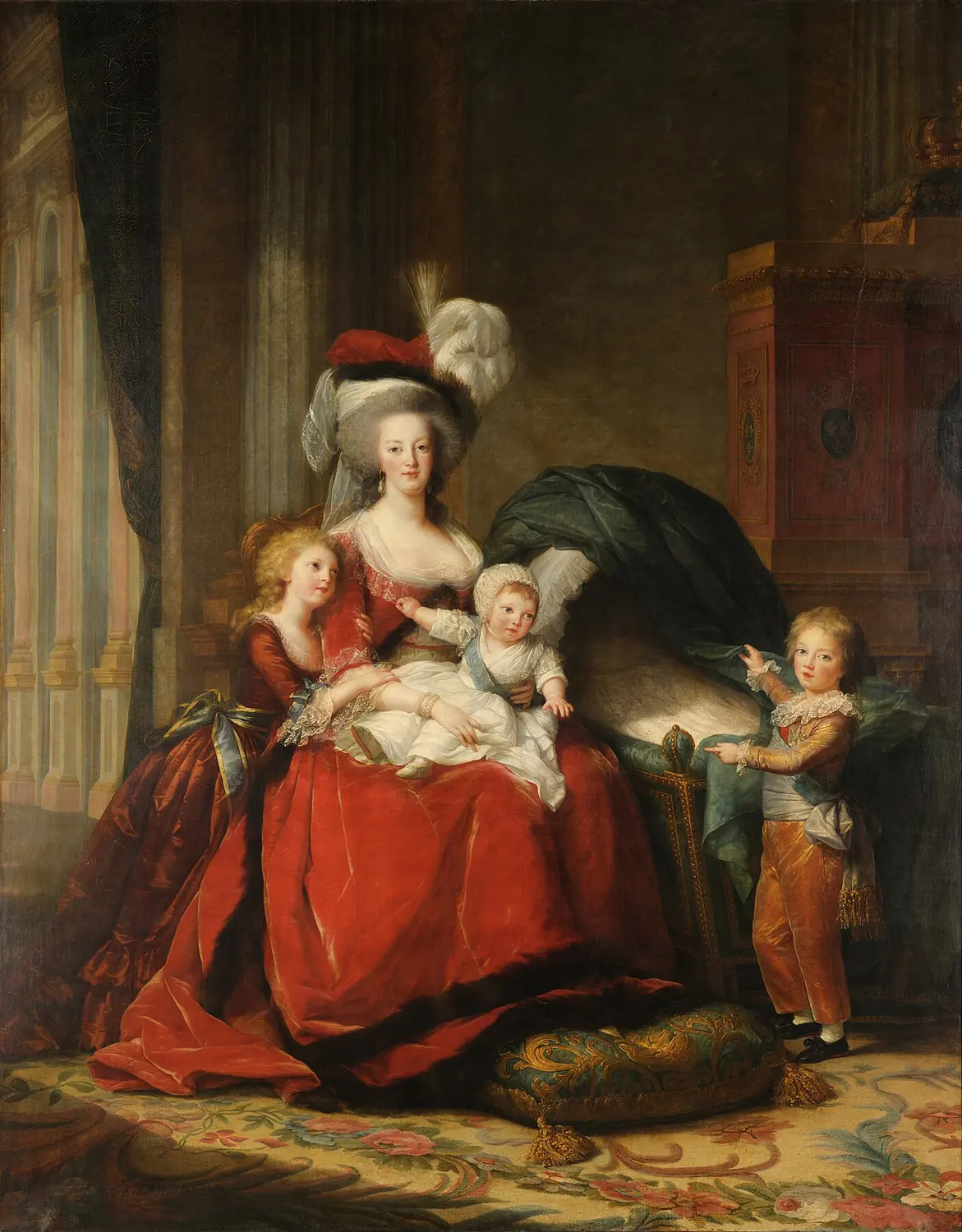
The most famous portraitist of her time, Élisabeth Vigée Le Brun painted Queen Marie Antoinette, then the courts of all Europe during her exile. Her luminous, natural portraits won over aristocrats everywhere.
Born in Paris in 1755, the daughter of the pastellist Louis Vigée, Élisabeth was painting portraits professionally as a teenager. In 1778 she made her first portrait of Marie Antoinette, who made her official painter. In 1783 she was received into the Royal Academy, a very rare honour for a woman.
On the night of 5-6 October 1789, threatened by the Revolution, she fled France with her daughter Julie. For twelve years she worked in Rome, Naples, Vienna and Saint Petersburg. Back in France she published her Souvenirs and died in Paris in 1842, having painted some six hundred portraits.
Vigée Le Brun painted with fresh colours and a smooth, luminous touch. She preferred natural poses, simple clothes and loose hair to powdered wigs. She knew how to flatter her sitters with softness and liveliness.
Inspired by Rubens’s Chapeau de Paille, the artist paints herself outdoors in a hat decorated with flowers and a feather, palette in hand. She proudly asserts her profession.
Queen Marie Antoinette poses with her three children. The empty cradle on the right recalls little Princess Sophie, who died that year. The portrait was meant to make the queen’s image more motherly.
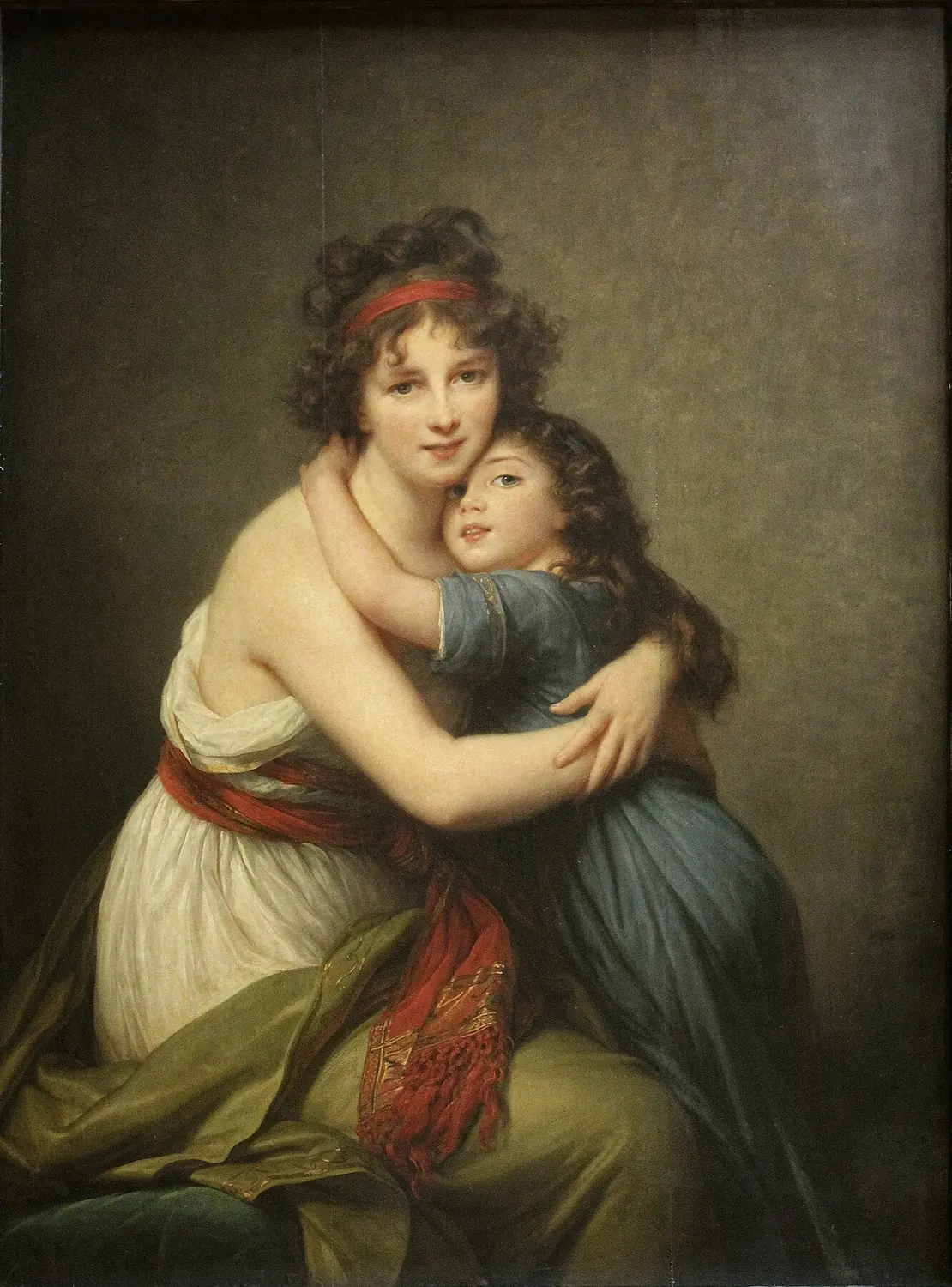
The painter tenderly hugs her daughter Julie. Dressed in simple classical tunics, mother and child form a gentle group, a few months before exile.
In 1787 she caused a scandal at the Salon by showing a smiling self-portrait in which her teeth could be seen: in official portraits, no one ever smiled with an open mouth.
 Katsushika Hokusai
 Jacques-Louis David
 Francisco Goya
 Caspar David Friedrich
 J. M. W. Turner
 John Constable
 Jean-Honoré Fragonard
 Jean-Auguste-Dominique Ingres