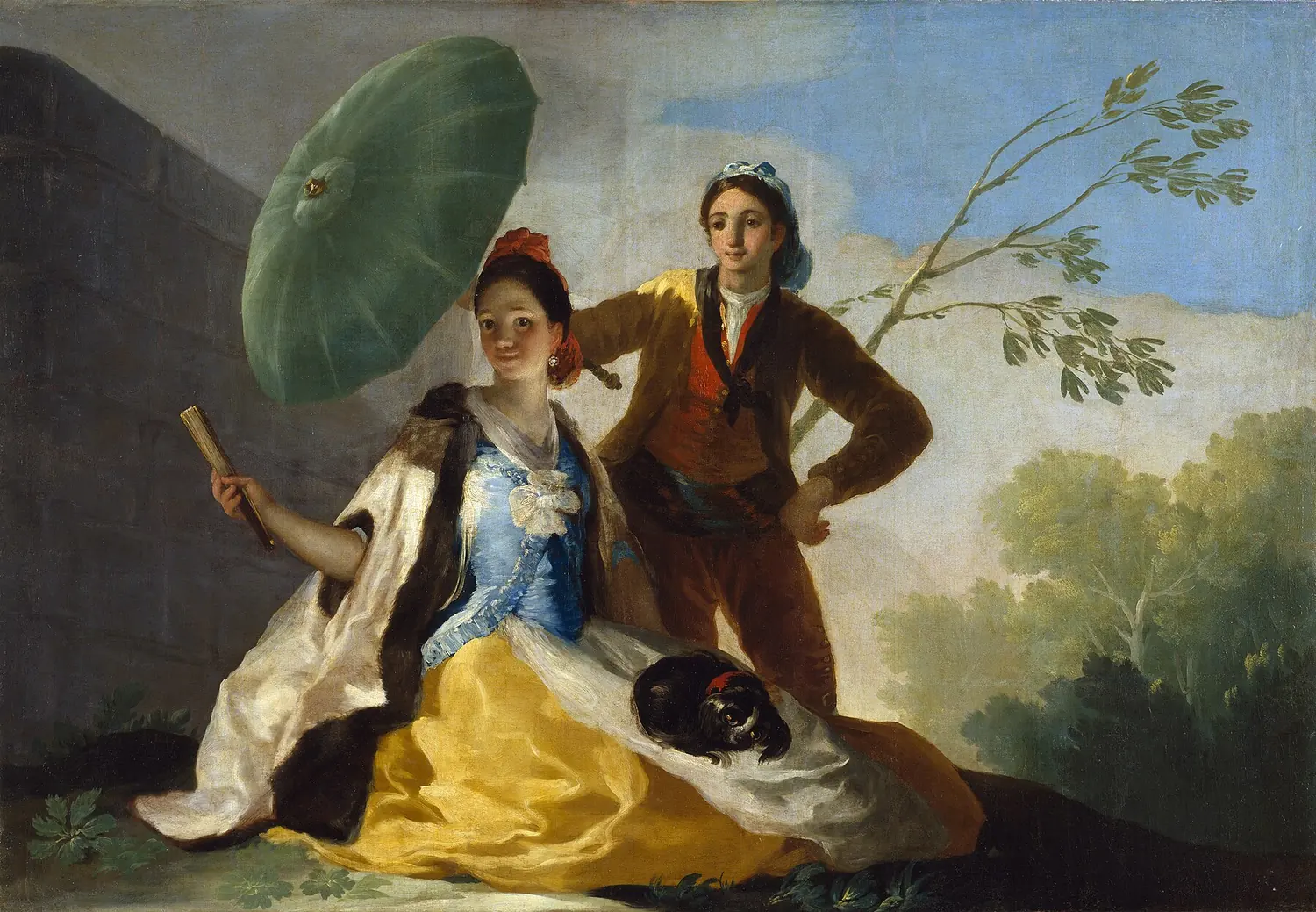
The Parasol
An elegant young woman sitting in the grass with a little dog on her lap is shaded from the sun by the green parasol held by a young man. This tapestry cartoon breathes lightness.
From court painter to witness of horror
Official painter to the Spanish court, Francisco de Goya was also the relentless witness of war, madness and human cruelty. His dark, visionary works opened the way to modern art.
Born in 1746 in Fuendetodos, Aragon, Goya began by painting cheerful tapestry cartoons for the royal factory. He became first court painter in 1799. In 1792 a serious illness left him completely deaf.
The war against Napoleon’s army from 1808 marked him deeply: he etched its horrors in The Disasters of War. Withdrawn to his house near Madrid, he painted his disturbing Black Paintings on the walls. In 1824 he went into exile in Bordeaux, where he died in 1828.
Goya moved from the bright, joyful colours of his youth to an ever freer, darker and more expressive painting, with broad brushstrokes. A brilliant printmaker, he used etching and aquatint to denounce stupidity and violence. His visions herald Romanticism and Expressionism.
An elegant young woman sitting in the grass with a little dog on her lap is shaded from the sun by the green parasol held by a young man. This tapestry cartoon breathes lightness.
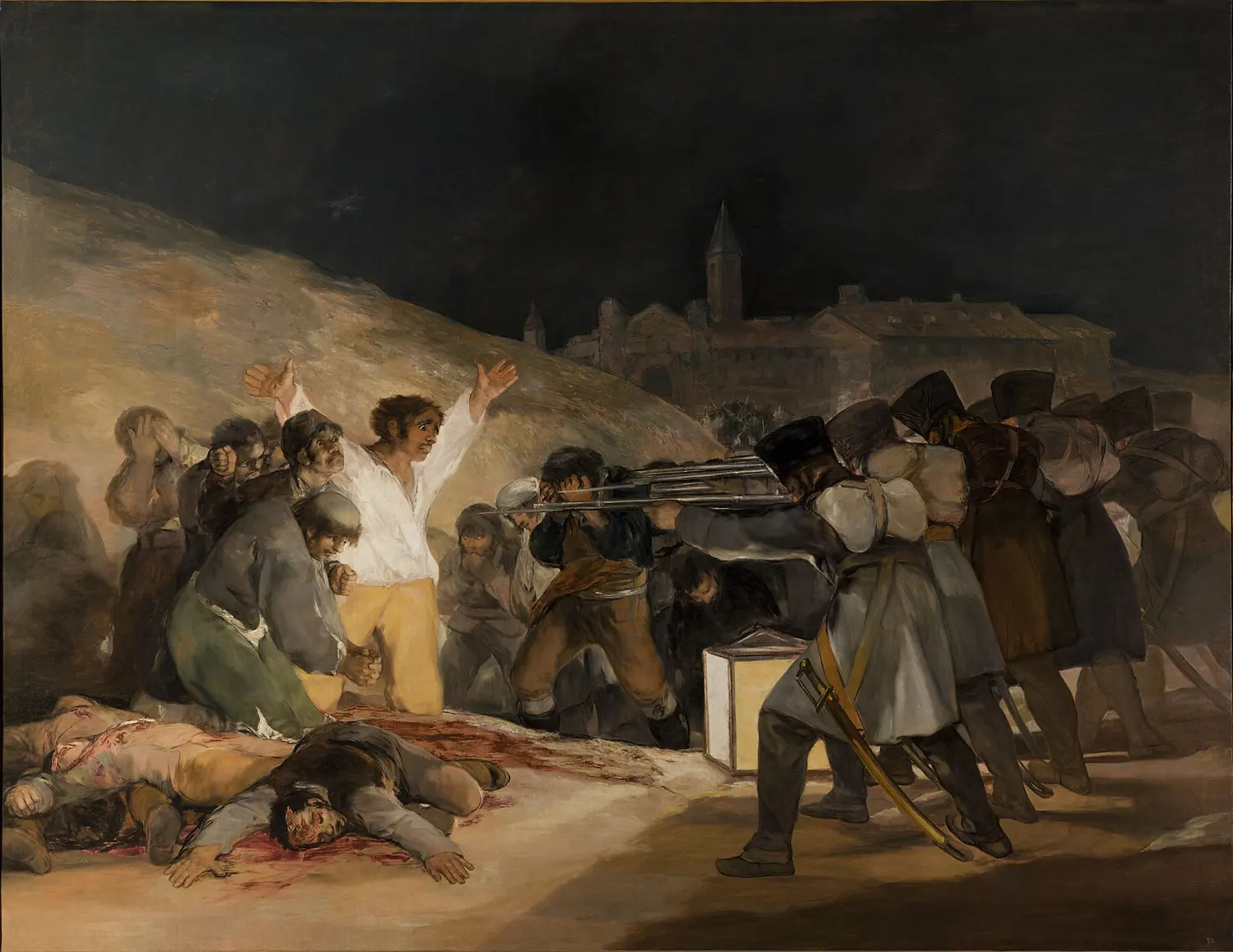
On 3 May 1808 in Madrid, French soldiers shoot Spanish insurgents. In the centre, a man in a white shirt raises his arms before the guns, lit by a lantern. The faceless soldiers look like a machine.
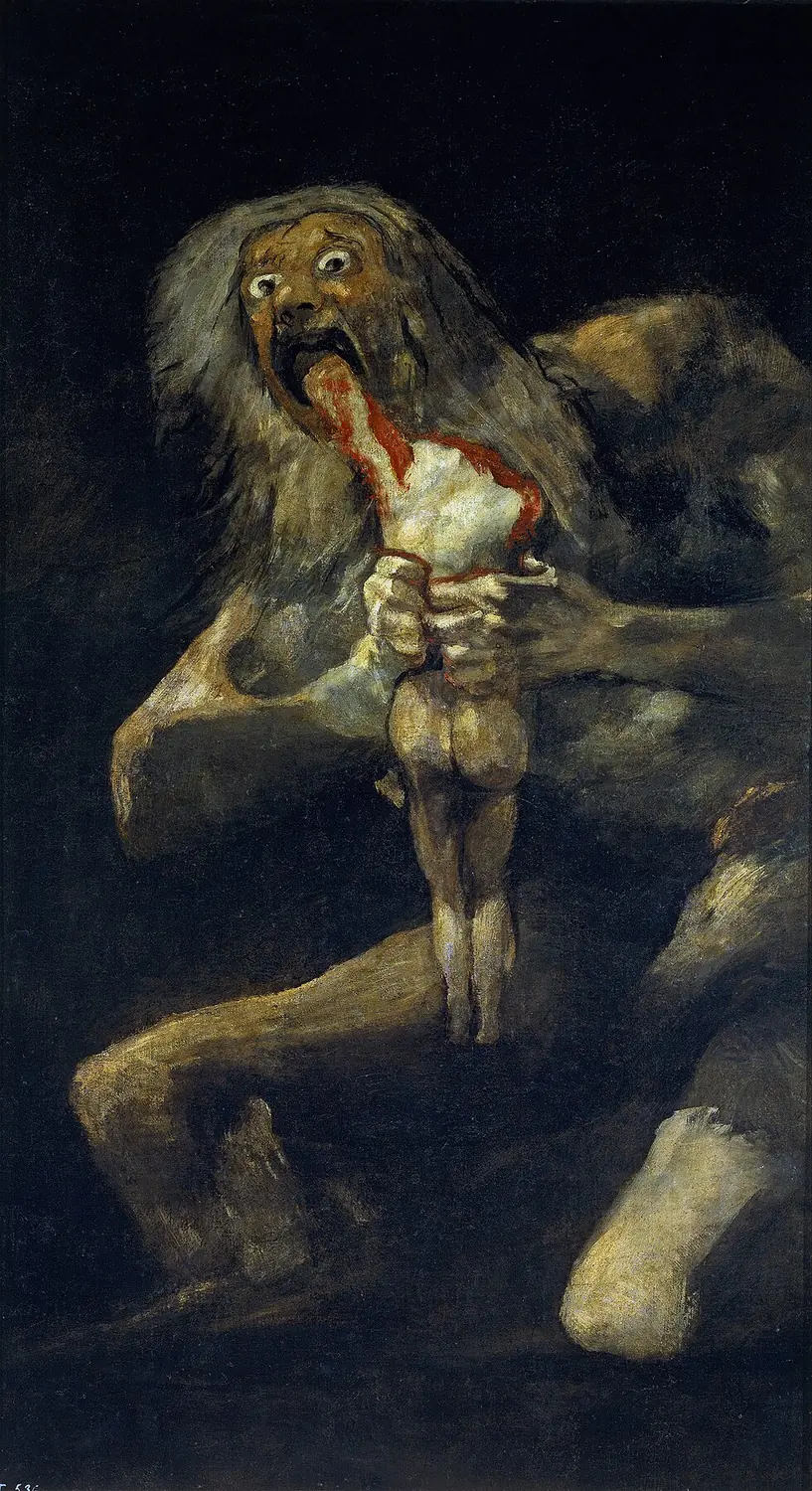
The titan Saturn, frightened by a prophecy, devours one of his children. Painted on a wall of Goya’s house, this terrifying image is one of the most powerful in Western art.
The Black Paintings were painted directly on the walls of Goya’s house, nicknamed the ’Deaf Man’s Villa’. They were transferred to canvas in 1874.
 Jacques-Louis David
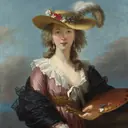 Élisabeth Vigée Le Brun
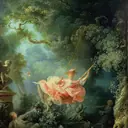 Jean-Honoré Fragonard
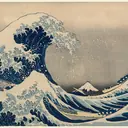 Katsushika Hokusai
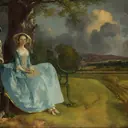 Thomas Gainsborough
 Caspar David Friedrich
 J. M. W. Turner
 John Constable