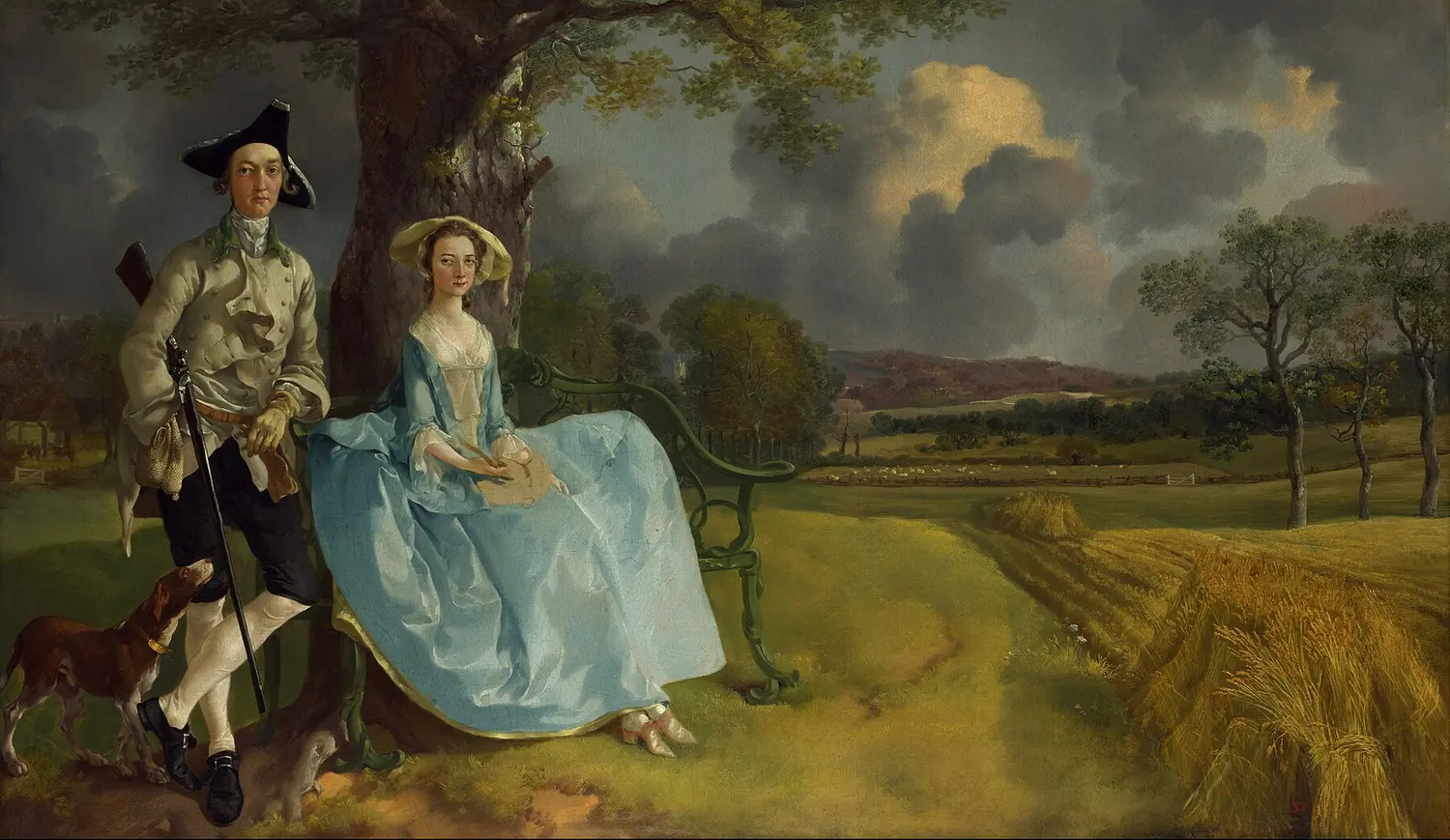
Mr and Mrs Andrews
A young landowning couple poses under an oak before their harvested wheat fields. An unfinished area on Mrs Andrews’s lap is intriguing: Gainsborough may have planned a bird or a book there.
The portraitist who preferred landscapes
An elegant portraitist of English high society, Thomas Gainsborough dreamed above all of landscapes. His light, shimmering touch gave his sitters a uniquely natural grace.
Born in 1727 in Sudbury, Suffolk, the son of a wool merchant, Gainsborough went to London at thirteen to train. He returned to his region, painting landowners on their estates, then settled in Bath, the fashionable spa town, where high society crowded into his studio.
A founding member of the Royal Academy in 1768, he moved to London in 1774 and became King George III’s favourite painter, rivalling Joshua Reynolds. He died in London in 1788.
Gainsborough painted with a quick, light, almost transparent touch that makes silks and foliage shimmer. He often placed his sitters in hazy landscapes. He said he painted portraits for a living and landscapes for pleasure.
A young landowning couple poses under an oak before their harvested wheat fields. An unfinished area on Mrs Andrews’s lap is intriguing: Gainsborough may have planned a bird or a book there.
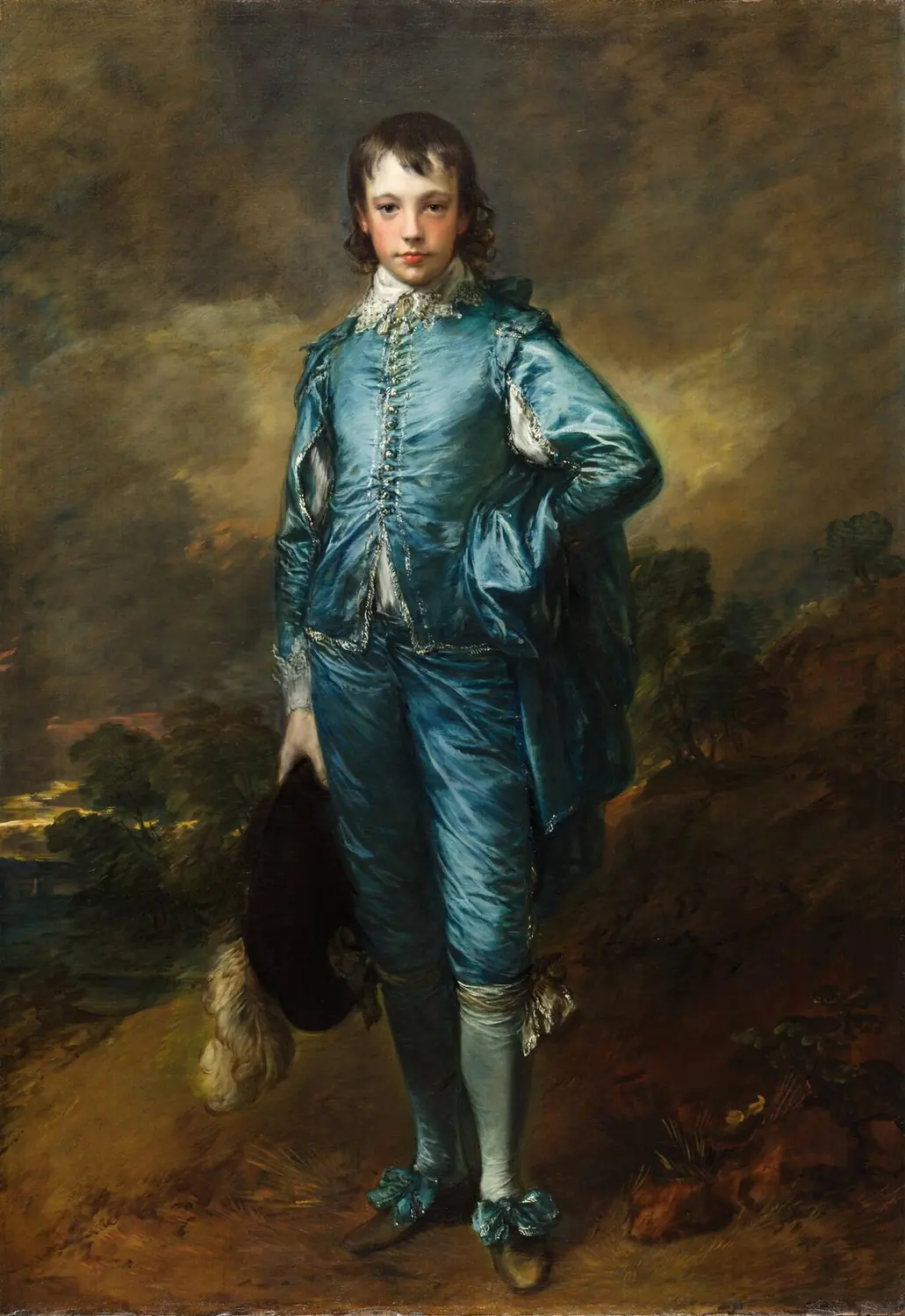
A boy poses, hand on hip, in a shimmering blue satin costume in the manner of Van Dyck’s portraits. The brilliant blue stands out against a brown, stormy landscape.
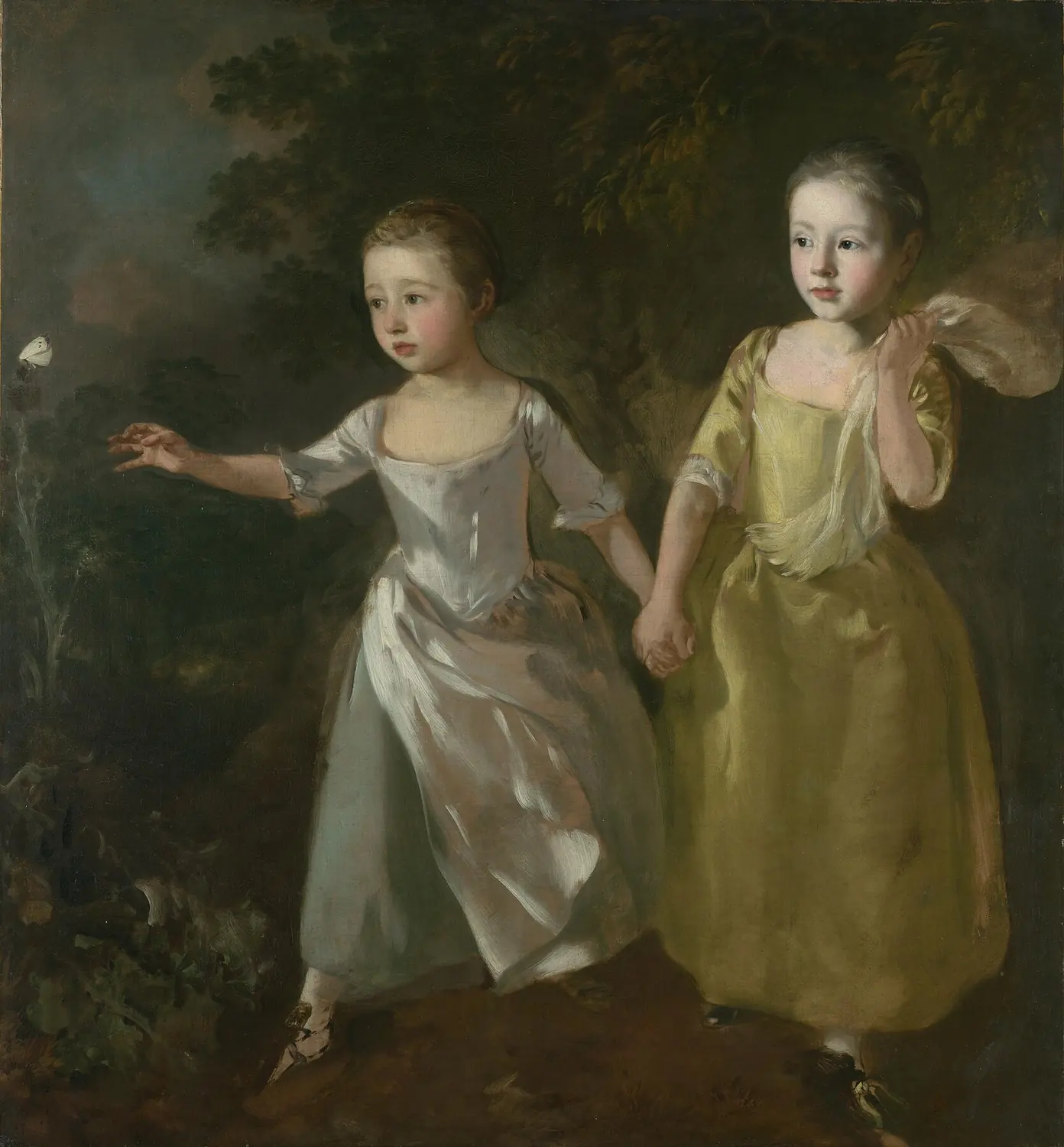
The painter’s two daughters, Mary and Margaret, run hand in hand after a butterfly. This tender, unfinished family portrait captures a moment of childhood.
In 1922 the sale of The Blue Boy to an American collector caused national emotion: nearly a hundred thousand people came to say goodbye to it at the National Gallery. A century later, in 2022, it returned there on loan.
 Jean-Honoré Fragonard
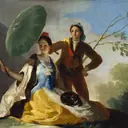 Francisco Goya
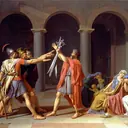 Jacques-Louis David
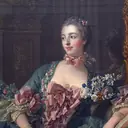 François Boucher
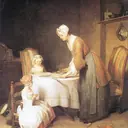 Jean-Baptiste-Siméon Chardin
 Élisabeth Vigée Le Brun
 Canaletto
 Katsushika Hokusai