Madame de Pompadour
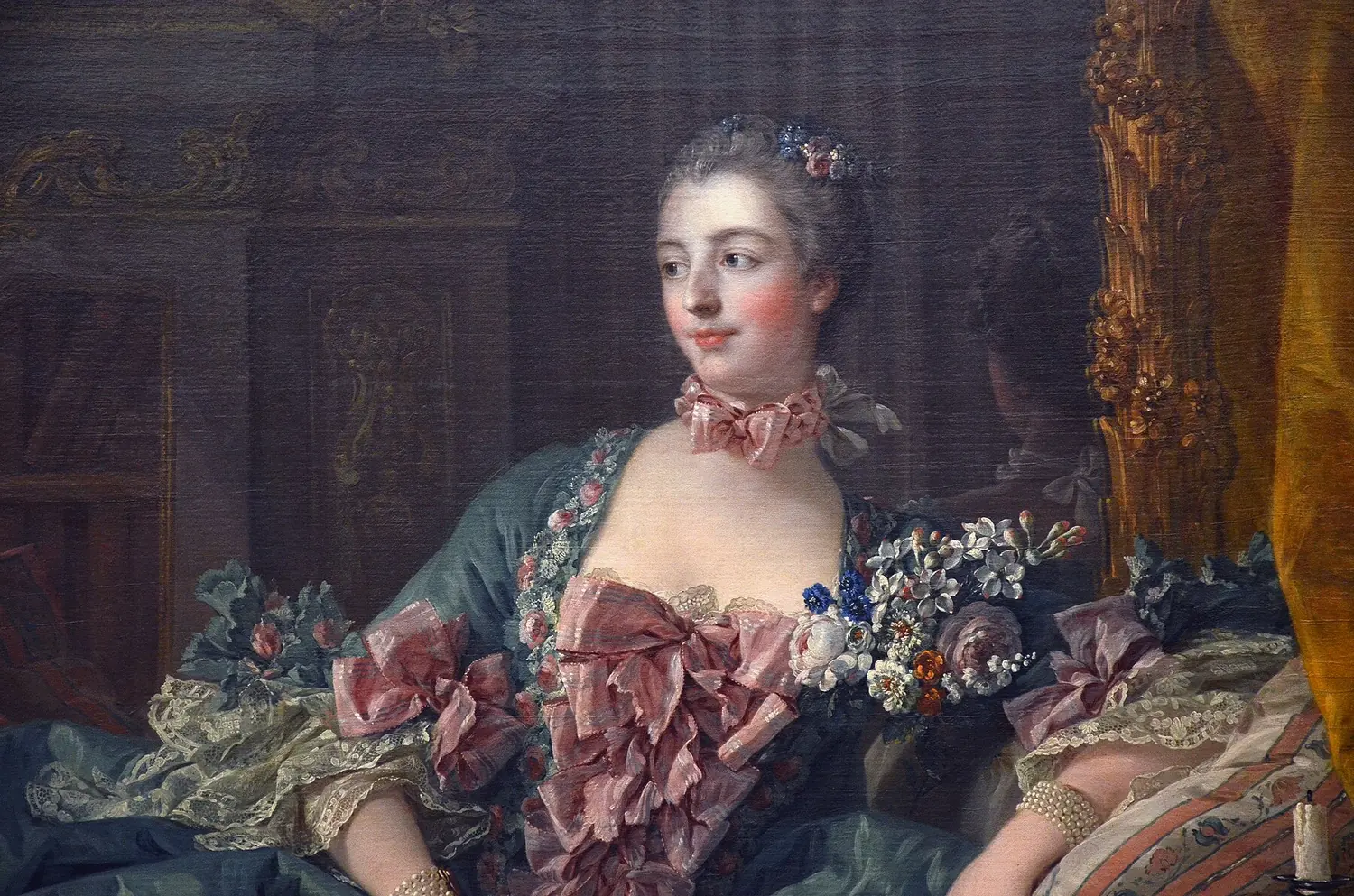
The Marquise de Pompadour poses in a silk gown covered with roses, surrounded by books, sheet music and writing paper. Her little dog lies at her feet: she presents herself as cultivated as well as elegant.
The great decorator of the Rococo
First painter to King Louis XV and protégé of Madame de Pompadour, François Boucher embodied Rococo taste: pastel colours, goddesses, shepherds, cherubs and graceful decoration. He worked for painting, tapestry, porcelain and the opera.
Born in Paris in 1703, the son of an embroidery designer, François Boucher won the Prix de Rome and stayed in Italy. Back home he enjoyed immense success: mythological pictures, pastoral scenes, portraits, decorations for royal palaces.
He designed models for the Beauvais and Gobelins tapestry factories, for Sèvres porcelain and for opera sets. Madame de Pompadour, Louis XV’s favourite, became his patron. In 1765 he was appointed first painter to the king and director of the Academy. He died in Paris in 1770. Fragonard was his pupil.
Boucher painted with ease and lightness: rosy flesh, pale blue skies, silky drapery, compositions of curves and countercurves. He sought charm and pleasure for the eye rather than drama. Critics such as Diderot reproached him for this too easy grace.
The Marquise de Pompadour poses in a silk gown covered with roses, surrounded by books, sheet music and writing paper. Her little dog lies at her feet: she presents herself as cultivated as well as elegant.
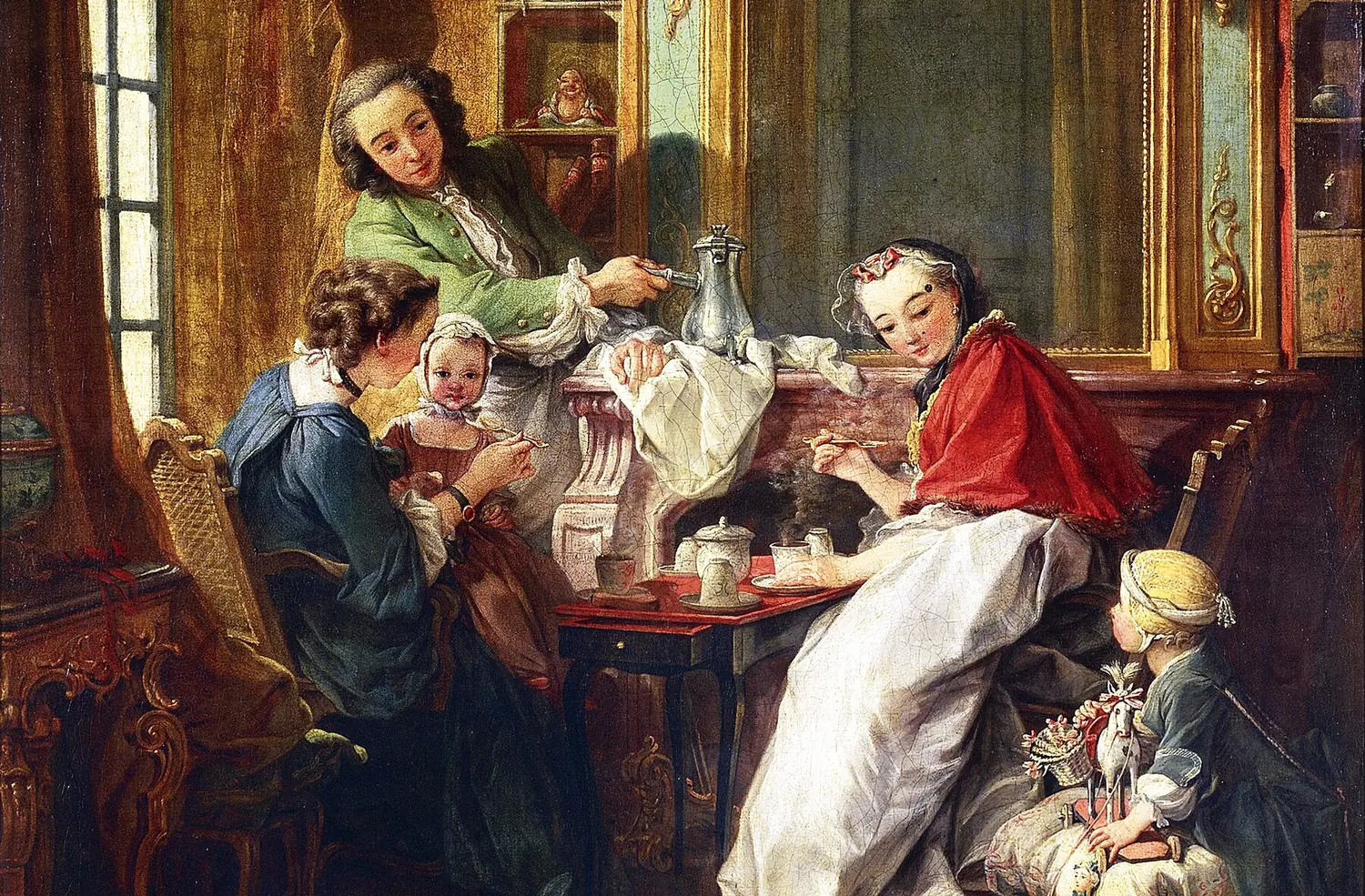
In a fashionable drawing room, a family takes morning chocolate. The drink is served while the children play with a toy and a doll. The rocaille décor and precious objects reflect the taste of the time.
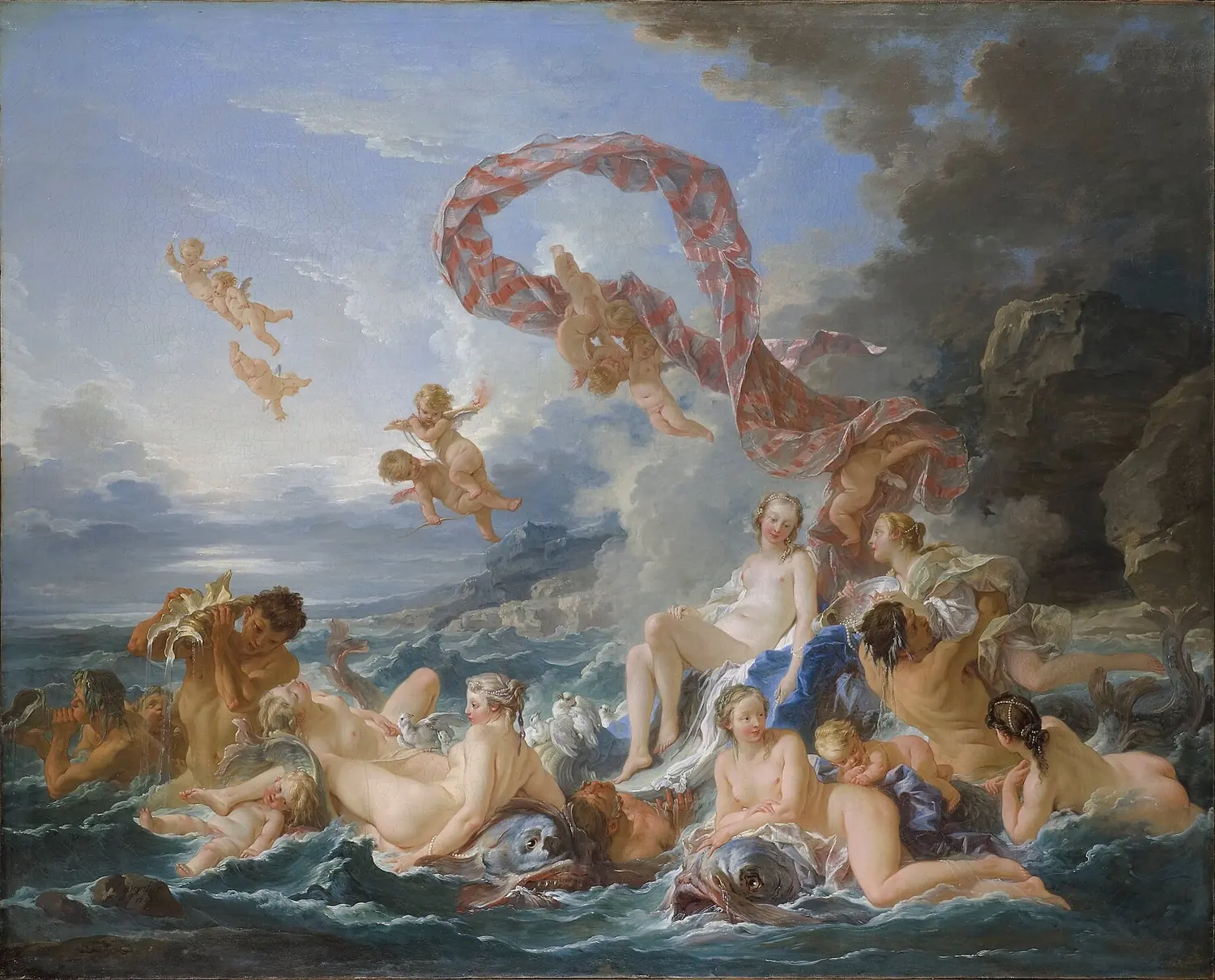
Venus, seated on a shell, is surrounded by tritons, nereids and cupids playing with pink veils in the foam. A celebration of pearly flesh and tender colours.
In The Breakfast a family drinks hot chocolate, a fashionable and costly drink: the chocolate pot stands on the table. Boucher is said to have portrayed his own family.
 Jean-Baptiste-Siméon Chardin
 Canaletto
 Antoine Watteau
 Thomas Gainsborough
 Jean-Honoré Fragonard
 Francisco Goya
 Jacques-Louis David
 Élisabeth Vigée Le Brun