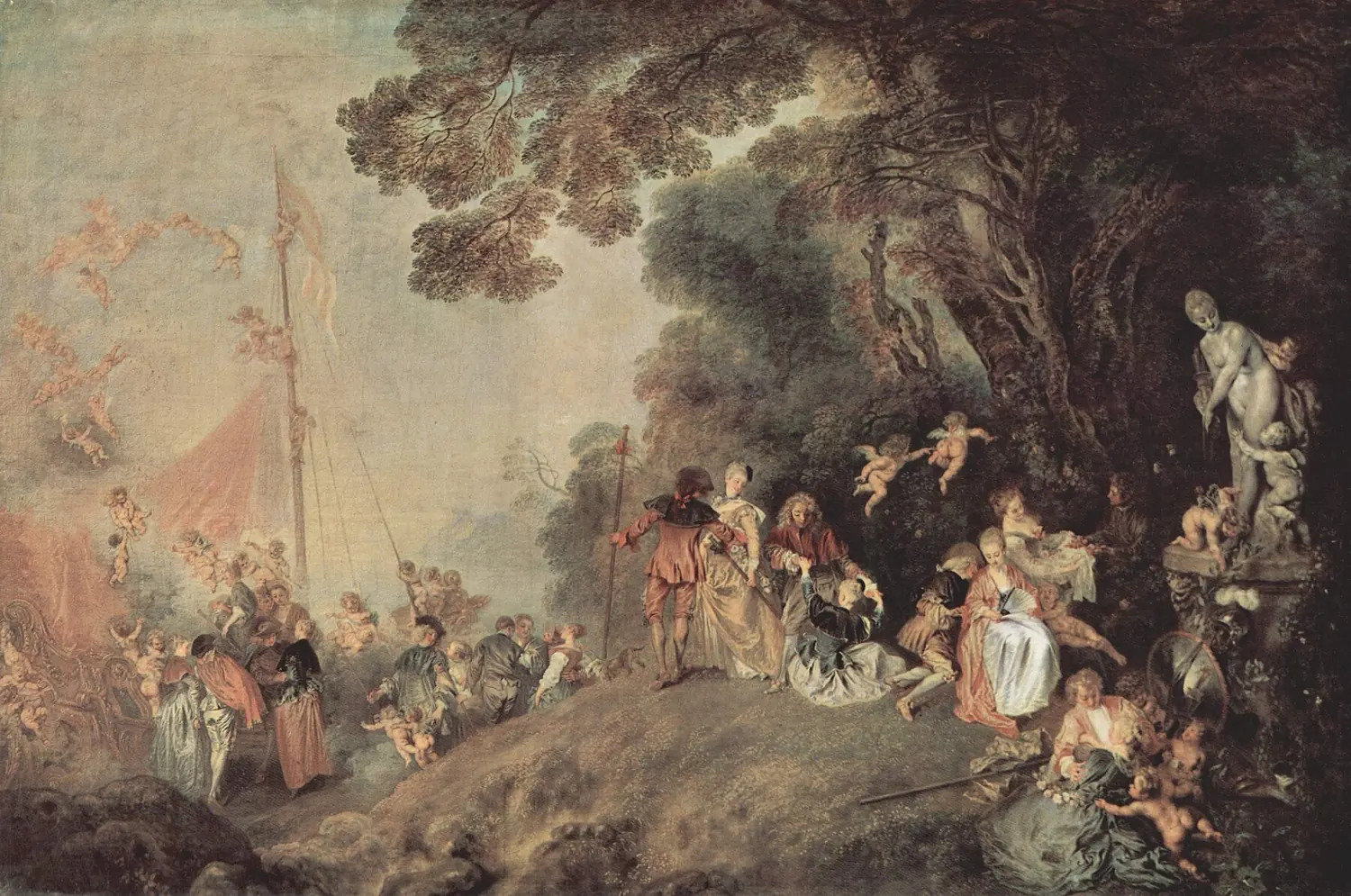
Pilgrimage to Cythera
Couples of love’s pilgrims prepare to embark for the island of Venus, or perhaps to leave it. They walk down the hill towards a golden boat under a flight of cupids. This painting inspired Debussy’s L’Isle joyeuse.
The painter of fêtes galantes
Antoine Watteau invented a new genre, the fête galante: young people in silk clothes chatting, making music and dreaming in parks. Beneath the lightness lies a gentle melancholy.
Born in 1684 in Valenciennes, the son of a roofer, Antoine Watteau came to Paris around 1702. He worked with the theatre painter Claude Gillot, then with the decorator Claude Audran, who introduced him to the Rubens paintings in the Luxembourg Palace.
In 1717 he presented the Pilgrimage to Cythera to the Royal Academy, which created for him the category of ’painter of fêtes galantes’. Suffering from tuberculosis, he died in 1721 at Nogent-sur-Marne, aged thirty-six.
Watteau painted in small, nervous, colourful touches inherited from Rubens and the Venetians. His figures, inspired by the theatre and the Italian comedy, move in hazy landscapes. He drew constantly, in red chalk and black chalk, filling whole sketchbooks with figures.
Couples of love’s pilgrims prepare to embark for the island of Venus, or perhaps to leave it. They walk down the hill towards a golden boat under a flight of cupids. This painting inspired Debussy’s L’Isle joyeuse.
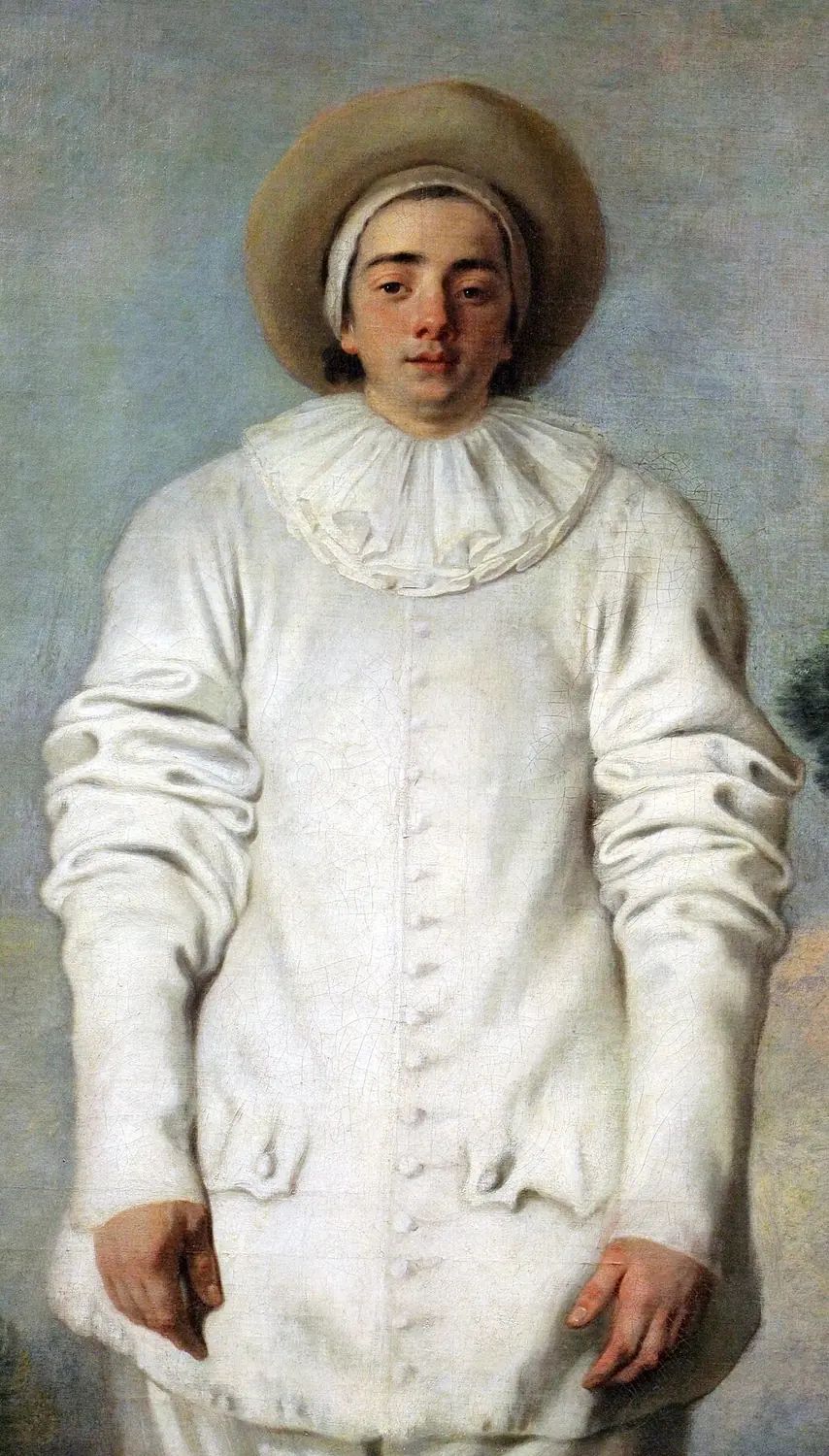
Pierrot, a character from the Italian comedy, stands facing us, dressed all in white, arms hanging, looking sad and lost. Behind him his companions are having fun: he is alone in the middle of the party.
Photo: Sailko — CC BY 3.0 — Wikimedia Commons
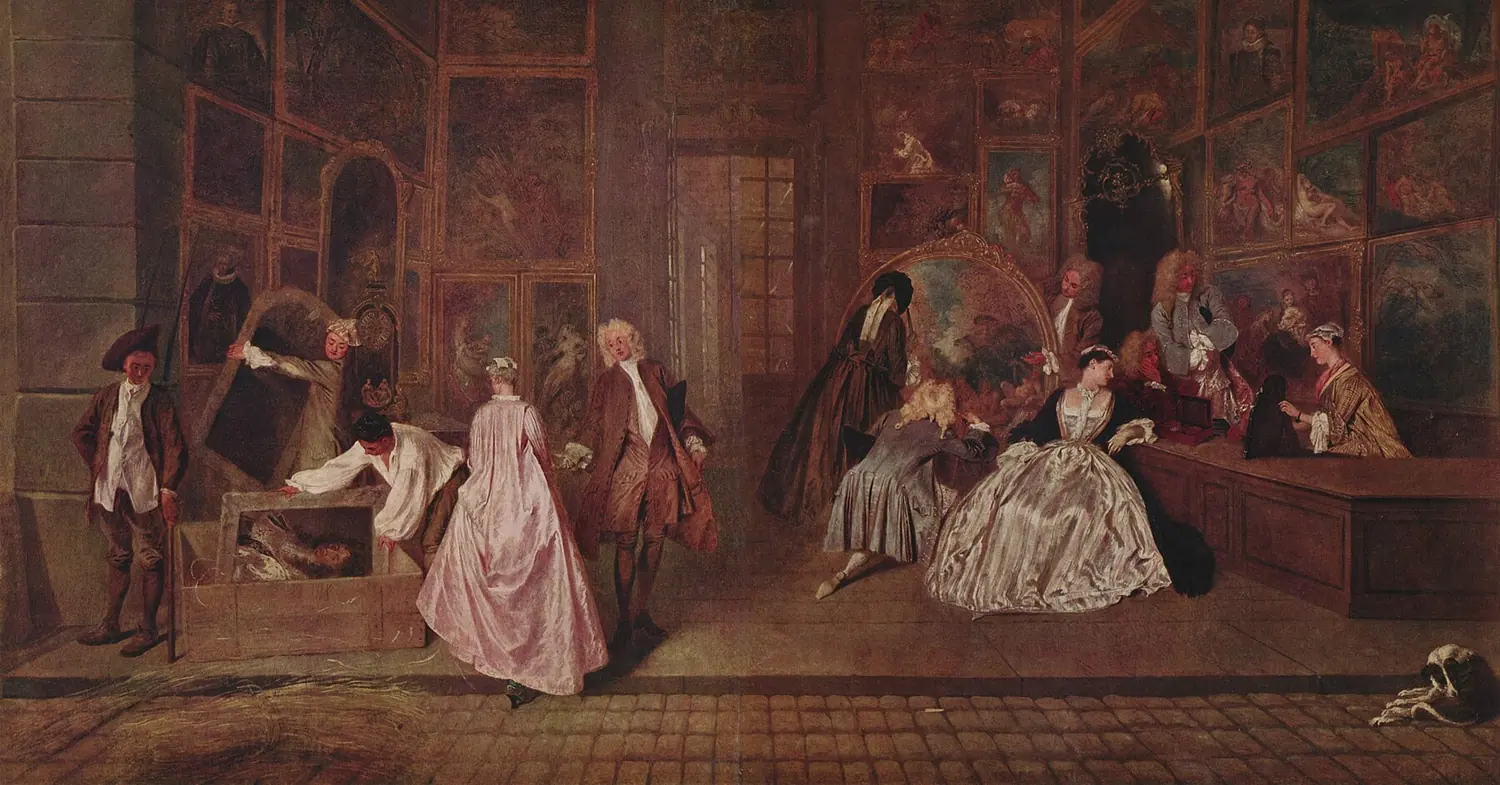
In the dealer Gersaint’s shop, connoisseurs examine paintings. On the left, employees pack a portrait of Louis XIV into a crate: an era is ending.
Gersaint’s Shopsign, painted for the shop of an art-dealer friend, was reportedly made in just eight mornings. The picture hung in the street above the door for a few days.
 Canaletto
 Jean-Baptiste-Siméon Chardin
 François Boucher