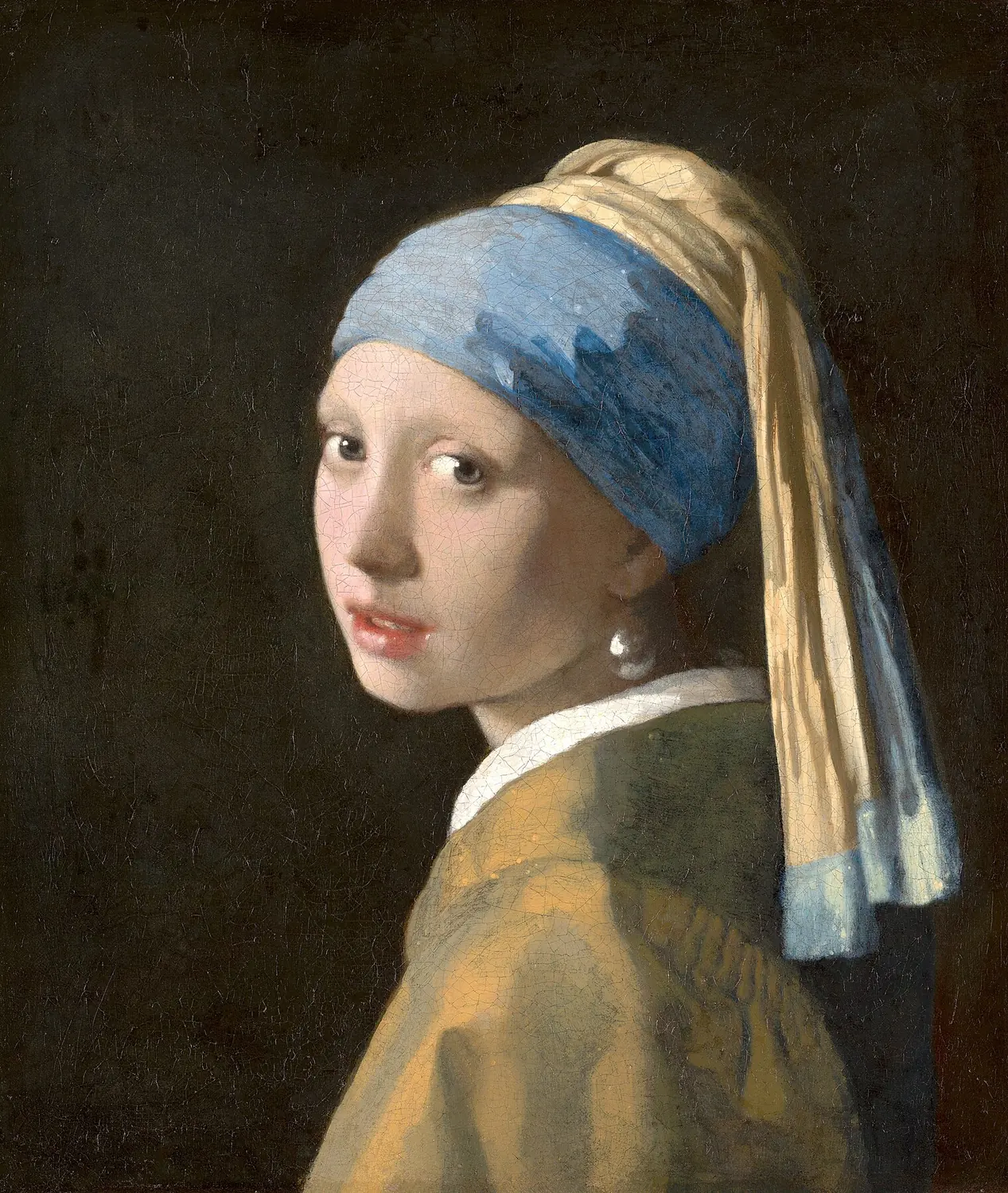
Girl with a Pearl Earring
A girl turns towards us, lips parted, wearing a blue and yellow turban. A large pearl gleams at her ear. It is not a portrait but a ’tronie’, a study of a face and expression.
The silence and light of Delft
Only some thirty paintings, nearly all interiors bathed in soft light: Johannes Vermeer turned everyday life into poetry. Forgotten for two centuries, he is now one of the best-loved painters.
Born in Delft in 1632, the son of an innkeeper and art dealer, Johannes Vermeer took over the family business and joined the painters’ guild. He married Catharina Bolnes; the couple had fifteen children, eleven of whom survived.
Vermeer painted slowly, two or three pictures a year, often for a single collector. The war of 1672 ruined the art trade in the Netherlands: he died in debt in 1675, aged forty-three. Only in the 1860s did the French critic Thoré-Bürger rediscover him.
Vermeer painted women reading, writing, making music or working, in rooms lit by a window on the left. He rendered light with small bright dots and used plenty of ultramarine, a very costly blue made from lapis lazuli. He is thought to have used a camera obscura, an ancestor of the camera.
A girl turns towards us, lips parted, wearing a blue and yellow turban. A large pearl gleams at her ear. It is not a portrait but a ’tronie’, a study of a face and expression.
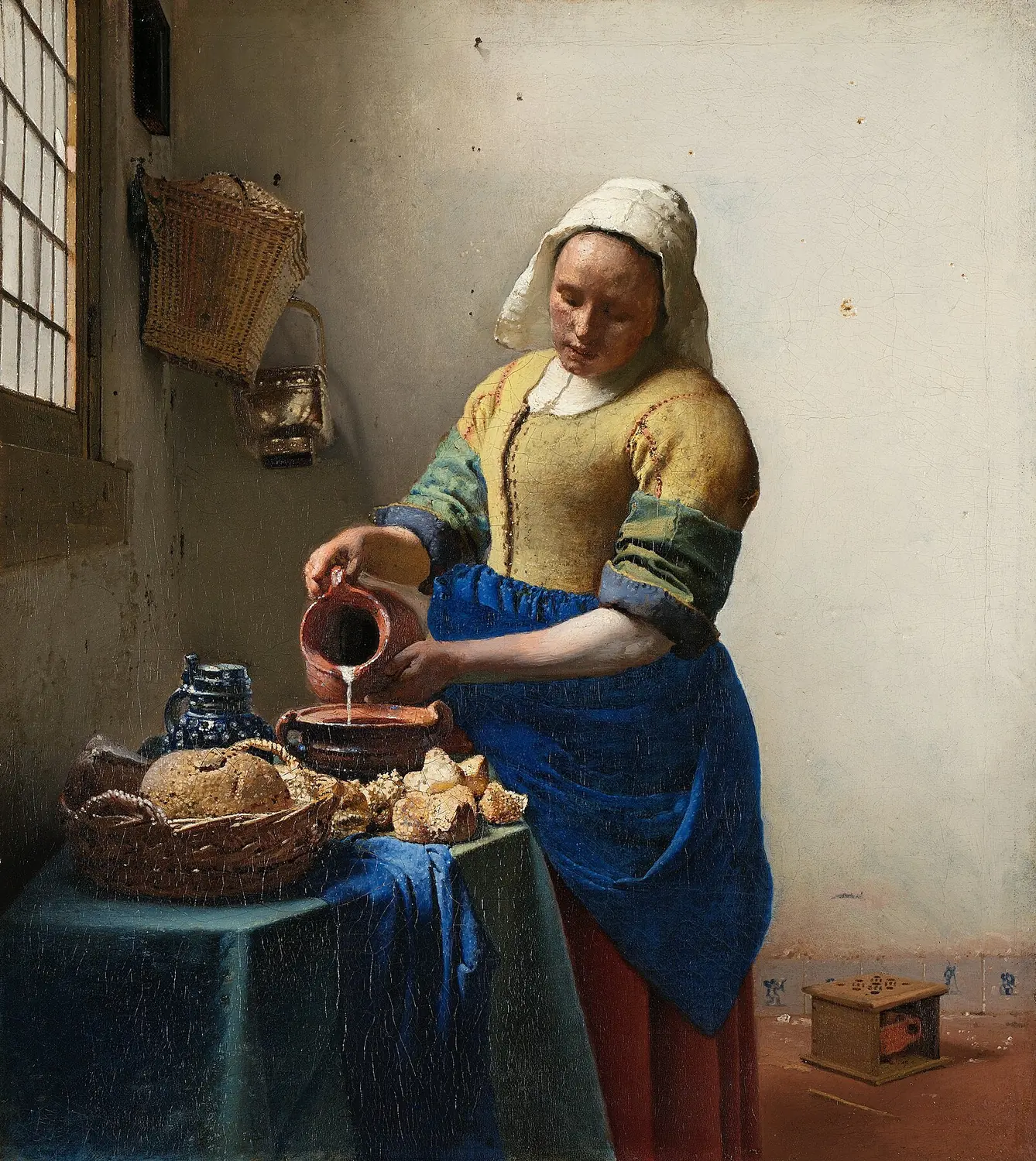
A maid pours milk with quiet concentration. Light glides over the bread, the jug and the white wall, where you can even see nail holes. A simple everyday gesture becomes monumental.
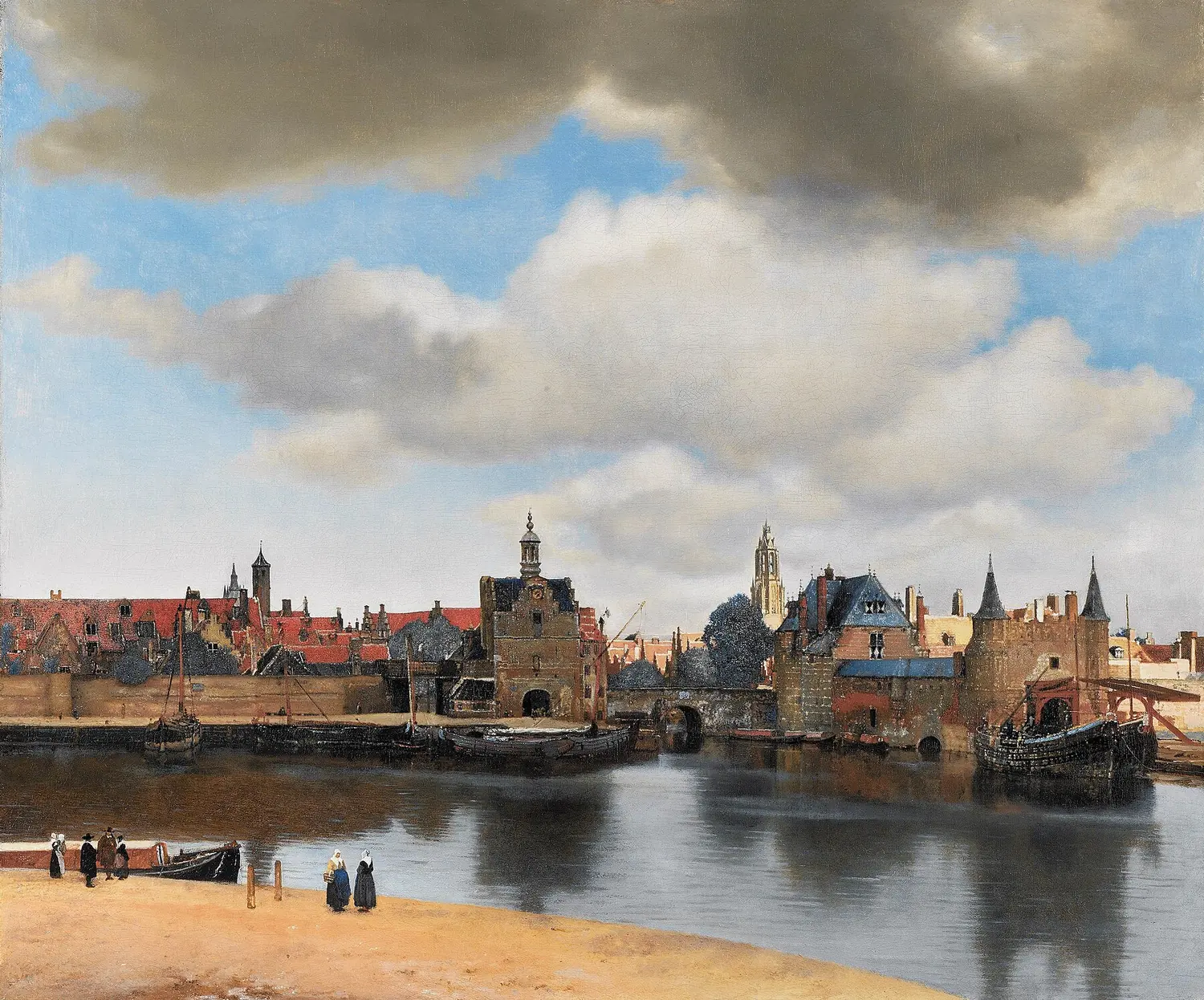
The town of Delft stretches beyond the canal under a great cloudy sky. The distant roofs are lit by the sun while the foreground stays in shadow. The reflections in the water are made of tiny touches of colour.
In In Search of Lost Time, Marcel Proust has the writer Bergotte die in front of View of Delft, dazzled by a ’little patch of yellow wall’.
 Bartolomé Esteban Murillo
 Judith Leyster
 Rembrandt
 Claude Lorrain
 Diego Velázquez
 Francisco de Zurbarán
 Nicolas Poussin
 Artemisia Gentileschi