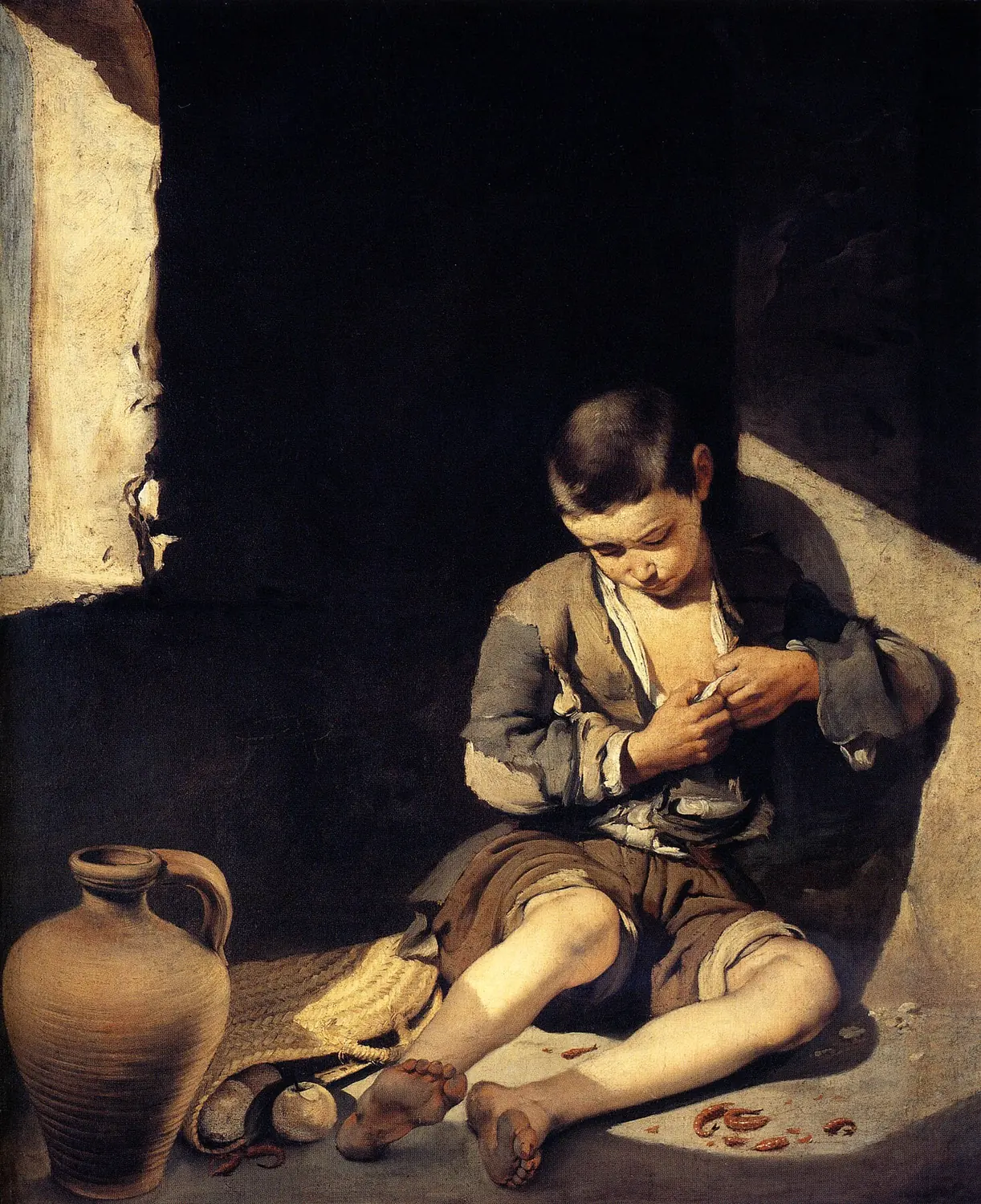
The Young Beggar
A boy in rags, sitting in a corner, picks lice in the sunshine beside some shrimps and a jug. The light coming through an opening makes this poor child a subject worthy of painting.
The tenderness of Seville
The best-loved painter of 17th-century Spain, Murillo painted Madonnas of luminous gentleness and lively street children. His paintings were among the most sought after in Europe.
Born in Seville in 1617, Bartolomé Esteban Murillo lost his parents at ten. He trained in his city and spent his whole career there, painting for convents, confraternities and wealthy merchants. In 1660 he and other artists founded the Seville painting academy.
His reputation soon spread beyond Spain: in the 18th century English and French collectors fought over his paintings. In 1682 he fell from scaffolding while painting an altarpiece for a church in Cádiz and died a few months later.
Murillo softened Caravaggio’s chiaroscuro into a hazy golden light. His Madonnas float among clouds of cherubs; his little barefoot beggars eat, play or pick lice without self-pity. His touch is supple, his colours warm.
A boy in rags, sitting in a corner, picks lice in the sunshine beside some shrimps and a jug. The light coming through an opening makes this poor child a subject worthy of painting.
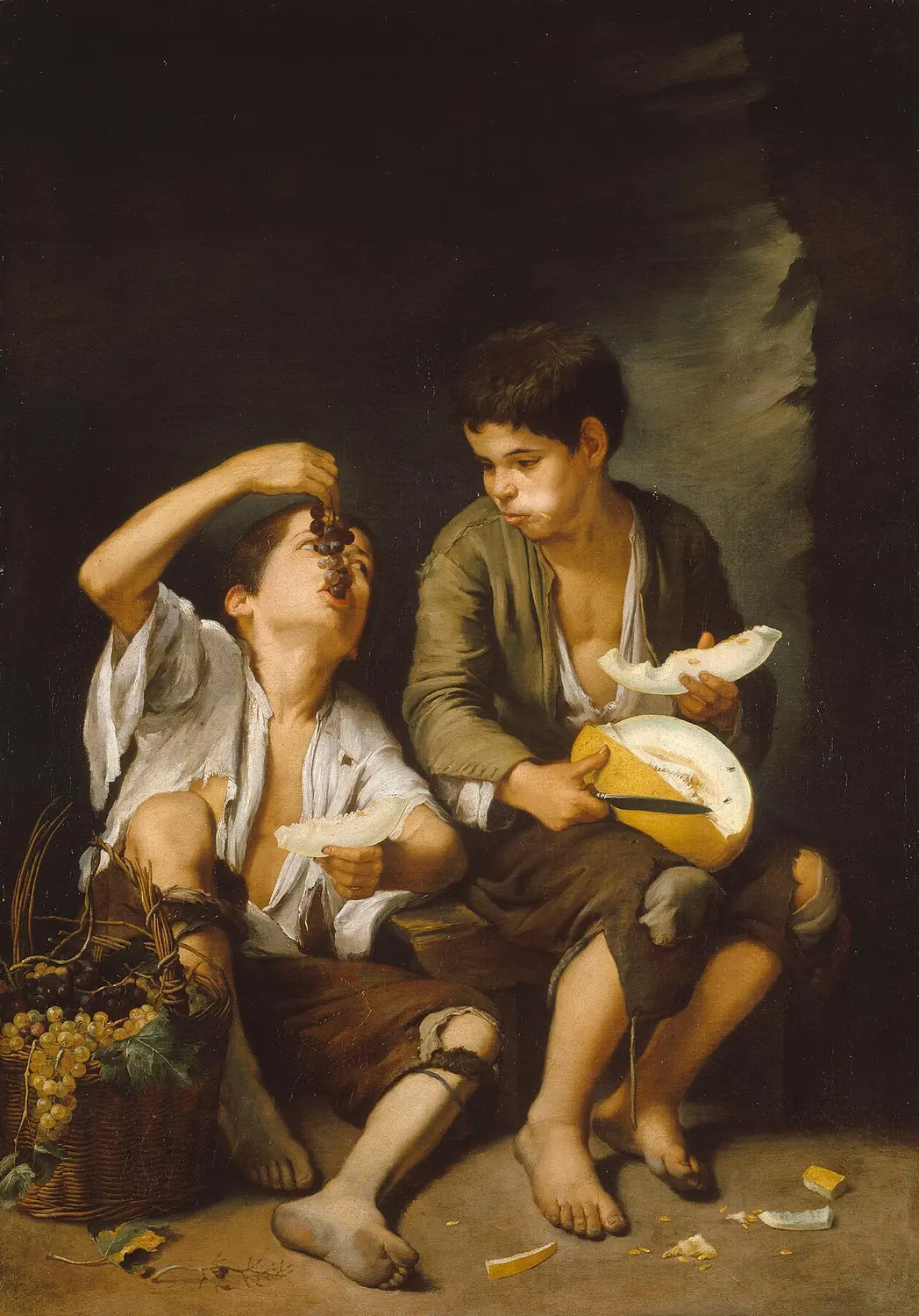
Two street children feast on grapes and melon. One eats a bunch with his head tilted back, the other watches him, his mouth full. A small moment of shared happiness.
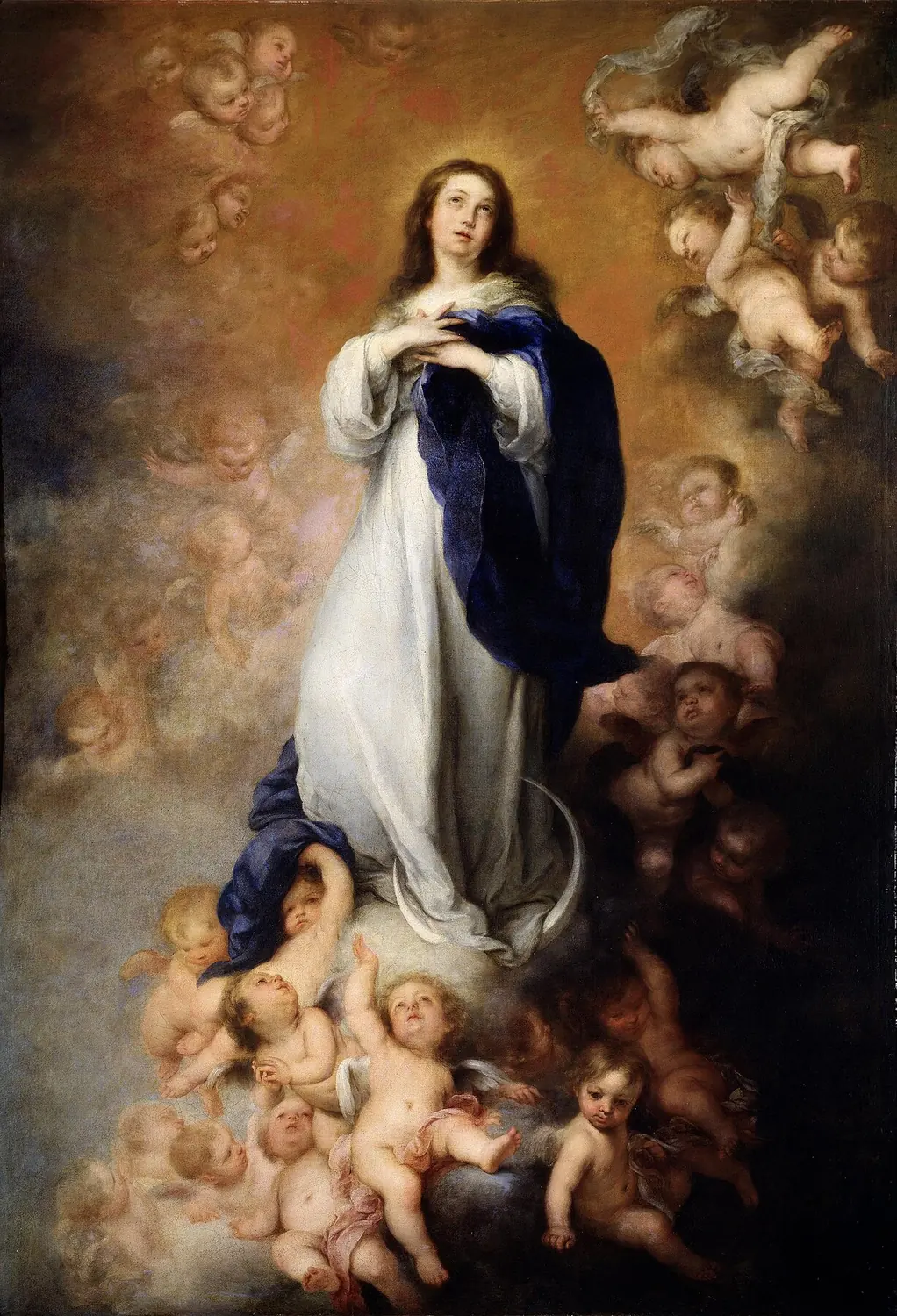
The Virgin, dressed in white and blue, rises into the sky on a crescent moon, surrounded by a ring of cherubs. It is the most famous image of this theme so dear to Seville.
The Immaculate Conception of Los Venerables was carried off to France in 1813 by Marshal Soult; it returned to Spain in 1941 after an exchange between the two countries.
 Judith Leyster
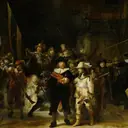 Rembrandt
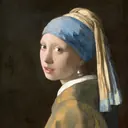 Johannes Vermeer
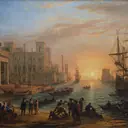 Claude Lorrain
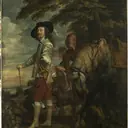 Anthony van Dyck
 Diego Velázquez
 Francisco de Zurbarán
 Nicolas Poussin