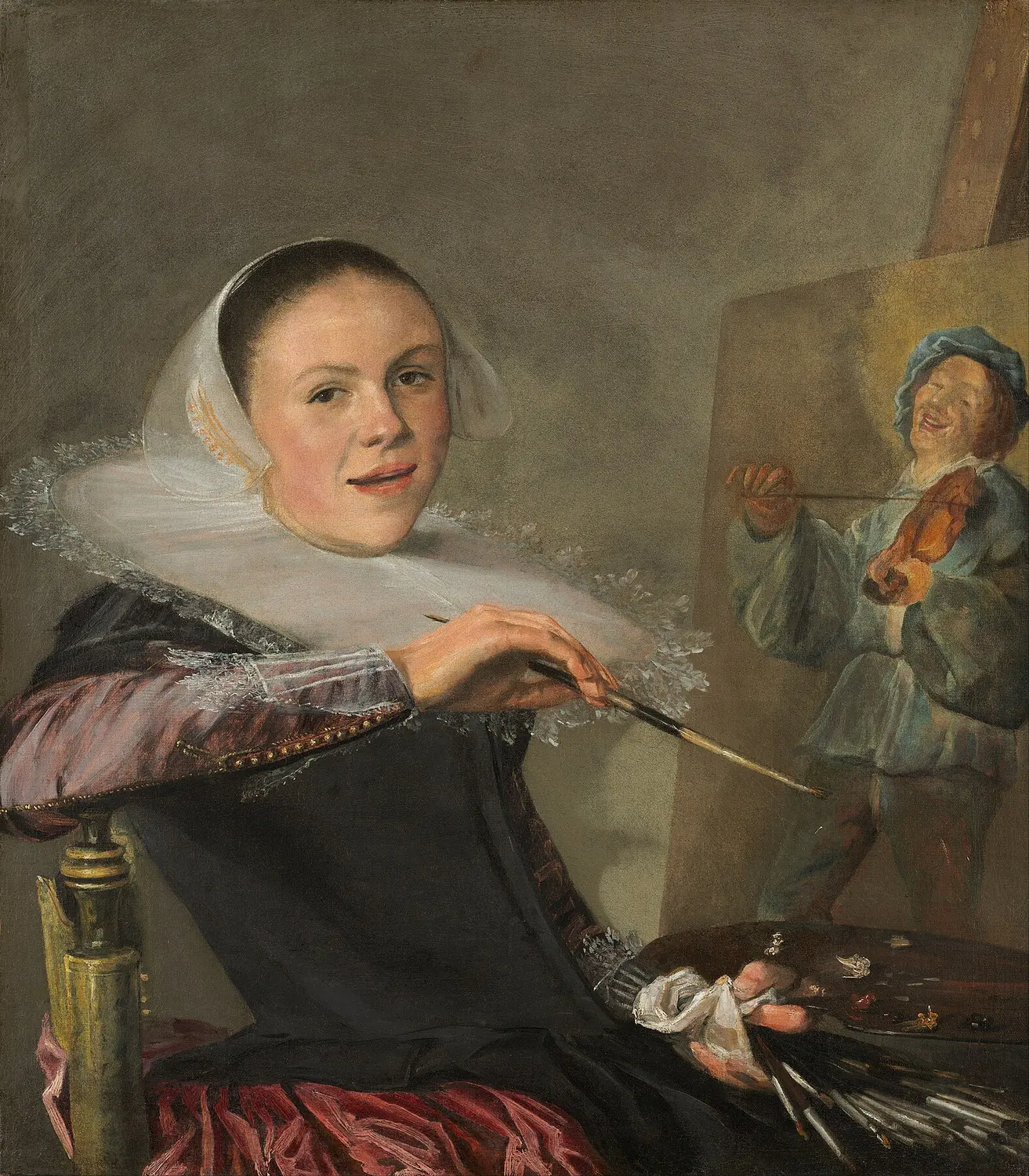
Self-Portrait
The young painter turns towards us, smiling, brush in hand, painting a cheerful fiddler. She shows both her talent and her good humour, and asserts her profession.
The forgotten star of Haarlem
A member of the Haarlem painters’ guild at twenty-four, Judith Leyster ran her own workshop. For two centuries her lively paintings were attributed to Frans Hals.
Born in 1609 in Haarlem, the daughter of a brewer whose brewery was called the Pole Star (Leyster), Judith took that name and signed with a JL monogram crossed by a star. In 1633 she was one of the very first women admitted to the Haarlem Guild of Saint Luke. She had pupils and did not hesitate to sue Frans Hals for taking one of her apprentices.
In 1636 she married the painter Jan Miense Molenaer and moved with him to Amsterdam, then Heemstede. She then painted much less, raised their children and took part in her husband’s business. She died in 1660.
Judith Leyster painted musicians, drinkers and children at play with a free touch close to Hals’s. She liked candlelight and intimate scenes. Her women are not figures of fun but dignified, focused people.
The young painter turns towards us, smiling, brush in hand, painting a cheerful fiddler. She shows both her talent and her good humour, and asserts her profession.
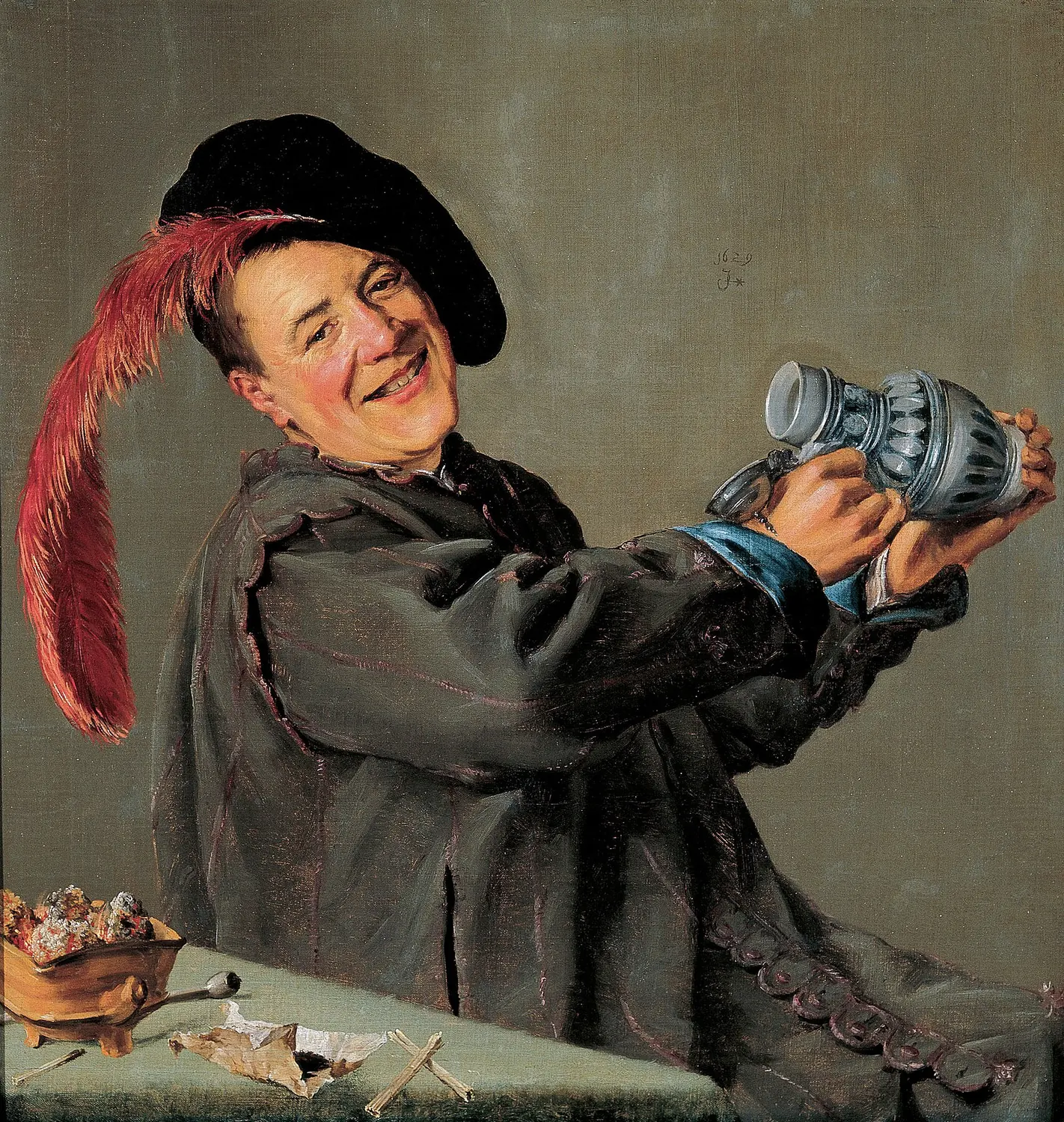
A ruddy drinker raises his jug, laughing. The bright light and quick brushwork give the scene the energy of a snapshot.
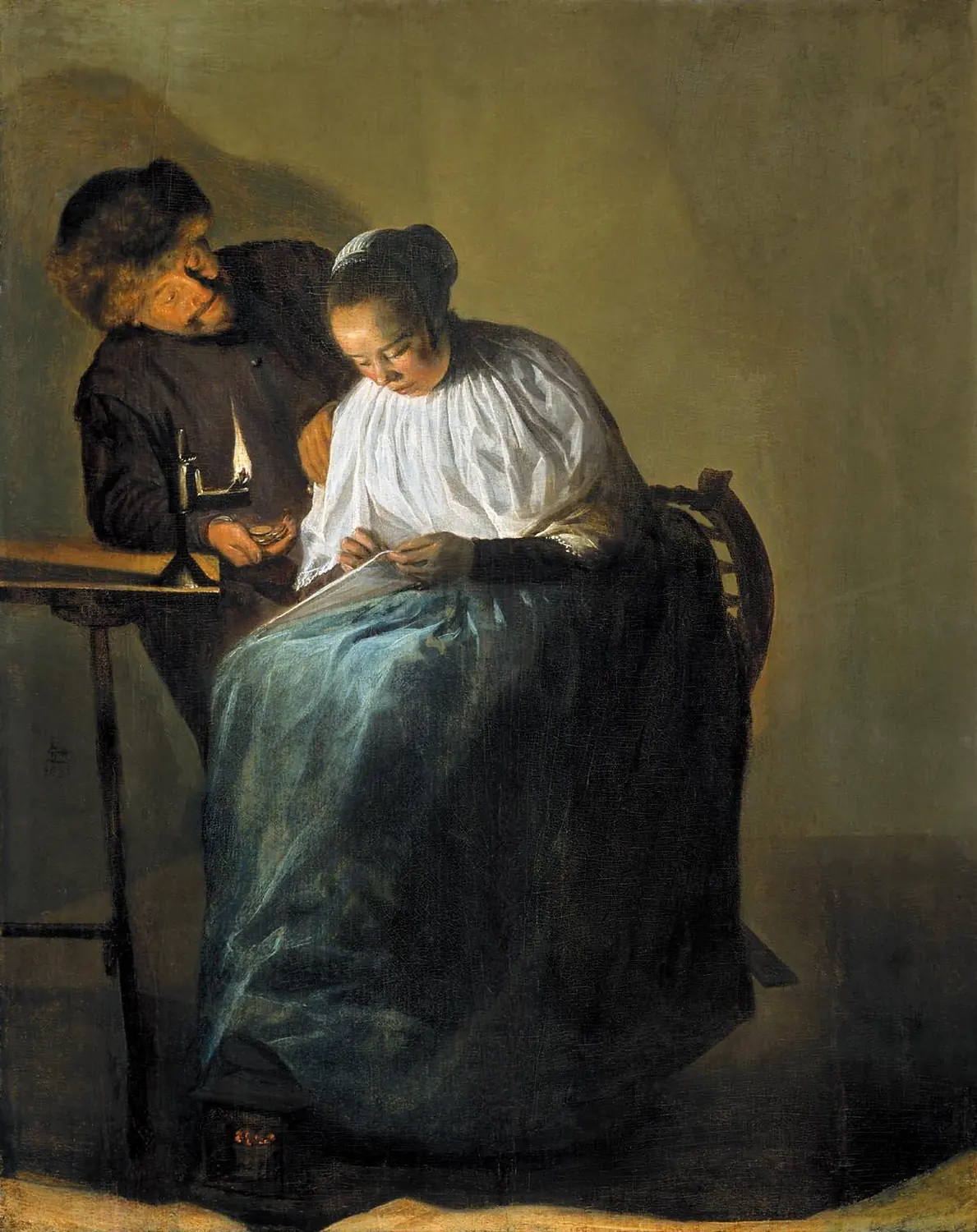
In the evening a woman sews by lamplight while a man leans over offering her coins. She ignores him, intent on her work: a silent, dignified refusal.
In 1893 the Louvre bought a painting by Frans Hals… before Judith Leyster’s monogram was found beneath the false signature. This famous lawsuit revived the study of her work.
 Rembrandt
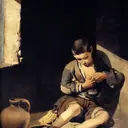 Bartolomé Esteban Murillo
 Claude Lorrain
 Anthony van Dyck
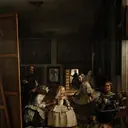 Diego Velázquez
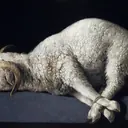 Francisco de Zurbarán
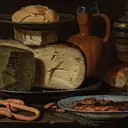 Clara Peeters
 Nicolas Poussin