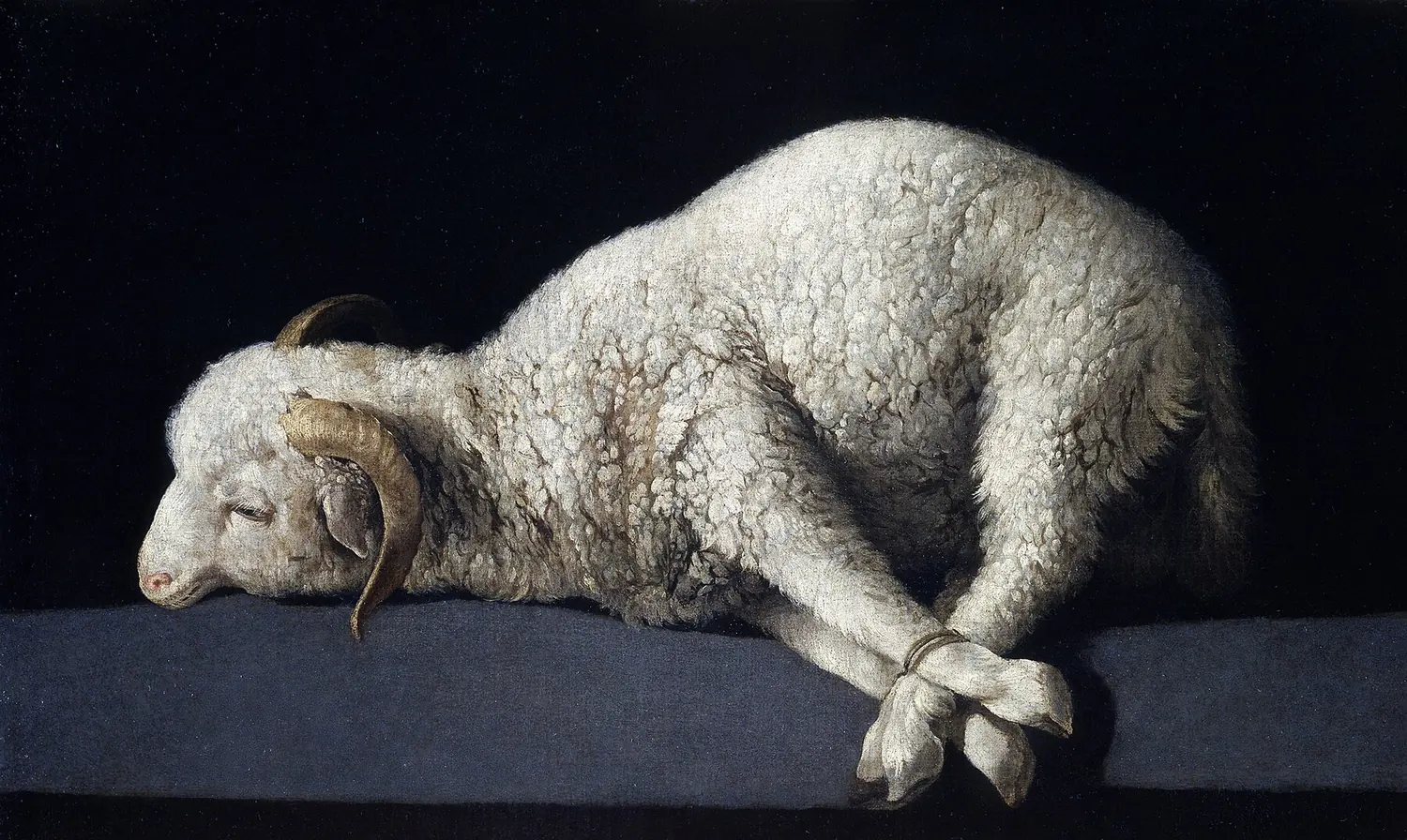
Agnus Dei
A lamb with bound legs lies on a table against a black background. The curly wool is rendered with tactile precision. The image evokes Christ, the ’Lamb of God’ offered in sacrifice.
The painter of silence and monks
Painter to the monasteries of Seville, Francisco de Zurbarán depicted saints and monks with sculptural gravity. His still lifes, of prayerful simplicity, almost seem like prayers.
Born in 1598 in Fuente de Cantos, Extremadura, Zurbarán trained in Seville, then Spain’s richest city thanks to trade with America. Religious orders commissioned large cycles of pictures for their convents from him.
A friend of Velázquez, he also worked for the king in Madrid. Shiploads of his paintings left for the American colonies. Overtaken by Murillo’s softer style, he saw commissions dwindle and died in Madrid in 1664.
Zurbarán isolated his figures against dark backgrounds and lit them with harsh light inherited from Caravaggio. He painted monks’ white habits with extraordinary virtuosity. His compositions are simple, symmetrical and silent.
A lamb with bound legs lies on a table against a black background. The curly wool is rendered with tactile precision. The image evokes Christ, the ’Lamb of God’ offered in sacrifice.
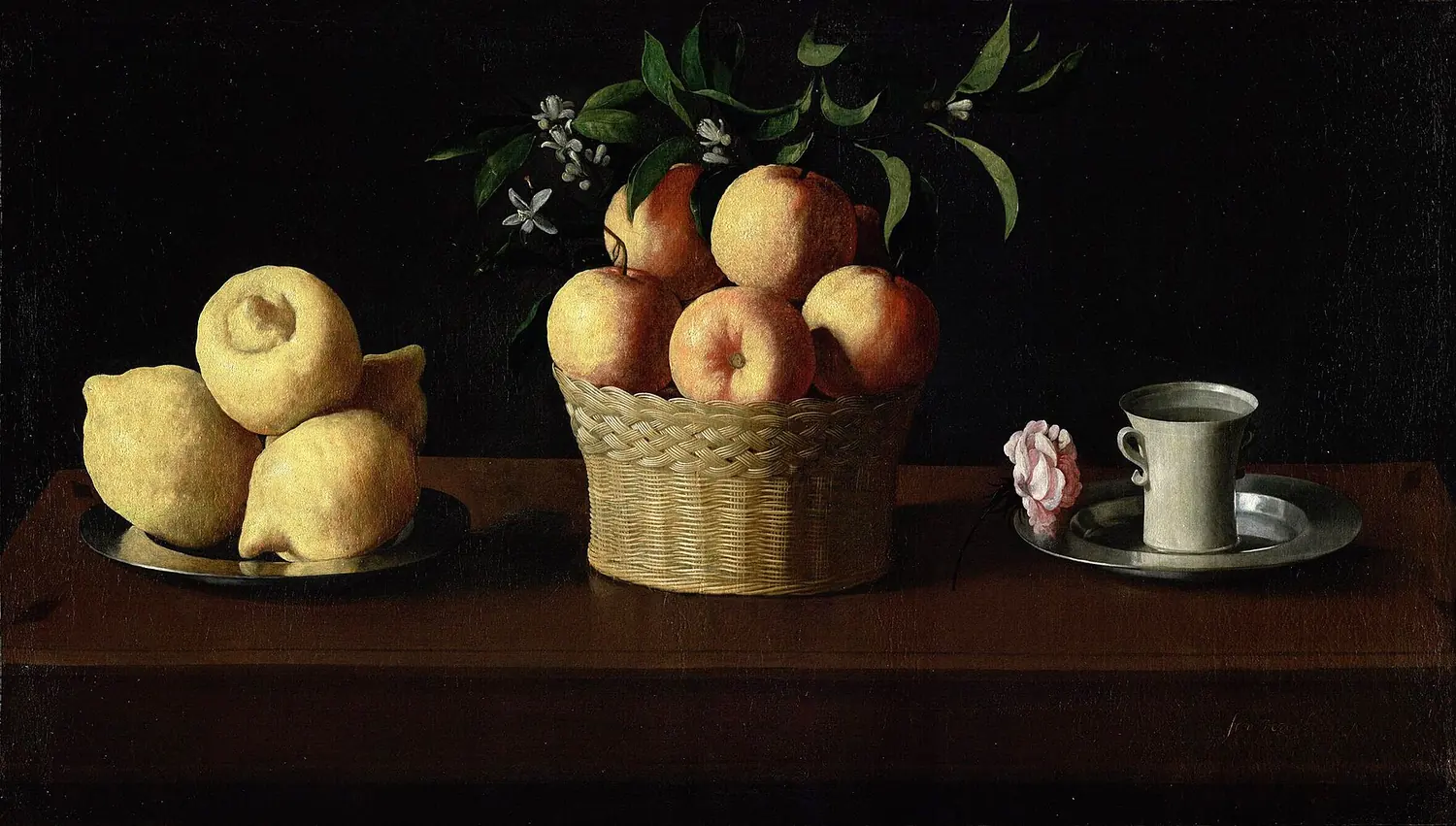
On a table, three groups of objects are lined up: citrons on a plate, a basket of oranges and orange blossom, a cup of water and a rose. They stand out against a dark background, like offerings.
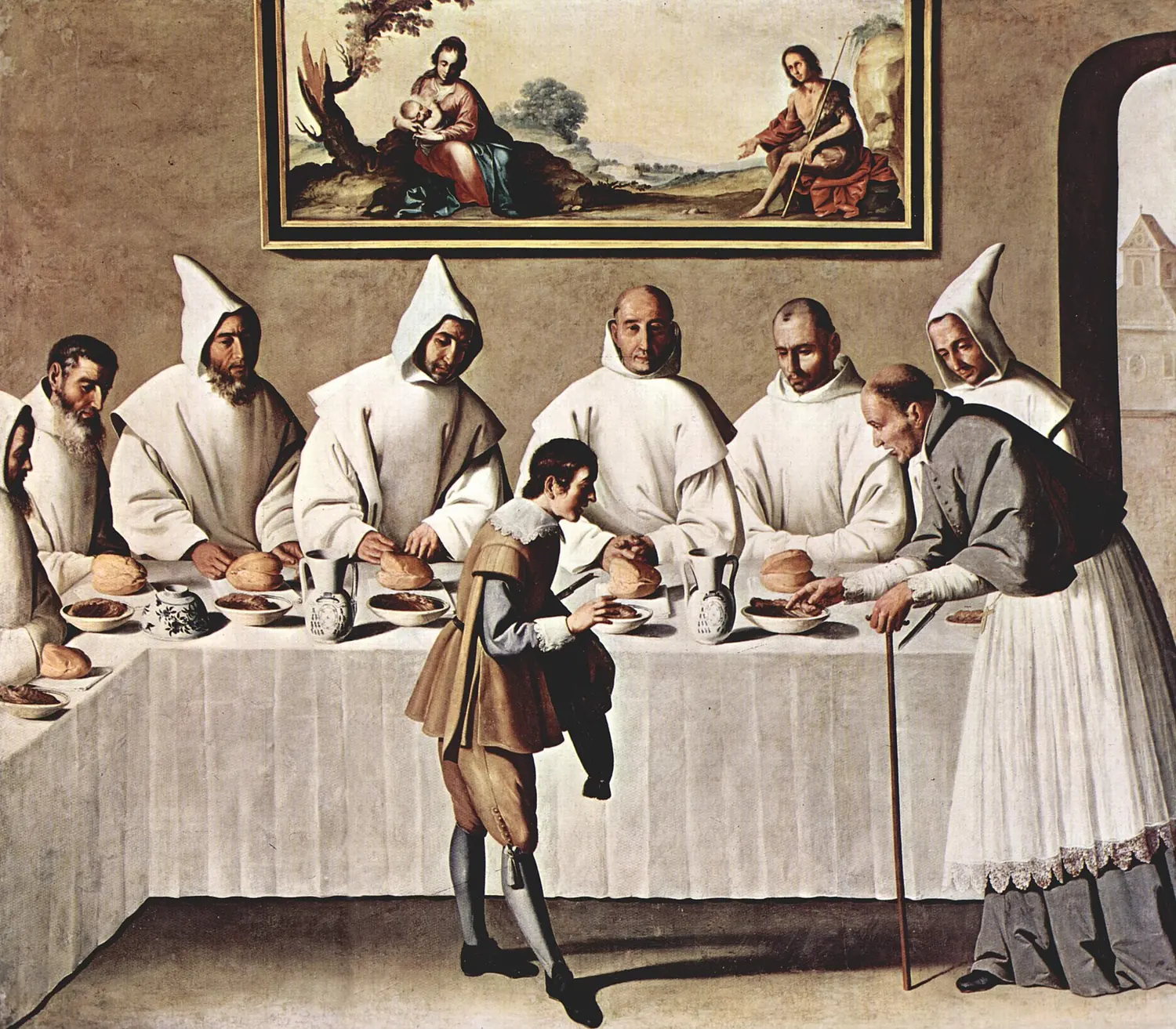
In a refectory, Carthusian monks seated before a meal of meat have fallen asleep; Saint Hugh, visiting them, finds that the meat has miraculously turned to ashes. The white habits fill the space.
The Still Life with Lemons, Oranges and a Rose is the only still life Zurbarán signed and dated.
 Anthony van Dyck
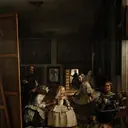 Diego Velázquez
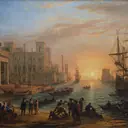 Claude Lorrain
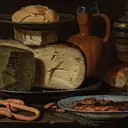 Clara Peeters
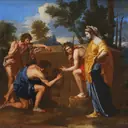 Nicolas Poussin
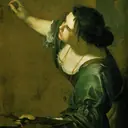 Artemisia Gentileschi
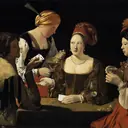 Georges de La Tour
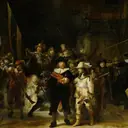 Rembrandt