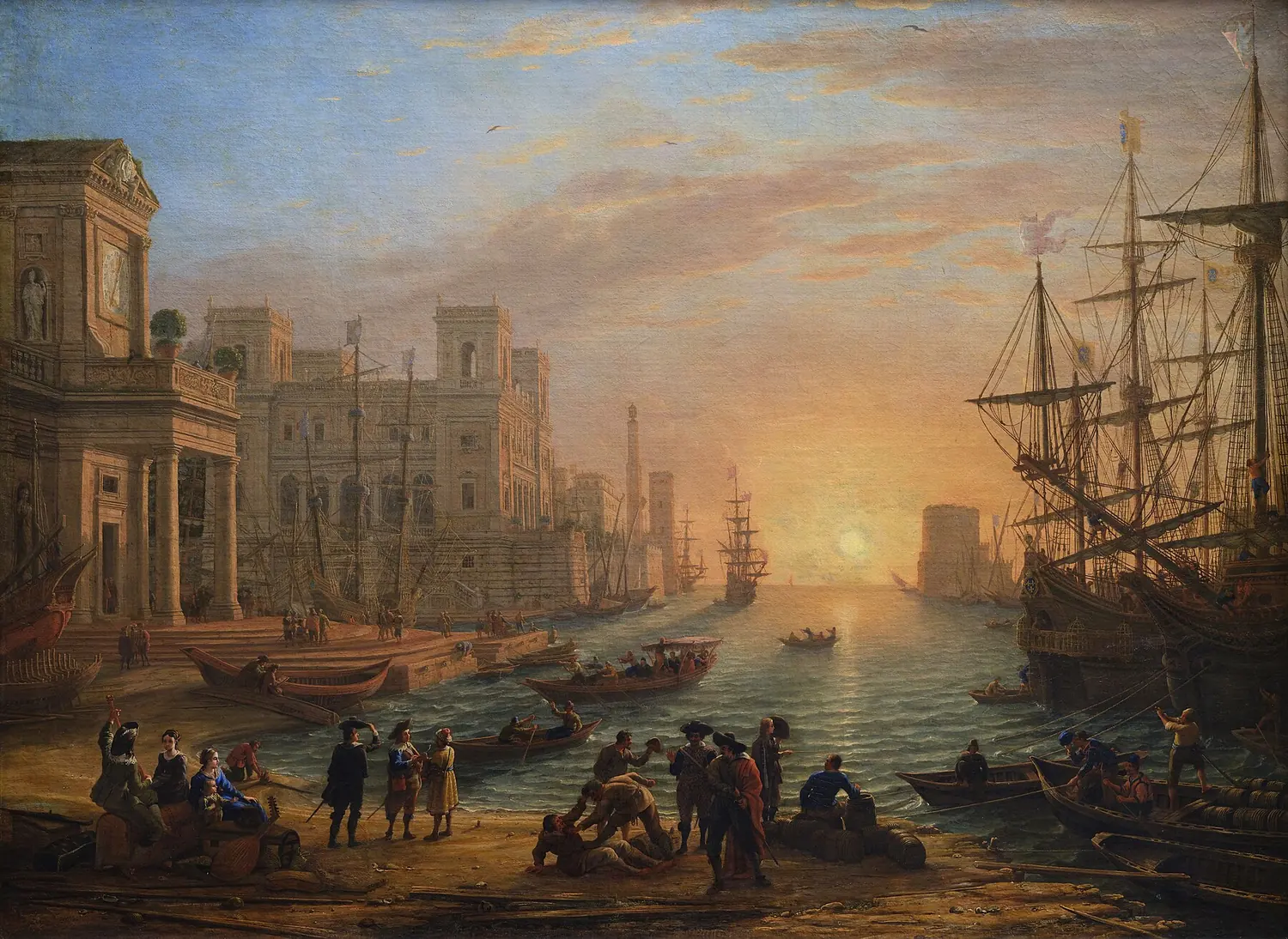
Seaport at Sunset
In an imaginary harbour lined with palaces, the sun sets over the sea. Sailors load goods and strollers chat on the quay. Everything is bathed in hazy golden light.
Claude Gellée, known as Claude Lorrain
The poet of the setting sun
A man from Lorraine settled in Rome, Claude Gellée invented the ideal landscape: ancient harbours bathed in golden light, Arcadian hills, a sun setting straight ahead of us. Turner and the English landscape painters revered him.
Born around 1600 in Chamagne, Lorraine, Claude Gellée left young for Italy. According to his first biographer, he was first apprenticed as a pastry cook before becoming assistant to the painter Agostino Tassi in Rome. He settled in the city for good and spent his whole career there.
Kings, popes and princes from all over Europe ordered landscapes from him. To protect himself from forgers he drew each of his paintings in a book, the Liber Veritatis, the ’book of truth’. He died in Rome in 1682.
Claude often placed the sun in the centre of the picture, facing the viewer: its golden light spreads over the sea, buildings and trees. He composed his landscapes in successive planes framed by tall trees or palaces, with small figures from mythology or the Bible.
In an imaginary harbour lined with palaces, the sun sets over the sea. Sailors load goods and strollers chat on the quay. Everything is bathed in hazy golden light.
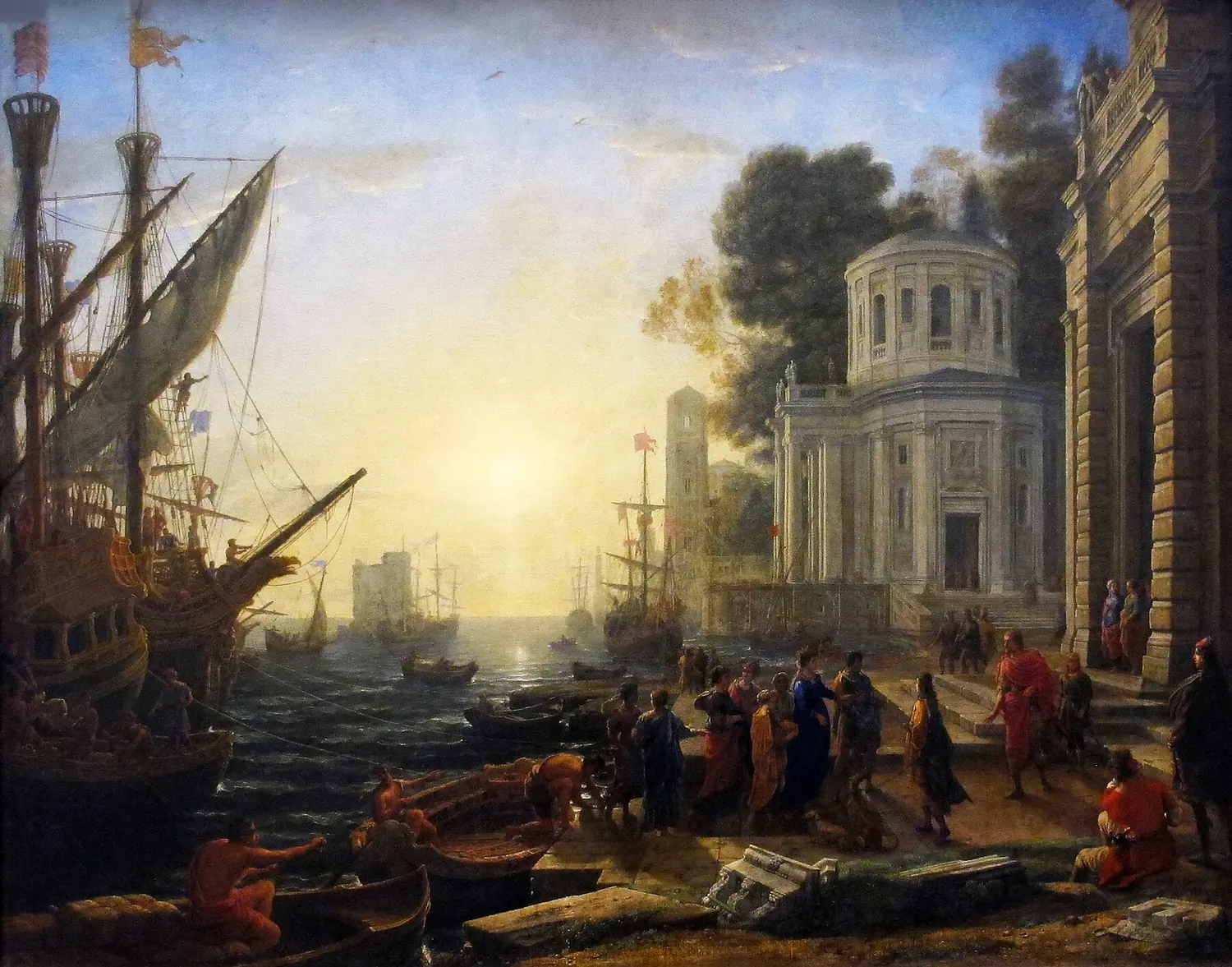
Cleopatra, Queen of Egypt, lands at Tarsus to meet the Roman general Mark Antony. The sun in the distance lights the ships and colonnades from the side.
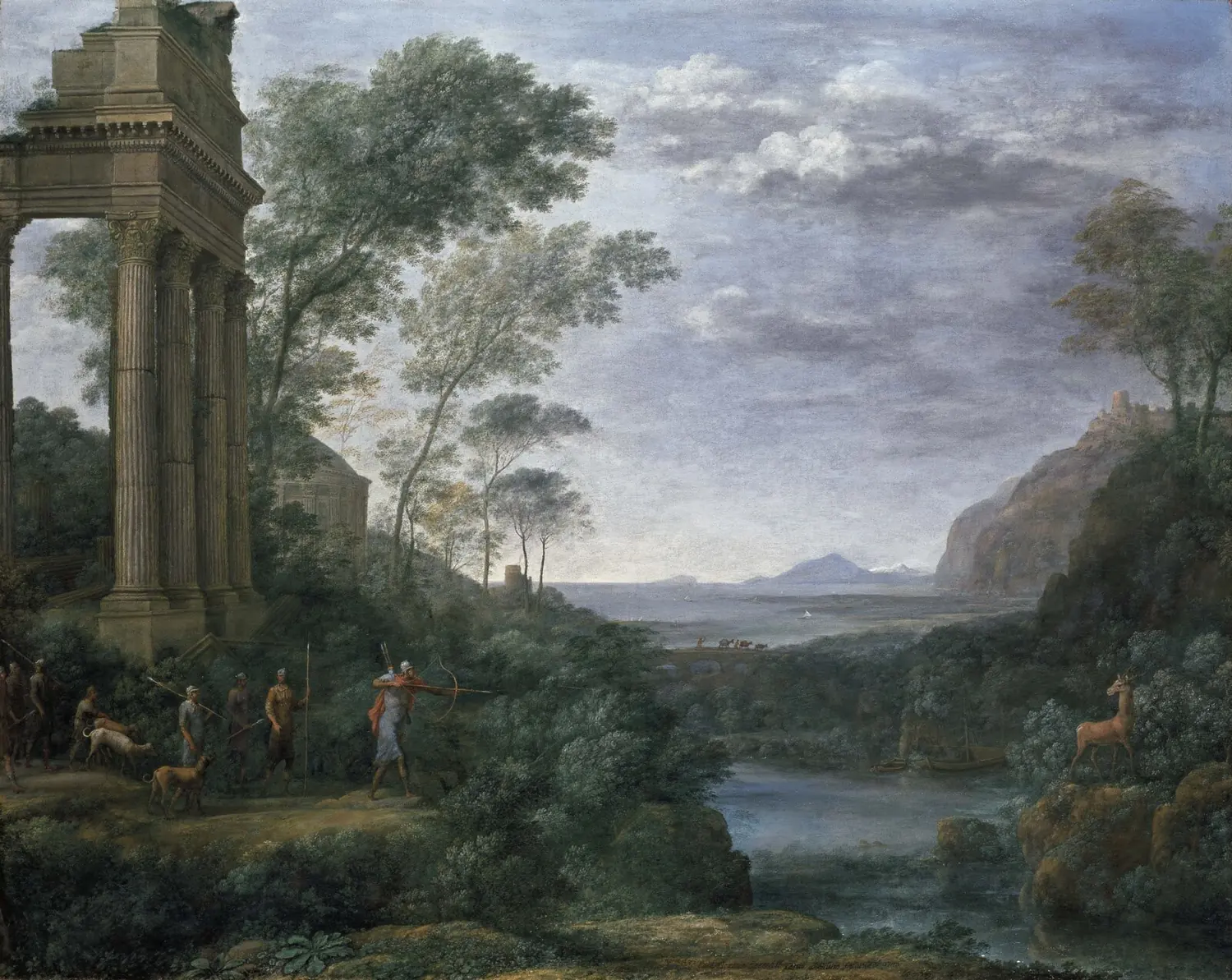
In a grand landscape, the young Ascanius shoots an arrow at Sylvia’s tame stag, which will start a war. It is the painter’s last picture, finished in the year he died.
Turner admired Claude so much that he left two of his own paintings to the National Gallery in London on condition that they hang next to two canvases by Claude.
 Anthony van Dyck
 Diego Velázquez
 Francisco de Zurbarán
 Clara Peeters
 Nicolas Poussin
 Rembrandt
 Artemisia Gentileschi
 Georges de La Tour