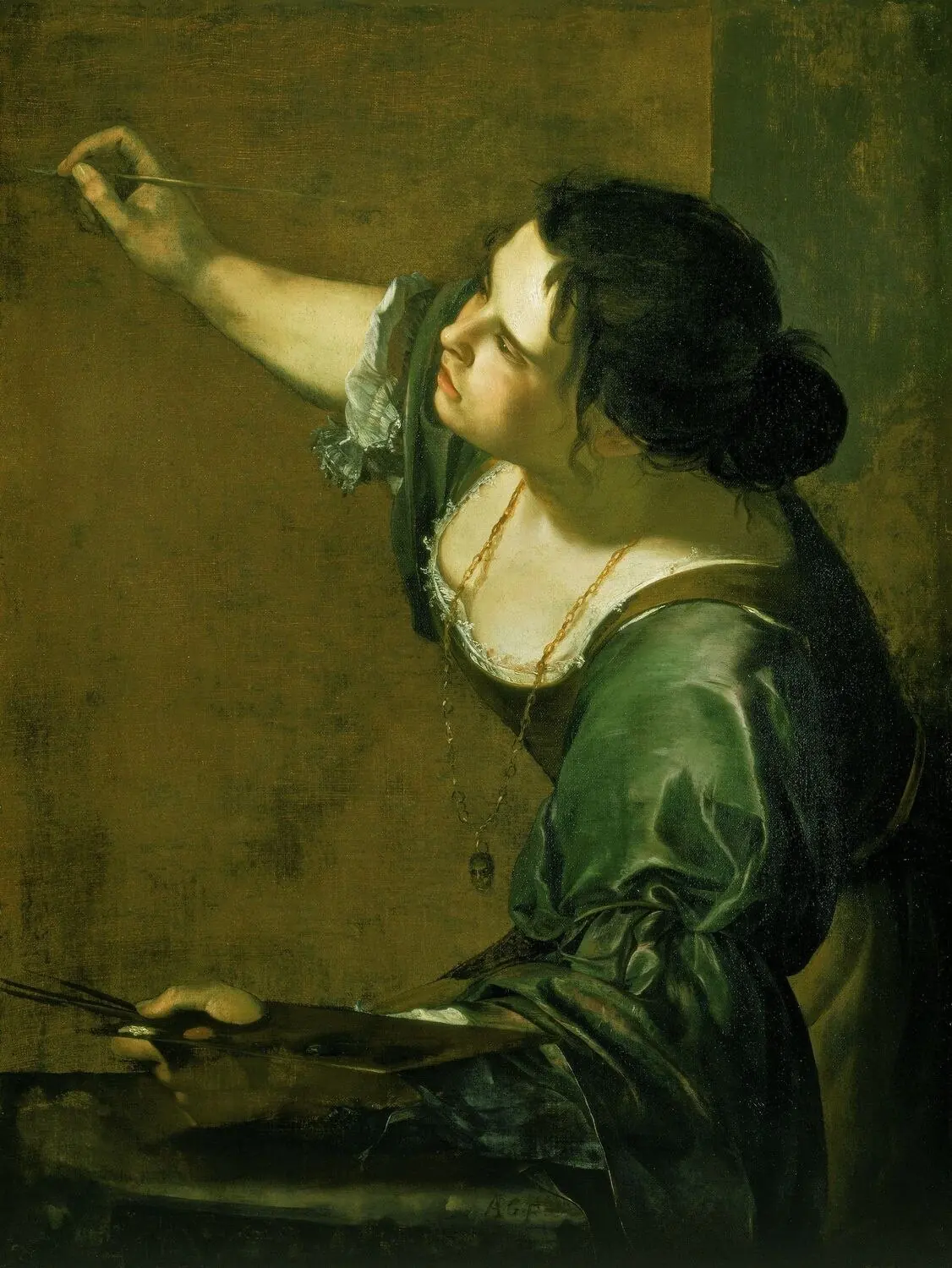
Self-Portrait as the Allegory of Painting
The artist depicts herself leaning towards her canvas, brush raised, as the allegory of Painting, with a gold chain and mask-shaped pendant. Few painters have shown themselves so fully at work.
The great woman painter of the Baroque
A painter’s daughter, Artemisia Gentileschi imposed her talent in a world of men. Her strong, determined biblical heroines are among the most powerful images of the 17th century.
Born in Rome in 1593, Artemisia learned to paint in the workshop of her father, Orazio Gentileschi, a follower of Caravaggio. At seventeen she was already painting masterpieces. In 1612 she went through a gruelling trial against a painter, her father’s collaborator, who had assaulted her.
Settled in Florence, in 1616 she became the first woman admitted to the Academy of Drawing and worked for the Medici. She then lived in Rome, Venice, London at the court of Charles I, and Naples, where she ran a workshop until her death around 1654.
Artemisia adopted Caravaggio’s chiaroscuro: dark backgrounds, dramatic light, live models. She added sumptuous fabrics, warm colours and above all a new view of the women of history and the Bible, whom she shows as active, brave and clear-sighted.
The artist depicts herself leaning towards her canvas, brush raised, as the allegory of Painting, with a gold chain and mask-shaped pendant. Few painters have shown themselves so fully at work.
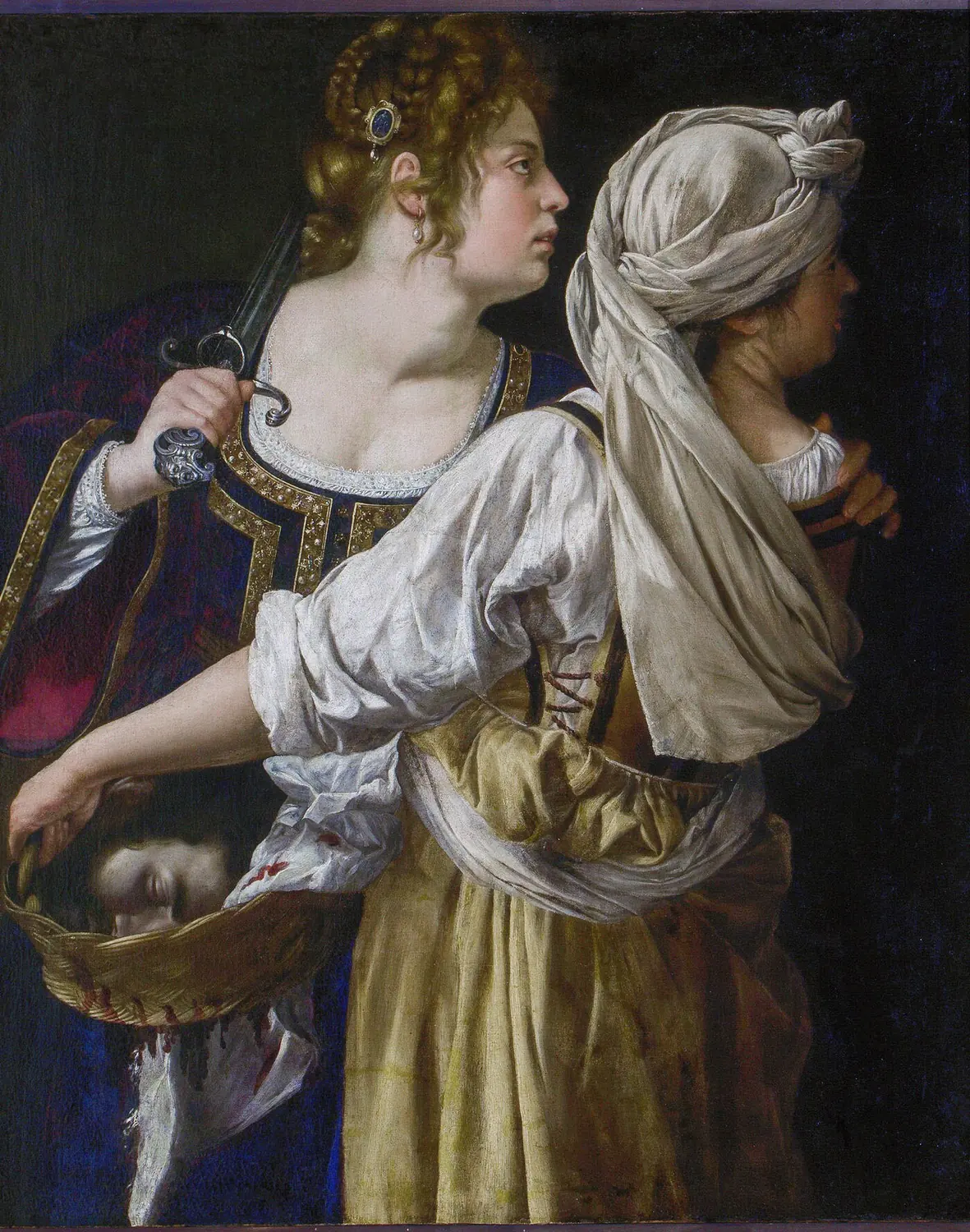
Judith and her maidservant have just left the enemy camp after killing the general Holofernes. They turn together towards a sound, on the alert. The tension is extreme, the scene silent.
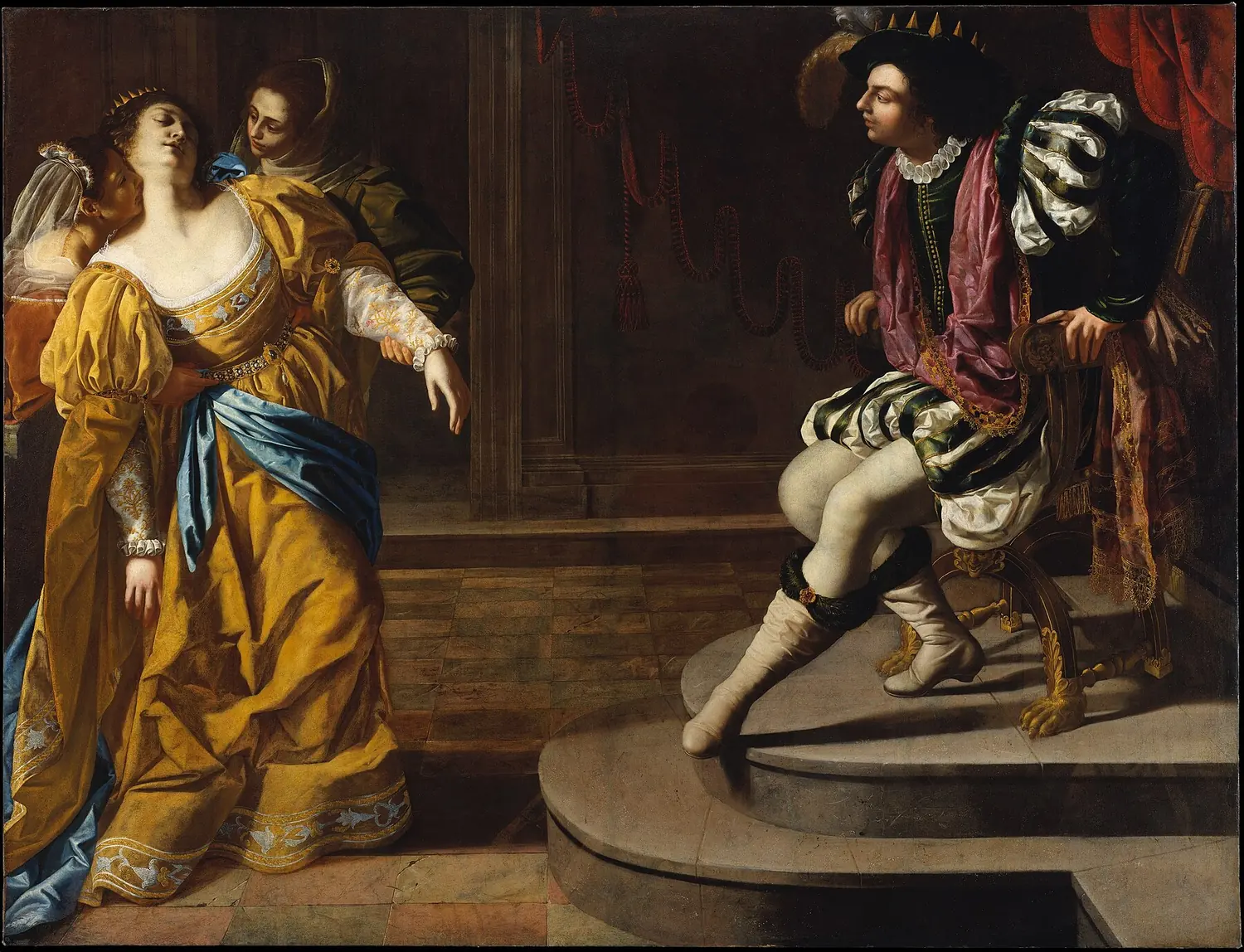
Queen Esther faints before King Ahasuerus, whom she has come to beg to save her people. The contrast between the collapsing woman and the young king startled on his throne creates the drama.
The Metropolitan Museum of Art — CC0 — Wikimedia Commons
Rediscovered in the 20th century, Artemisia is now one of the most studied artists of the Baroque, and her paintings break records at auction.
 Georges de La Tour
 Clara Peeters
 Nicolas Poussin
 Francisco de Zurbarán
 Anthony van Dyck
 Diego Velázquez
 Claude Lorrain
 Frans Hals