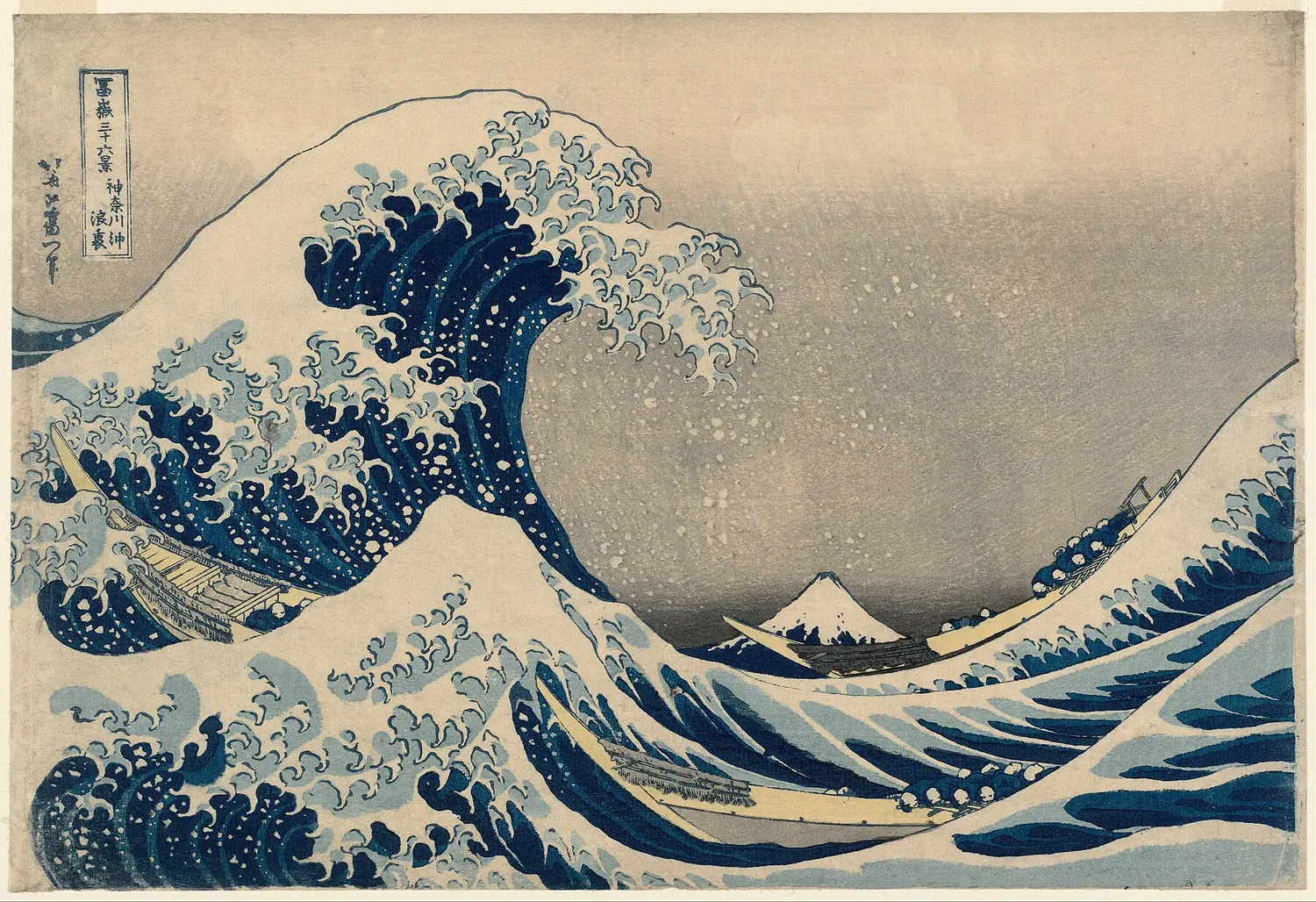
The Great Wave off Kanagawa
A giant wave with crests torn like claws is about to crash onto three fishing boats. In the distance, tiny Mount Fuji itself looks like a small wave. This print was produced in thousands of copies.
The old man mad about drawing
A Japanese painter and printmaker, Katsushika Hokusai created one of the most famous images in the world, The Great Wave. Tireless, he produced tens of thousands of works and inspired the Impressionists and Debussy.
Born in 1760 in Edo, today’s Tokyo, Hokusai learned woodblock carving as a teenager. During his long life he changed his artist’s name some thirty times and is said to have moved house more than ninety times. He published sketchbooks, the Hokusai Manga, in which he drew everything: people, animals, plants, objects.
Around the age of seventy he published the series Thirty-six Views of Mount Fuji, which made him famous. He then signed himself ’the old man mad about drawing’. He died in Edo in 1849, aged eighty-eight, regretting that he had not had ten more years to become a true painter.
Ukiyo-e prints are printed from several carved woodblocks, one per colour. Hokusai introduced Prussian blue, a pigment imported from Europe, and bold compositions: huge foreground, tiny mountain, dynamic lines. His sense of movement fascinated European artists.
A giant wave with crests torn like claws is about to crash onto three fishing boats. In the distance, tiny Mount Fuji itself looks like a small wave. This print was produced in thousands of copies.
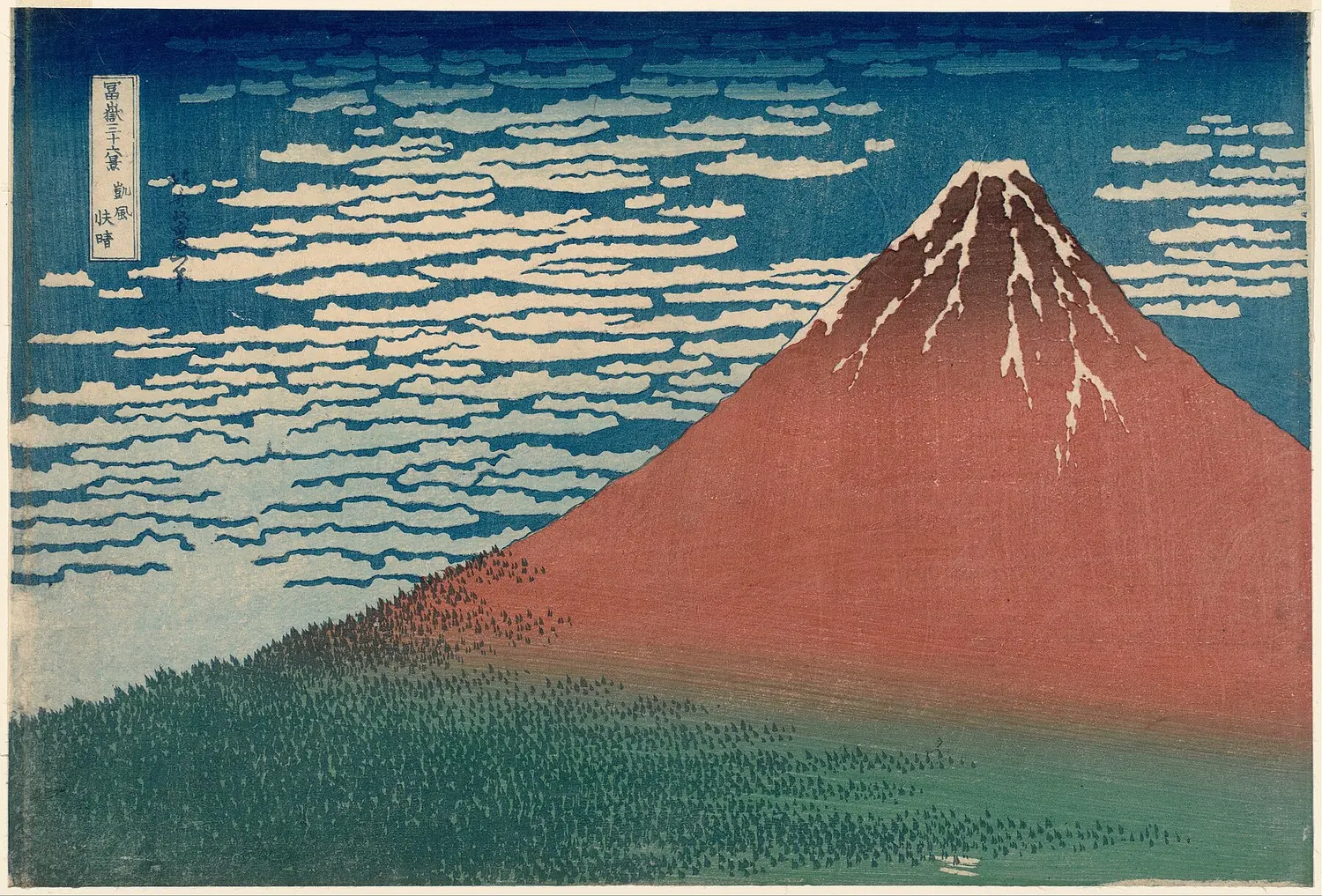
Mount Fuji, reddened by the rising sun at the end of summer, stands under a sky dotted with small clouds. With very few elements, Hokusai creates an image of monumental force.
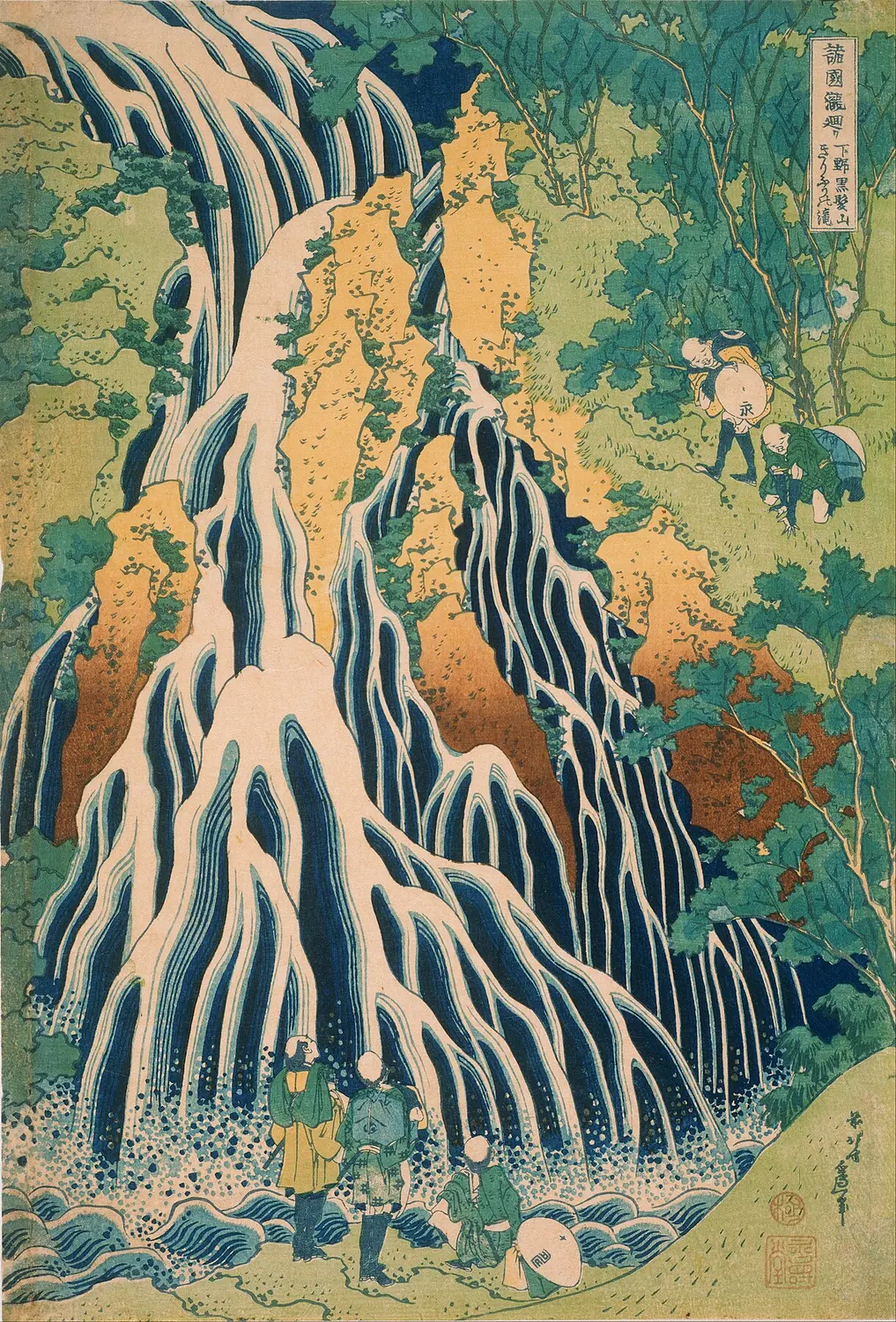
A waterfall divides into streams that rush down the mountain like the fingers of a hand, while tiny pilgrims admire it from a rock.
For the cover of the score of La Mer in 1905, Claude Debussy chose a detail of The Great Wave.
 Élisabeth Vigée Le Brun
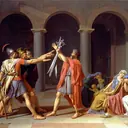 Jacques-Louis David
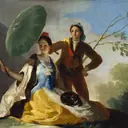 Francisco Goya
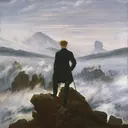 Caspar David Friedrich
 J. M. W. Turner
 John Constable
 Jean-Auguste-Dominique Ingres
 Jean-Honoré Fragonard