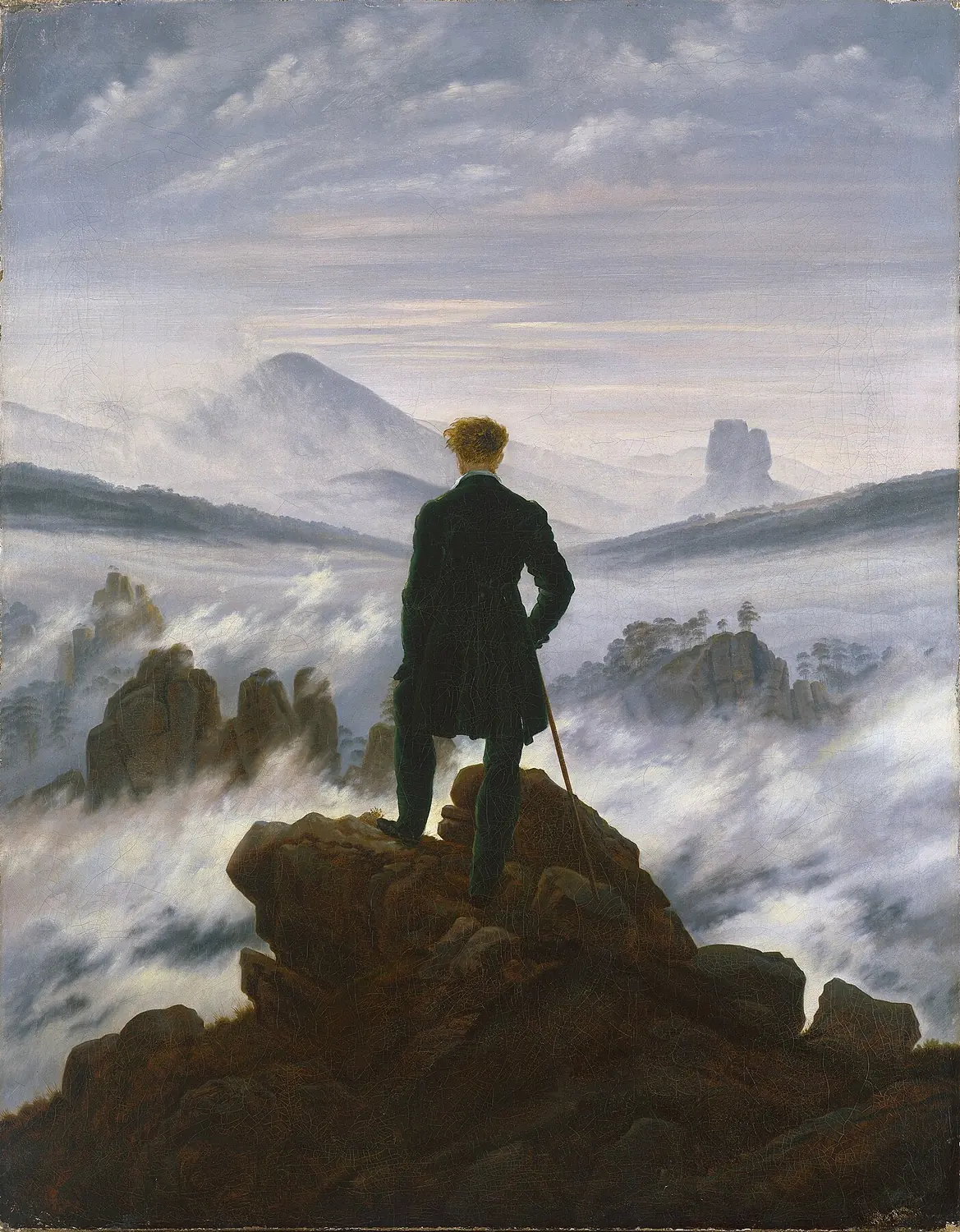
Wanderer above the Sea of Fog
A man seen from behind, standing on a rock, gazes at a sea of clouds from which peaks emerge. We do not see his face: we share his view of the immensity.
Landscape as meditation
A painter of German Romanticism, Caspar David Friedrich made landscape a place of contemplation: mists, seas of ice, ruins, and figures seen from behind facing the immensity of nature.
Born in 1774 in Greifswald, on the Baltic, Caspar David Friedrich trained at the Copenhagen Academy, then settled in Dresden in 1798, where he spent his life. He walked through mountains, coasts and forests, filling sketchbooks with precise drawings.
His mystical landscapes made him famous around 1810, and he was appointed professor at the Dresden Academy. But tastes changed, his health declined, and he died in 1840, almost forgotten. Rediscovered in the early 20th century, he is now one of Germany’s best-loved painters.
Friedrich composed his paintings in the studio from nature studies. He often placed a figure seen from behind, the Rückenfigur, who looks at the landscape on our behalf and invites us to meditate. Dawn or twilight light, mists and silences give his landscapes a spiritual dimension.
A man seen from behind, standing on a rock, gazes at a sea of clouds from which peaks emerge. We do not see his face: we share his view of the immensity.
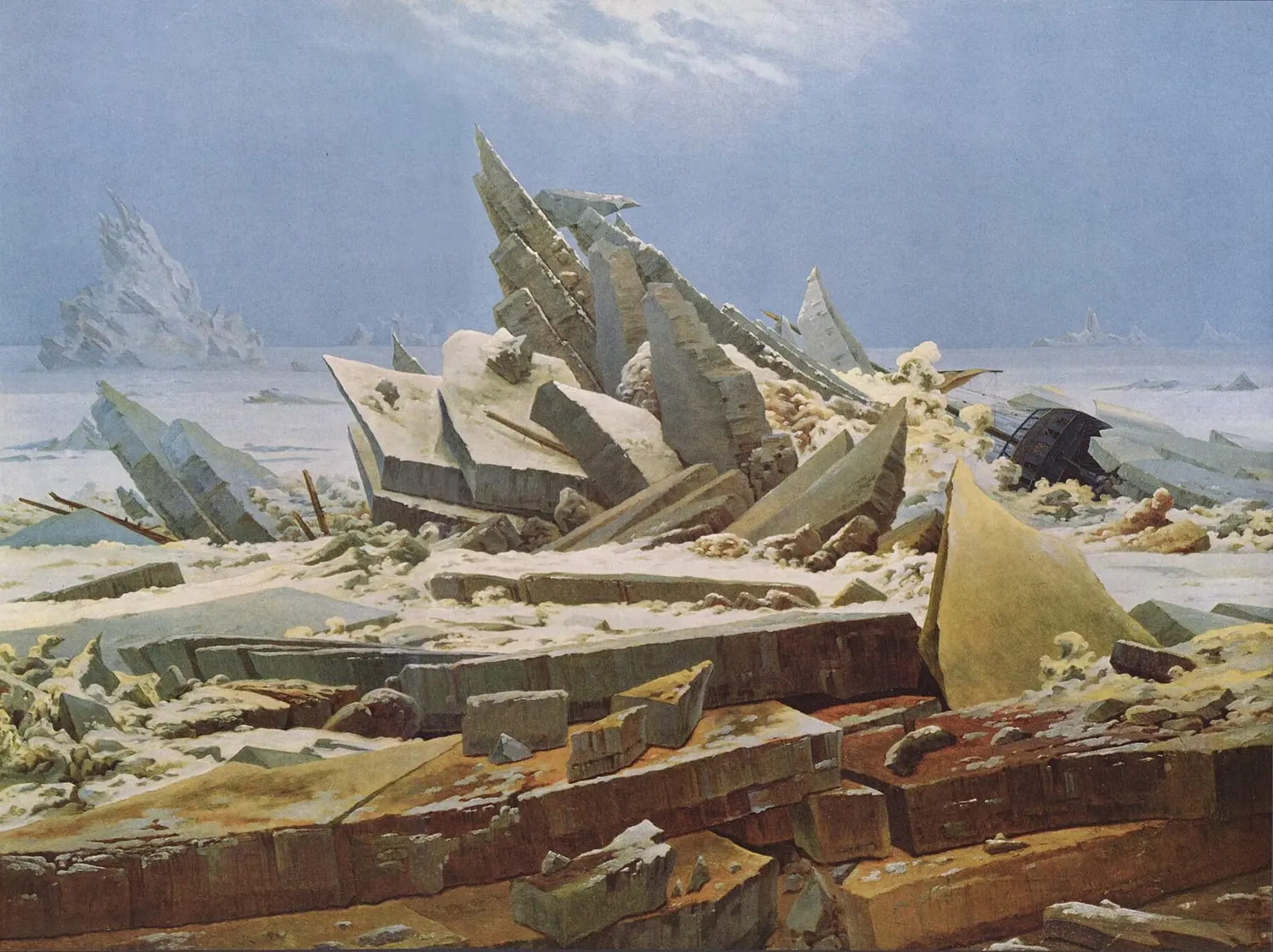
Broken blocks of ice pile up in a sharp pyramid under a frozen sky. On the right, the stern of a crushed ship can be made out. Nature has defeated man.
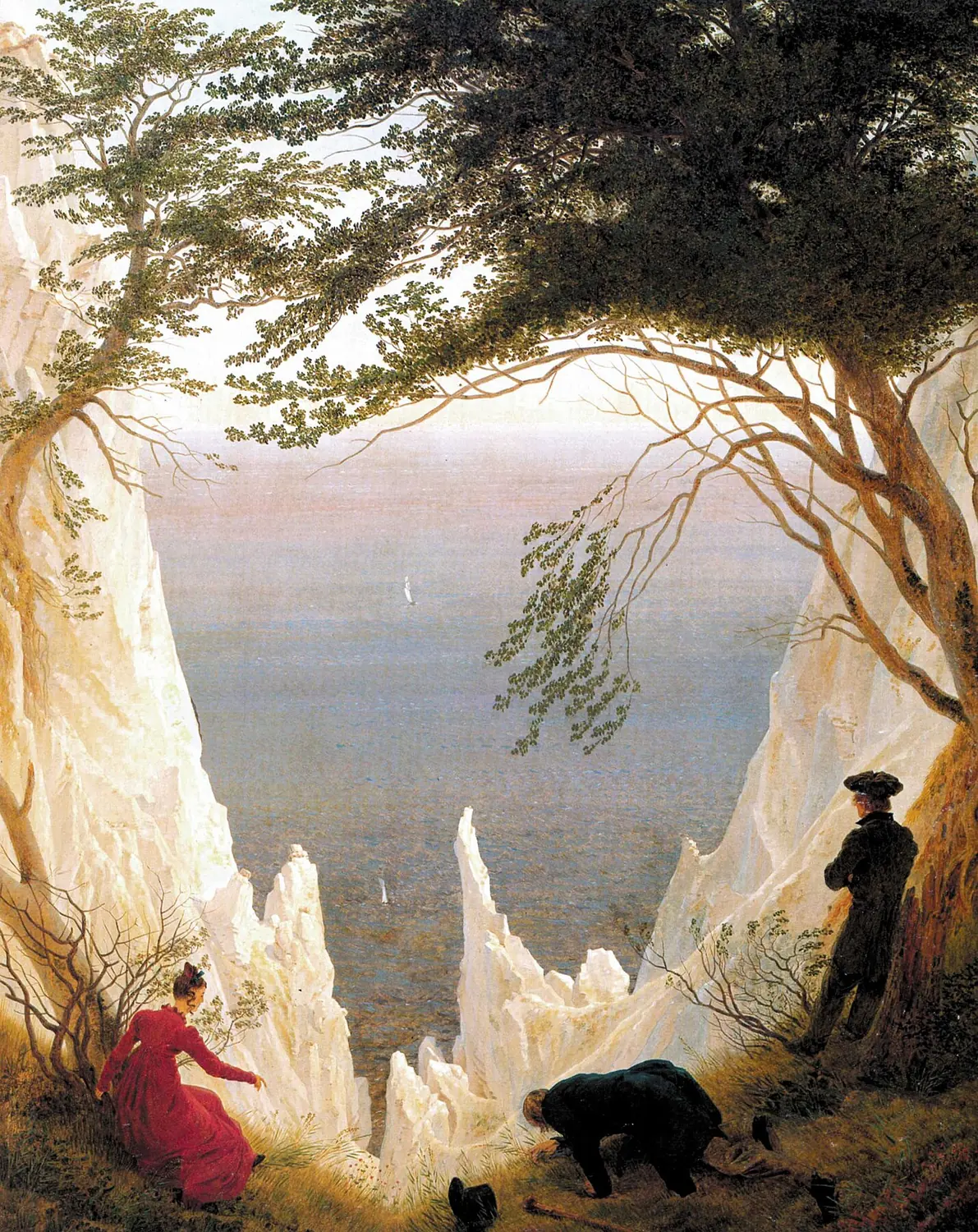
Three walkers at the edge of a white chalk cliff contemplate the blue sea between the trees. One man crawls to look over the edge, another leans against a tree.
Chalk Cliffs on Rügen is said to have been painted in memory of the honeymoon of Friedrich and his wife Caroline in 1818.
 J. M. W. Turner
 John Constable
 Jean-Auguste-Dominique Ingres
 Katsushika Hokusai
 Théodore Géricault
 Élisabeth Vigée Le Brun
 Camille Corot
 Utagawa Hiroshige