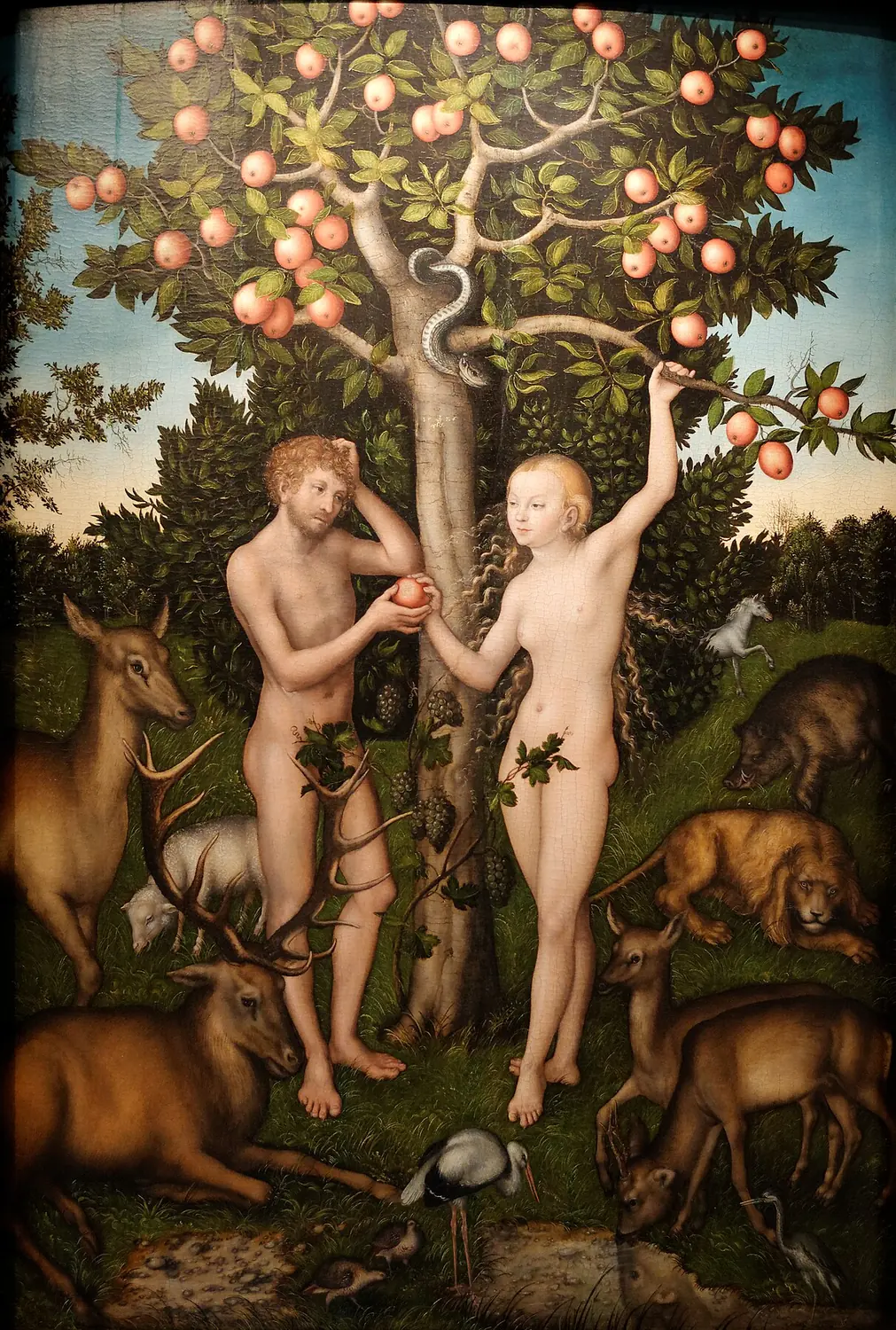
Adam and Eve
Beneath the tree of knowledge, Eve hands the apple to Adam, who scratches his head, hesitating. Around them, animals including a lion and deer people the Garden of Eden.
The painter of the Reformation
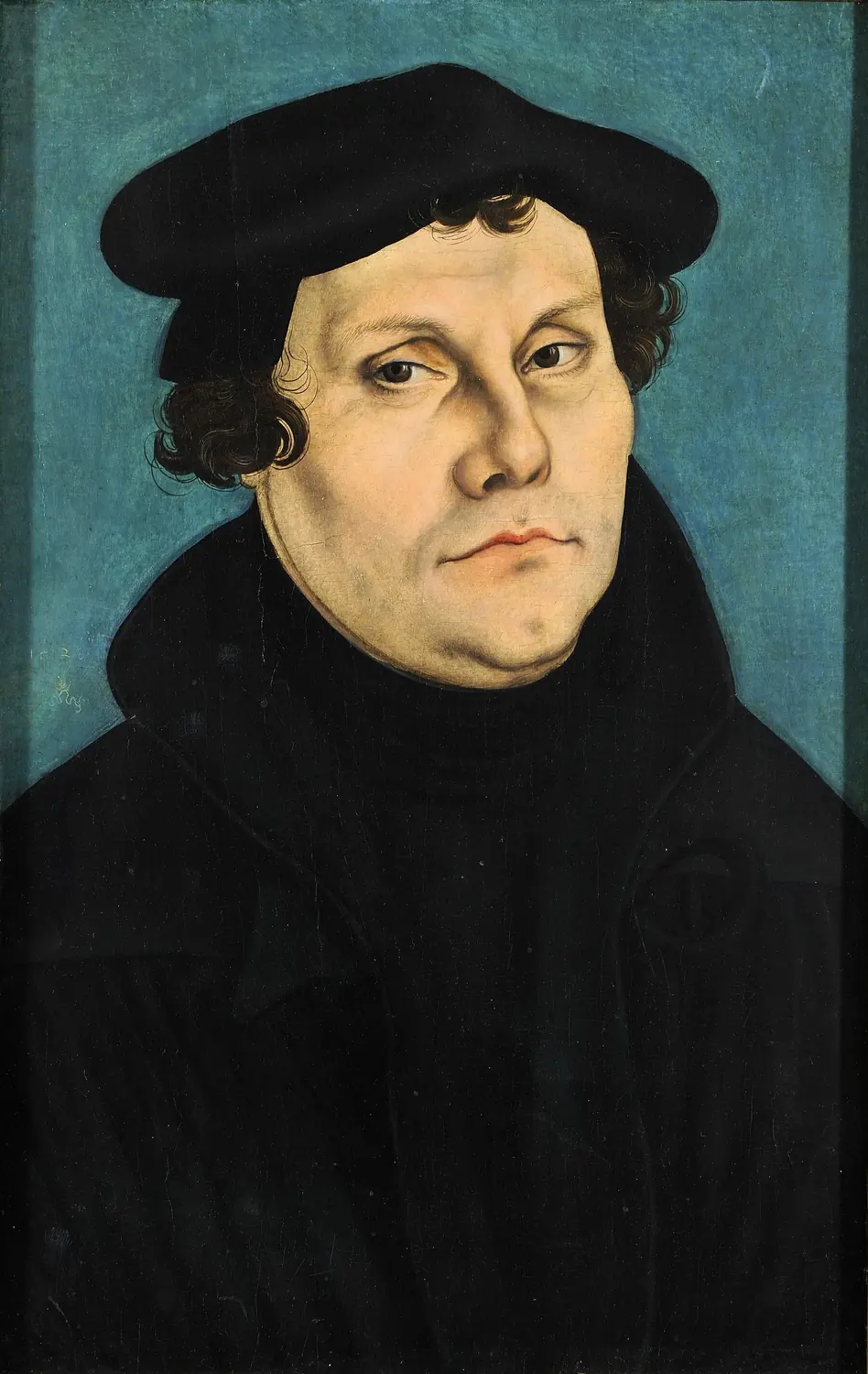
Court painter to the princes of Saxony and a friend of Martin Luther, Lucas Cranach the Elder fixed the face of the Protestant Reformation. His formidably efficient workshop produced portraits, elegant nudes and Bible scenes.
Born in 1472 in Kronach, Franconia, whose name he took, Lucas trained with his father. After a stay in Vienna he became court painter to the Elector of Saxony in Wittenberg in 1505. There he was granted a coat of arms: a winged serpent that he used as his signature.
A shrewd businessman, he owned a pharmacy, a printing press and houses, and became mayor of Wittenberg. A friend of Luther, he painted and engraved his portrait dozens of times and printed his writings. He followed his prince into exile and died in Weimar in 1553.
Cranach loved slender silhouettes, sharp outlines, brilliant colours and plain backgrounds or forest landscapes. His slim, bejewelled female nudes became his trademark. With his workshop and his son, he produced hundreds of pictures from models he varied.
Beneath the tree of knowledge, Eve hands the apple to Adam, who scratches his head, hesitating. Around them, animals including a lion and deer people the Garden of Eden.
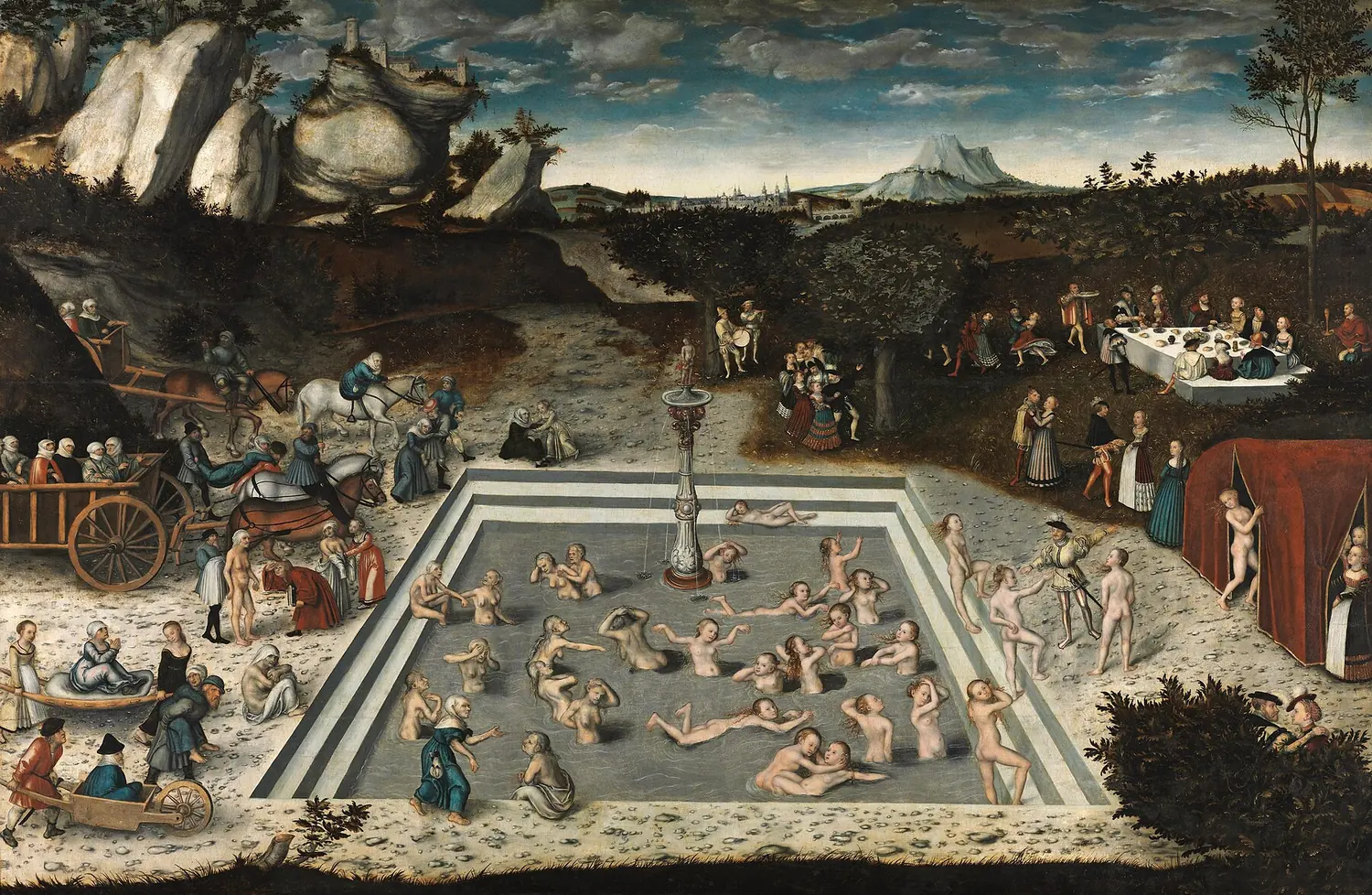
On the left, old women arrive by cart and step into a pool; on the right, they come out young and join a courtly party. This humorous picture illustrates the dream of eternal youth.
Martin Luther, the reformer, poses in black against a plain background. This portrait, produced in many copies by the workshop, made his face known throughout Germany.
Cranach’s little winged serpent helps date his paintings: after the death of his son Hans in 1537, he lowered the creature’s wings, as if in mourning.
 Albrecht Dürer
 Michelangelo
 Giorgione
 Raphael
 Titian
 Leonardo da Vinci
 Kamāl ud-Dīn Behzād
 Hieronymus Bosch