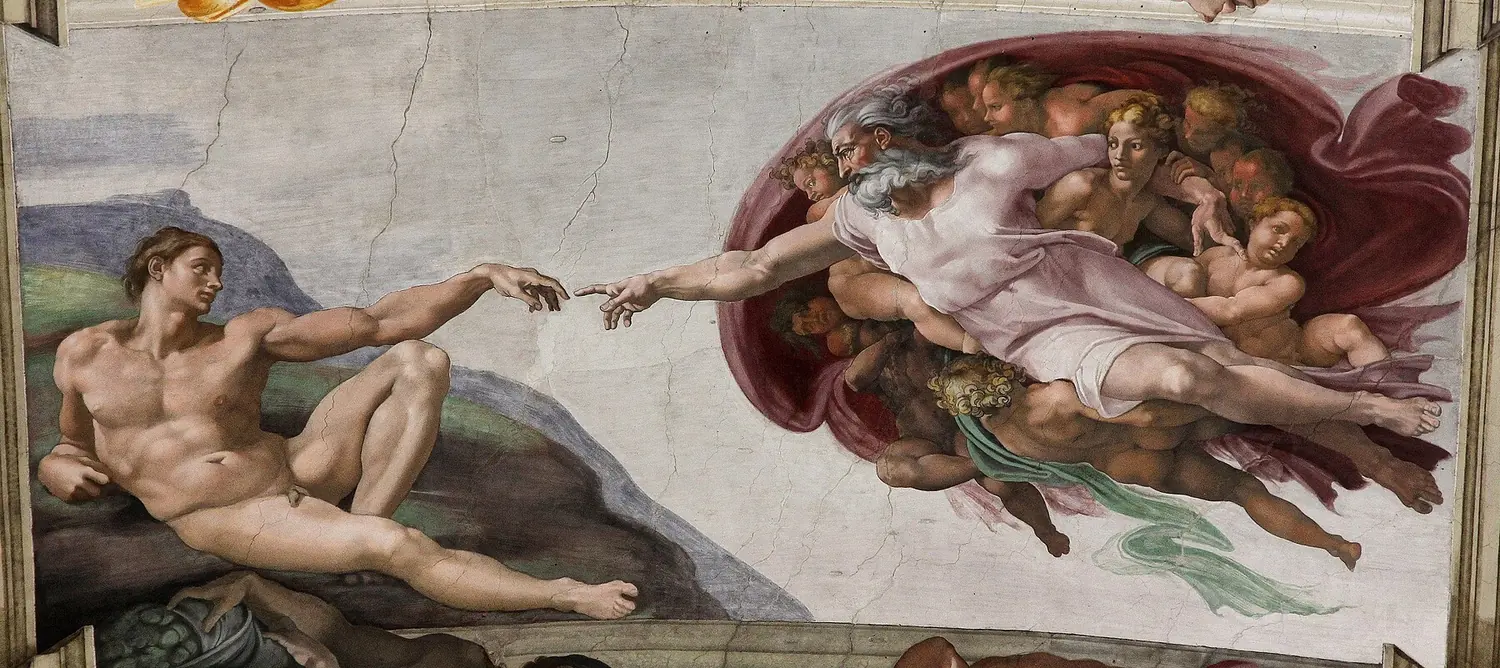
The Creation of Adam
God, carried by angels in a great cloak, stretches out his finger towards Adam, lying on the earth, to give him life. The two index fingers do not touch: everything happens in that small empty gap.
The sculptor who painted the Sistine Chapel
A sculptor above all, Michelangelo nevertheless painted one of the greatest masterpieces of painting: the Sistine Chapel ceiling. His powerful, tormented bodies left their mark on all Western art.
Born in 1475 in Caprese, Tuscany, Michelangelo Buonarroti grew up in Florence. As a teenager he was welcomed into Lorenzo de’ Medici’s sculpture garden. At twenty-four he carved the Pietà in Rome, then the David in Florence. Pope Julius II called him to Rome for his tomb, then made him paint the vault of the Sistine Chapel.
From 1508 to 1512, standing on scaffolding of his own design with his head thrown back, he painted more than three hundred figures. Twenty-four years later he returned to paint the Last Judgment on the altar wall. Architect of the dome of St Peter’s, he worked until his death in Rome in 1564, at eighty-eight.
Michelangelo painted as he carved: his bodies are muscular, twisting and full of energy, and his colours, revealed by the 1980s-1990s restoration, are bright and acidic. He knew anatomy by heart and sought to express the great movements of the soul through the human body.
God, carried by angels in a great cloak, stretches out his finger towards Adam, lying on the earth, to give him life. The two index fingers do not touch: everything happens in that small empty gap.
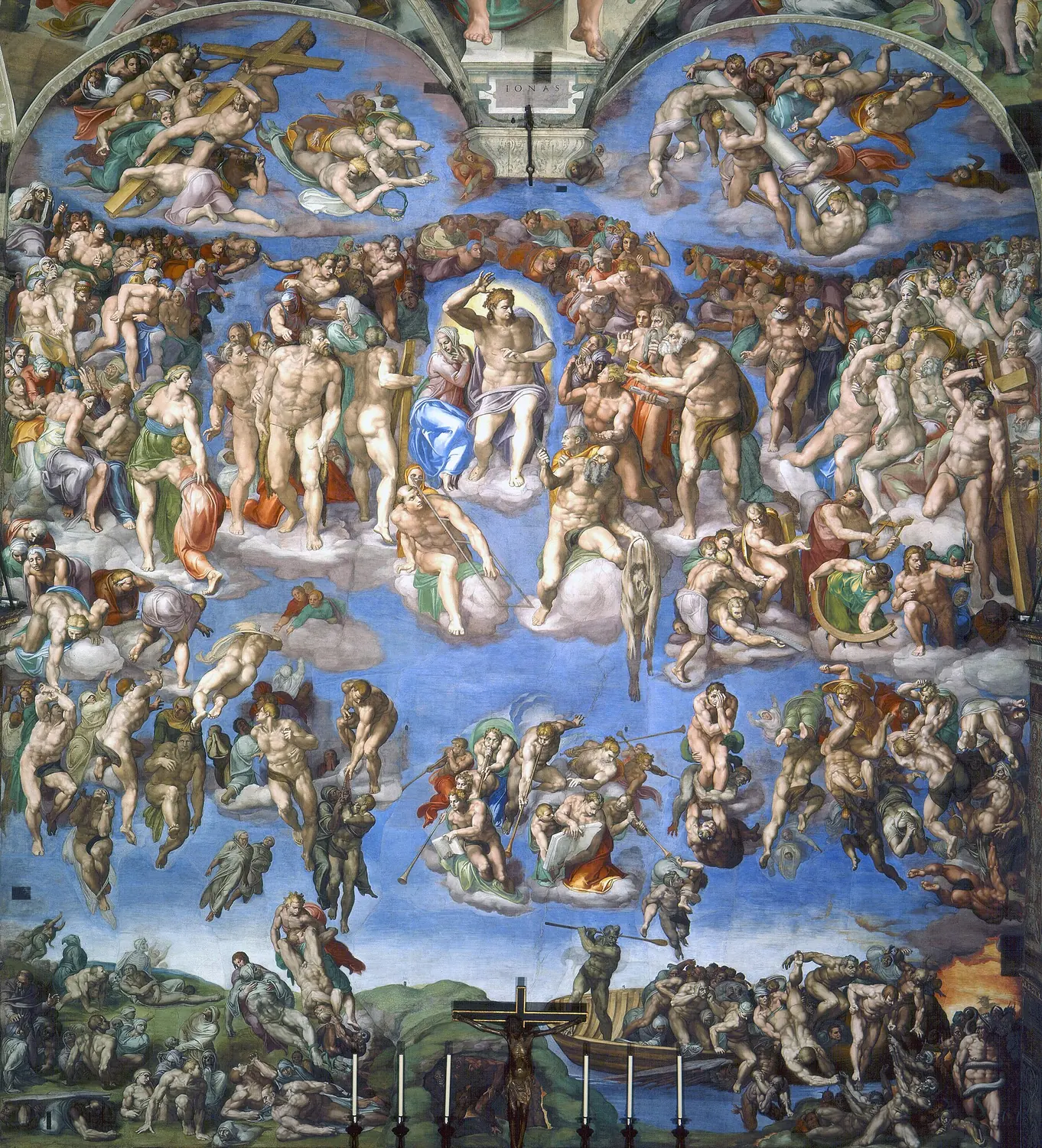
On the altar wall, Christ judges humanity. Almost four hundred figures swirl around him: the blessed rise to heaven, the damned are hurled into hell. After the painter’s death, some of the nudes were covered with drapery.
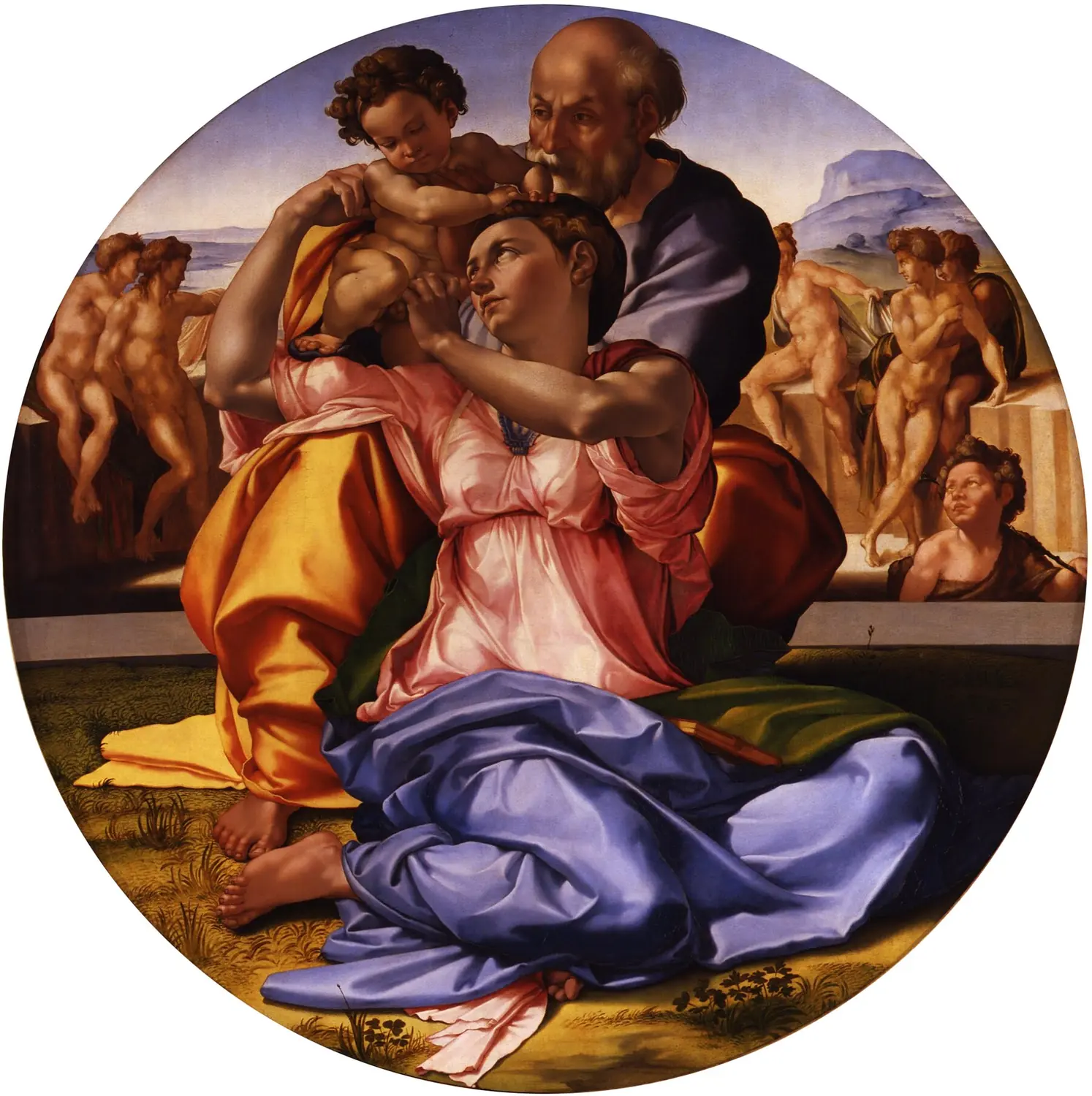
Painted for the wedding of the merchant Agnolo Doni, this round picture shows the Holy Family in a spiralling movement. Behind them, nude youths recall antiquity. It is the only finished easel painting attributed to Michelangelo with certainty.
While working on the vault, Michelangelo wrote a mocking poem about his sufferings: his beard pointing to the sky, his neck stuck to his back, his face covered in drops of paint.
 Giorgione
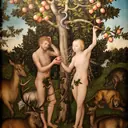 Lucas Cranach the Elder
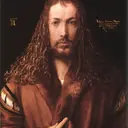 Albrecht Dürer
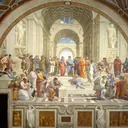 Raphael
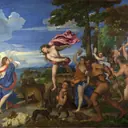 Titian
 Hans Holbein the Younger
 Leonardo da Vinci
 Kamāl ud-Dīn Behzād