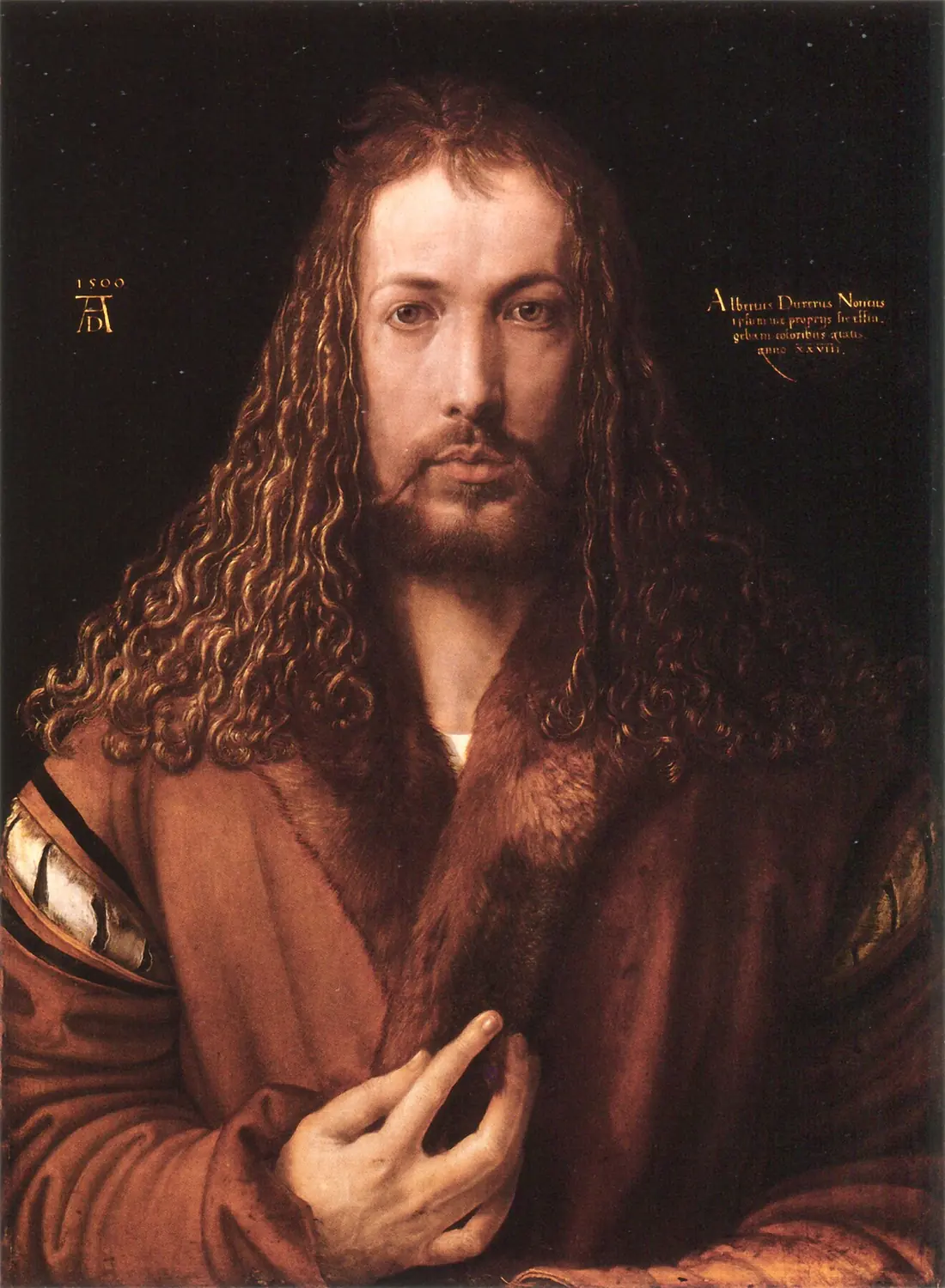
Self-Portrait at Twenty-Eight
Dürer paints himself face on, as Christ was usually shown, with long curly hair, his hand on his fur coat. A Latin inscription states that he painted himself thus, aged twenty-eight, ’in his own colours’.
The German master of printmaking and self-portraiture
Painter, printmaker and theorist, Albrecht Dürer spread the art of the Northern Renaissance across Europe. His incredibly fine prints travelled everywhere and made his AD monogram famous.
Born in 1471 in Nuremberg, the son of a goldsmith from Hungary, Albrecht Dürer drew from childhood: at thirteen he made a self-portrait in silverpoint. He trained with the painter Michael Wolgemut, travelled along the Rhine and twice to Italy, to Venice, where he discovered perspective and Venetian colour.
Back in Nuremberg he opened a workshop, published his own prints and became rich and famous. He worked for Emperor Maximilian I and wrote treatises on geometry and the proportions of the human body. He died in his home town in 1528.
Dürer combined the meticulous precision of Northern painters with Italian knowledge of perspective and proportion. Woodcut, engraving, watercolour, oil: he mastered every technique. His drawings of plants and animals have a naturalist’s accuracy.
Dürer paints himself face on, as Christ was usually shown, with long curly hair, his hand on his fur coat. A Latin inscription states that he painted himself thus, aged twenty-eight, ’in his own colours’.
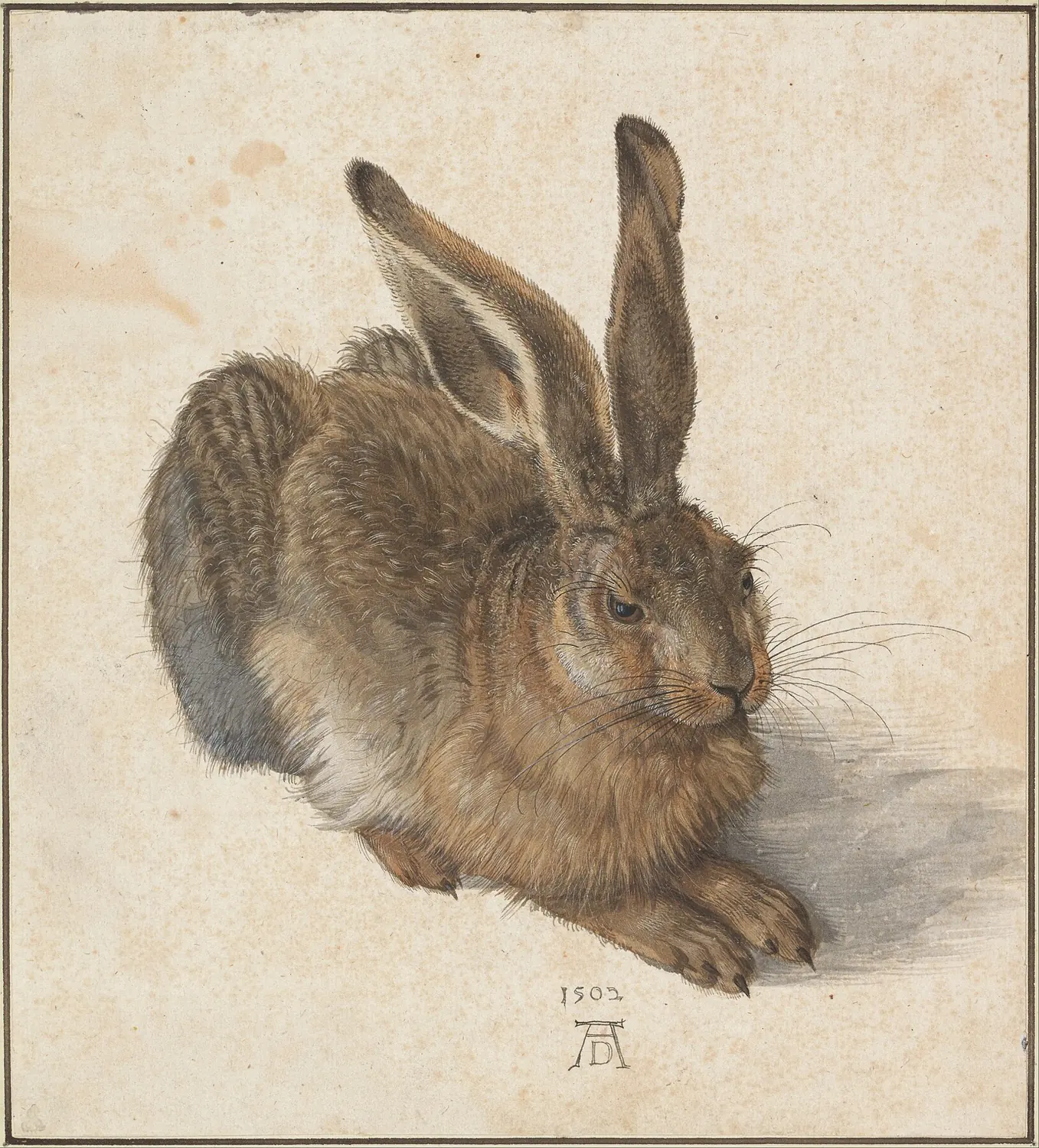
This young hare, painted in watercolour and gouache, looks ready to leap. Every hair is drawn one by one, and the studio window is reflected in its eye.
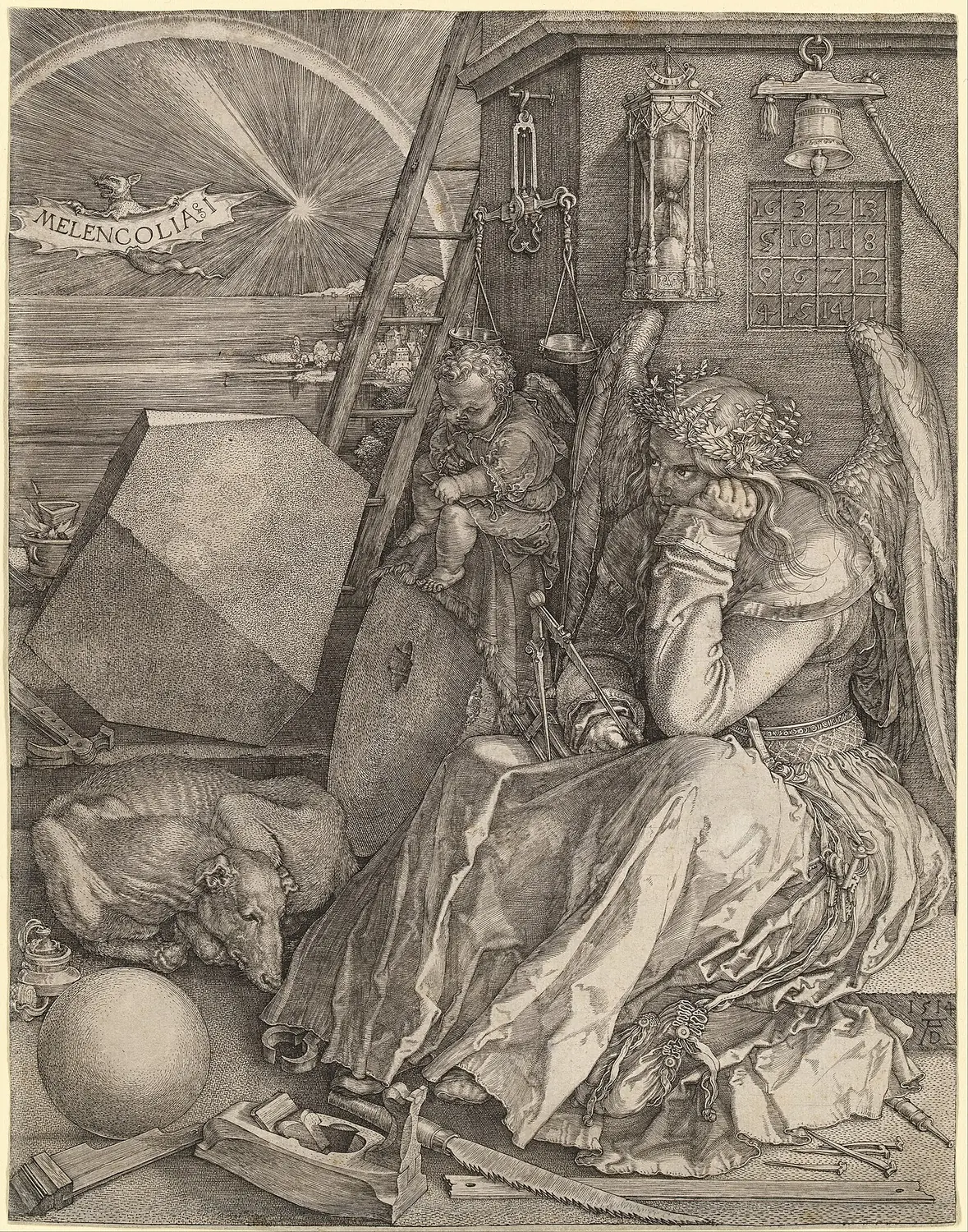
A pensive winged figure sits among abandoned tools: compass, scales, hourglass, polyhedron and a magic square whose lines all add up to 34. This mysterious engraving evokes the melancholy of scholars and artists.
In 1515 Dürer made a woodcut of a rhinoceros without ever having seen one, based on a letter and a sketch from Lisbon. He added a small horn on its back and armour-like plates: this inaccurate image served as a model in books for two centuries.
 Lucas Cranach the Elder
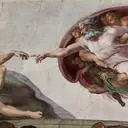 Michelangelo
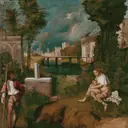 Giorgione
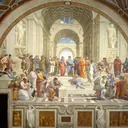 Raphael
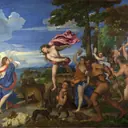 Titian
 Leonardo da Vinci
 Kamāl ud-Dīn Behzād
 Hieronymus Bosch