lesPeintres.eu

Raphael

Born: Urbino, 1483Died: Rome, 1520

The perfect harmony of the Renaissance

Italian RenaissanceItaly
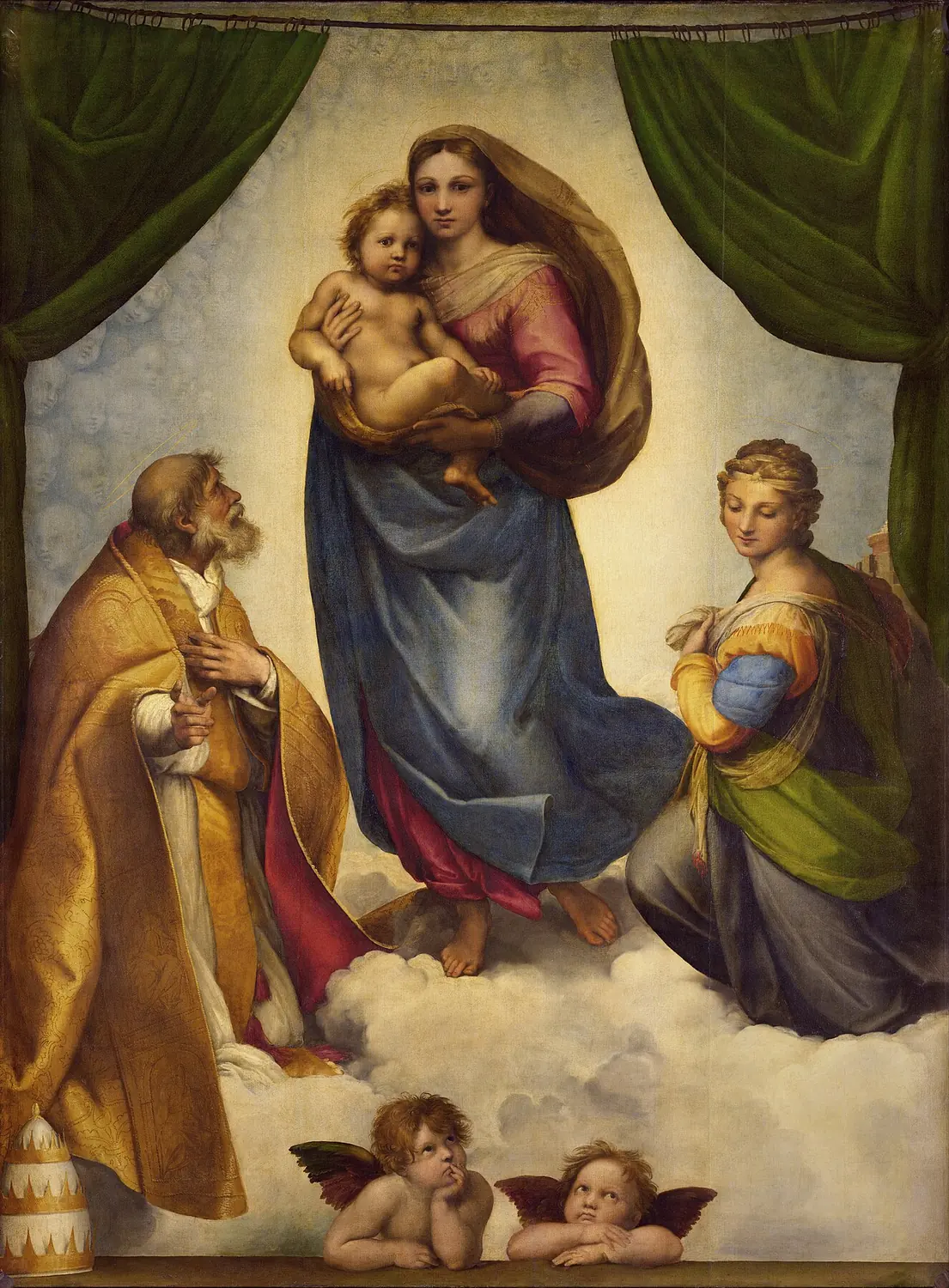
The Sistine Madonna — Raphael
The Sistine Madonna, 1512 · Gemäldegalerie Alte Meister, Dresden
Public domain — Wikimedia Commons

1In brief

Dead at thirty-seven, Raphael embodied the ideal of the Renaissance: grace, balance, clarity. His Madonnas and Vatican frescoes served as a model for painters for four centuries.

2Life

Born in 1483 in Urbino, the son of the painter Giovanni Santi, Raffaello Sanzio lost his parents early and trained with Perugino. In Florence, from 1504 to 1508, he studied Leonardo and Michelangelo and painted a series of Madonnas of new gentleness.

In 1508 Pope Julius II called him to Rome to decorate his apartments in the Vatican. There Raphael painted the School of Athens, became architect of St Peter’s and ran an enormous workshop. He died aged thirty-seven, on Good Friday 1520, and lies in the Pantheon in Rome.

3Style and technique

Raphael composed with a perfect sense of balance: pyramidal groups, clear spaces, natural gestures. His colours are limpid and his faces gentle and serene. He could absorb other artists’ inventions and create a style of luminous ease.

4Works

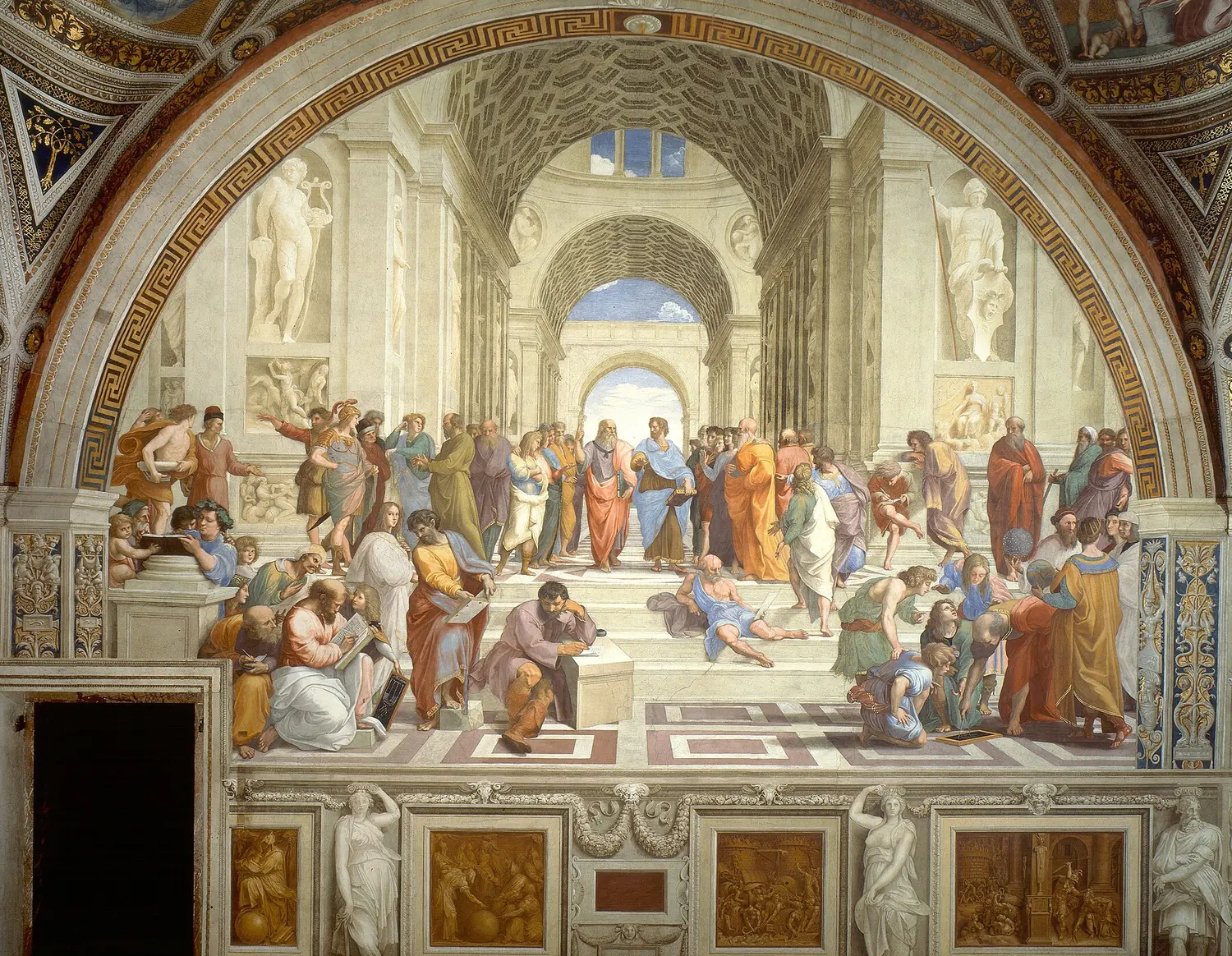
The School of Athens — Raphael

The School of Athens

1511Vatican Museums

Beneath great vaults, the philosophers of antiquity debate. In the centre Plato points to the sky and Aristotle to the earth. Raphael is said to have given Plato the features of Leonardo da Vinci, and he painted himself on the right, looking out at us.
Public domain — Wikimedia Commons

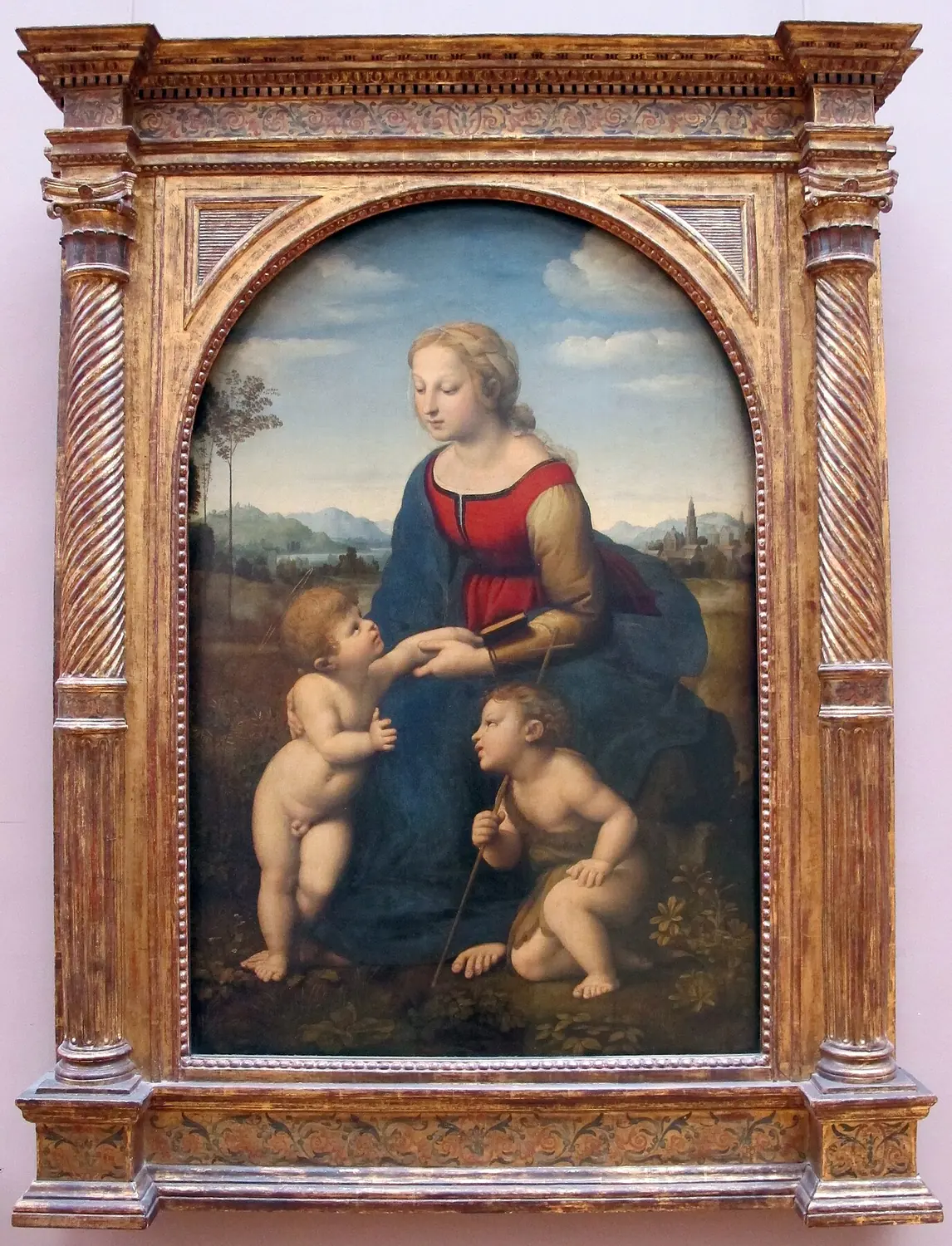
La Belle Jardinière — Raphael

La Belle Jardinière

1507Louvre Museum, Paris

In a meadow, the Virgin watches over the infant Jesus and the young Saint John the Baptist. The three figures form a perfect pyramid. The nickname ’beautiful gardener’ comes from the flowering landscape.

Photo: Sailko — CC BY 3.0 — Wikimedia Commons

The Sistine Madonna — Raphael

The Sistine Madonna

1512Gemäldegalerie Alte Meister, Dresden

A curtain opens on the Virgin descending from the clouds with the Child, between Saint Sixtus and Saint Barbara. Below, two dreamy cherubs watch the scene, leaning on the edge of the picture.

Public domain — Wikimedia Commons

5Did you know?

The two cherubs leaning at the bottom of the Sistine Madonna have become more famous than the painting itself: they appear on postcards, stamps and packaging all over the world.

6Further

Contemporaries