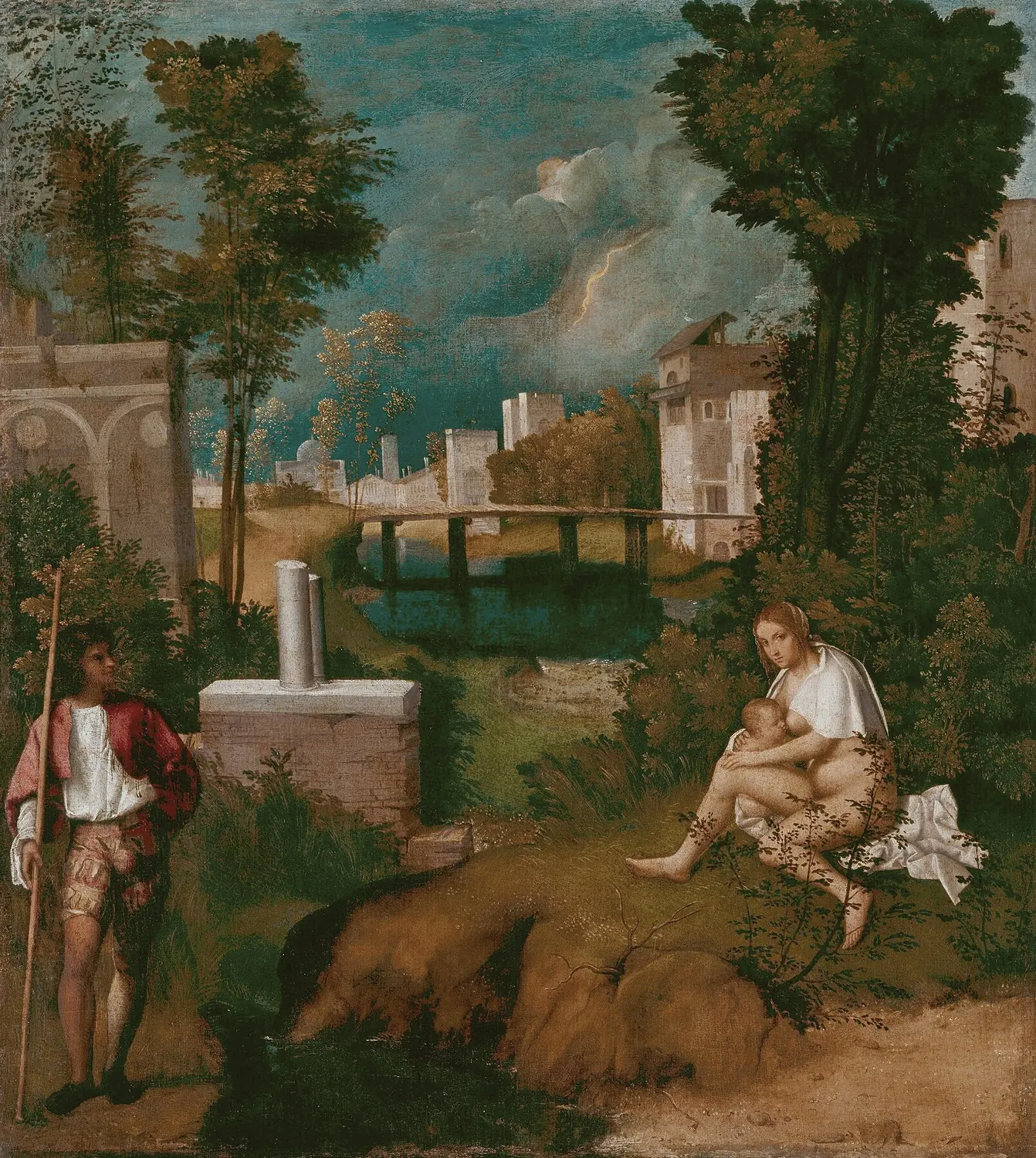
The Tempest
A standing young man and a seated woman nursing a child are separated by a river, while lightning rips the sky above a town. Nobody really knows what this painting is about, but the storm is its true subject.
The mysterious poet of Venice
Dying young, the author of only a handful of paintings, Giorgione nevertheless revolutionised Venetian painting. His atmospheric landscapes and enigmatic subjects still fascinate.
Born around 1477 in Castelfranco Veneto, Giorgio da Castelfranco, known as Giorgione (’big George’), probably trained with Giovanni Bellini. An admired musician and singer, he moved in Venice’s cultivated circles, which commissioned small pictures from him for their private collections.
With the young Titian, he painted in 1508 the façade frescoes of the Fondaco dei Tedeschi, the German merchants’ warehouse. He died of plague in 1510, at about thirty-two. Several of his paintings were finished by Titian or Sebastiano del Piombo.
Giorgione almost did away with preparatory drawing and painted directly with colour. His landscapes are no longer mere backdrops: light, storm and evening softness create an atmosphere, an emotion. His subjects often remain mysterious, as if he were painting daydreams.
A standing young man and a seated woman nursing a child are separated by a river, while lightning rips the sky above a town. Nobody really knows what this painting is about, but the storm is its true subject.
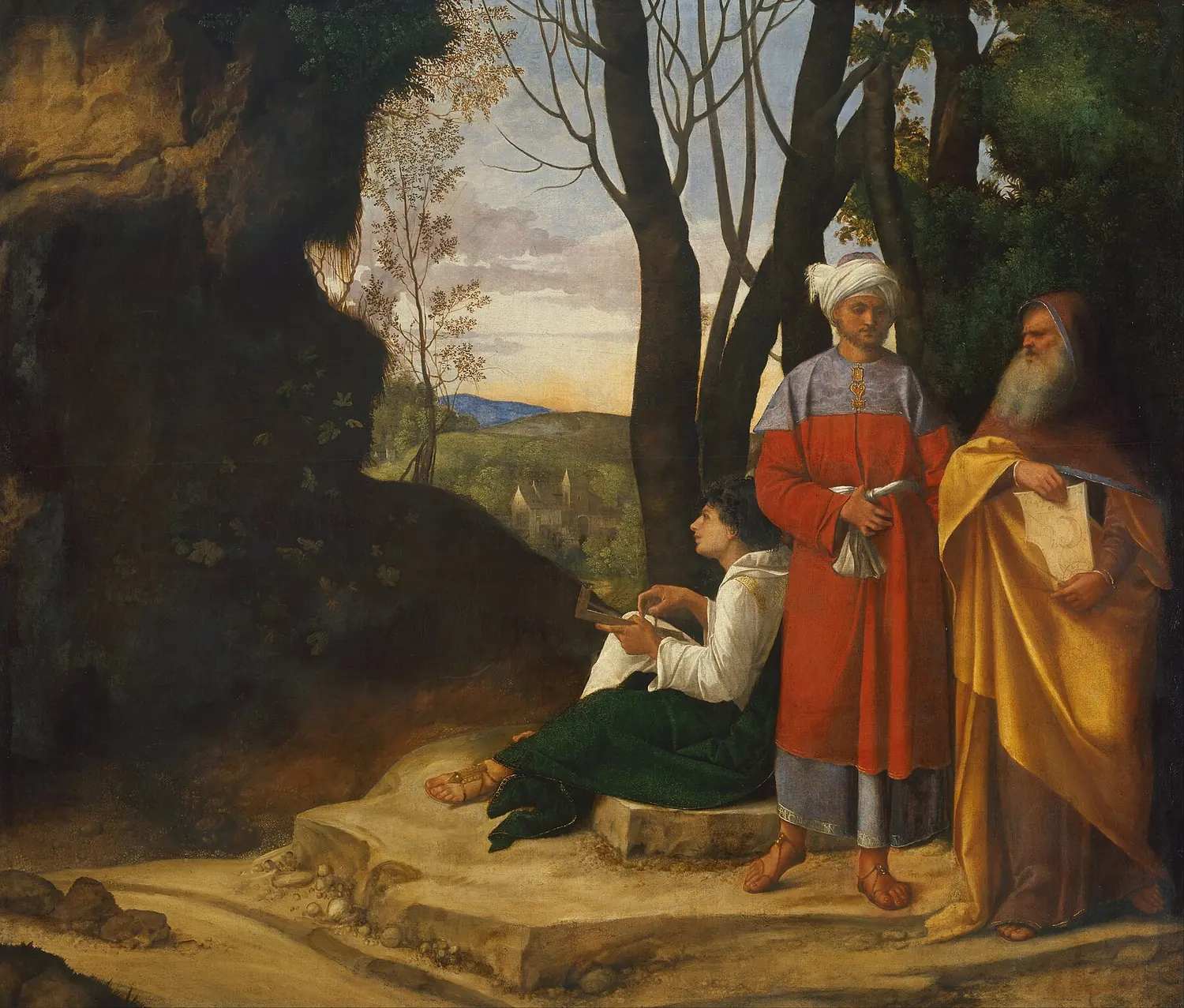
Three men of different ages stand at the edge of a cave: a seated youth taking measurements, a man in a turban and an old man holding a parchment. Magi, philosophers, the ages of life? The mystery remains.
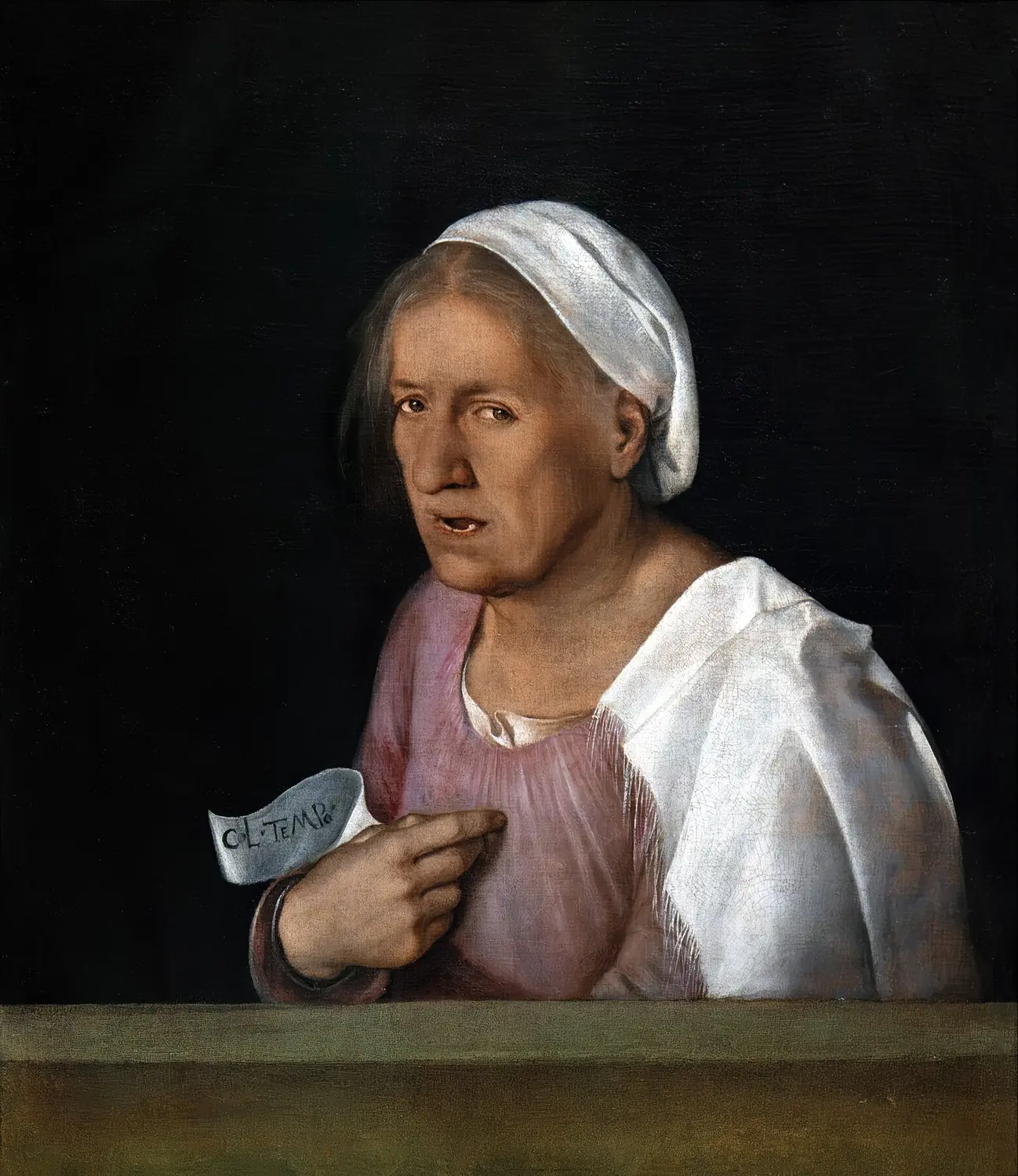
An old woman looks at us, holding a note reading ’Col tempo’, ’with time’. This unflattering portrait reminds us that beauty fades.
Photo: Didier Descouens — CC BY-SA 4.0 — Wikimedia Commons
X-rays of The Tempest revealed that where the standing young man is on the left, Giorgione had first painted a woman bathing in the river.
 Michelangelo
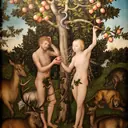 Lucas Cranach the Elder
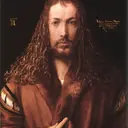 Albrecht Dürer
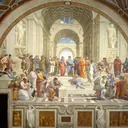 Raphael
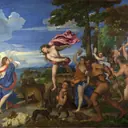 Titian
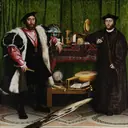 Hans Holbein the Younger
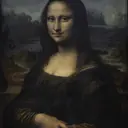 Leonardo da Vinci
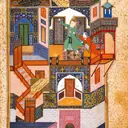 Kamāl ud-Dīn Behzād