lesPeintres.eu

El Greco

Born: Candia (Crete), 1541Died: Toledo, 1614

The visionary of Toledo

MannerismCrete, then Spain
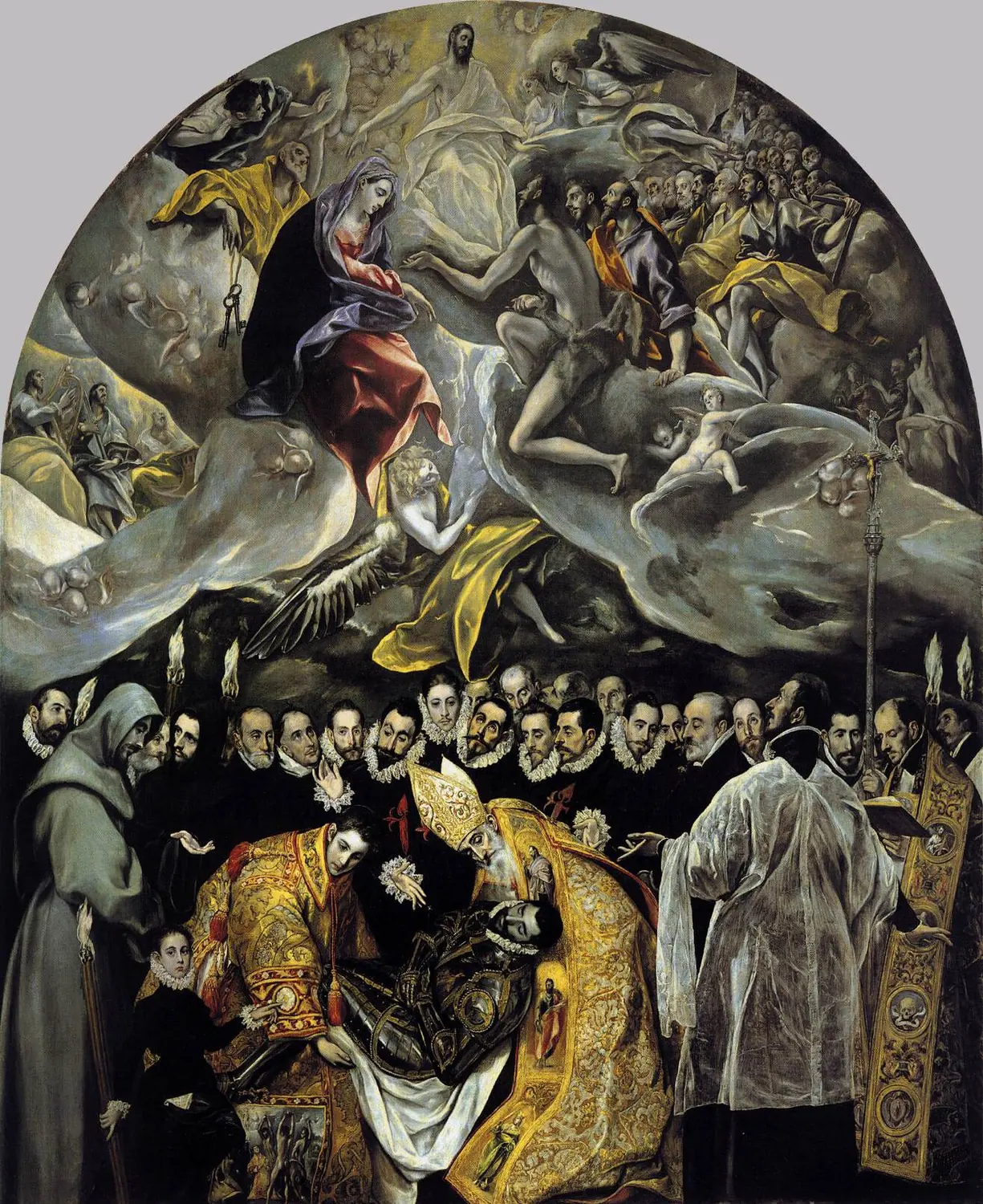
The Burial of the Count of Orgaz — El Greco
The Burial of the Count of Orgaz, 1588 · Church of Santo Tomé, Toledo
Public domain — Wikimedia Commons

1In brief

Born in Crete, trained in Venice and Rome, settled in Toledo, El Greco invented a unique style: figures stretched like flames, acid colours, supernatural light. Modern painters saw him as a forerunner.

2Life

Born in 1541 in Candia, Crete, then Venetian, Domenikos Theotokopoulos began as an icon painter. Around 1567 he left for Venice, where he studied Titian and Tintoretto, then for Rome. The Spanish nicknamed him ’the Greek’, El Greco.

In 1577 he settled in Toledo, Spain, where he stayed until his death. He hoped to work for Philip II, but the king disliked the painting he had commissioned. The churches and convents of Toledo became his best clients. He died in 1614.

3Style and technique

El Greco stretched bodies, twisted space, set cold vivid colours against each other and made light flicker as in a vision. From his past as an icon painter he kept a taste for the supernatural, and from Venice a free, rapid brushstroke.

4Works

The Burial of the Count of Orgaz — El Greco

The Burial of the Count of Orgaz

1588Church of Santo Tomé, Toledo

According to legend, Saint Stephen and Saint Augustine came down from heaven to bury the pious Count of Orgaz themselves. Below, the earth and a row of nobles in black; above, heaven, where the count’s soul is welcomed by Christ.
Public domain — Wikimedia Commons

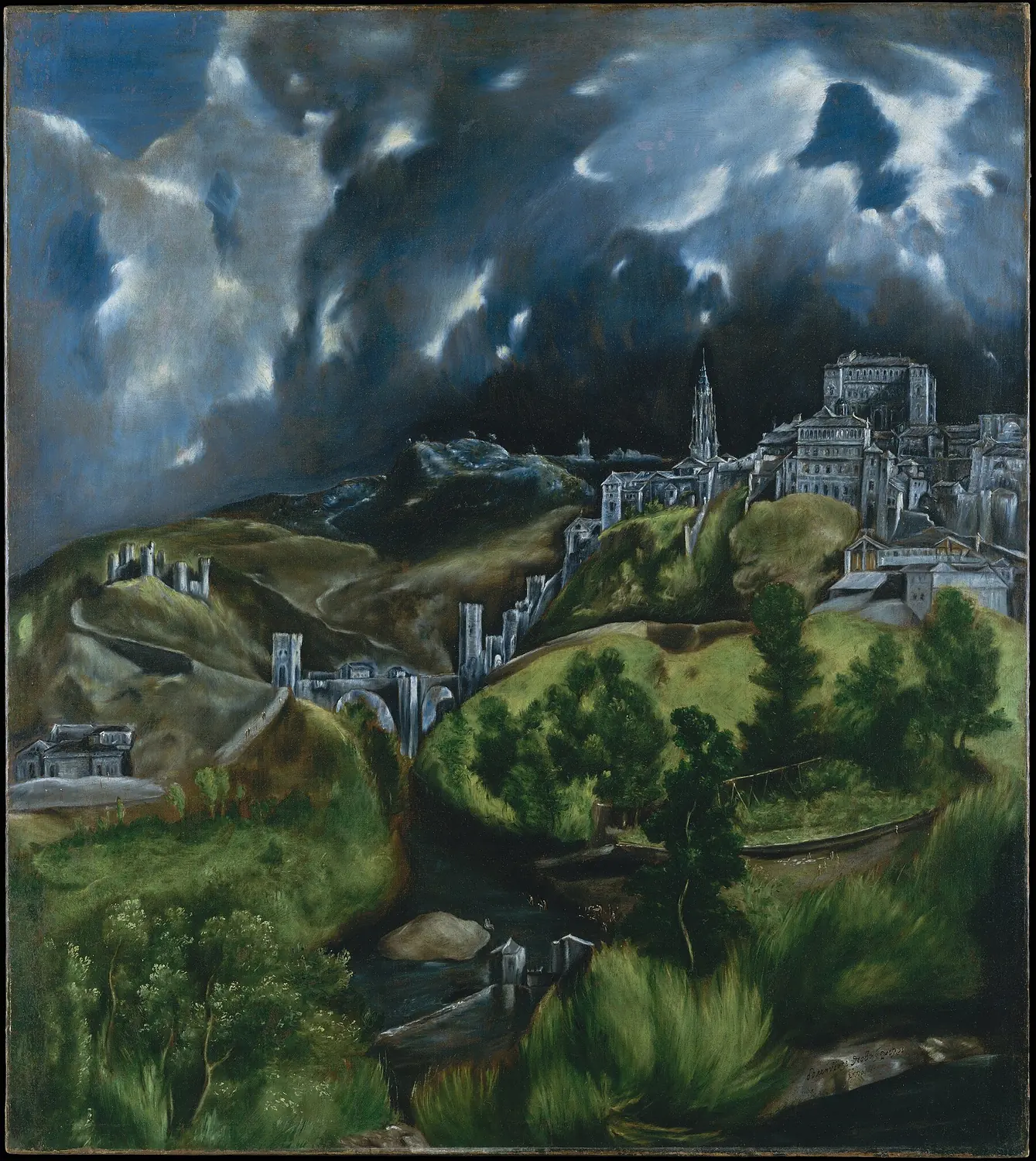
View of Toledo — El Greco

View of Toledo

c. 1599Metropolitan Museum of Art, New York

Under a stormy sky of unsettling green and blue, the city of Toledo stretches along its hill. El Greco moved some monuments to compose his landscape better: one of the first independent landscapes in Spanish art.

Public domain — Wikimedia Commons

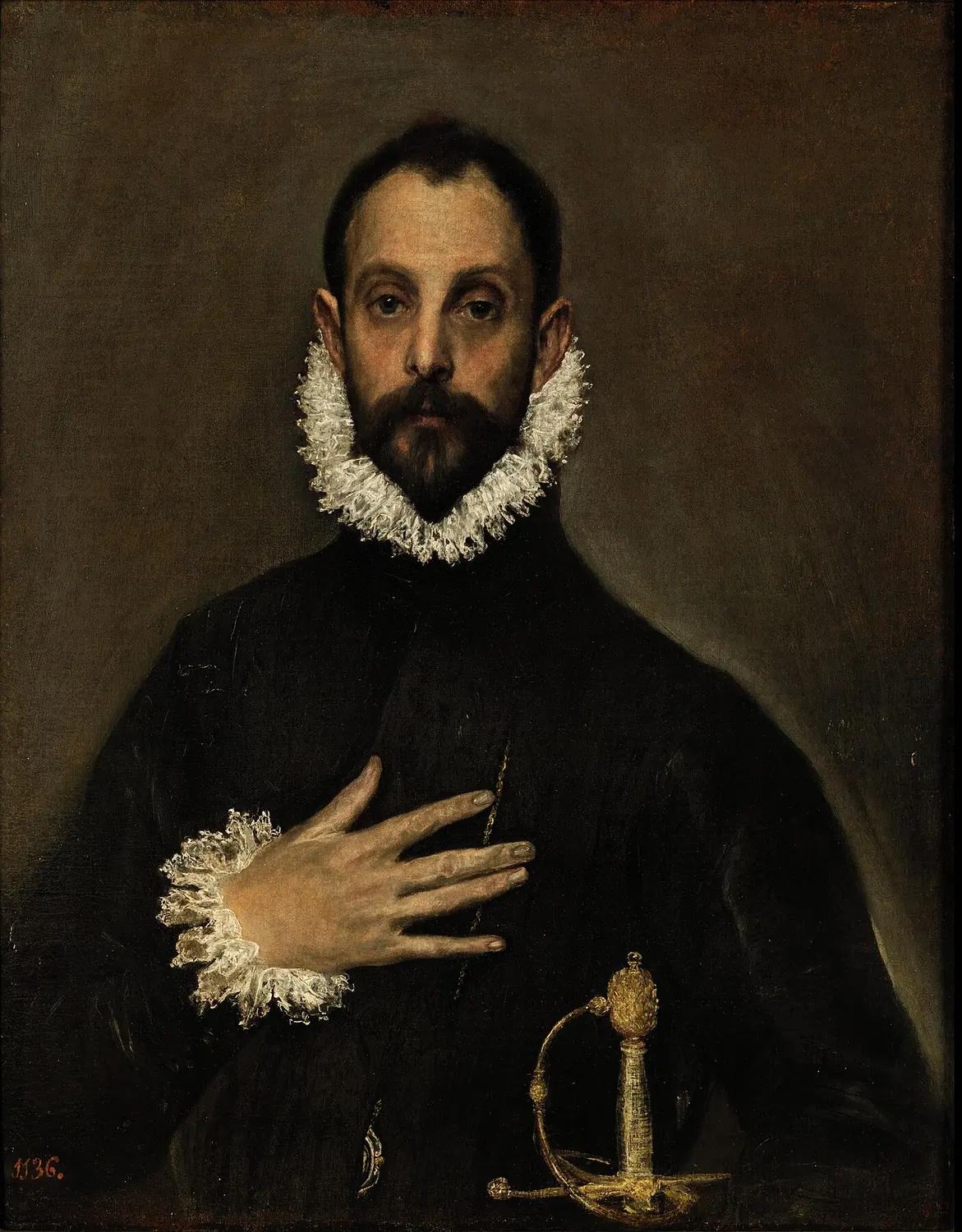
The Nobleman with his Hand on his Chest — El Greco

The Nobleman with his Hand on his Chest

c. 1580Prado Museum, Madrid

A gentleman in black places his hand on his chest, as if taking an oath. The white ruff and the hilt of his sword stand out against the dark background.

Public domain — Wikimedia Commons

5Did you know?

In The Burial of the Count of Orgaz, the boy on the left is the painter’s son: on the handkerchief sticking out of his pocket, El Greco wrote his signature and the boy’s birth year, 1578.

6Further

Contemporaries