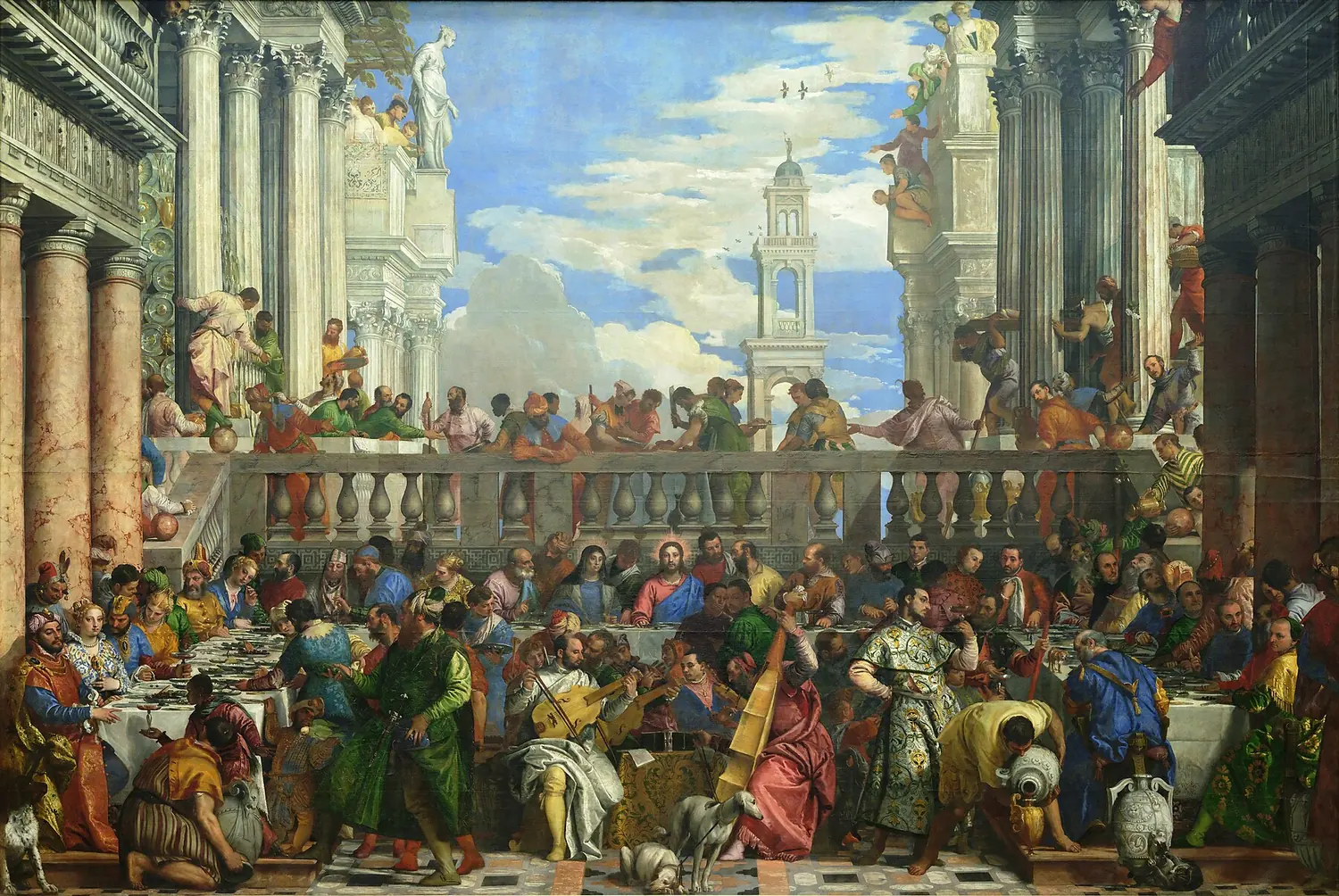
The Wedding at Cana
Christ turns water into wine at a wedding, amid a Venetian feast with more than one hundred and thirty guests. In the centre musicians play: tradition sees portraits of Titian, Tintoretto, Bassano and Veronese himself.
The stage director of Venetian feasts
Painter of sumptuous banquets and marble architecture, Veronese gave Venice its greatest painted spectacles. His bright, luminous colours celebrate the wealth of the Republic.
Born in 1528 in Verona, hence his nickname, Paolo Caliari settled in Venice around 1553. He decorated churches, palaces and villas, including the Villa Barbaro at Maser, where he painted illusionistic doors and figures.
In 1573 his great Feast painted for a convent led to his questioning by the Inquisition tribunal, which objected to his jesters, soldiers and dogs. Rather than alter the canvas, he changed its title. He died in Venice in 1588.
Veronese composed vast theatrical scenes under classical colonnades, peopled with dozens of figures in shimmering costumes. His colours are fresh and silvery, his shadows light and coloured. A bright green even bears his name: Veronese green.
Christ turns water into wine at a wedding, amid a Venetian feast with more than one hundred and thirty guests. In the centre musicians play: tradition sees portraits of Titian, Tintoretto, Bassano and Veronese himself.
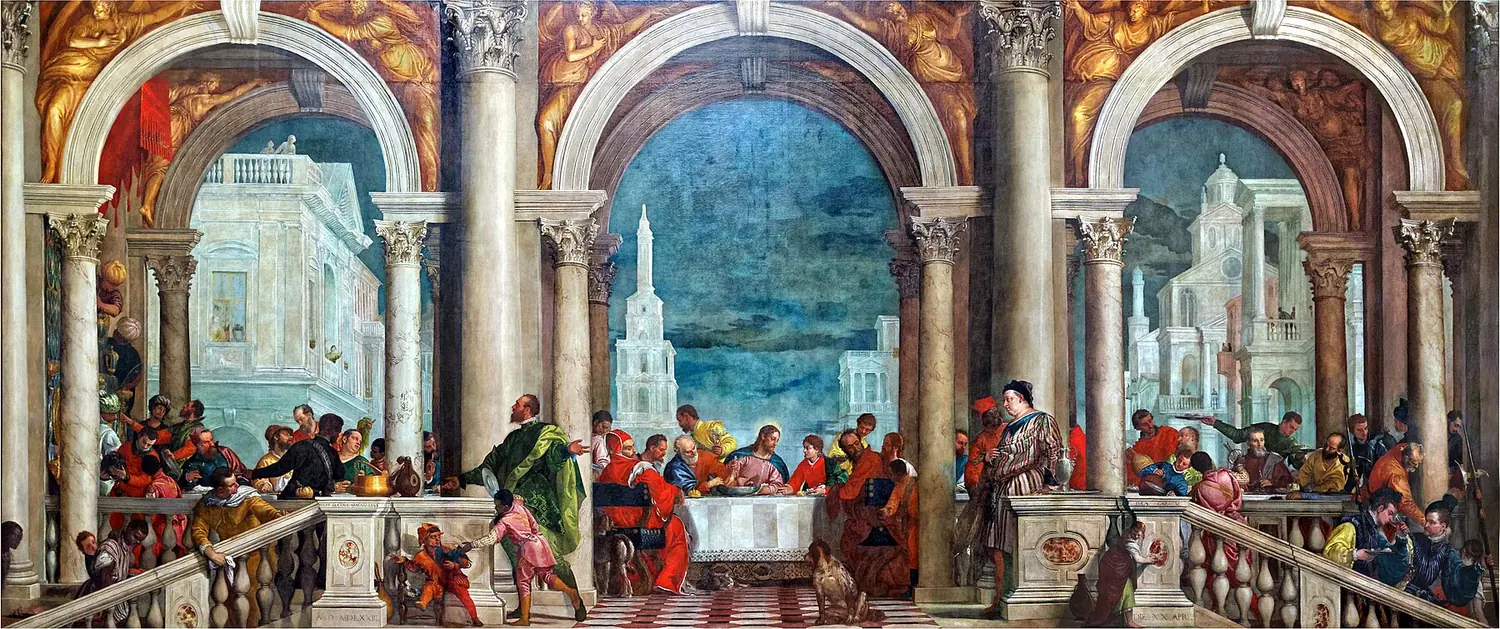
Under three great arches, a banquet brings together Christ, the apostles, servants, soldiers, a jester and even a parrot. Originally painted as a Last Supper, the picture was renamed after the Inquisition hearing.
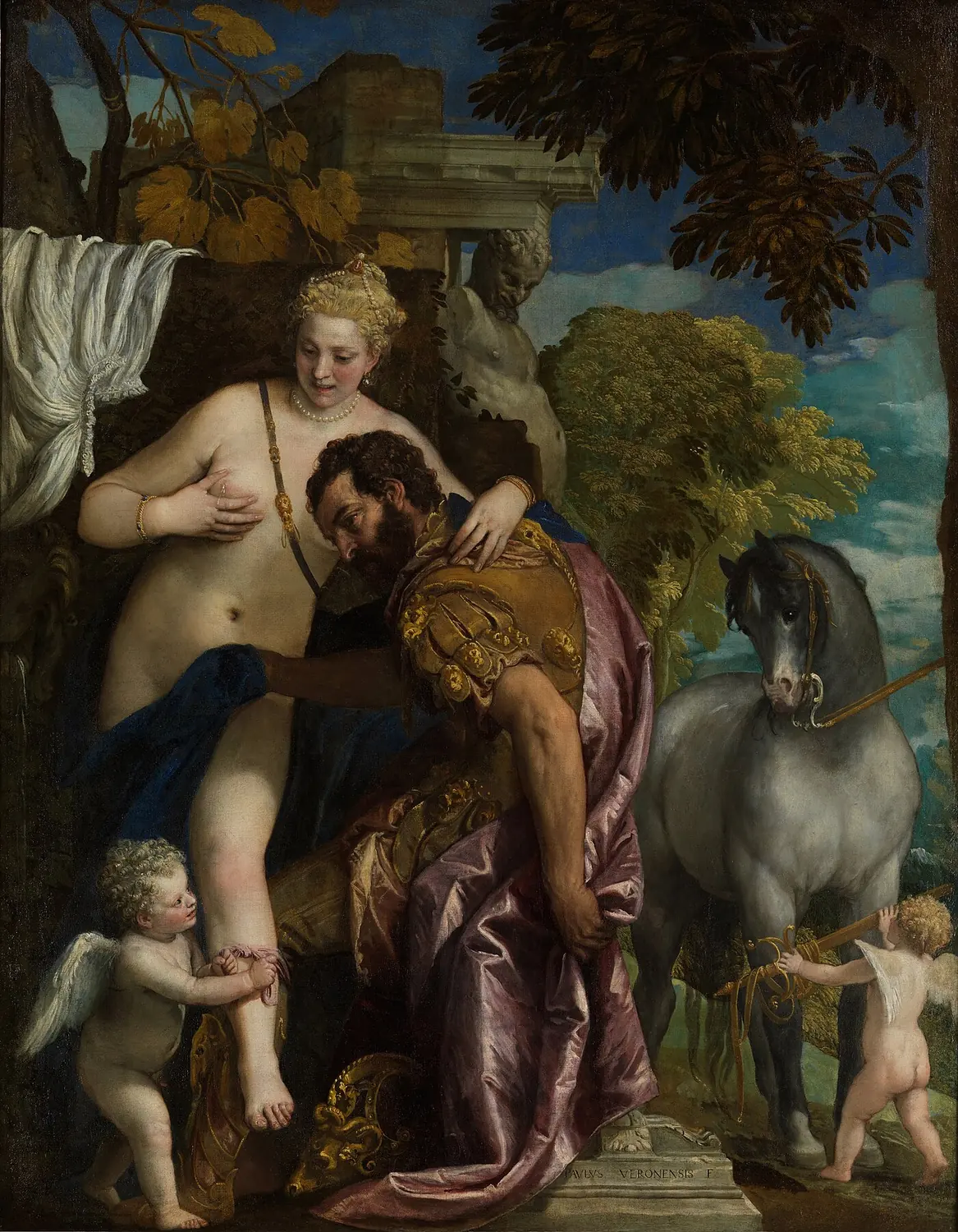
Cupid binds Mars, god of war, and Venus, goddess of love, with a ribbon. Another cupid holds back Mars’s horse with his sword: love disarms violence.
The Wedding at Cana is the largest painting in the Louvre. Carried off from Venice in 1797 by Bonaparte’s troops, it was cut up for the journey and later sewn back together.
 Giuseppe Arcimboldo
 Pieter Bruegel the Elder
 Sofonisba Anguissola
 Tintoretto
 El Greco
 Hans Holbein the Younger
 Titian
 Caravaggio