Colour
Primary, complementary, warm and cool: how painters play with colour.
The colour wheel
In painting, the traditional starting point is three primary colours: red, yellow and blue. Mixing them in pairs gives the secondaries: orange, green and violet. Arranged in a circle, they form the colour wheel, a basic tool for painters since the 19th century.
Complementaries
Two colours facing each other on the wheel are called complementary: red and green, blue and orange, yellow and violet. Side by side they strengthen each other and vibrate; mixed together, they dull towards grey or brown. The chemist Eugène Chevreul studied this ’simultaneous contrast’, which inspired Delacroix, the Impressionists and Seurat.
Warm and cool
Reds, oranges and yellows look warm and seem to come towards us; blues and greens look cool and seem to recede. Landscape painters use this: distant things turn bluish, which is called atmospheric perspective.
Mixing on the palette or in the eye
Mixing pigments on the palette always darkens the colour a little: it is subtractive mixing. The Impressionists, and then Seurat, preferred to place small pure touches side by side that the eye mixes from a distance: optical mixing, which is brighter.
Colour that expresses
From the late 19th century, colour broke free from reality. Van Gogh used it to express his emotions, the Fauves painted green faces, Franz Marc blue horses, and Kandinsky linked each colour to a sound.
The three magic colours
With only red, yellow and blue you can make almost every colour! Red + yellow = orange. Yellow + blue = green. Blue + red = purple.
Friend-enemy colours
Red and green, blue and orange, yellow and purple are opposite colours. Side by side, they make each other shine!
Warm or cool?
Red, orange and yellow are warm colours, like fire and sunshine. Blue and green are cool colours, like water and ice.
Challenge
Take three pens or paints: red, yellow and blue. How many different colours can you make?
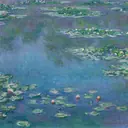 Claude Monet
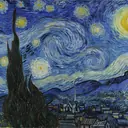 Vincent van Gogh
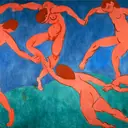 Henri Matisse
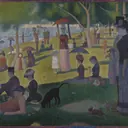 Georges Seurat
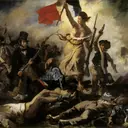 Eugène Delacroix
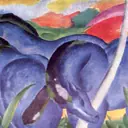 Franz Marc