Light and shadow
Modelling, chiaroscuro, backlighting, open-air light: light makes forms exist.
Modelling
To give a shape volume, the painter moves gradually from light to dark. The side facing the light is bright, the other falls into its own shadow, and the object casts a shadow on its surroundings. Leonardo da Vinci took this art as far as sfumato, modelling so soft that you cannot see the transitions.
Chiaroscuro
Caravaggio plunged his scenes into darkness and lit them with a violent beam, like a spotlight. Rembrandt made his figures emerge from a golden shadow; Georges de La Tour lit them by the glow of a single candle.
Daylight
Vermeer painted the soft light of a window sliding across a wall. The Impressionists went outdoors to paint: they coloured shadows blue and violet and painted the same motif at different hours, as Monet did with his haystacks and cathedrals.
Light that dissolves
In Turner’s work, light and atmosphere become the subject itself: sun, mist, steam and storm dissolve forms in a whirl of colour.
Light and dark
To make a ball look round, you paint it light on the side of the lamp and dark on the other side. And under the ball, there’s a shadow on the table!
The spotlight
Some painters like Caravaggio put lots of black in their pictures and lit only the people, like on a theatre stage.
The candle
Georges de La Tour painted scenes lit by a single candle. Everything is golden and very calm.
Challenge
In the dark, shine a torch on a piece of fruit from one side and then the other. Watch how the shadow moves!
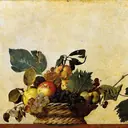 Caravaggio
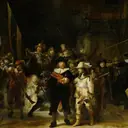 Rembrandt
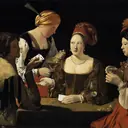 Georges de La Tour
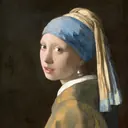 Johannes Vermeer
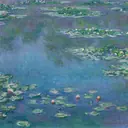 Claude Monet
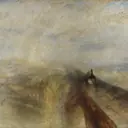 J. M. W. Turner