Composition
Where to place things in the frame: lines of force, thirds, diagonals and balance.
Organising the eye
Composing means choosing where to place the elements of a picture to guide the viewer’s eye. Lines, light and dark masses, colours and the gazes of figures create paths that we follow without realising.
Thirds and diagonals
Dividing the frame into thirds, vertically and horizontally, gives lines and points of interest that balance the image without fixing it in the centre. Diagonals bring movement: they are the signature of the Baroque.
Symmetry and the pyramid
Symmetry brings calm and solemnity. Renaissance painters such as Raphael liked to group their figures in a pyramid, a stable, harmonious shape.
Modern framing
Inspired by Japanese prints and photography, Degas and others cut figures off at the edge of the frame, left large empty spaces and chose surprising viewpoints, from above or below.
The eye’s path
When you look at a painting your eyes follow a path: a road, a gaze, an outstretched arm. The painter prepared it!
The game of three
Cut a picture into three strips, across and down: important things are often placed on those lines, not right in the middle.
The triangle
Many painters arrange their figures in a triangle or pyramid shape. It looks calm and solid.
Challenge
Take a photo of an object placed in the middle, then on one side. Which one do you like best?
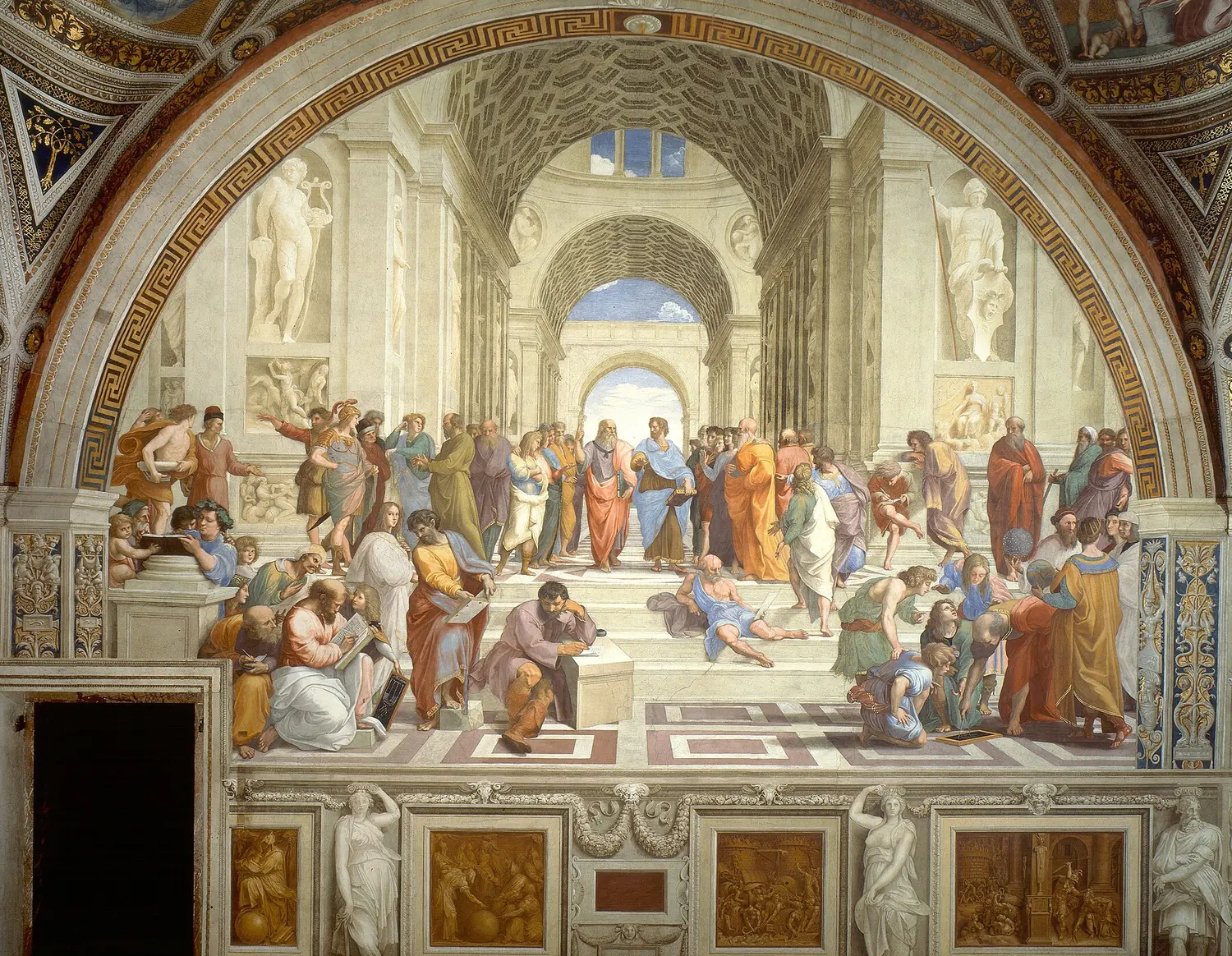
 Raphael
 Johannes Vermeer
 Katsushika Hokusai
 Nicolas Poussin
 Edgar Degas
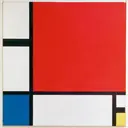 Piet Mondrian